
- Tell the story of Major Somnath Sharma and the Battle of Badgam in the right order, with every date, number and quotation
- Explain the poem Somebody’s Mother couplet by couplet, with its form, tone and poetic devices quoted exactly
- Explain the ideas and values in Verghese Kurien’s letter to his grandson Siddharth
- Use the unit’s grammar: subject-verb agreement, collective nouns, ‘over’ verbs, advice/advise pairs, lest, fact and opinion, dashes, it’s/its, prepositional phrases
- Set out a letter of enquiry, a diary entry and an informal letter in the book’s format
1 The Unit at a Glance
Unit 2 of Poorvi is called Values and Dispositions. A disposition is a person’s natural way of behaving. All three texts show a value in action: courage and duty, kindness to a stranger, and a life of service.
| Text 1 | Text 2 | Text 3 | |
|---|---|---|---|
| Title | A Tale of Valour: Major Somnath Sharma and the Battle of Badgam | Somebody’s Mother | Verghese Kurien: I Too Had A Dream |
| Writer | A tribute (no named author) | Mary Dow Brine | V Kurien (Dr Verghese Kurien) |
| Form | Prose: the true story of a war hero | Poem: a story told in rhyming couplets | Prose: a personal letter to his grandson, “Anand, 2005” |
| Value | Courage, duty, self-sacrifice, patriotism | Kindness, empathy, helping the elderly | Service, integrity, contribution to the common good |
2 A Tale of Valour: Who Was Major Somnath Sharma?
First PVC
India’s first recipient of the Param Vir Chakra, awarded posthumously.
His unit
Commander of the D Company of the 4th Battalion of Kumaon Regiment (4 KUMAON).
His battle
The Battle of Badgam, 03 November 1947, near the Srinagar airport.
His age
He laid down his life “at the young age of 24” (1923 to 1947).

The Param Vir Chakra is “the highest military award in India, awarded for the most conspicuous bravery in the presence of the enemy.” Its name means the “Wheel of the Ultimate Brave”.
Posthumously means “after death”. Major Somnath Sharma’s PVC was awarded posthumously, because he was killed in the battle.
The opening tribute. The text begins by calling his name “etched in the annals of history” (permanently fixed in memory) and his bravery “a beacon of inspiration” (a source of inspiration). He is remembered through the National War Memorial, patriotic songs, books, stories and the celebrations of Azadi ka Amrit Mahotsav. The line “his legacy of courage and devotion to the nation remains forever alive, forever alive…” repeats forever alive to stress that his memory will never fade.
3 The Background: Why the Battle Was Fought
The village of Badgam was less than 5 kilometres from the Srinagar airport and on higher ground than the airfield, and access to the airfield was through the village. So Indian forces had to hold it to protect the troops and the supplies arriving by air.
4 The Battle of Badgam, Stage by Stage
“The enemy is only 50 yards from us. We are heavily outnumbered. We are under devastating fire. I shall not withdraw an inch but will fight to the last man and the last round”.
Major Somnath Sharma’s last message to Brigade headquarters
4.1 The result and the honours
- “D Company’s sacrifice and Major Somnath’s leadership saved Srinagar for India.”
- The 4 KUMAON battalion was awarded the Battle Honour, Srinagar.
- For “conspicuous bravery” he was awarded the Param Vir Chakra, the first PVC, awarded posthumously “for gallantry and supreme sacrifice”.
- His name is on the Honour Wall of the National War Memorial. His valour “ensured that the tricolour would continue to fly over Srinagar”.
- The book also reproduces his original award recommendation and the Ministry of Defence citation as pictures.
5 His Early Life
5.1 His qualities, with proof from the text
| Quality | Proof from the text |
|---|---|
| Commitment to his men | Went into battle with his left hand in plaster: “they are not going in without me.” |
| Sharp judgement | “correctly visualised that the first attack was just a distraction” |
| Fearlessness | Laid out ground panels for aircraft; moved through the battlefield despite injuries |
| Leadership by example | Filled magazines for his gunners; urged his men “to fight with tenacity and valour” |
| Sense of duty | “I shall not withdraw an inch but will fight to the last man and the last round” |
| Inspiration even after death | His men held on for over six more hours |
The text shows the “highest ideals of duty, honour, and patriotism“. It is “a poignant reminder of the price of freedom” and of “the sacrifices made by countless men and women in defence of the motherland”. Values to carry into daily life: courage, duty and self-sacrifice.
6 A Tale of Valour: Words and Grammar
6.1 Glossary (the book’s margin meanings)
| Word | Meaning | Word | Meaning |
|---|---|---|---|
| valour | courage | resolute | determined |
| etched | permanently fixed in someone’s memory | tenacity | determination |
| beacon | a source of inspiration | unparalleled | unmatched |
| infiltrators | people who secretly invade | magazines | (here) containers that hold cartridges to be fed into a gun |
| annex | to take possession of | ammunition | a supply of bullets, shells, and explosives |
| combat | a battle | crouched | sat with knees bent |
| unfounded | not based on reason or facts | conspicuous | noticeable |
| eerily | in a strange, frightening and mysterious way | legacy | life experiences, values, beliefs, and traditions passed down from generation to generation |
| outnumbered | were greater in number | testament | strong evidence or proof |
| forged | shaped or strengthened, often through hardship | poignant | emotional and sad |
6.2 Expressions from the text
| Expression | Meaning | Example situation |
|---|---|---|
| fight to the last man | fight until every soldier has laid down his life | soldiers fought valiantly until each one died for the nation |
| foil the plan | stop someone’s plan from succeeding | a spy disrupts the enemy’s invasion by intercepting messages |
| deliver a blow | cause a sudden setback or damage | a last-minute goal shakes the opponent’s confidence |
| hold their ground | stay in position and refuse to give way | soldiers fight back though the enemy is stronger |
6.3 Collective nouns of the armed forces
A collective noun names a group as one unit. The text’s example: “A contingent of troops posted to Jammu and Kashmir was airlifted into Srinagar.”
| Collective noun | Meaning (as given in the book) |
|---|---|
| regiment | a permanent unit of an army typically commanded by a lieutenant colonel/colonel and divided into several companies |
| squadron | a small unit, typically comprising 12-24 aircrafts and their crews used in air force, naval, or army aviation services |
| fleet | a group of ships sailing together, engaged in the same activity, or under the same ownership |
| battalion | a large body of troops ready for battle, especially an infantry unit |
6.4 ‘Over’ verbs and c/s word pairs
Three ‘over’ verbs
- overthrow: to take and seize control (of a government)
- overrun: to invade or occupy an area in large numbers
- overwhelm: to flood or overpower someone emotionally
- More: overcome, overlook, overflow, overhear, overtake
‘c’ for nouns, ‘s’ for verbs
- advice (n) / advise (v)
- practice (n) / practise (v)
- device (n) / devise (v)
- council (n) / counsel (v)
- defence (British, preferred) = defense (American); same meaning
6.5 Subject-verb agreement
The verb must agree with its subject: a singular subject takes a singular verb and a plural subject takes a plural verb. Text example: “The life and sacrifice of Major Somnath Sharma embody the highest ideals…” (two subjects joined by and, so plural).
| Rule | Example (from the book’s exercise) |
|---|---|
| A collective/group noun seen as one unit takes a singular verb | The bouquet of flowers is beautiful. A battalion of soldiers stands at attention. |
| Neither…nor / either…or: the verb agrees with the nearer subject | Neither the teacher nor the students were aware. Either the children or their guardian has to attend. |
| Each of / one of / neither of + plural noun: singular verb | Each of the participants has submitted. One of the players was injured. Neither of the statements is true. |
| “A pair of” takes a singular verb | A pair of shoes is missing. |
| Subjects ending in -s that name one subject are singular | Mathematics is an interesting subject. |
| A plural subject takes a plural verb | The members of the jury have delivered their verdict. |
6.6 Writing: letter of enquiry
A letter of enquiry “is a formal letter written to seek detailed information about something the writer wants to know”, for example joining a course, organising an event or details about a trip. Its language is “formal and specific, with relevant queries”.
7 A Tale of Valour: Listening and Exploring
7.1 The Param Vir Chakra (listening talk)
- Means “Wheel of the Ultimate Brave”; granted for “exemplary bravery in the presence of the enemy”.
- Instituted as a Gallantry Medal with retrospective effect from 15 August 1947 by Dr. Rajendra Prasad, the then President of India.
- Designed by Mrs. Savitri Khanolkar, inspired by Sage Dadhichi, a Vedic rishi who gave up his body so the gods could make the Vajra (Thunderbolt) from his spine.
- Cast in bronze; the State Emblem of India at the centre, surrounded by four replicas of Indra’s Vajra, lined with lotus flowers.
7.2 Gallantry awards and other bravehearts
| Award | Given for |
|---|---|
| Param Vir Chakra | Highest military award; most conspicuous bravery in the presence of the enemy |
| Maha Vir Chakra | Second-highest; acts of gallantry in the presence of the enemy |
| Vir Chakra | Acts of gallantry in the presence of the enemy |
- Captain Vikram Batra: of twenty-one PVC awardees, Major Somnath Sharma was the first and Captain Batra the last. Called the “Shershah of Kargil“; success signal “Yeh Dil Mange More“. As D Company commander he captured Point 5140 on 20 June 1999; with 13 JAK RIF he led the assault on Point 4875 on 07 July 1999, killed five enemy soldiers at point blank range, was seriously injured and later succumbed. PVC (posthumously).
- Birsa Munda: tribal freedom fighter of the Munda tribe, known in Jharkhand as Dharti Aaba (Father of the Land); a commemorative stamp by Shri Sankha Samanta shows him addressing his followers.
8 Somebody’s Mother: The Poem
The poem by Mary Dow Brine tells a small story: on a snowy winter day an old, poor woman waits at a busy crossing; a crowd and a group of schoolboys pass her by; one boy stops and helps her across.
A couplet is a pair of lines that rhyme. This poem “is written in couplets with two lines in each stanza”, and its rhyme scheme is AABB: grey/day, snow/slow, long/throng, sheep/deep.
8.1 The story of the poem in order
8.2 Meaning, couplet by couplet
| Lines | Meaning |
|---|---|
| “The woman was old and ragged and grey / And bent with the chill of the Winter’s day.” | She is old, her clothes are old and torn (ragged), her hair is grey, and her body is bent by the cold. |
| “The street was wet with a recent snow / And the woman’s feet were aged and slow.” | The street is slippery with fresh snow and she walks slowly, so crossing is dangerous for her. |
| “She stood at the crossing and waited long, / Alone, uncared for, amid the throng” | She waits a long time at the crossing, alone and ignored in the middle of a crowd (throng). |
| “Of human beings who passed her by / Nor heeded the glance of her anxious eyes.” | People pass by without paying attention (heeded) to her worried look. |
| “Down the street, with laughter and shout, / Glad in the freedom of ‘school let out,'” | School is over and the boys come down the street, laughing and shouting, happy to be free. |
| “Came the boys like a flock of sheep, / Hailing the snow piled white and deep.” | The boys move together like sheep and greet the deep snow with joy. |
| “Past the woman so old and grey / Hastened the children on their way.” | The children hurry (hastened) past her. |
| “Nor offered a helping hand to her — / So meek, so timid, afraid to stir” | No one helps her. She is meek and timid, afraid to move (stir). |
| “Lest the carriage wheels or the horses’ feet / Should crowd her down in the slippery street.” | She fears that carriages or horses might knock her down on the slippery street. |
| “At last came one of the merry troop, / The gayest laddie of all the group;” | Finally the happiest boy (laddie) of the cheerful group comes up. |
| “He paused beside her and whispered low, / ‘I’ll help you cross, if you wish to go.'” | He stops and gently, softly offers to help her cross. |
| “Her aged hand on his strong young arm / She placed, and so, without hurt or harm,” | She trusts him and holds his arm; she crosses safely. |
| “He guided the trembling feet along, / Proud that his own were firm and strong.” | He guides her shaky steps, glad that his own strong feet can help. |
| “Then back again to his friends he went, / His young heart happy and well content.” | He returns to his friends, feeling happy and satisfied. |
| “‘She’s somebody’s mother, boys, you know, / For all she’s aged and poor and slow’,” | He tells them that even though she is old, poor and slow, she is someone’s mother. |
| “‘And I hope some fellow will lend a hand / To help my mother, you understand’,” | He hopes another boy will help his own mother when she needs it. |
| “‘If ever she’s poor and old and grey, / When her own dear boy is far away.'” | That is, if his mother is ever old and alone, with her son far away. |
| “And ‘somebody’s mother’ bowed low her head / In her home that night, and the prayer she said” | That night, at home, the old woman bows her head in prayer. |
| “Was ‘God be kind to the noble boy, / Who is somebody’s son, and pride and joy!'” | She asks God to bless the kind boy, who is someone’s son and the pride and joy of his family. |
8.3 Form, tone and theme
| Feature | In this poem |
|---|---|
| Central theme | Kindness and empathy |
| Tone | Sympathetic and hopeful |
| Form | Couplets, two lines in each stanza; rhyme scheme AABB |
| Effect of the structure | A steady rhythmic flow that carries both the story and its feelings |
| Message | Every elderly stranger is someone’s loved one and deserves the care we want for our own family |
8.4 Poetic devices with the exact lines
A simile compares two different things using like or as. “Came the boys like a flock of sheep“: the boys move together in a noisy group.
Alliteration is the repetition of the same consonant sound at the start of nearby words. “His young heart happy”; “So meek, so timid… stir… slippery street”; “her home that night”.
Repetition is using the same word or phrase again for emphasis: “old and grey” (“so old and grey”, “poor and old and grey”), “somebody’s mother”, “So meek, so timid”. Imagery is language that creates a picture in the reader’s mind: “The street was wet with a recent snow”, “with laughter and shout”, “amid the throng / Of human beings who passed her by” (a bustling street).
- Contrast: “the trembling feet” of the old woman against the boy’s feet that were “firm and strong”; the indifferent crowd and boys against the one kind boy.
- Why “somebody’s mother” is repeated: it reminds the reader that every old person is someone’s loved one, and it becomes the title.
- Title: apt, because the boy helps a stranger by seeing her as somebody’s mother, and in turn she prays for him as “somebody’s son”.
The boy was “proud that his own were firm and strong”. This shows he was grateful for his ability to help, not arrogant about being strong. His act was driven by empathy, not by a cold, logical decision.
9 Somebody’s Mother: Words, Grammar and Writing
9.1 Word meanings
| Word | Meaning | Word | Meaning |
|---|---|---|---|
| ragged | (of clothes) old and torn; shabby | meek | quiet, gentle, not willing to argue |
| throng | a large crowd | timid | shy and easily frightened |
| heeded | paid attention to | stir | move slightly |
| hastened | moved or worked quickly | laddie | a boy |
| hailing | greeting with joy | lend a hand | help somebody |
Antonyms of words in the poem: firm / fragile · meek / bold · merry / sad · kind / rude · anxious / calm · bent / straight.
9.2 Idioms with ‘hand’
| Idiom | Meaning |
|---|---|
| get out of hand | become difficult to control |
| try your hand at something | do something new |
| give somebody a free hand | allow somebody to do something with full freedom |
| give somebody a big hand | applaud somebody |
| work hand in hand | work together |
| have your hands full | be very busy |
‘Lest‘ is a conjunction used to prevent something bad or unpleasant from happening; it can be replaced with “just in case”. Poem: “Lest the carriage wheels or the horses’ feet / Should crowd her down in the slippery street.” Book’s example: “She showed all the documents lest we doubt her.”
9.3 Saying ‘-ed’ endings
| Final sound | When | Examples |
|---|---|---|
| /id/ | after a ‘t’ or ‘d’ sound; and adjectives before a noun ending in ‘-ed’ (book’s note) | waited, guided, heeded, ragged, aged |
| /d/ | after voiced sounds | offered, whispered, paused |
| /t/ | after voiceless sounds such as p, k, s, sh, ch | helped, looked, passed |
9.4 Writing: diary entry
9.5 Listening and exploring
- News broadcast: in Rajouri, Rohan Ramchandra Bahir, a 15-year-old student, leapt into the Domri River without a moment’s hesitation and saved a 43-year-old woman who had fallen in while washing clothes and was struggling in the strong currents. Onlookers witnessed it. He received the Pradhan Mantri Rashtriya Bal Puraskar 2023 at Vigyan Bhawan from President Droupadi Murmu, showing that “age is no barrier when it comes to saving lives”.
- Earth as mother: in section 12.1.12 of the Prithvi-Sukta of the Atharva Veda: “Earth is my mother and I am her child”.
- A Nation’s Strength by Ralph Waldo Emerson: “Not gold, but only men can make / A people great and strong” (men here means both men and women).
10 Verghese Kurien: I Too Had A Dream
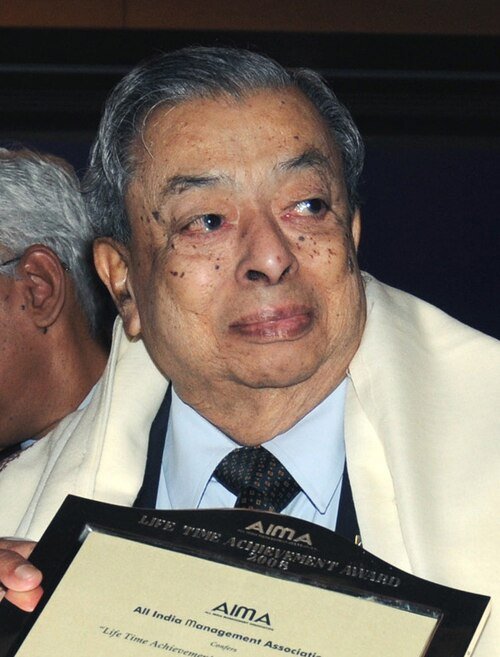
The text is a personal letter headed “TO MY GRANDSON”, written from Anand, 2005, beginning “My dear Siddharth” and ending “With my fondest love, (V Kurien)”. Kurien explains why he chose a life of service to India’s farmers and what values he wants his grandson to live by.
10.1 The letter, idea by idea
10.2 The careers he gave up
Metallurgy
He could have become “the chief executive of a large company”.
The Army
A commission in the Indian Army, “and maybe retired as a general”.
Abroad
Gone to the US and become “a highly successful NRI”.
His choice
Anand, Gujarat: “I could make a more meaningful contribution by working here”.
10.3 Key lines to quote
| Idea | Kurien’s words |
|---|---|
| Integrity | “integrity—and personal integrity, at that—is being honest to yourself. If you are always honest to yourself, it does not take much effort in always being honest with others.” |
| Life | “Life is a privilege and to waste it would be wrong.” Accept responsibility, use your talents “to the best of your ability” and “contribute somehow to the common good”. |
| The common good | “your friend may need some help, your teacher could be looking for a volunteer, or the community you live in will need you to make a contribution.” |
| Failure | “failure is not about not succeeding. Rather, it is about not putting in your best effort and not contributing, however modestly, to the common good.” |
| Happiness | “there is little correlation between the circumstances of people’s lives and how happy they are.” Those we envy show “only images of perfection”, so we should “cherish what we have”. |
| A full life | “if we are brave enough to love, strong enough to rejoice in another’s happiness and wise enough to know that there is enough to go around for all, then we would have lived our lives to the fullest.” |
| True rewards | “rewards that come to you then are the only true rewards for a life well-spent.” |
Selfless service gives life meaning and helps society for a long time. Kurien hopes Siddharth and “the millions of other children of your generation” will “work tirelessly in your chosen field for the larger good of the country, for the larger good of humanity”.
10.4 Glossary
| Word | Meaning | Word | Meaning |
|---|---|---|---|
| addicted | dependent on something | envisioned | imagined or expected something to happen in a particular way |
| fleeting | momentary or short-lived | ardently | in a way that shows strong feelings |
| abiding pleasure | a feeling of happiness that continues for a long time | poise | in a calm and confident manner |
| jottings | brief notes | adhered | to continue to support |
| foremost | leading | integrity | honest and strong moral principles |
| humility | modesty; the quality of being humble | correlation | a connection between two or more things |
| pursue | follow | musings | thoughts on something one has been thinking about carefully for a long time |
11 I Too Had A Dream: Grammar, Speaking and Writing
11.1 Fact and opinion
“A fact is something that can be proven true or false. A fact is not based on people’s beliefs. An opinion on the other hand is a belief, feeling or judgement, and can vary from one person to another. An opinion cannot be proven.”
Facts in the letter
- “I started my working life soon after our country became independent.”
- Tribhuvandas Patel was his mentor in Anand.
- The President awarded him the Padma Vibhushan in 1999.
Opinions in the letter
- The telephone gives “an immediate but fleeting joy”.
- “Life is a privilege, and to waste it would be wrong.”
- Failure “is not about not succeeding”.
11.2 Words and expressions
| From the text | Meaning / synonym |
|---|---|
| magnificent · fleeting · instant · core · valuable · abiding | splendid · momentary · swift · essential · useful · lifelong |
| in all humility | being humble and having no feeling of self-importance |
| hold their heads high | be confident and have a positive feeling |
| to be quite honest | to speak in a truthful way |
| to the best of your ability | doing something using all your skills, talents, and knowledge |
| looked at in awe | observed with great respect and wonder |
| somewhere deep down | in the innermost part of the self |
11.3 Punctuation: en dash and em dash
A dash links words or numbers or creates a pause. The shorter en dash “represents a span or range in numbers or dates” (June to September, pages 50 to 75, a score of 2 to 1). The longer em dash “is used to add extra information or to show a change in thought within a sentence”. Do not add spaces around the dash and avoid overusing it.
11.4 It’s / its, you’re / your, they’re / their
| Word | What it is | Book’s example |
|---|---|---|
| it’s | contraction of “it is” or “it has” | It’s getting dark outside. |
| its | shows possession | The dog wagged its tail. |
| you’re | contraction of “you are” | You’re going to love this book. |
| your | shows possession | Can I have one of your books? |
| they’re | contraction of “they are” | They’re coming to the field trip. |
| their | shows possession | We should contact their manager. |
Prepositional phrases “are groups of words that begin with a preposition and include a noun or pronoun as the object of the preposition.” They give information about time, place, manner, cause, direction or relationship. Examples from the text: “In today’s fast-paced world”, “On the telephone”, “With great, abiding pleasure”, “With equal respect and love”.
11.5 Speaking: stress and sounds
| Point | Examples |
|---|---|
| Noun: stress on the 1st syllable; verb: stress on the 2nd | PREsent / preSENT · PROduce / proDUCE · CONtract / conTRACT · PROject / proJECT · CONtent / conTENT · REfuse / reFUSE |
| -sure as ‘zhuh’ | treasure, pleasure, measure, leisure, seizure, enclosure, composure, exposure |
| -sure as ‘shuh’ | pressure, ensure, reassure, fissure, unsure |
| Pausing and chunking | Split speech into groups with a short pause (/) or long pause (//): “When things go wrong,/ as they sometimes will,//” (Don’t Quit, Edgar Albert Guest) |
11.6 Listening: Evelyn Glennie
Evelyn Glennie’s hearing loss was gradual; by 11 her school work had suffered and her headmistress urged her parents to take her to a specialist, who found gradual nerve damage. She saw a girl playing a xylophone and wanted to play it too. Most teachers discouraged her, but percussionist Ron Forbes spotted her potential, tuning two drums to different notes and telling her, “Don’t listen through your ears… try to sense it some other way.” She learnt to feel sounds and vibrations through her body and became “the world’s most sought-after multi percussionist with a mastery of some thousand instruments”.
11.7 Writing: informal letter to grandparents
11.8 Explore: three revolutions and two schemes
| Topic | What the book says |
|---|---|
| White Revolution | Increase in milk production, mainly due to Dr Verghese Kurien, “the Milkman of India” |
| Green Revolution | High-yielding wheat and rice; initiated by Dr M.S. Swaminathan (Padma Shri 1967, Padma Bhushan 1972, Padma Vibhushan 1989, Bharat Ratna 2024) |
| Blue Revolution | Fisheries production; led by Dr Hiralal Chaudhuri |
| Jan Shikshan Sansthan (JSS) | Vocational training for rural people, under the Ministry of Skill Development and Entrepreneurship |
| Financial literacy | Understanding money, saving, budgeting and wise spending; telling needs from wants; comparing prices |
12 Quick Revision
- Major Somnath Sharma (born 31 January 1923, Dadh, Kangra) was India’s first Param Vir Chakra awardee, awarded posthumously; he died at 24.
- Operation Gulmarg (Pakistan) aimed to annex the Kashmir Valley; the Princely State became part of India on 26 October 1947; troops airlifted on 27 October because the Pathankot route was poor.
- On 03 November 1947 D Company (90 men, 4th Battalion, Kumaon Regiment) faced about 500 invaders at Badgam, under 5 km from the Srinagar airport.
- He spotted the first attack as a distraction, called air strikes with ground panels, filled magazines, refused to withdraw “an inch”, and was killed by a mortar shell; his men held on for over six more hours; Srinagar was saved.
- Grammar: subject-verb agreement, collective nouns (regiment, squadron, fleet, battalion), overthrow/overrun/overwhelm, advice/advise; writing: letter of enquiry.
- Somebody’s Mother (Mary Dow Brine): couplets, AABB, sympathetic and hopeful; theme kindness and empathy; simile “like a flock of sheep”; repetition “somebody’s mother”; ‘lest’ = just in case.
- Verghese Kurien’s letter (Anand, 2005) to Siddharth: writing gives abiding pleasure; he chose a dairy cooperative over metallurgy, the Army or the US; integrity is being honest to yourself; life is a privilege; failure is not giving your best.
- Grammar: fact vs opinion, en dash (range) vs em dash (extra information), it’s/its, prepositional phrases; speaking: PREsent/preSENT, -sure sounds, chunking.