1What Are Tertiary Activities?
You go to a doctor when you fall ill, a teacher teaches you in school, and a lawyer gives legal advice when there is a dispute. None of these people make a physical object. They sell you a service instead, using their own skill, training and experience. This whole group of skill-based, paid services is called the tertiary sector or the service sector.
Tertiary activities are economic activities that provide services rather than produce physical goods. They involve both the production of a service (which is “consumed” as it is provided, and paid for as wages or fees) and the exchange of goods and services through trade, transport and communication, which help overcome distance.
Common tertiary workers: a plumber, electrician, technician, launderer, barber, shopkeeper, driver, cashier, teacher, doctor, lawyer, publisher.
1.1 Tertiary vs Secondary Activities
Secondary activities
- Produce a physical, tangible good
- Value depends on machines, factories and production technique
- Example: a factory manufacturing cloth
Tertiary activities
- Provide a service, not a physical good
- Value depends on the worker’s skill, experience and knowledge
- Example: a shop selling the cloth to a customer
2Trade and Commerce
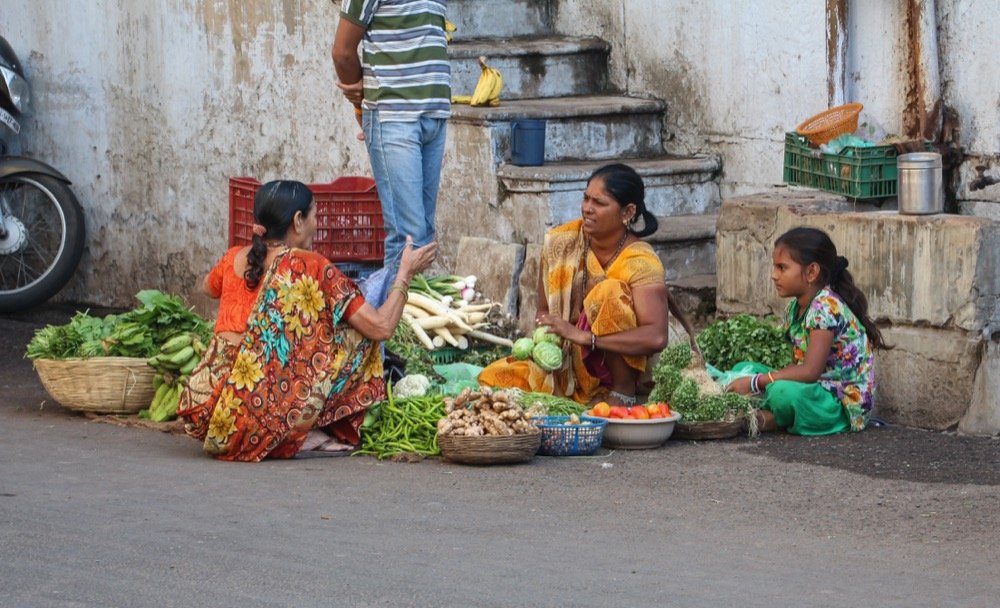
Trade is the buying and selling of items produced elsewhere, done specifically for profit, through retail and wholesale trading or commerce. The towns and cities where this happens are called trading centres. Trading grew from local barter to international money exchange, creating trading centres and collection-distribution points.
2.1 Rural and urban marketing centres
| Rural marketing centres | Urban marketing centres |
|---|---|
| Serve nearby settlements; “quasi-urban” (not fully urban) | More widely specialised urban services |
| Most rudimentary type of trading centre | Ordinary goods and services, plus specialised ones people want |
| Personal and professional services not well developed | Manufactured goods and specialised markets: labour, housing, semi/finished products |
| Local collecting and distributing centres, with mandis (wholesale markets) and retailing areas | Educational institutions and professionals: teachers, lawyers, consultants, physicians, dentists, vets |
Periodic markets are a favourite 1-mark/3-mark topic. In rural areas with no regular market, local periodic markets are held weekly or bi-weekly, on fixed dates, moving from place to place, so people from the surrounding area can meet demand built up over time. The shopkeepers stay busy on all days while serving a wide area.
2.2 Retail trading
Retail trading is the business of selling goods directly to consumers, mostly through fixed stores or establishments devoted only to selling.
Non-store retailing examples: street peddling, handcarts, trucks, door-to-door selling, mail-order, telephone selling, automatic vending machines, and the internet.
Consumer cooperatives
The first large-scale innovation in retailing.
Departmental stores
Delegate purchasing and sales authority to department heads for each section.
Chain stores
Buy in bulk very economically, sometimes even directing manufacture to their own specification. They test an idea in one store and roll it out to many.
2.3 Wholesale trading
Wholesale trading is bulk business carried out through intermediary merchants and supply houses, not through retail stores. Some large or chain stores buy directly from manufacturers, but most retail stores get supplies through a middleman. Wholesalers often extend credit to retailers, so much so that a retailer often runs largely on the wholesaler’s capital.
3Transport
Transport is a service or facility by which people, materials and manufactured goods are physically carried from one place to another. It is an organised industry built to meet people’s basic need for mobility, and it adds value to goods at every stage of production, distribution and consumption.
| Way of measuring transport distance | What it means |
|---|---|
| Km distance | The actual distance, or length, of the route |
| Time distance | The time taken to travel a particular route |
| Cost distance | The expense of travelling on a route |
When people choose how to travel, distance in terms of time or cost is usually the deciding factor. Isochrone lines are drawn on a map to join places that take an equal amount of time to reach.
As transport systems grow, places link up into a network, made of nodes and links. A node is a meeting point of two or more routes: an origin, a destination, or any sizeable town along a route. A link is every road that joins two nodes. A well-developed network has many links, meaning the places on it are well connected.
Factors affecting transport demand and routes: demand rises with population size (bigger population, greater demand). Routes depend on the location of cities, towns, villages, industries and raw materials; the pattern of trade between them; the nature of the landscape in between; the type of climate; and the funds available to overcome obstacles along the route.
4Communication
Communication services transmit words, messages, facts and ideas. Writing was the first invention that preserved messages, and it made communication depend on the means of transport (carried by hand, animals, boat, road, rail, air). This is exactly why all forms of transport are also called lines of communication. Where the transport network is efficient, communication spreads easily.
Mobile telephony and satellites have since made communication independent of transport, but old systems are so cheap that huge volumes of mail are still handled by post offices worldwide.
4.1 Types of communication services
Telecommunications
Linked to modern technology; cut message time from weeks to minutes. Mobile telephony makes communication direct and instant from anywhere. The telegraph, Morse code and telex are now almost obsolete.
Radio and television
Called mass media: they relay news, pictures and calls to huge audiences, and are vital for advertising and entertainment.
Newspapers and satellites
Newspapers cover events from every corner of the world. Satellite communication relays information between Earth and space.
The internet
Has genuinely revolutionised the whole global communication system.
5Services
Services occur at different levels: geared to industry, to people, or to both (like the transport system). Low-order services (grocery shops, laundries) are common and widespread. High-order services (accountants, consultants, physicians) are more specialised and less common. Some services are mainly physical labour (gardener, launderer, barber); others are mainly mental labour (teacher, lawyer, physician, musician).
“Regulated services” is asked as a direct 1-mark or 3-mark question. State/Union legislation has set up corporations to supervise and control services such as transport, telecommunication, energy and water supply. Governments or companies also supervise highways, bridges, fire departments, education and customer care.
Professional services: health care, engineering, law, management. The location of recreational and entertainment services depends on the market: a multiplex or restaurant may sit within or near the Central Business District (CBD), while a golf course chooses a site where land is cheaper than in the CBD.
Personal services make daily life easier for people. Unskilled workers who migrate from rural areas for work are employed in domestic services as housekeepers, cooks and gardeners; this segment of workers is largely unorganised.
6People Engaged in Tertiary Activities
Today most people, worldwide, are service workers; services exist in every society. But in more developed countries a higher percentage of workers is employed in services than in less developed countries. Employment in this sector keeps rising, while it has stayed unchanged or fallen in the primary and secondary sectors.
7Tourism, the World’s Largest Tertiary Activity
Tourism is travel undertaken for recreation, not business.
Tourism employs local people for accommodation, meals, transport, entertainment and special shops, and fosters infrastructure industries, retail trading and craft industries (souvenirs). It is seasonal in some regions, where the vacation period depends on the weather, but attracts visitors all year round in others.
7.1 Tourist regions and what attracts tourists
Popular tourist destinations include the warmer Mediterranean coast and the West Coast of India, winter sports regions in mountainous areas, scenic landscapes and national parks, and historic towns (for their monuments, heritage sites and cultural activities).
| Attraction | What draws tourists |
|---|---|
| Climate | Warm, sunny weather for beach holidays is the main reason for Southern Europe and Mediterranean tourism: long sunshine, low rainfall and high temperature through the peak season. Winter-holiday tourists want either higher temperatures than home, or snow cover for skiing. |
| Landscape | Mountains, lakes, spectacular sea coasts, landscapes not completely altered by people |
| History and art | Ancient or picturesque towns, archaeological sites, castles, palaces, churches |
| Culture and economy | Ethnic and local customs; cheap-cost regions become very popular; home-stay is a profitable business, for example heritage homes in Goa, and in Madikere and Coorg (Karnataka) |
7.2 Medical tourism
Medical tourism is what it is called when medical treatment is combined with international tourism.
About 55,000 US patients visited India for treatment in 2005. This is small next to the millions of surgeries done yearly in the US healthcare system, but India has become the world’s leading medical-tourism country, with world-class hospitals in its metropolitan cities treating patients from all over the world. Medical tourism brings big benefits to developing countries like India, Thailand, Singapore and Malaysia. Beyond treatment itself, hospitals in India, Switzerland and Australia also do outsourced medical tests and data interpretation, reading radiology images, interpreting MRIs, and running ultrasound tests. This kind of outsourcing helps patients when it is focused on quality or specialised care.
8Quaternary Activities
What does the CEO of a multinational company in Copenhagen or New York have in common with a medical transcriptionist in Bangalore? Both work in the knowledge-oriented segment of the service sector, which is divided into quaternary and quinary activities.
Quaternary activities involve the collection, production and dissemination of information, or even the production of information itself. They are centred on research and development, and are an advanced form of services needing specialised knowledge and technical skill. They are not tied to resources, not affected by the environment, and not necessarily localised by market. So, like tertiary activities, they can be outsourced.
Together with the tertiary sector, the quaternary sector has replaced most primary and secondary employment as the basis of economic growth. Over half of all workers in developed economies are in the “Knowledge Sector”: mutual fund managers, tax consultants, software developers, statisticians. Workers in office buildings, elementary schools, university classrooms, hospitals, doctors’ offices, theatres, and accounting/brokerage firms all belong here.
Outsourcing (contracting out) means giving work to an outside agency to improve efficiency and cut costs. When the work goes to an overseas location, it is called off-shoring; the two terms are often used together. IT, human resources, customer support, call centres, and sometimes manufacturing and engineering are commonly outsourced.
Data processing is an IT-related service that is easily outsourced to Asian, East European and African countries, where IT-skilled staff with good English are available at lower wages. For example, a company in Hyderabad or Manila might do a GIS (Geographical Information System) project for a client in the USA or Japan. Overhead costs there are much lower, so it stays profitable to get job-work done overseas, whether in India, China, or even a less-populous country like Botswana.
9Quinary Activities
Quinary activities are performed by the highest level of decision-makers or policy-makers. They are subtly different from general knowledge-based (quaternary) industries: they focus on the creation, re-arrangement and interpretation of new and existing ideas, on data interpretation, and on the use and evaluation of new technologies. Often called “gold collar” professions, they are a subdivision of the tertiary sector representing the special, highly paid skills of senior business executives, government officials, research scientists, and financial and legal consultants. Their importance in advanced economies far outweighs their numbers.
Outsourcing has opened up large numbers of call centres in India, China, Eastern Europe, Israel, the Philippines and Costa Rica, creating new jobs. These are also out-migrating countries, so work from outsourcing may reduce migration from them. At the same time, outsourcing countries face resistance from job-seeking youth at home. Comparative advantage is the main reason outsourcing continues.
New trends in quinary services: Knowledge Process Outsourcing (KPO) and “home-shoring” (an alternative to outsourcing). KPO is different from Business Process Outsourcing (BPO) because it involves highly skilled workers doing information-driven knowledge outsourcing, which lets companies create additional business opportunities. Examples of KPO: research and development (R&D), e-learning, business research, intellectual property (IP) research, the legal profession, and banking.
10The Digital Divide
The digital divide is the unequal distribution, across the globe, of the opportunities that come from Information and Communication Technology (ICT) based development. The deciding factor is how quickly a country can give its citizens ICT access and its benefits. Developed countries have surged ahead while developing countries have lagged behind.
The digital divide exists within countries too. In a large country like India or Russia, metropolitan centres inevitably have better connectivity and access to the digital world than peripheral rural areas.
- Tertiary activities sell services, not goods; their value comes from the worker’s skill, not from machines
- Trade runs through rural and urban marketing centres, periodic markets, and retail vs wholesale trading
- Transport distance is measured three ways: km, time and cost; networks are built from nodes and links
- Communication used to depend on transport; mobile phones and satellites freed it, but old systems stay cheap and busy
- Services range from low-order (grocery) to high-order (consultants), and are regulated, professional, recreational or personal
- Tourism is the world’s single largest tertiary activity by jobs and revenue; medical tourism is its fast-growing branch in India
- Quaternary means information and research work; quinary means top decision-makers, the “gold collar” professions; both can be outsourced
- KPO needs highly skilled workers and is different from ordinary BPO
- The digital divide separates countries by ICT access, and separates cities from rural areas within a country too
- Can I list the three ways of measuring transport distance?
- Can I explain the difference between quaternary and quinary activities in my own words?
- Can I name the book’s own examples: the dabbawala service, Botswana, Goa/Madikere/Coorg home-stays?
- Can I define node, link, CBD, off-shoring and KPO without looking?
- 1 markWhich one of the following is a tertiary activity?
(a) Farming(b) Trading(c) Weaving(d) Hunting - 1 markWhich one of the following activities is NOT a secondary-sector activity?
(a) Iron smelting(b) Catching fish(c) Making garments(d) Basket weaving - 1 markWhich sector provides most of the employment in Delhi, Mumbai, Chennai and Kolkata?
(a) Primary(b) Quaternary(c) Secondary(d) Service - 1 markJobs that involve a high degree and level of innovation are known as:
(a) Secondary activities(b) Quaternary activities(c) Quinary activities(d) Primary activities - 1 markWhich one of the following activities is related to the quaternary sector?
(a) Manufacturing computers(b) Paper and raw-pulp production(c) University teaching(d) Printing books - 1 markWhich one of the following statements is NOT true?
(a) Outsourcing reduces costs and increases efficiency(b) Engineering and manufacturing jobs can also be outsourced(c) BPOs have better business opportunities than KPOs(d) There may be dissatisfaction among job seekers in outsourcing countries - 1 markA road that joins two nodes in a transport network is called a:
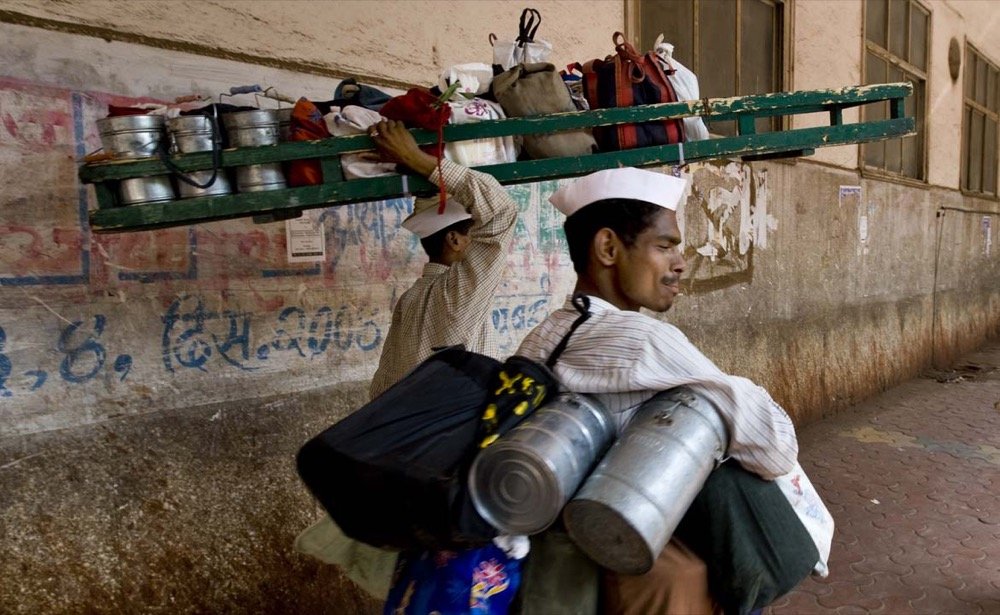
(a) Link(b) Node(c) Isochrone(d) CBD - 1 markMumbai’s dabbawala service is the book’s own example of a:
(a) Regulated service(b) Personal service(c) Quinary activity(d) Professional service
Reason (R): In selecting a mode of transport, distance in terms of time or cost is usually the determining factor.
Reason (R): KPO involves highly skilled workers doing information-driven knowledge work, such as research, legal work and banking.
Reason (R): Very large volumes of mail are still handled by post offices worldwide because older communication systems remain cheap.
- 1 markDefine tertiary activities in one line.
- 1 markWhat is a node in a transport network?
- 1 markName the two divisions of the knowledge-oriented segment of the service sector.
- 1 markWhat does CBD stand for?
- 1 markWhy are all forms of transport also called “lines of communication”?
- 1 markWhat is off-shoring?
- 3 marksExplain retail trading as a service.
- 3 marksDescribe quaternary services.
- 3 marksName the fast-emerging countries of medical tourism in the world.
- 3 marksWhat is the digital divide?
- 3 marksDistinguish between rural and urban marketing centres.
- 3 marksWhat are periodic markets? Why are they held?
- 3 marksExplain the three ways of measuring transport distance.
- 3 marksWhat is meant by “gold collar” professions?
- 3 marksDistinguish between KPO and BPO.
- 3 marksWhy does the location of recreational services like a golf course differ from that of a multiplex?
- 5 marksDiscuss the significance and growth of the service sector in modern economic development.
- 5 marksExplain in detail the significance of transport and communication services.
- 5 marksTourism has become the world’s single largest tertiary activity. Explain, with reference to the factors that attract tourists to a region.
- 5 marksDistinguish between quaternary and quinary activities, with examples of each.
- Find out, if a BPO is accessible near you, what activities it carries out.
- Ask a travel agent what documents are needed to travel abroad.