Pattern: CBSE 2026-27 official Sample Question Paper (SQP) design · Maximum marks: 80 · Time: 3 hours. Solve the paper first, then open the marking scheme at the end to check your answers.
SOCIAL SCIENCE (087)
General Instructions:
- This question paper contains 38 questions. All questions are compulsory.
- The question paper has four sections and contains Multiple Choice Questions (MCQ), Very Short Answer (VSA), Short Answer (SA), Long Answer (LA) and Case/Source Based Questions (CBQ).
• Section A: History, 20 marks • Section B: Geography, 20 marks
• Section C: Political Science, 20 marks • Section D: Economics, 20 marks - Very Short Answer (VSA) questions carry 2 marks each. The answer to each should not exceed 40 words.
- Short Answer (SA) questions carry 3 marks each. The answer to each should not exceed 60 words.
- Long Answer (LA) questions carry 5 marks each. The answer to each should not exceed 120 words.
- Case/Source Based Questions (CBQ) have three sub-questions and carry 4 marks each. The answer to each should not exceed 100 words.
- The map-based questions carry 5 marks in two parts: Q. 9 in Section A, History (2 marks) and Q. 19 in Section B, Geography (3 marks).
- There is no overall choice in the question paper. However, an internal choice has been given in a few questions. Attempt only one of the choices in such questions.
- Note: a separate question has been given for Visually Impaired candidates in place of questions with visual inputs, maps etc. Such questions are to be attempted by Visually Impaired candidates only.
(i) It was formed at the initiative of Prussia and was joined by most of the German states.
(ii) It abolished tariff barriers and reduced the number of currencies from over thirty to two.
(iii) It set up an elected parliament for all the German states.
(iv) The network of railways created at the time further stimulated mobility, harnessing economic interests to national unification.
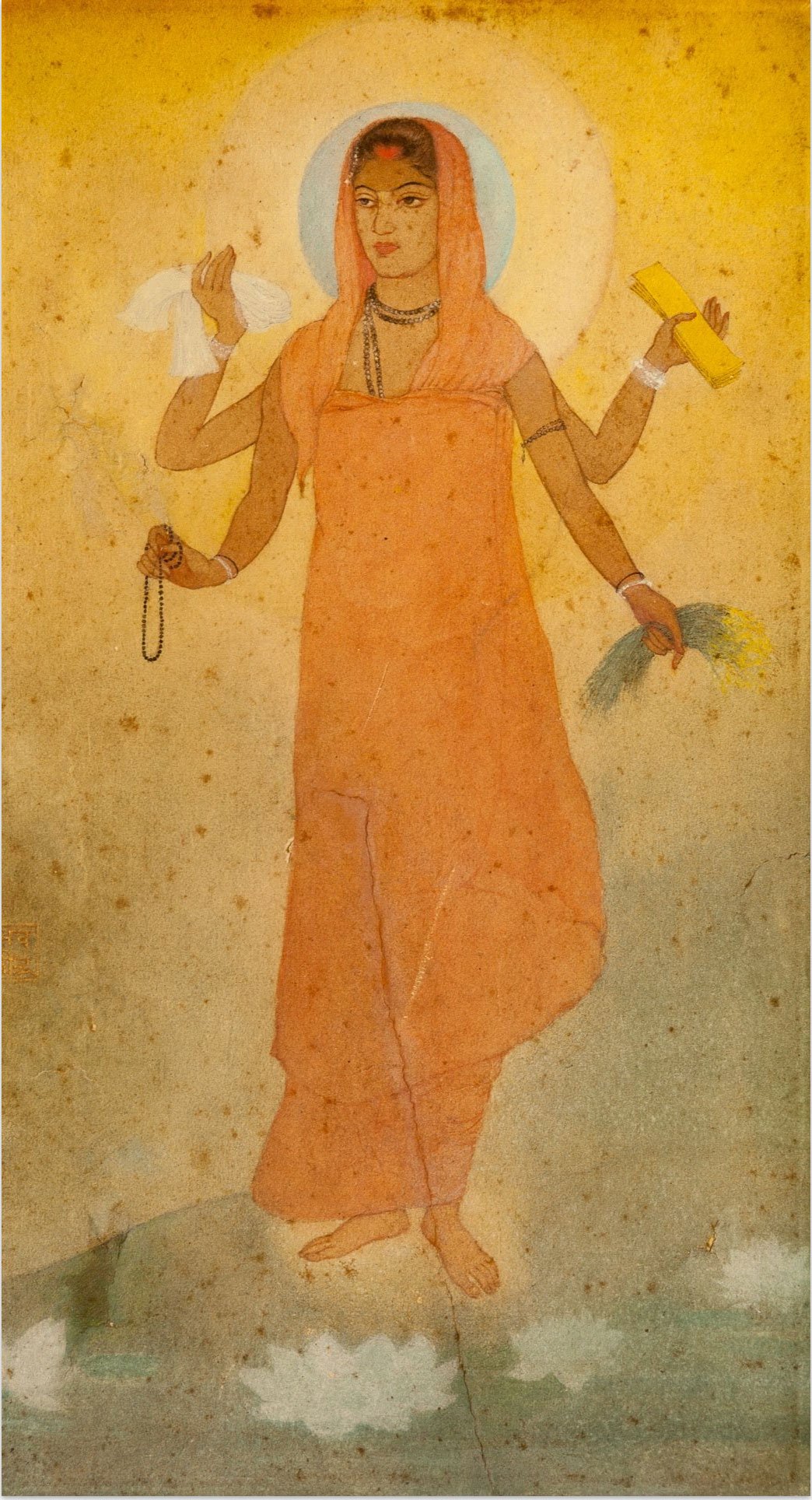
Who wrote ‘Vande Mataram’ as a hymn to the motherland in the 1870s, which was later included in his novel Anandamath?
Statement I: Until well into the eighteenth century, China and India were among the world’s richest countries and were pre-eminent in Asian trade.
Statement II: China’s reduced role and the rising importance of the Americas gradually moved the centre of world trade westwards, and Europe emerged as its centre.
(i) Gandhiji went to London for the Second Round Table Conference.
(ii) The Rowlatt Act was hurriedly passed through the Imperial Legislative Council.
(iii) The Simon Commission arrived in India and was greeted with the slogan ‘Go back Simon’.
(iv) Mahatma Gandhi returned to India from South Africa.
Choose the correct option:
In December 1929, under the presidency of Jawaharlal Nehru, the Lahore Congress formalised the demand of ‘Purna Swaraj’ or full independence for India. It was declared that 26 January 1930, would be celebrated as the Independence Day when people were to take a pledge to struggle for complete independence. But the celebrations attracted very little attention. So Mahatma Gandhi had to find a way to relate this abstract idea of freedom to more concrete issues of everyday life.
The Independence Day Pledge, 26 January 1930: ‘We believe that it is the inalienable right of the Indian people, as of any other people, to have freedom and to enjoy the fruits of their toil and have the necessities of life, so that they may have full opportunities of growth. We believe also that if any government deprives a people of these rights and oppresses them, the people have a further right to alter it or to abolish it. The British Government in India has not only deprived the Indian people of their freedom but has based itself on the exploitation of the masses, and has ruined India economically, politically, culturally, and spiritually. We believe, therefore, that India must sever the British connection and attain Purna Swaraj or Complete Independence.’
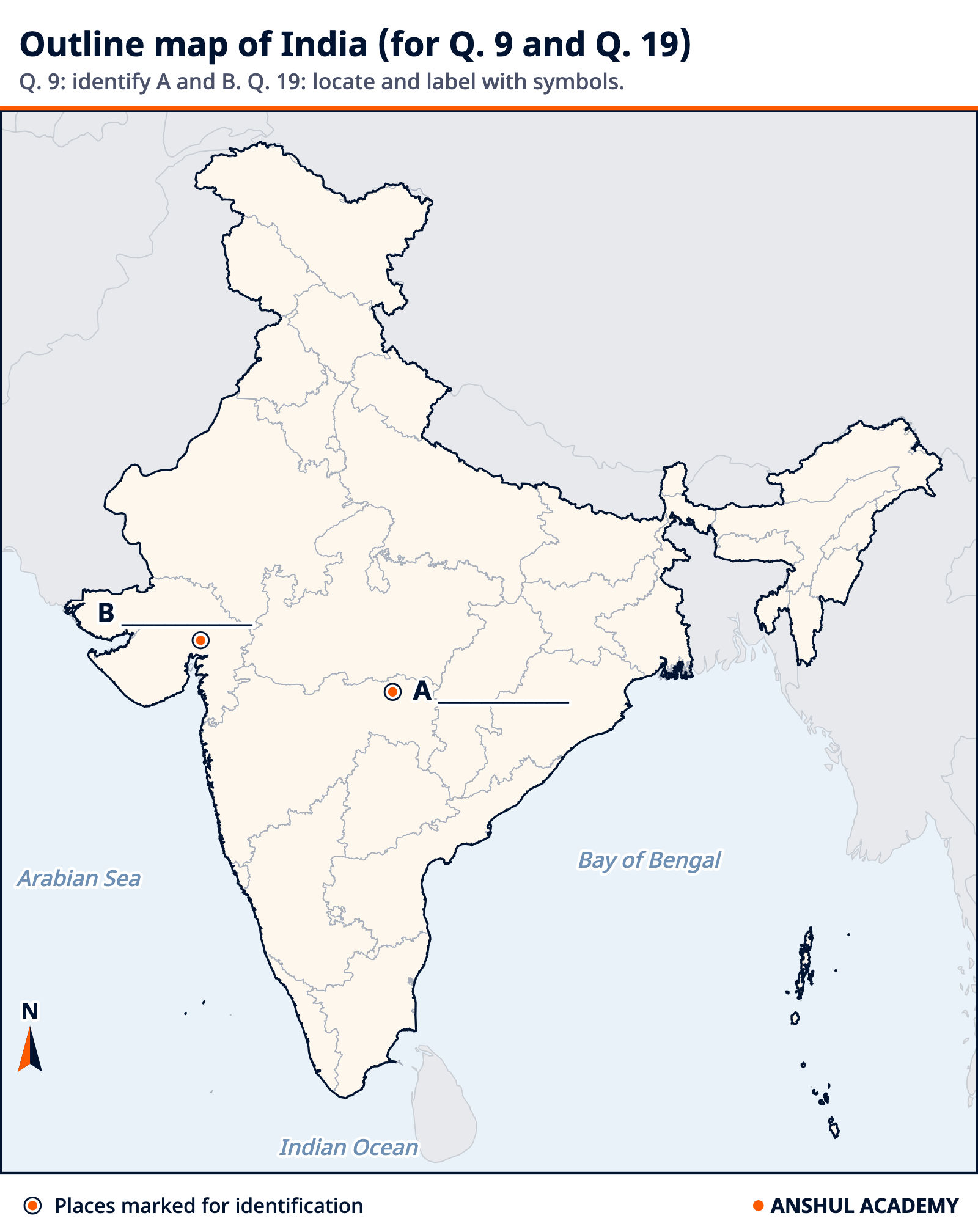
Two places A and B have been marked on the given outline map of India. Identify them and write their correct names on the lines drawn near them.
A. The place where, at the Congress session of December 1920, a compromise was worked out and the Non-Cooperation programme was adopted.
B. The district in Gujarat where, in 1918, Gandhiji organised a satyagraha to support peasants who could not pay the revenue after crop failure and a plague epidemic.
A. Name the city where, at the Congress session of September 1920, Gandhiji convinced other leaders of the need to start a non-cooperation movement in support of Khilafat as well as for swaraj.
B. Name the place in Bihar where Gandhiji travelled in 1917 to inspire the peasants to struggle against the oppressive plantation system.
Assertion (A): Several virgin forests in India have been preserved in pristine form as sacred groves, and any interference with them is banned.
Reason (R): Nature worship is an age-old tribal belief based on the premise that all creations of nature have to be protected.
(i) It is a 200-year-old system of tapping stream and spring water by using bamboo pipes.
(ii) Water is pumped up from rivers in the valleys to the fields on the hilltops.
(iii) About 18-20 litres of water enters the bamboo pipe system and finally reduces to 20-80 drops per minute at the site of the plant.
(iv) The flow of water into the pipes is controlled by manipulating the pipe positions.
| Column I (Place) | Column II (Resource) |
|---|---|
| 1. Panchpatmali (Koraput district, Odisha) | X. Petroleum |
| 2. Neyveli (Tamil Nadu) | Y. Bauxite |
| 3. Ankeleshwar (Gujarat) | Z. Lignite |
Choose the correct option:
The growing consumption of energy has resulted in the country becoming increasingly dependent on fossil fuels such as coal, oil and gas. Rising prices of oil and gas and their potential shortages have raised uncertainties about the security of energy supply in future, which in turn has serious repercussions on the growth of the national economy. Moreover, increasing use of fossil fuels also causes serious environmental problems. Hence, there is a pressing need to use renewable energy sources like solar energy, wind, tide, biomass and energy from waste material. These are called non-conventional energy sources. India is blessed with an abundance of sunlight, water, wind and biomass. It has the largest programmes for the development of these renewable energy resources.
On the given outline map of India, locate and label the following with suitable symbols:
I. (a) The dam built on the Krishna river on the border of Telangana and Andhra Pradesh 1
OR
(b) The dam built on the Mahanadi river in Odisha
II. Any two of the following: 1 × 2 = 2
(i) A nuclear power plant in Uttar Pradesh
(ii) A cotton textile centre in Madhya Pradesh
(iii) A major sea port in Odisha
Answer any three of the following:
(i) Name the dam built on the Mahanadi river in Odisha.
(ii) Name the nuclear power plant located in Uttar Pradesh.
(iii) Name an important cotton textile centre located in Madhya Pradesh.
(iv) Name the major sea port located in Odisha.
Assertion (A): In modern India, the old notions of caste hierarchy are breaking down.
Reason (R): Economic development, large-scale urbanisation, growth of literacy and education, occupational mobility and the weakening of the position of landlords in the villages have brought great changes in the caste system.
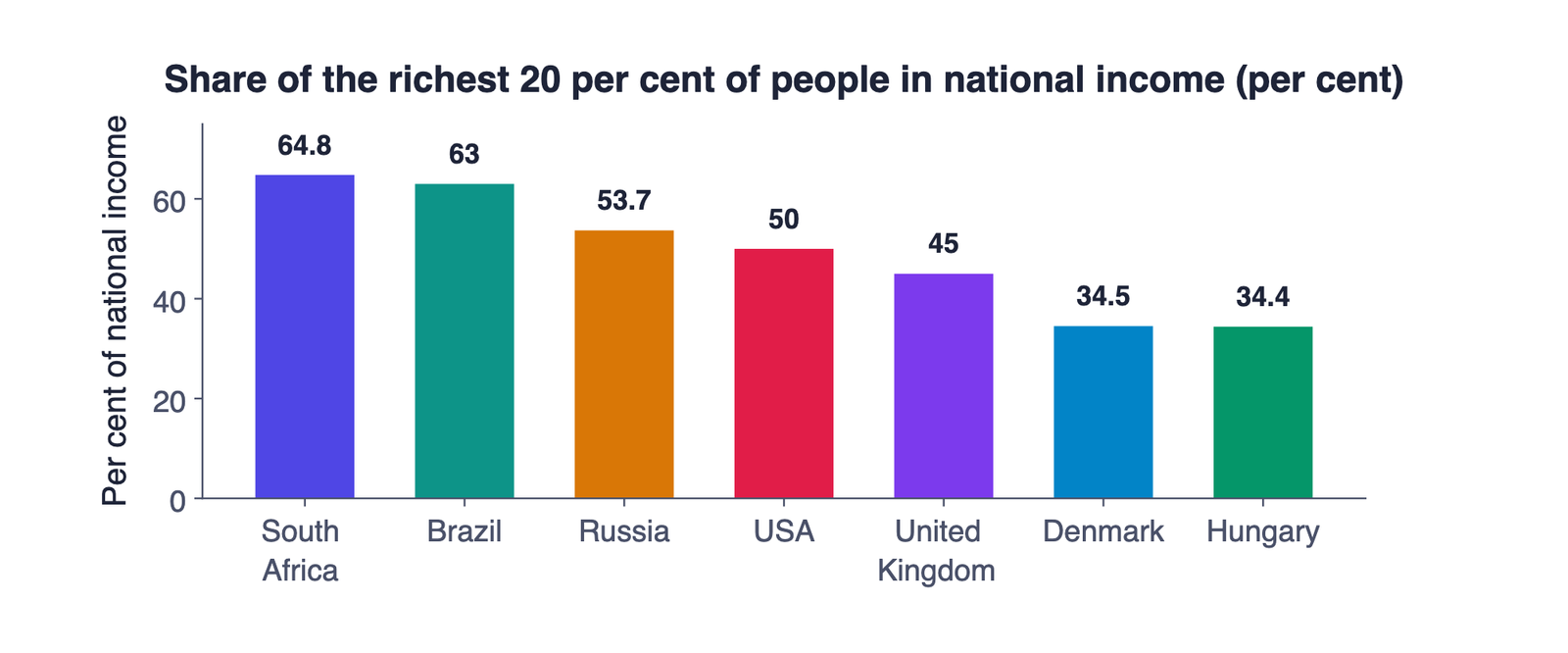
What does the evidence on rates of economic growth (1950-2000) given in the textbook show?
Communalism was and continues to be one of the major challenges to democracy in our country. The makers of our Constitution were aware of this challenge. That is why, they chose the model of a secular state. This choice was reflected in several constitutional provisions that we studied last year: There is no official religion for the Indian state. Unlike the status of Buddhism in Sri Lanka, that of Islam in Pakistan and that of Christianity in England, our Constitution does not give a special status to any religion. The Constitution provides to all individuals and communities freedom to profess, practice and propagate any religion, or not to follow any. The Constitution prohibits discrimination on grounds of religion. At the same time, the Constitution allows the state to intervene in the matters of religion in order to ensure equality within religious communities. For example, it bans untouchability. Understood in this sense, secularism is not just an ideology of some parties or persons. This idea constitutes one of the foundations of our country. Communalism should not be seen as a threat to some people in India. It threatens the very idea of India. That is why communalism needs to be combated. A secular Constitution like ours is necessary but not sufficient to combat communalism. Communal prejudices and propaganda need to be countered in everyday life and religion-based mobilisation needs to be countered in the arena of politics.
Statement I: Under MGNREGA 2005, all those who were able to, and were in need of, work in rural areas were guaranteed 100 days of employment in a year by the government.
Statement II: In 2025, MGNREGA 2005 was replaced by the Viksit Bharat-Guarantee for Rozgar and Ajeevika Mission (Viksit Bharat-G RAM G 2025).
Assertion (A): In rural areas, the main demand for credit is for crop production.
Reason (R): Repayment of a crop loan is crucially dependent on the income from farming.
| Source | Per cent | Source | Per cent |
|---|---|---|---|
| Commercial banks | 51 | Moneylenders | 23 |
| Cooperative banks and societies | 10 | Relatives and friends | 7 |
| Other formal agencies | 5 | Landlords | 1 |
| Other informal agencies | 3 |
Data: NCERT, Understanding Economic Development, Chapter 3, Graph 1
(i) According to the table, what percentage of the loans of rural households came from formal sources in 2019? 1
(ii) Distinguish between formal and informal sources of credit on any two points. 2
(iii) The textbook says that 54 per cent of the loans of poor urban households come from informal sources, against only 17 per cent for rich urban households. What two conclusions can be drawn from this? 2
(i) ‘What may be development for one may not be development for the other.’ Explain the statement with two examples. 2
(ii) ‘Besides seeking more income, one-way or the other, people also seek things like equal treatment, freedom, security, and respect of others.’ Explain this statement with three points. 3
Map for Q. No. 9 (Section A) and Q. No. 19 (Section B)
Marking Scheme / अंकन योजना (उत्तर देखें)
SOCIAL SCIENCE (087)
For examiners and students:
- For objective questions, both the letter of the correct option and the answer are given.
- For descriptive questions, value points are given. ‘Any two/three/five’ means full marks for that many correct points from those listed.
- Any other relevant point based on the textbook is also accepted, where this is stated.
- The potato came to Europe from America after Columbus reached the Americas; with its introduction, Europe’s poor began to eat better and live longer. (1)
- Ireland’s poorest peasants became so dependent on potatoes that when disease destroyed the potato crop in the mid-1840s, hundreds of thousands died of starvation (the Irish Potato Famine). (1)
- Many dalit leaders wanted a political solution to the problems of the community: reserved seats in educational institutions and a separate electorate to choose dalit members for legislative councils; they believed political empowerment would resolve their social disabilities. Dr Ambedkar, who organised the dalits into the Depressed Classes Association in 1930, demanded separate electorates at the Second Round Table Conference. (1)
- Gandhiji believed that separate electorates for dalits would slow down the process of their integration into society; when the British government conceded Ambedkar’s demand, he began a fast unto death. (1)
- Ambedkar ultimately accepted Gandhiji’s position, and the result was the Poona Pact of September 1932: the Depressed Classes (later the Scheduled Castes) got reserved seats in provincial and central legislative councils, but they were to be voted in by the general electorate. (1)
- Romanticism: Romantic artists and poets criticised the glorification of reason and science and focused on emotions, intuition and mystical feelings, to create a sense of a shared collective heritage and a common cultural past as the basis of a nation.
- Folk culture: Johann Gottfried Herder claimed that true German culture was to be discovered among the common people (das volk); through folk songs, folk poetry and folk dances the true spirit of the nation (volksgeist) was popularised, and vernacular language and folklore carried the nationalist message to a largely illiterate audience.
- Music in Poland: though Poland no longer existed as an independent territory, Karol Kurpinski celebrated the national struggle through his operas and music, turning folk dances like the polonaise and mazurka into nationalist symbols.
- Language in Poland: after the 1831 rebellion against Russian rule was crushed, the clergy used Polish for Church gatherings and religious instruction; its use became a symbol of the struggle against Russian dominance.
- The Grimm brothers: they collected old folktales, which they saw as expressions of a pure German spirit, and published a 33-volume German dictionary, as part of the effort to oppose French domination and create a German national identity.
- By the 1820s the Calcutta Supreme Court passed regulations to control press freedom, and the Company encouraged newspapers that would celebrate British rule.
- In 1835, faced with urgent petitions by editors of English and vernacular newspapers, Governor-General Bentinck agreed to revise press laws; Thomas Macaulay formulated new rules that restored the earlier freedoms.
- After the revolt of 1857 the attitude changed: enraged Englishmen demanded a clampdown on the ‘native’ press, and as vernacular newspapers became assertively nationalist, the government debated stringent control.
- The Vernacular Press Act of 1878, modelled on the Irish Press Laws, gave the government extensive rights to censor reports and editorials; a newspaper judged seditious was warned, and if the warning was ignored the press could be seized and the printing machinery confiscated.
- Despite repression, nationalist newspapers grew in numbers in all parts of India; they reported on colonial misrule and encouraged nationalist activities, and attempts to throttle criticism provoked militant protest and a renewed cycle of persecution and protests.
- When Balgangadhar Tilak wrote with great sympathy in his Kesari about the Punjab revolutionaries deported in 1907, he was imprisoned in 1908, which provoked widespread protests all over India.
- Italy had a long history of political fragmentation: in the middle of the century it was divided into seven states, and only Sardinia-Piedmont was ruled by an Italian princely house; the north was under the Austrian Habsburgs, the centre under the Pope and the south under the Bourbon kings of Spain.
- Mazzini: during the 1830s he sought to put together a coherent programme for a unitary Italian Republic and formed the secret society Young Italy to spread his goals; the failure of the uprisings of 1831 and 1848 meant the task now fell on Sardinia-Piedmont under King Victor Emmanuel II, to unify the states through war.
- Cavour: the Chief Minister who led the movement was neither a revolutionary nor a democrat; through a tactful diplomatic alliance with France he helped Sardinia-Piedmont defeat the Austrian forces in 1859.
- Garibaldi: a large number of armed volunteers under his leadership joined the fight; in 1860 they marched into South Italy and the Kingdom of the Two Sicilies and won the support of the local peasants to drive out the Spanish rulers.
- In 1861 Victor Emmanuel II was proclaimed king of united Italy; yet much of the population, with very high rates of illiteracy, was unaware of liberal-nationalist ideology (peasants in the south believed ‘La Talia’ was Victor Emmanuel’s wife).
- Jawaharlal Nehru (December 1929).
- The people have a further right to alter that government or to abolish it.
- Purna Swaraj was an abstract idea of freedom; to bring the masses into the struggle it had to be related to concrete issues of everyday life that people could identify with. (1)
- Salt was consumed by the rich and the poor alike and was one of the most essential items of food; the tax on salt and the government monopoly over its production revealed the most oppressive face of British rule, so it could unite the nation (the demand to abolish the salt tax was among Gandhiji’s eleven demands to Viceroy Irwin, leading to the Salt March). (1)
- Poaching for trade: the trade of tiger skins and the use of their bones in traditional medicines, especially in Asian countries, left the tiger on the verge of extinction; India and Nepal, home to about two-thirds of the surviving tigers, became prime targets for poaching and illegal trading.
- Shrinking habitat and the depletion of prey base species.
- Growing human population.
- Basic industry: all other industries, heavy, medium and light, depend on it for their machinery; steel is needed for engineering goods, construction material, defence, medical, telephonic and scientific equipment and consumer goods, and its production and consumption is often regarded as the index of a country’s development. (1)
- Heavy industry: all the raw materials as well as the finished goods are heavy and bulky, entailing heavy transportation costs; iron ore, coking coal and limestone are needed in the ratio of about 4 : 2 : 1, with some manganese to harden the steel. (1)
- Chhotanagpur (any three of four): low cost of iron ore.
- Chhotanagpur: high-grade raw materials in proximity.
- Chhotanagpur: cheap labour.
- Chhotanagpur: vast growth potential in the home market.
- Need: India has enormous diversity in the availability of resources; some regions are rich in certain resources but deficient in others, some are self-sufficient and some have an acute shortage of vital resources, so balanced resource planning is needed at the national, state, regional and local levels. (1)
- Examples: Jharkhand, Chhattisgarh and Madhya Pradesh are rich in minerals and coal; Arunachal Pradesh has abundant water but lacks infrastructure; Rajasthan is well endowed with solar and wind energy but lacks water; the cold desert of Ladakh has a rich cultural heritage but is deficient in water, infrastructure and some vital minerals. (1)
- Step 1: identification and inventory of resources across the regions of the country, through surveying, mapping and qualitative and quantitative estimation and measurement. (1)
- Step 2: evolving a planning structure endowed with appropriate technology, skill and institutional set up for implementing resource development plans. (1)
- Step 3: matching the resource development plans with overall national development plans. (1)
- Any two of sunlight, water, wind and biomass.
- Because of the growing consumption of energy, the country has become increasingly dependent on fossil fuels such as coal, oil and gas.
- Energy security and the economy: rising prices of oil and gas and their potential shortages have raised uncertainties about the future security of energy supply, which has serious repercussions on the growth of the national economy. (1)
- Environment: increasing use of fossil fuels causes serious environmental problems. (1)
- The country’s President must belong to the Maronite sect of Catholic Christians.
- The Prime Minister must be from the Sunni Muslim community.
- The post of Deputy Prime Minister is fixed for the Orthodox Christian sect and that of the Speaker for Shi’a Muslims.
- The Christians agreed not to seek French protection and the Muslims agreed not to seek unification with the neighbouring state of Syria.
- No one would be able to make any promises to the people about any major policy changes; the government may be formed, but its utility would remain ever uncertain.
- Elected representatives would be accountable to their constituency for what they do in the locality, but no one would be responsible for how the country will be run.
- Gram panchayat: each village, or group of villages, has a council of ward members (panch) and a president (sarpanch), directly elected by all the adult population of the ward or village; it is the decision-making body for the village and works under the overall supervision of the gram sabha (all voters of the village), which meets at least twice or thrice a year to approve its budget and review its performance. (1)
- Panchayat samiti (block or mandal): a few gram panchayats are grouped together to form it; its members are elected by all the panchayat members in that area. (1)
- Zilla (district) parishad: all the panchayat samitis in a district together constitute it; most members are elected, and the Lok Sabha members and MLAs of the district and some officials are also members; its chairperson is the political head. (1)
- One-party system: only one party is allowed to control and run the government, as the Communist Party in China; it is not a democratic option, because any democratic system must allow at least two parties to compete in elections with a fair chance of coming to power.
- Two-party system: power usually changes between two main parties; other parties may win a few seats, but only the two main parties have a serious chance of forming the government, as in the USA and the United Kingdom.
- Multiparty system: several parties compete and more than two have a reasonable chance of coming to power on their own or in alliance; governments are often coalitions, and parties form alliances or fronts (in 2004: the National Democratic Alliance, the United Progressive Alliance and the Left Front).
- The multiparty system often appears messy and leads to political instability, but it allows a variety of interests and opinions to enjoy political representation.
- A party system is not something a country can choose; it evolves over a long time, depending on the nature of society, its social and regional divisions, its history of politics and its system of elections.
- India has a multiparty system because the social and geographical diversity of such a large country is not easily absorbed by two or even three parties.
- Every individual wants respect from fellow beings; the passion for respect and freedom is the basis of democracy, and democracies throughout the world have recognised this, at least in principle, though it is not simple for societies long built on subordination and domination.
- Women: long struggles by women have created some sensitivity that respect and equal treatment of women are necessary ingredients of a democratic society; women are not always treated with respect, but once the principle is recognised it becomes easier for them to struggle against what is now legally and morally unacceptable.
- In a non-democratic set-up such unacceptability would have no legal basis, because the principle of individual freedom and dignity would not have legal and moral force there.
- Disadvantaged castes: democracy in India has strengthened the claims of the disadvantaged and discriminated castes for equal status and equal opportunity; caste-based inequalities and atrocities still occur, but they lack moral and legal foundations.
- Expectations: the examination of democracy never gets over; as people get some benefits, they ask for more, so complaints are themselves a testimony to its success: people have developed awareness and the ability to look critically at power holders.
- Democracy transforms people from the status of a subject into that of a citizen; most individuals today believe that their vote makes a difference to the way the government is run.
- Because communalism was, and continues to be, one of the major challenges to democracy in our country, and they were aware of this challenge.
- The Constitution bans untouchability (½); the state intervenes to ensure equality within religious communities (½).
- Constitutional provisions alone cannot remove communal prejudices and propaganda; these need to be countered in everyday life. (1)
- Religion-based mobilisation needs to be countered in the arena of politics; communalism threatens the very idea of India, so secularism must be one of the foundations of the country and not just the ideology of some parties or persons. (1)
- Cloth is the final good: the good that reaches the consumers; GDP is the value of all final goods and services produced within a country during a particular year. (1)
- Cotton and yarn are intermediate goods: they are used up in producing the final good. (1)
- The value of the final good already includes the value of all the intermediate goods used in making it; counting cotton and yarn separately would count the value of the same things a number of times (as in the textbook’s wheat, flour and biscuits example). (1)
- Banks keep only a small proportion of their deposits as cash with themselves (about 5 per cent in India these days), as provision to pay depositors who may come to withdraw money on any given day; since only some depositors come on a particular day, this is enough. (1)
- Banks use the major portion of the deposits to extend loans; in this way they mediate between those who have surplus funds (the depositors) and those who need these funds (the borrowers). (1)
- Banks charge a higher interest rate on loans than what they offer on deposits; the difference between what is charged from borrowers and what is paid to depositors is their main source of income. (1)
- Trade barrier: a restriction set up by the government on foreign trade or foreign investment; a tax on imports is one example (a limit on the number of goods that can be imported, a quota, is another). (1)
- Tax on imports: importers have to pay the tax, so buyers pay a higher price for imported goods; imports fall and domestic producers gain. In this way governments increase or decrease foreign trade and decide what kinds of goods, and how much of each, should come into the country. (1)
- Liberalisation: removing barriers or restrictions set by the government; businesses are allowed to make decisions freely about what they wish to import or export, and the government imposes far fewer restrictions than before. (1)
- (i) 66 per cent (commercial banks 51 + cooperatives 10 + other formal agencies 5); answer from the table. (1)
- (ii) Supervision: formal lenders (banks and cooperatives) are supervised by the Reserve Bank of India, which sees that they lend also to small cultivators, small-scale industries and small borrowers; no organisation supervises informal lenders (moneylenders, traders, employers, relatives and friends), who can lend at any interest rate and use unfair means to recover money. (1)
- (ii) Cost: most informal lenders charge a much higher interest on loans than formal lenders, so the cost of borrowing is much higher and can lead to a debt trap. (1)
- (iii) The rich households avail cheap credit from formal lenders, whereas the poor households have to depend on informal sources and pay a large amount for borrowing. (1)
- (iii) Formal sector loans need to expand, and formal credit must be distributed more equally, so that the poor can also benefit from cheaper loans and their dependence on informal sources reduces. (1)
- (i) To get more electricity, industrialists may want more dams, but dams may submerge land and disrupt the lives of people who are displaced, such as tribals, who might prefer small check dams or tanks to irrigate their land. (1)
- (i) A girl expects as much freedom and opportunity as her brother, and that he also shares in the household work; her brother may not like this. (Any other example from Table 1.1, such as the landless labourer and the prosperous farmer, is also accepted.) (1)
- (ii) People also seek equal treatment, freedom, security and respect of others, and resent discrimination; in some cases these may be more important than more income or more consumption. (1)
- (ii) The quality of life also depends on non-material things, such as friendship, which are not easily measured but mean a lot to our lives; what cannot be measured is not unimportant. (1)
- (ii) In choosing a job, people consider facilities for the family, working atmosphere, opportunity to learn and job security, not only pay; similarly, for development people look at a mix of goals (for example, if women are engaged in paid work, their dignity in the household and society increases). (1)
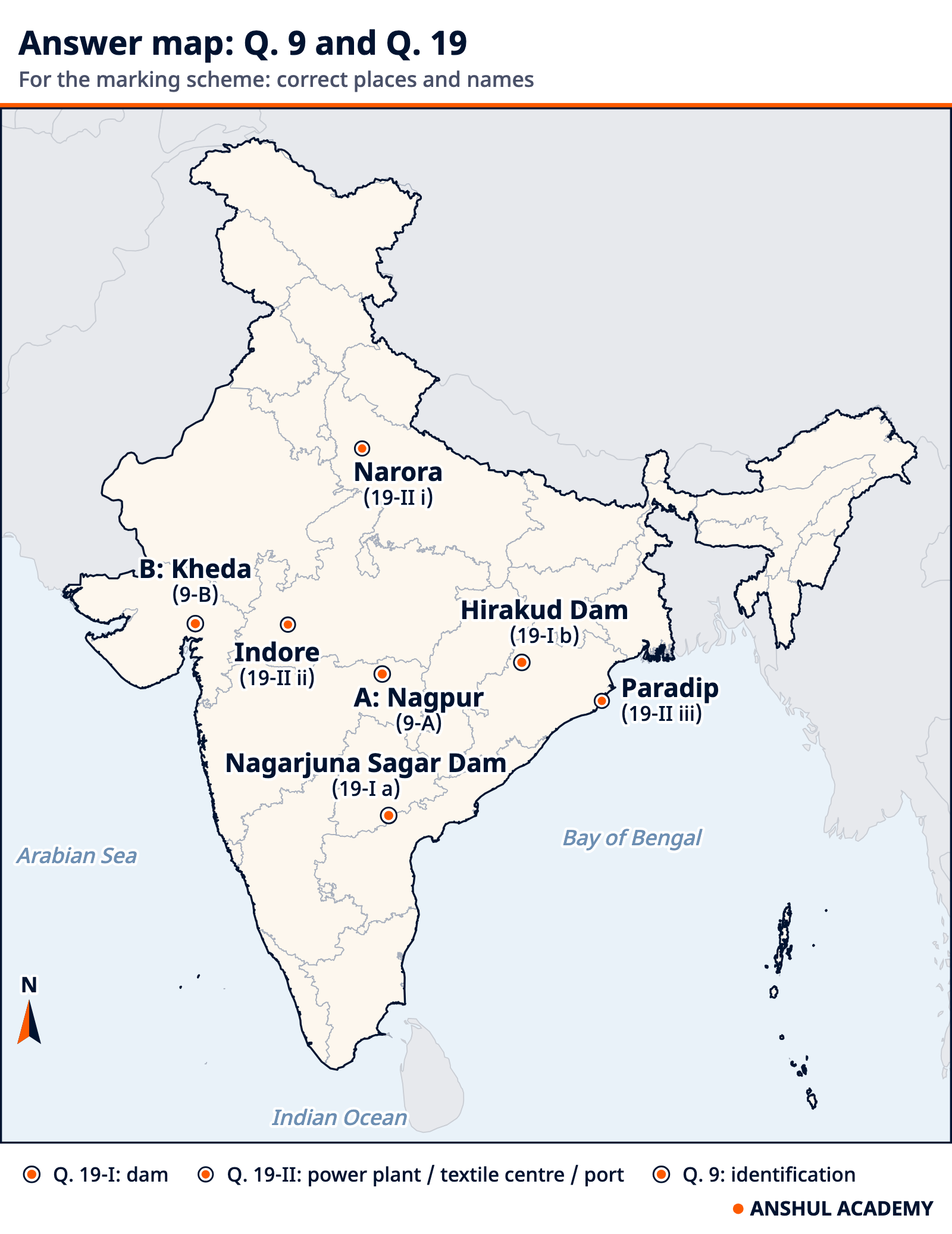
Answers to Q. No. 9 and 19 (on the map)