
- The complete poem, word for word as NCERT prints it
- What each of the four stanzas means, and which one shows rationalism (reasoning for yourself), hypocrisy (saying one thing and doing another) and individuality (thinking for yourself)
- Why growing up is shown as both a gain and a loss
- The main poetic devices the poem uses, with the exact line that shows each one
- The theme, the tone and the form, ready for extract, short-answer and long-answer questions
1 About the Poem
“Childhood” is a short poem by Markus Natten. In NCERT’s Hornbill it is printed on page 41, in Unit 4, straight after the essay “The Ailing Planet: the Green Movement’s Role”. Its only exercise is “Think it out” (four questions, page 42). It is in the CBSE English Core syllabus for 2026-27.
The book gives no “About the poet” note for Markus Natten, and its only apparatus for this poem is the four “Think it out” questions on page 42. So these notes focus on the poem itself: its stanzas, its ideas about growing up, its devices and its tone.
The poem is spoken by an “I”, a person who is no longer a child, looking back. He asks one question again and again: when did my childhood go? He offers four possible moments as answers (two in Stanza 1, one each in Stanzas 2 and 3), but never settles on one. In the last stanza he changes the question to where childhood went, and gives a gentle, uncertain answer.
The CBSE 2026-27 Class 11 English Core curriculum lists three kinds of question from Hornbill poetry: a poetry extract (one out of two, 3 × 1 mark), a short answer of 40-50 words (3 marks), and a long answer of 120-150 words from Hornbill prose or poetry (6 marks). This poem is short, so learn all four stanzas well enough to recognise any extract instantly.
2 The Poem in Full
Here is the complete poem exactly as printed in Hornbill. Keep the punctuation as it is: notice the exclamation mark in “Was that the day!” and the change from “When” to “Where” in the last stanza.
When did my childhood go?
Was it the day I ceased to be eleven,
Was it the time I realised that Hell and Heaven,
Could not be found in Geography,
And therefore could not be,
Was that the day!
Stanza 2
When did my childhood go?
Was it the time I realised that adults were not
all they seemed to be,
They talked of love and preached of love,
But did not act so lovingly,
Was that the day!
Stanza 3
When did my childhood go?
Was it when I found my mind was really mine,
To use whichever way I choose,
Producing thoughts that were not those of other people
But my own, and mine alone
Was that the day!
Stanza 4
Where did my childhood go?
It went to some forgotten place,
That’s hidden in an infant’s face,
That’s all I know.
Do not quote the last stanza as “some forgotten location”, and do not end the first three stanzas with “Was that the day?” The book prints “some forgotten place” and “Was that the day!” with an exclamation mark. Quote the book’s words exactly.
3 The Poem at a Glance
Stanza 1 offers two possible moments when childhood ended; Stanzas 2 and 3 offer one each. The fourth stanza stops looking for a moment and asks where childhood went.
| Stanza | Question asked | Possible moment childhood ended | One-word idea |
|---|---|---|---|
| 1 | When did my childhood go? | Turning twelve; realising Hell and Heaven cannot be found in Geography | Rationalism |
| 2 | When did my childhood go? | Seeing that adults preach love but do not act lovingly | Hypocrisy |
| 3 | When did my childhood go? | Finding that his mind is his own, with thoughts of his own | Individuality |
| 4 | Where did my childhood go? | No moment: childhood has gone to a “forgotten place” hidden in an infant’s face | Lost innocence |
4 Meaning, Stanza by Stanza
4.1 Stanza 1: Growing up by reasoning (rationalism)
The speaker first asks whether childhood ended on “the day I ceased to be eleven”, that is, the day he stopped being eleven and turned twelve. This is the simplest possible answer: childhood ends at a certain age. But he does not stop there, which shows that age alone does not satisfy him.
His second guess is the time he realised that “Hell and Heaven, / Could not be found in Geography, / And therefore could not be”. As a child he seems to have believed in Hell and Heaven. Then he realised that they “Could not be found in Geography”, and so he reasoned that they “could not be”. He began to test what he had been told against facts and logic, instead of simply believing it.
Rationalism is the habit of accepting something only when reason and evidence support it, not just because others say it is true. In the poem, Stanza 1 shows rationalism: the speaker decides Hell and Heaven “could not be” because they “Could not be found in Geography”.
Notice the word “therefore”. It is a word of logic, the kind used to draw a conclusion in a proof. A small child does not argue like this; a growing mind does. That is why this realisation is offered as a sign that childhood was ending.
4.2 Stanza 2: Seeing through adults (hypocrisy)
The second possible moment is when he realised that “adults were not / all they seemed to be”. As a child he seems to have trusted grown-ups. Then he noticed a gap between their words and their actions: “They talked of love and preached of love, / But did not act so lovingly”.
Adults talked about love and preached it, yet their own behaviour was not loving. Discovering this gap between what adults said and what they did seems to have broken his childish trust. This kind of discovery, that people are not as good as they seem, is called disillusionment.
Hypocrisy means saying one thing and doing another: claiming or preaching a value that you do not practise yourself. In the poem, Stanza 2 shows the hypocrisy of adults, who “talked of love and preached of love, / But did not act so lovingly”.
4.3 Stanza 3: Owning his own mind (individuality)
The third possible moment is when he “found my mind was really mine, / To use whichever way I choose”. The speaker now discovers that his mind belongs to him and that he is free to use it as he likes.
He begins “Producing thoughts that were not those of other people / But my own, and mine alone”. These thoughts are “not those of other people”. The repeated “my own, and mine alone” stresses that the thoughts belong to him alone.
Individuality is the quality of being a separate person who thinks and decides for himself or herself. In the poem, Stanza 3 shows individuality: the speaker finds his “mind was really mine” and produces thoughts that are “my own, and mine alone”.
“Think it out” Q1 asks which stanza talks of individuality, rationalism and hypocrisy. Learn it in poem order: Stanza 1 = rationalism, Stanza 2 = hypocrisy, Stanza 3 = individuality. The book lists the three words in a different order (individuality, rationalism, hypocrisy), so match each word to its stanza carefully.
4.4 Stanza 4: Where childhood went (lost innocence)
In the last stanza the question changes from “When” to “Where did my childhood go?” The speaker has given up trying to find the exact day. Instead he gives an answer about a place: childhood “went to some forgotten place, / That’s hidden in an infant’s face”.
One reading of these lines: an infant (a baby) has not yet gone through the changes of Stanzas 1-3, so its face still holds the innocence the speaker has lost. The speaker suggests that the innocence of childhood is hidden in such small children. For him it is a “forgotten place”: he cannot go back to it.
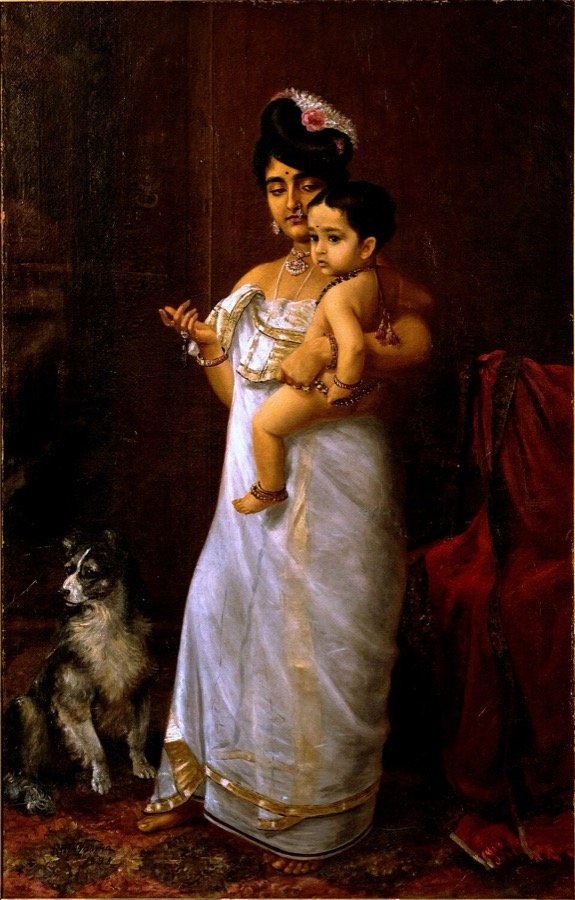
Innocence (in this poem) is a child’s simple, trusting state of mind: believing what one is told, trusting adults and thinking other people’s thoughts. Stanzas 1-3 of “Childhood” can be read as showing pieces of this innocence being lost; Stanza 4 says childhood is “hidden in an infant’s face”.
The poem ends with “That’s all I know.” After three stanzas of guesses, the speaker honestly admits that he cannot say exactly when childhood ended. He cannot fix one day for the change; one reading is that growing up came through several realisations rather than on a single day.
Do not write that the poet says childhood ended “at the age of eleven”. He only asks whether it ended “the day I ceased to be eleven”, and then offers three more possibilities. The poem never gives one final date; that uncertainty is the point.
5 Growing Up: A Gain and a Loss
“Think it out” Q2 asks what is involved in the process of growing up. The poem’s answer is that growing up is not one event but a set of changes in how a person thinks. Each change brings something new and takes something away.
What the speaker gains
- The power to reason and question (Stanza 1)
- A clear, realistic view of adults (Stanza 2)
- An independent mind and thoughts of his own (Stanza 3)
What the speaker loses
- Simple belief in what he was told, such as Hell and Heaven
- His trust in grown-ups
- Thinking other people’s thoughts instead of his own
- The innocence now hidden “in an infant’s face” (Stanza 4)
The process of growing up, as the poem shows it: moving from blind belief to reasoning, from trust in adults to recognising their hypocrisy, and from borrowed ideas to independent thinking, while the child’s innocence is lost.
6 Poetic Devices Used
Each device below is named, defined, quoted and explained. When answering a device question, name the device and then explain what it does.
Rhetorical question: a question asked for effect, to make the reader think, not to get a direct answer. The poem is built on one: “When did my childhood go?”
Refrain: a line repeated at regular points in a poem. “When did my childhood go?” opens Stanzas 1-3, and “Was that the day!” closes them.
Personification: giving a human action or quality to something that is not human. Childhood is shown as if it could walk away: “It went to some forgotten place”.
| Device | Exact line(s) | What it does |
|---|---|---|
| Rhetorical question | “When did my childhood go?” / “Where did my childhood go?” | Makes the reader ask the same question about their own childhood |
| Refrain | “When did my childhood go?”; “Was that the day!” | Holds the poem together and keeps returning to the search |
| Anaphora (repeated opening words) | “Was it the day …” / “Was it the time …” / “Was it when …” | Lines up the speaker’s guesses one after another |
| Exclamation (a line ending in “!” to show strong feeling) | “Was that the day!” | Sounds like a sudden thought that this might be the moment, not a calm question |
| Alliteration (the same first sound repeated in nearby words) | “Hell and Heaven” (h); “my mind was really mine” (m) | Adds sound and stresses the key words |
| Antithesis / contrast (two opposite ideas set side by side) | “They talked of love and preached of love, / But did not act so lovingly”; “Hell and Heaven” | Sets adults’ words against their deeds; pairs two opposites |
| Repetition for emphasis (repeating a word to stress it) | “love … love … lovingly”; “my own, and mine alone” | Underlines adults’ empty talk; stresses ownership of his thoughts |
| Enjambment (a sentence running on to the next line) | “adults were not / all they seemed to be”; “not those of other people / But my own” | Carries a thought across the line break; the pause after “were not” makes us wait for the hard truth “all they seemed to be” |
| Personification | “It went to some forgotten place” | Shows childhood as something that left on its own |
| Metaphor / imagery (one thing standing for another; a word-picture) | “That’s hidden in an infant’s face” | An infant’s face stands for the innocence the speaker has lost |
A note on capital letters (typography, not a poetic device): the poem prints “Hell”, “Heaven” and “Geography” with capital letters. One reading is that this marks Hell and Heaven as grand, named ideas and Geography as a school subject.
Two devices are central to this poem and worth learning word for word: the rhetorical question / refrain “When did my childhood go?”, and the contrast in “They talked of love and preached of love, / But did not act so lovingly”.
Q4 asks which lines you find most poetic, and why. There is no single right answer, but you must quote the lines exactly and give reasons. A strong choice is Stanza 4 (“It went to some forgotten place, / That’s hidden in an infant’s face, / That’s all I know.”): it personifies childhood, gives the image of an infant’s face for lost innocence, rhymes softly (go / know, place / face) and ends on honest uncertainty. Another good choice is “They talked of love and preached of love, / But did not act so lovingly”, where repetition and contrast expose hypocrisy in very few words.
7 Form, Rhyme and the Change from “When” to “Where”
Four stanzas
Three six-line stanzas, each beginning “When did my childhood go?” and ending “Was that the day!”, followed by a shorter four-line closing stanza.
Free verse
There is no fixed rhyme scheme (a regular pattern of rhyming line-endings) and no regular metre (a steady beat). Rhyme comes now and then: “eleven / Heaven” in Stanza 1, and “go / know” with “place / face” in Stanza 4, which rhymes ABBA (lines 1 and 4 rhyme with each other, and so do lines 2 and 3).
When becomes Where
Stanzas 1-3 search for a time. Stanza 4 asks for a place. The change suggests the speaker giving up on finding one exact day and accepting that childhood is gone.
8 Theme, Tone and Title
Central theme (one reading): growing up and the loss of childhood innocence. The speaker cannot date the end of his childhood to a single day; he links it to learning to reason, recognising adult hypocrisy and developing a mind of his own. What remains of childhood is, the poem suggests, hidden in an infant’s face.
Tone. The tone is reflective (thoughtful, looking back) and questioning: the speaker keeps asking and guessing. It is also nostalgic (longing for a happy time that is gone) and a little wistful (gently sad), especially in the last stanza, where childhood has become a “forgotten place”. He does not reject growing up; he simply feels its cost.
Nostalgia is a sad but fond longing for a happy time in the past that cannot come back. The speaker’s feeling towards childhood (“Think it out” Q3) can be read as nostalgia: he keeps asking when it went, cannot find the moment, and sees it hidden “in an infant’s face”.
Title. The title “Childhood” names exactly what the speaker has lost and is searching for. The first line of every stanza contains the word “childhood”, so the title stays in front of the reader all through the poem.
For a long answer on growing up (the CBSE curriculum sets 120-150 words for a long answer), use this plan: (1) one line on the speaker’s question, (2) one short paragraph each on Stanzas 1, 2 and 3 with a quoted phrase, (3) Stanza 4 and “That’s all I know”, (4) a closing line that growing up is both a gain and a loss.
- Can I write all four stanzas from memory, with “Was that the day!” and “Where” in Stanza 4?
- Can I match rationalism, hypocrisy and individuality to the right stanzas?
- Can I explain “Hell and Heaven, / Could not be found in Geography, / And therefore could not be”?
- Can I explain “That’s hidden in an infant’s face” and the speaker’s feeling towards childhood?
- Can I name and quote at least five devices from the poem?
- Poet: Markus Natten; Hornbill, Unit 4, page 41; the speaker looks back and asks “When did my childhood go?”
- Stanza 1, rationalism: turning twelve, and reasoning that Hell and Heaven “could not be” because they are not in Geography
- Stanza 2, hypocrisy: adults “talked of love and preached of love, / But did not act so lovingly”
- Stanza 3, individuality: “my mind was really mine”, thoughts “my own, and mine alone”
- Stanza 4: “When” becomes “Where”; childhood went to “some forgotten place, / That’s hidden in an infant’s face”
- “That’s all I know”: the speaker cannot fix a single day when childhood ended
- Growing up = gain (reason, a realistic view of adults, independence) + loss (innocence, trust)
- Tone: reflective, questioning, nostalgic; form: four stanzas, free verse, Stanza 4 rhymes ABBA