
- What kind of short story “The Lament” is, in the book’s own words, and why nothing dramatic “happens” in it
- The full story of Iona Potapov in the order it unfolds, from the empty street at twilight to the stable at night
- A complete character sketch of Iona and of his horse, and why the horse matters to the plot
- The story’s central theme: human indifference and the failure to communicate
- Chekhov’s technique, the literary devices he uses, and the exact lines that show each one
- Every glossary word, idiom and Language Work item the chapter’s own exercises test
1What Kind of Short Story Is This?
The textbook opens this unit with a short introduction to what a short story is.
A short story is a brief work of prose fiction. It has a plot that may be comic, tragic, romantic or satiric, told from one of many possible points of view, in the mode of fantasy, realism or naturalism.
The book sorts short stories into two broad kinds:
Story of incident
- Focus is on what happens and how it turns out
- Example the book gives: a Sherlock Holmes story
Story of character
- Focus is on a person’s state of mind, motivation, or psychology
- Example the book gives: Glory at Twilight
Short story and novel. The book adds that “the short story differs from the novel in magnitude”: the limit on length “imposes economy of management and in literary effects.” A short story can still “attain a fairly long and complex form”, coming close to the expansiveness of the novel, and the book names The Third and Final Continent, in this same unit, as an example.
The book gives “The Lament” its own special description. Learn the line as printed: Chekov’s The Lament “focuses on form—nothing happens, or seems to happen, except an encounter and conversations, but the story becomes a revelation of deep sorrow.”
In short: no accident, crime or big event drives the plot; there is only “an encounter and conversations”, and the story still becomes “a revelation of deep sorrow.”
2About the Author: Anton Chekhov
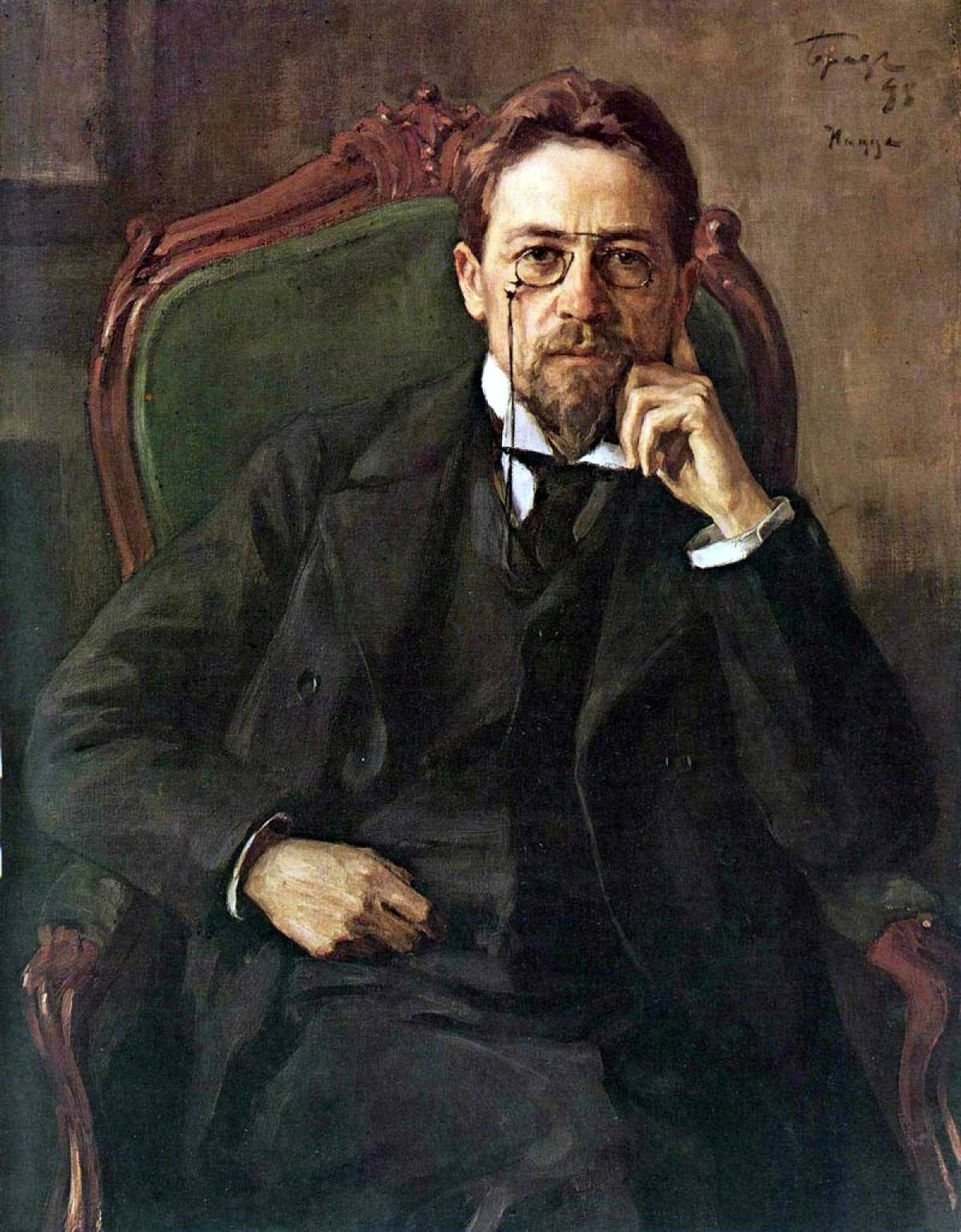
Anton Chekhov (1860-1904) was a Russian writer, born into a middle-class family. He studied medicine at Moscow University. His first short story appeared in 1880, and in the next seven years he wrote more than six hundred stories, plus plays including Seagull, Uncle Vanya, The Three Sisters and The Cherry Orchards (exactly as the book lists them).
The book states Chekhov’s main theme directly: “The main theme of Chekov’s short stories is life’s pathos, caused by the inability of human beings to respond to, or even to communicate with, one another. The present story illustrates this point beautifully.” Memorise it word for word.
3Setting and Opening Scene
The story opens at twilight, in a Russian city street, during a heavy snowfall. Iona and his little horse left their yard before dinner and, “up to now, not a fare”; they “have not moved from their place for a long while”, and are described almost as statues:
“The cabdriver, Iona Potapov, is quite white and looks like a phantom… he is bent double as far as a human body can bend double… he never makes a move.” His little horse is “also quite white, and remains motionless… even close by, give it the appearance of a gingerbread horse worth a kopek.”
Man and horse are described in almost identical words: both “quite white”, both still (Iona “never makes a move”; the horse “remains motionless”). One reading of this pairing, before any dialogue, is that they share one condition: waiting, in the cold, for someone to notice them.
4The Story, Scene by Scene
The order matters: Iona tries to speak of his son to one listener after another, and each one ignores, mocks or dismisses him, until the last scene, with his horse, breaks the pattern.
Appreciation Q4 asks directly about this: “The story begins and ends with Iona and his horse.” One way to answer: the story comes full circle. After being turned away by every human he meets, Iona ends with his horse, now in the stable rather than on the street where the story began: the one companion who was there all along.
5Iona’s Grief: The Facts Behind the Story
Iona’s son, Kuzma Ionitch, died after three days in hospital; of the cause, Iona says only, “They say high fever.” It has been almost a week, and Iona has not yet told anyone the story properly. His daughter, Anissia, has stayed behind in their home village. Iona rehearses, in his mind, everything he wants a listener to hear: how his son fell ill and died, the funeral, and the journey to fetch his son’s clothes from the hospital.
Understanding the Text Q1 asks: “Comment on the indifference that meets Iona’s attempts to share his grief with his fellow human beings.” Structure the answer around the people he tells about his son, the officer, the three young men and the young cabdriver, each failing him differently (closing his eyes, mocking, falling asleep), with the hall porter, asked only the time, telling him to “Move on”, before he finally tells his horse.
6Character Sketches
6.1 Iona Potapov
Iona Potapov is an old cabdriver (“I am too old to drive”), whose son died this week. He longs to talk about it: “Just as much as the young one wants to drink, the old man wants to talk.” He is ignored, mocked and dismissed; he shows some ill grace (“with a bad grace, brandishes his whip”) but no anger at anyone. In the end he tells the whole story to his horse.
- Grief-stricken: “When he is alone, he dare not think of his son”; he can speak about him to anyone, but to picture him is “unbearably painful”
- A widower too: “Now I have only a wife and the moist ground… that is to say, the grave.” He feels death “mistook the door… instead of coming to me, it went to my son…”
- Patient and long-suffering: he bears insults and even a blow from the young men without protest, simply laughing it off (“‘He-he’ he laughs”)
- Isolated by others: people mostly speak to him to give orders, curse him or move him along; the few questions they ask (“What did he die of?”, “Cabby, are you married?”) never lead to real listening, and nobody asks how he is
- Persistent: he tells the officer, the three young men and the young cabdriver about his son before he finally tells his horse the whole story
6.2 The Little Horse
Iona’s horse is never given a personal name; it is simply “the little horse.” Both it and Iona are described as “quite white” and motionless. In the last scene the book says the horse “munches, listens and breathes over its master’s hand” while Iona speaks.
Understanding the Text Q3 asks exactly this. One way to answer, in three points: (1) from the first paragraph it shares Iona’s condition, “quite white” and motionless in the snow; (2) unlike the people he meets, it does not interrupt, mock or walk away; (3) in the final scene Iona talks to it as to a fellow parent (“Now let’s say you had a foal … It would be sad, wouldn’t it?”), and it “munches, listens and breathes over its master’s hand” as he tells it the whole story.
6.3 The Other Characters
| Character | Who they are | How they treat Iona |
|---|---|---|
| The officer | Iona’s first fare, to Viborg Way | Scolds his driving; asks how his son died, then closes his eyes |
| The three young men | Two lanky, one humpbacked, to the Police Bridge | Insult and strike him; the humpback dismisses his grief with “We must all die” |
| The hall porter | Approached just to ask the time | Answers curtly, then says, “Move on” |
| The young cabdriver | A fellow cabdriver sleeping in the room by the stove | Wakes for water; when Iona speaks of his son, he hides his face and is “fast asleep again” |
7Themes
Human indifference
The book’s own theme: “life’s pathos, caused by the inability of human beings to respond to, or even to communicate with, one another.” Every human Iona meets shows this.
Grief and mourning
The story is Iona’s attempt to share an “immense, illimitable” grief that “no one can see.”
Loneliness in a crowd
Iona is surrounded by people all evening, yet never once truly seen or heard by any of them.
Irony (one reading)
The one listener Iona finally tells the whole story to is not a person but his horse. One reading: comfort comes from an animal, not from people.
Alienation and the “public face”
The book’s discussion points (Talking about the Text) ask you to connect the story to two ideas: that “empathy and understanding are going out of modern society” and the individual “experiences intense alienation”, and that “behind the public face of the people in various occupations is a whole saga of personal suffering and joy which they wish to share with others.” Iona, a cabdriver waiting for fares, is a clear example of the second.
Language Work Q3 asks what the colour white means here. The snow lies “on roofs, on horses’ backs, on people’s shoulders and hats”, and Iona and his horse are both “quite white”. One reading: for Iona, “quite white and looks like a phantom” suggests exhaustion and numbness, as if his grief has begun to erase him, and white can stand for cold, blankness and his near-invisibility to the people around him.
8Chekhov’s Style and Technique
- Economy and understatement: the emotional weight comes from “an encounter and conversations”, not from any dramatic event
- Repetition as technique: Iona repeats the news of his son’s death (“My son… died this week”) to one listener after another, the officer, the young men, the young cabdriver and finally the horse, showing both his desperation and how each attempt fails
- The setting mirrors the emotion (one reading): the falling snow, cold and recurring whiteness can be read as reflecting Iona’s numbness and isolation, not just the weather
- Precise, visual detail: each minor character (the officer’s greatcoat, the humpback’s “twanging voice”) is drawn in just a line or two, which is what Appreciation Q2 asks you to notice
- Dialogue and narration: much of the story is spoken conversation, but the narrator also describes Iona’s feelings and surroundings between the exchanges (for example, “He sees it is useless to turn to people for help”)
9Literary Devices
Simile is a comparison between two unlike things using “like” or “as.” Example from the text: “The cabdriver… is quite white and looks like a phantom,” and “stretches out his neck like a swan.”
Personification is giving human qualities to something that is not human. Example: the horse is described as being “plunged in deep thought,” and and when Iona heads for the stables, “the little horse, as if it understood, starts off at a trot.”
Irony is a gap between what is expected and what actually happens. Example (one reading of the ending): Iona spends the evening looking for “just one person who will listen to him”; in the end, the one he tells the whole story to is his horse.
Pathos is writing that stirs pity or sadness in the reader. Example: the line describing Iona’s grief as so enormous that “Should his heart break and the grief pour out, it would flow over the whole earth, so it seems, and yet no one sees it.”
10Glossary and Word Meanings
The book itself flags four expressions before the story begins, asking you to guess their meaning from context. Learn all four, plus the other words the exercises test.
| Word / phrase | Meaning |
|---|---|
| Gingerbread horse | A stiff, toy-like horse shape; describes how wooden-looking Iona’s real horse looks |
| Slough | A swamp or muddy pit; here, the overwhelming noise and crowd of the city |
| Snuffle | To breathe noisily through a blocked nose; the sound Iona first makes to the officer |
| As if he were on needles | Restless, uncomfortable, unable to sit still |
| Kopek | A small Russian coin, of very low value |
| Grivenik | A Russian coin worth ten kopeks; the young men offer “two griveniks” for the ride |
| Sleigh | A horse-drawn vehicle on runners, for travel over snow |
| Barin | A Russian term of respect, roughly “sir” or “master,” used by Iona to the officer |
| Hubbub | A loud, confused noise, as from a crowd |
| Phantom | A ghost, or a ghost-like figure |
11Language Work: The Vocabulary Exercise
The book gives two vocabulary tasks. First: what is common, in form and meaning, to snuffle, snort, sniffle, snore? All four begin with “sn-” and describe a sound made through the nose.
Second, a longer word list sorted by closeness to five model words:
| Model word | Meaning | Words that belong with it |
|---|---|---|
| Snigger | A sly laugh; the group is words for laughing | Titter, chuckle, giggle, chortle, guffaw (a loud laugh) |
| Wriggle | To twist and move the body; the group is words for ways of moving | Sidle, scramble, sneak, straggle, plod (the last two are ways of walking) |
| Squeak | A short, high-pitched sound; the group is words for cries and noises | Squawk, shriek, croak (a low, hoarse sound) |
| Jeer | To mock rudely | Boo |
| Sigh | A long, sad breath out; the group is words for breathing | Pant, gasp (a sudden breath in) |
Language Work Q4 asks the meaning of “as if he were on needles” and for another phrase with a similar meaning. The idiom means to be restless and uneasy; a phrase that replaces “needles” is “as if he were on hot coals” or “as if he were on tenterhooks.”
12Suggested Reading
The book lists two stories under Suggested Reading: “What Men Live by” by Leo Tolstoy, and “The Overcoat” by N. Gogol.
- The book calls “The Lament” a story that “focuses on form”: almost nothing happens, yet it reveals deep sorrow
- Anton Chekhov: studied medicine, first story in 1880, wrote 600+ stories and plays like Uncle Vanya; dates 1860-1904
- Main theme (book’s own words): “life’s pathos, caused by the inability of human beings to respond to, or even to communicate with, one another”
- Iona Potapov, a grieving cabdriver, tries to tell an officer, three young men and a young cabdriver about his son Kuzma Ionitch’s death, and is ignored, mocked or dismissed by each; a hall porter, asked only the time, tells him to “Move on”
- His daughter Anissia has stayed behind in the village
- In the last scene he tells his horse the whole story: the story begins and ends with Iona and his horse
- Themes: indifference, grief, loneliness in a crowd, alienation, irony (one reading: an animal listens, not a human)
- Devices to remember with their exact lines: simile (“like a phantom”), personification (the horse “listens”), irony (one reading: the horse as the listener), pathos (the grief that “would flow over the whole earth”)
- Colour white: the snow covers roofs, horses and people, Iona and his horse are “quite white”; one reading is that for Iona it suggests numbness and near-invisibility
- Suggested reading: Tolstoy’s “What Men Live by” and Gogol’s “The Overcoat”