
- The full story of the luncheon at Foyot’s, told stage by stage in the order it happens
- How to describe the narrator and his guest with the right supporting detail
- The story’s main themes: social pretension, hypocrisy, irony and the narrator’s economic anxiety
- How Maugham builds his comic effect through a repeated pattern
- The literary devices in the story: situational and dramatic irony, flashback, hyperbole and simile, and the satire reading
- The words and phrases that show the narrator was not well off (the book’s Language Work)
- Every word in the book’s own vocabulary box, explained in context
This chapter is in the NCERT book but is not in the CBSE 2026-27 English Elective syllabus, so it is not assessed in the CBSE board paper this year. Study it for other boards that use the NCERT book, or for practice.
1About the Story and the Author
“The Luncheon” is a short, comic story by the British writer William Somerset Maugham,
built around one sharply observed situation: a poor young writer is talked into giving an
expensive luncheon to a woman who says, again and again, “I never eat anything for
luncheon,” while asking for one costly dish after another. Many readers see it as a gentle
satire of pretension (satire is a term from literary study; the book does not use it): the gap
between what people say about themselves and what they do.
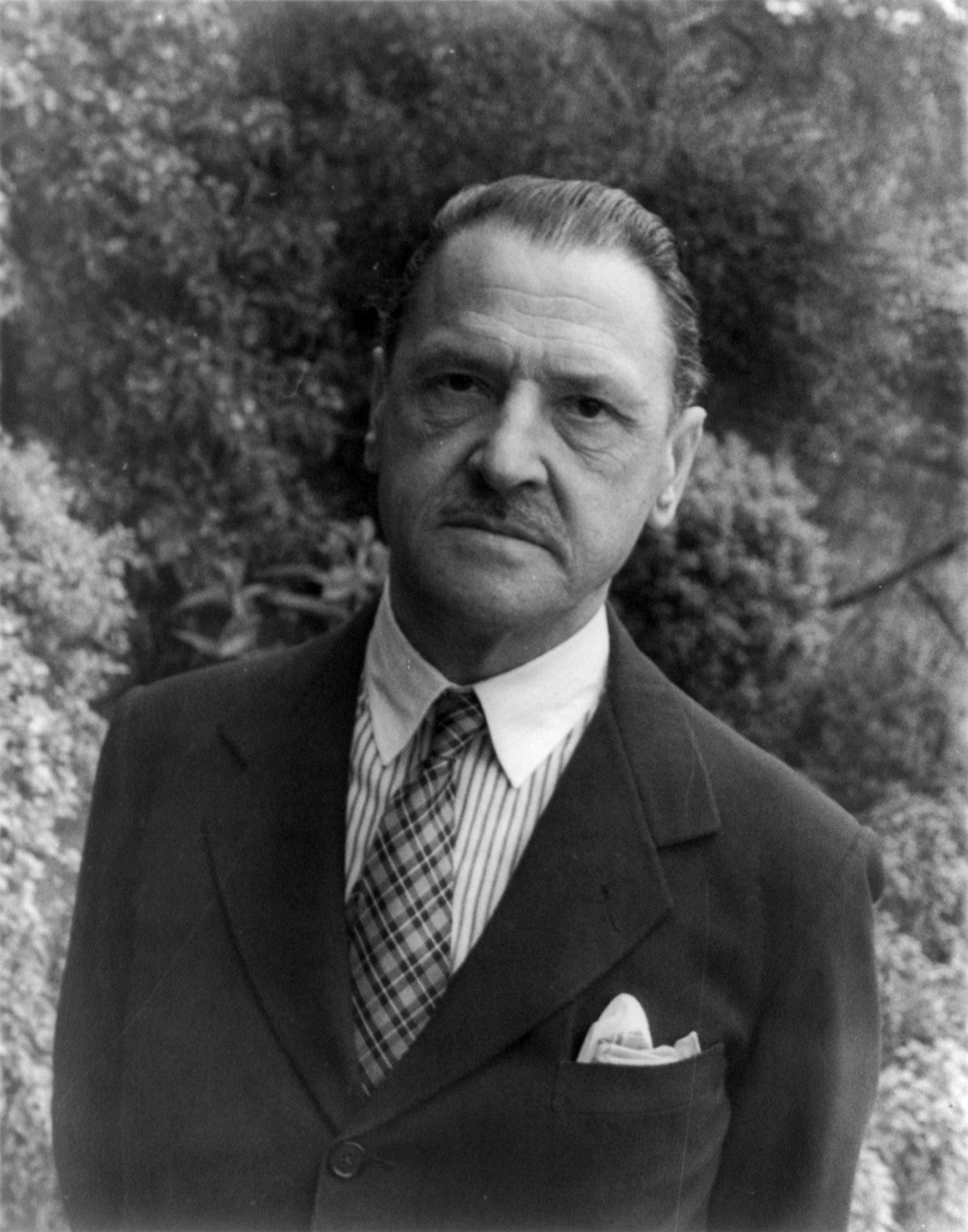
Vechten / Wikimedia Commons / Public Domain.
William Somerset Maugham (1874-1965), a distinguished British author, was born in
Paris and spent his childhood in a French-speaking society. After his father’s death he
returned to England at ten, studied at Heidelberg and St. Thomas’s Hospital, London, and
qualified as a doctor, but preferred writing to practising medicine. He produced many
novels, plays and short stories, including Of Human Bondage, The Moon and
Sixpence and Cakes and Ale, and is known for revealing a situation and a
character’s essentials with a few touches, in prose of lucidity and economy.
Neither the narrator nor the woman he takes to lunch is ever given a name in this story.
They are simply “I” and “she” throughout. Do not invent names for either character in an
answer; refer to them as “the narrator” and “the woman” (or “his guest”), exactly as the
story does.
2The Story, Stage by Stage
The story is told mostly in flashback: it opens in the present, jumps back twenty years for
almost the whole plot, and returns to the present for its final, punchline-like sentence.
Reading the middle section as a sequence of stages makes the repeated comic pattern much
easier to hold in your head.
Do not write that the narrator or the woman is named anywhere in the story. Both remain
unnamed throughout: the whole comic effect works through the contrast between what “she”
says and what “she” does, not through any personal name.
3Characters
3.1 The narrator
A young, struggling writer telling the story of his own youthful mistake years later. In
Paris he is poor but too polite, and too flattered by a woman’s attention, to refuse her
luncheon or correct her as she runs up an enormous bill. His inward panic, hidden behind
small talk about “the condition of the drama in the Balkans,” is a main source of the story’s comedy. Looking
back, he is wry and self-aware, able to laugh at his own younger foolishness.
3.2 The woman
Confident, talkative and unaware of, or unwilling to admit, her own contradictions. Again
and again she says “I never eat anything for luncheon” or “I never eat more than one thing,”
and once “I never drink anything for luncheon,” while she has salmon, caviare, Champagne, giant
asparagus, ice-cream and coffee (all ordered by the narrator at her request) and takes a peach,
in one sitting. She seems to believe her own claim of eating lightly; one reading is that this
makes her, not the narrator, the real target of the story’s humour. Her eyes rest on his
inadequate tip and he knows that “she thought me mean,” though she is the reason for it.
| Character | Role in the story | What seems to drive them (one reading) |
|---|---|---|
| The narrator | Poor young writer, host of the luncheon; tells the story looking back | Flattery, politeness, fear of embarrassment over money |
| The woman | The guest; insists she eats almost nothing, asks for one costly dish after another | Vanity and self-deception about her own appetite |
4Themes
Social pretension and hypocrisy
The woman’s line “I never eat anything for luncheon,” echoed before nearly every
course, is directly contradicted by what she actually asks for: the story’s comedy
depends largely on this gap.
Economic anxiety versus carelessness
The story is built on the widening gap between the narrator’s shrinking eighty francs
and the woman’s mounting, oblivious orders, turning money into the central tension.
Vanity and self-deception
The woman is not simply lying for effect; she seems to believe her own image as a
light eater. The final line, her weight twenty years on, can be read as quietly exposing
how false that self-image was.
Comic revenge
The narrator takes no active revenge of his own. He credits “the immortal gods” with
taking “a hand in the matter,” and says it is “pardonable to observe the result with
complacency.” One reading is that this is what makes the ending land as comedy rather than
as a bitter complaint.
“I never eat anything for luncheon.” Echoed, in one form or another, before nearly
every course she then orders, the line the story’s comic irony is built on.
the woman, at Foyot’s
5The Author’s Technique
NCERT’s own Appreciation question asks how the story reflects Maugham’s humour, not just what happens. Two
techniques do much of the work, beyond the irony, flashback, satire, hyperbole and simile
defined in the next section: first-person retrospective narration, where an older
narrator lets dry, knowing lines (“Did I remember?”) sit over his younger self’s real-time
panic; and comic repetition: “I never eat anything for luncheon,” “I never eat more
than one thing” and “I never drink anything for luncheon” come back with variation through
the meal, so the joke builds cumulatively rather than being told once.
6Literary Devices
Situational irony is a gap between what is expected and what happens: the
woman’s claim, “I never eat anything for luncheon,” is contradicted, course after
course, by exactly what she orders.
Dramatic irony is when the reader knows something that a character does not. The
first-person narration tells us that the narrator cannot afford the meal (“I knew I could not
afford caviare”); the woman does not know this, and goes on asking for more.
Flashback is a scene from an earlier time placed inside a story told from the
present. The story opens at the play in the present, goes back twenty years to the luncheon
at Foyot’s, and returns to the present for its last lines.
Satire (a term from literary study; the book does not use it) uses humour or
exaggeration to criticise a human failing. The story can be read as gently satirising social
pretension through the woman’s behaviour.
Hyperbole is deliberate exaggeration for effect, as in the woman having “more teeth,
white and large and even, than were necessary for any practical purpose,” or the asparagus
“so large, so splendid, so tender, that it was a marvel.”
Simile compares two unlike things using “like” or “as.” Example from the story:
“The smell of the melted butter tickled my nostrils as the nostrils of Johovah were tickled
by the burned offerings of the virtuous Semites.”
The book’s question asks you to “Locate instances of irony in the story.” Naming several,
for example the salmon, the caviare and the asparagus, shows the same pattern of a claim
followed by an expensive order.
- Before the luncheon: “a tiny apartment in the Latin quarter overlooking a cemetery”; “earning barely enough money to keep the body and soul together”
- The invitation: Foyot’s “was so far beyond my means that I had never even thought of going there”; “I had eighty francs (gold francs) to last me the rest of the month”; “If I cut out coffee for the next two weeks I could manage well enough”
- At the table: “I knew I could not afford caviare”; “For myself I chose the cheapest dish on the menu”
- While the asparagus cooks: “whether I had enough to pay the bill”; “It would be mortifying to find myself ten francs short and be obliged to borrow from my guest”
- The bill: “I had only enough for a quite inadequate tip”; “the whole month before me and not a penny in my pocket”
7Glossary
These are the words the NCERT textbook itself lists before the story, plus a few key
words from inside it. Learn the meaning in the exact sense the story uses it, not just the
dictionary sense.
8Recap and Self-Check
- A poor narrator is talked into giving a woman luncheon at expensive Foyot’s in Paris
- She says “I never eat anything for luncheon” and “I never drink anything for luncheon,” then has salmon, caviare, Champagne, giant asparagus, ice-cream and coffee, which he orders for her, and takes a peach
- With only eighty francs for the month, he has a mutton chop and water while panicking about the bill
- He is left with only a three-franc tip, and not a penny for the rest of the month
- She calls his bitter joke about eating nothing for dinner “quite a humorist”
- Twenty years later, the ending reveals his “revenge”: she now weighs twenty-one stone
- Themes: social pretension, economic anxiety, vanity, comic revenge; techniques: flashback, retrospective narration, comic repetition, hyperbole and simile
- Can I retell the luncheon’s courses in the correct order, with what she said before each?
- Can I describe the narrator and the woman with one supporting detail each?
- Can I name and explain at least three separate instances of irony in the story?
- Can I use “ingratiating,” “imposing” and “absentmindedly” correctly in a sentence?