
- Why history is about change over time, and why many changes cannot be given one exact date
- Why the old British histories of India were built around Governor-Generals, and what that left out
- How James Mill divided Indian history in 1817, and the problems with his division and with “ancient, medieval, modern”
- What the words “colonial” and “colonisation” mean
- Which sources historians use for the last 250 years: official records, surveys, the Census and many others
- What official records cannot tell us, and whose lives are hardest to find in the sources
This is Chapter 1 of the old NCERT Class 8 History book “Our Pasts III”. The book prints its title as “Introduction: How, When and Where”. It is still taught in many schools and state boards. Everything in these notes follows that book.
1How Important are Dates?
Many students say, “I find history boring because it is all about memorising dates.” The book asks whether this idea is really true.
1.1 History is about change over time
- There was a time when historians were fascinated with dates. They argued hotly about the dates on which rulers were crowned or battles were fought.
- In the common-sense idea, history and dates meant the same thing.
- History is really about changes that happen over time: how things were in the past and how they have changed.
- The moment we compare the past with the present, we start talking about time, about “before” and “after”.
1.2 Everyday questions are historical questions
We usually take the world around us for granted, as if it had always been this way. But in moments of curiosity we ask questions that are actually historical:
| What you see | The historical question it raises |
|---|---|
| Someone sipping tea at a roadside tea stall | When did people begin to drink tea or coffee? |
| The view from a train window | When were railways built? How did people travel long distances before railways? |
| The morning newspaper | How did people hear about things before newspapers began to be printed? |
1.3 Maps and British power: James Rennel, 1782
- Robert Clive gave James Rennel the job of producing maps of Hindustan.
- Rennel was an enthusiastic supporter of the British conquest of India. For him, making maps was an essential part of establishing British domination.
- The opening picture (frontispiece) of his first map, 1782, shows Brahmans offering the Shastras to Britannia, the symbol of British power.
- The picture suggests that Indians gave their ancient texts to Britannia willingly, as if asking her to protect Indian culture.
The image projects an imperial view: Britannia is shown as the protector, and Indians come to her of their own will with their sacred texts. It hides the fact that British power came through conquest, and presents British rule as something Indians wanted.
1.4 Some changes have no single date
- All such questions take us back to time. But time does not always have to be fixed to an exact year or month.
- For a process that happens slowly, it is actually incorrect to fix one precise date.
- People in India did not start drinking tea one fine day. They developed a taste for it over time.
- In the same way, there is no single date on which:
- British rule was established,
- the national movement started, or
- changes took place in the economy and society.
- For such things we can only refer to a span of time: an approximate period over which the changes became visible.
Do not write that “history does not need dates”. The book’s point is narrower: events (a coronation, a battle) can be dated exactly, but processes (a new habit, a new kind of rule) happen over a period of time, so we describe them with a span of time.
1.5 Why history got linked with dates
There is a reason people still connect history with a string of dates. At one time, history was an account of battles and big events. It was about rulers and their policies. Historians recorded:
Events like these have exact dates, so in histories of this kind, debates about dates stay important.
1.6 What historians write about now
Historians now ask many other questions, about ordinary life and slow change:
Livelihood
How people earned their living, what they produced and what they ate
Towns and trade
How cities developed and markets came up
Kingdoms and ideas
How kingdoms were formed and new ideas spread
Culture and society
How cultures and society changed
Chronology is the order of events in time, from earlier to later. Older histories arranged the past as a chronology of rulers’ lives: crowning, marriage, wars, death and succession.
2Which Dates?
2.1 Dates matter because of what we focus on
- The dates we choose are not important on their own.
- They become vital because we treat a particular set of events as important.
- If our focus of study changes and we look at new issues, a new set of dates becomes significant.
2.2 The example of British histories of India
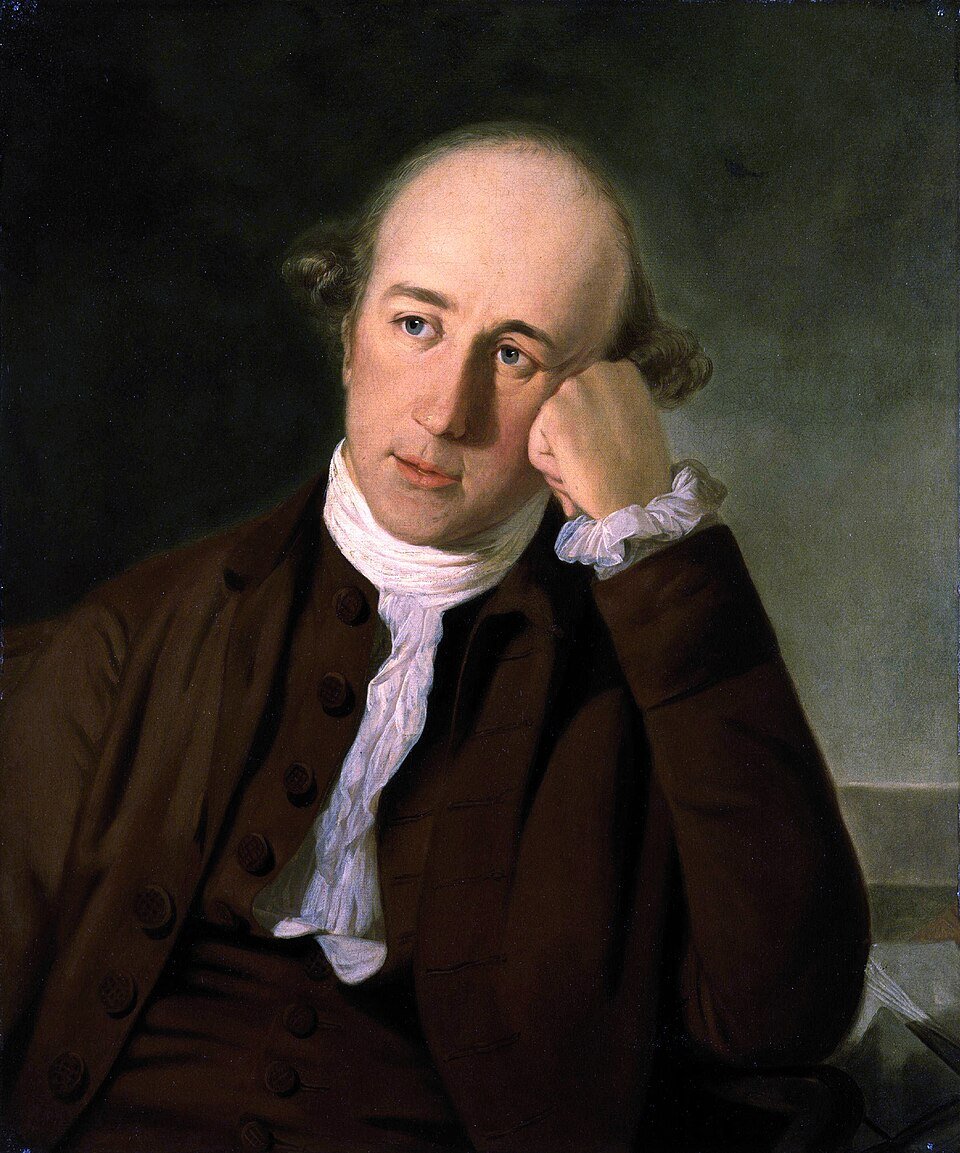
- In the histories written by British historians in India, the rule of each Governor-General was what mattered.
- These histories began with the rule of the first Governor-General, Warren Hastings, and ended with the last Viceroy, Lord Mountbatten.
- In separate chapters, readers studied the deeds of the others: Hastings, Wellesley, Bentinck, Dalhousie, Canning, Lawrence, Lytton, Ripon, Curzon, Harding and Irwin.
- It was a seemingly never-ending succession of Governor-Generals and Viceroys.
- All the dates in these books were linked to these men: to their activities, policies and achievements.
- It was as if nothing outside their lives was important. The chronology of their lives marked the chapters of the history of British India.
2.3 Why this format left Indians out
A 3-mark question often asks why British histories of India were “histories of Governor-Generals” and what was wrong with them. Write three points: (1) dates were tied to the lives and policies of Governor-Generals, from Warren Hastings to Lord Mountbatten; (2) nothing outside their lives seemed important; (3) the activities of different groups and classes of Indians had no space.
3How do we Periodise?
Periodisation means dividing history into different periods, marking off where one period ends and the next begins, so that the main features of each time can be captured.
3.1 James Mill’s three periods
- In 1817, James Mill, a Scottish economist and political philosopher, published a massive three-volume work, A History of British India.
- In it, he divided Indian history into three periods: Hindu, Muslim and British.
- This periodisation came to be widely accepted.
3.2 Why do we divide history into periods at all?
- We do it to capture the characteristics of a time: its central features as they appear to us.
- So the terms we use to periodise become important.
- They reflect our ideas about the past.
- They show how we judge the significance of the change from one period to the next.
3.3 What Mill thought about India
A despot is a ruler with total power who uses it harshly. In this idea of history, British rule stood for all the forces of progress and civilisation, and the period before British rule was one of “darkness”. The book asks whether such an idea can be accepted today, and clearly expects the answer no.
3.4 Problems with Mill’s periodisation
Many faiths at once
A variety of faiths existed at the same time in every period, so no period was only “Hindu” or only “Muslim”
Only the rulers’ religion
Naming an age after the religion of its rulers suggests that the lives and practices of everyone else do not matter
Rulers differed too
Even rulers in ancient India did not all share the same faith
A biased view
It treats the time before the British as “darkness” and British rule as progress, which comes from Mill’s belief that Asia was less civilised than Europe
“What is the problem with James Mill’s periodisation?” is a very common question (it is Exercise Q2). Give the three periods first, then at least three problems from the cards above.
3.5 Ancient, medieval and modern
- Moving away from the British classification, historians have usually divided Indian history into ‘ancient’, ‘medieval’ and ‘modern’.
- This division too has its problems. It is borrowed from the West.
- In the West, the modern period was linked with the growth of the forces of modernity: science, reason, democracy, liberty and equality.
- Medieval was the term for a society where these features of modern society did not exist.
- Can we accept this meaning of “modern” for the period we study? Under British rule, people did not have equality, freedom or liberty. Nor was the period one of economic growth and progress.
- That is why many historians call this period ‘colonial’.
| Way of dividing Indian history | Periods | Main problem |
|---|---|---|
| James Mill (1817) | Hindu, Muslim, British | Names whole ages after the rulers’ religion; treats British rule as progress and the past as darkness |
| Usual division by historians | Ancient, medieval, modern | Borrowed from the West; “modern” means science, reason, democracy, liberty and equality, which people under British rule did not have |
| Term many historians use for this period | Colonial | Describes what British rule actually did to the country |
4What is Colonial?
The book (Our Pasts III) tells the story of how the British came to rule India and what that rule changed. These are the changes it lists:
Political
The British conquered the country and set up their rule, subjugating (bringing under control) local nawabs and rajas
Economic
They controlled the economy, collected revenue to meet their expenses, bought the goods they wanted at low prices and had crops grown for export
Social and cultural
They controlled society and changed values and tastes, customs and practices
Colonisation: when the subjugation of one country by another leads to political, economic, social and cultural changes, the process is called colonisation. Because British rule brought exactly these changes, many historians call this period colonial.
All classes and groups did not experience these changes in the same way. That is why the book is called Our Pasts, in the plural.
the reason behind the book’s name
5How do We Know?
What sources do historians use to write about the last 250 years of Indian history? The chapter looks at three kinds of sources: official records, surveys, and sources outside the government.
5.1 Administration produces records
- One important source is the official records of the British administration.
- The British believed that the act of writing was important.
- Every instruction, plan, policy decision, agreement and investigation had to be clearly written up, so that it could be properly studied and debated.
- This belief created an administrative culture of memos, notings and reports.
- The British also felt that important documents and letters must be carefully preserved.
- So they set up record rooms attached to all administrative institutions.
- Specialised institutions like archives and museums were also set up to preserve important records.
| Offices that had their own record rooms (as named in the book) |
|---|
| The village tahsildar’s office |
| The collectorate |
| The commissioner’s office |
| The provincial secretariats |
| The lawcourts |
Archives are places where important records and documents are collected and preserved so that they can be studied later.
What can still be read in the archives today:
- letters and memos that moved from one branch of the administration to another in the early nineteenth century;
- notes and reports prepared by district officials;
- instructions and directives sent by top officials to provincial administrators.
5.2 From handwriting to printing
Calligraphists are people who specialise in the art of beautiful writing.
5.3 Surveys become important
- Surveying became common under the colonial administration.
- The British believed that a country had to be properly known before it could be effectively administered.
- By the early nineteenth century, detailed surveys were being carried out to map the entire country.
- In the villages, revenue surveys were conducted.
A survey is a careful, organised collection of facts about a place or its people. Under colonial rule, surveys were used to know the country so that it could be administered.
A revenue survey tried to record everything the British saw as necessary to administer a region:
The Census is a count of the people of a country. In India, Census operations were held every ten years from the end of the nineteenth century. They prepared detailed records of the number of people in all the provinces, with information on castes, religions and occupation.
A custard-apple plant, 1770s (Fig. 5). Botanical gardens and natural history museums set up by the British collected plant specimens and information about their uses, and local artists were asked to draw them. Historians now study how such information was gathered and what it reveals about colonialism. James Prinsep’s drawing, 1832 (Fig. 6) shows mapping and survey work in Bengal, with all the survey instruments placed in front to stress the scientific nature of the project.
5.4 What official records do not tell
What official records tell us
- What the officials thought
- What they were interested in
- What they wished to preserve for posterity (people of the future)
What they do not always tell us
- What other people in the country felt
- What lay behind their actions
For that we must look elsewhere. Such sources exist in plenty, though they are more difficult to get than official records:
| Other source | Who produced it |
|---|---|
| Diaries | Ordinary people |
| Accounts of pilgrims and travellers | People on journeys |
| Autobiographies | Important personalities |
| Popular booklets | Sold in the local bazaars |
| Newspapers | Published as printing spread; issues were debated in public |
| Writings of leaders and reformers | Written to spread their ideas |
| Poems and novels | Written by poets and novelists to express their feelings |
All these sources were produced by people who were literate (could read and write). From them we cannot easily understand how history was lived by tribals and peasants, workers in the mines or the poor on the streets. Knowing their lives is harder, but the book says it can be done with a little effort.
Images show the viewpoint of whoever made them. The book’s Fig. 7 shows the rebels of 1857 with the caption “Mutinous sepoys share the loot”. It appeared in several illustrated books made by the British after the 1857 rebellion, where rebels were shown as greedy, vicious and brutal.
6Reading the Chapter’s Pictures and Sources
6.1 Pictures that carry a message
| Book figure | What it shows | The message behind it |
|---|---|---|
| Fig. 2 (1922) | A Lipton tea advertisement: an Indian palace wall behind, and Prince Arthur, Duke of Connaught, third son of Queen Victoria, on horseback in front | Advertisements helped create markets for new products and popularise new tastes; this one links the tea with royalty all over the world |
| Fig. 3 | Warren Hastings, first Governor-General in 1773 | See Figure 1 in section 2.2 |
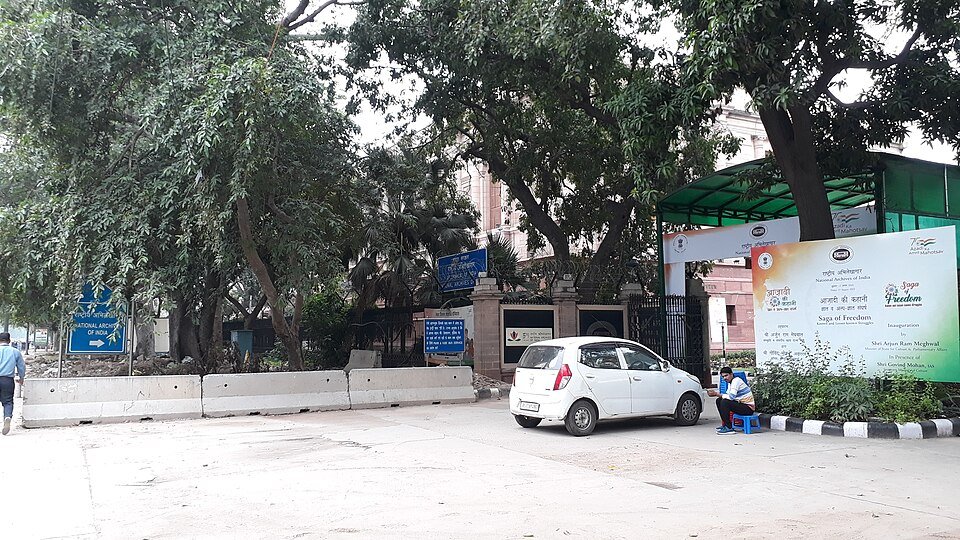
| Fig. 4 (1920s) | The National Archives of India | See Figure 2 in section 5.2 |
| Fig. 7 | Rebels of 1857 | See the box at the end of section 5.4 |
6.2 Source 1: Reports to the Home Department (1946)
- In 1946 the colonial government was trying to put down a mutiny on the ships of the Royal Indian Navy.
- The Home Department received reports from the different dockyards.
| Dockyard | What the report said |
|---|---|
| Bombay | Arrangements made for the Army to take over ships and establishments; Royal Navy ships stayed outside the harbour |
| Karachi | 301 mutineers under arrest, a few more suspected to be arrested; establishments under military guard |
| Vizagapatnam | Position completely under control, no violence; military guards placed; only a few men may refuse to work |
The report was from the Director of Intelligence, HQ. India Command, Situation Report No. 7, File No. 5/21/46 Home (Political), Government of India.
6.3 Source 2: “Not fit for human consumption” (1946)
- Newspapers give accounts of the movements in different parts of the country.
- The Hindustan Times, 22 March 1946, reported a police strike.
- More than 2000 policemen in Delhi refused their food on a Thursday morning to protest against low salaries and the bad quality of food from the Police Lines kitchen.
- As the news spread, men at other police stations also refused food.
- One striker said the food was “not fit for human consumption” and that even cattle would not eat the chappattis and dal they were given.
6.4 Comparing the two sources
Source 1: official report
- Written by officials for the government
- Short, dry, about control and arrests
- Says the situation is “under control”
- Does not say why the sailors rebelled or how they felt
Source 2: newspaper report
- Written for the public
- Tells why the policemen protested
- Quotes a striker in his own words
- Shows the feelings of ordinary men
Exercise Q4 asks how information from old newspapers differs from police reports. Use the comparison above: a newspaper gives the public’s side and people’s own words; an official report gives the government’s side, focused on order and control.
- History is about change over time; slow processes have a span of time, not one date.
- Old histories tied dates to rulers; historians now study livelihood, markets, ideas and society.
- British histories ran from Warren Hastings (first Governor-General, 1773) to Lord Mountbatten (last Viceroy) and left no space for Indians.
- James Mill, 1817, A History of British India: Hindu, Muslim, British periods, based on his view that Asia was less civilised than Europe.
- “Ancient, medieval, modern” is borrowed from the West; under British rule there was no equality, freedom or liberty, so many historians say “colonial”.
- Colonisation = subjugation of one country by another causing political, economic, social and cultural changes; “Our Pasts” is plural because groups lived it differently.
- Sources: official records (memos, notings, reports, record rooms, archives), surveys (revenue surveys, Census every ten years, botanical and others).
- Official records show the officials’ view; diaries, travellers’ accounts, autobiographies, booklets and newspapers show more, but only of literate people.
- Can I name James Mill’s three periods and give three problems with them?
- Can I define colonisation in one sentence?
- Can I name five places that had record rooms?
- Can I say what a revenue survey recorded and what the Census recorded?
- Can I explain why official records do not tell the whole story?