
- The three types of economic activities: primary, secondary and tertiary
- What agriculture is, where the word comes from, and its branches (sericulture, pisciculture, viticulture, horticulture)
- Agriculture as a system of inputs, operations and outputs
- Types of farming: subsistence (intensive and primitive) and commercial (grain, mixed, plantation)
- The conditions and leading producers of eight major crops
- Agricultural development, food security, and a farm in India compared with a farm in the USA
This is Chapter 3 of the old NCERT Geography book “Resources and Development” for Class 8. It is still taught in many schools and state boards. Everything here follows that book’s own text and examples.
1 From a wheat field to a biscuit: three economic activities
The chapter opens in a village. Gurpreet, Madho and Tina see a farmer ploughing (tilling) his land. He tells them he is growing wheat and has just added manure to make the soil more fertile. The wheat will be sold for a good price in the mandi (market). From there it goes to factories, where its flour is made into bread and biscuits.
So a plant becomes a finished product in steps, and each step is a different kind of work. These are the three types of economic activities: primary, secondary and tertiary.
Primary activities: Activities connected with the extraction and production of natural resources. Examples: agriculture, fishing and gathering.
Secondary activities: Activities concerned with the processing of these natural resources. Examples: manufacturing of steel, baking of bread and weaving of cloth.
Tertiary activities: Activities that support the primary and secondary sectors through services. Examples: transport, trade, banking, insurance and advertising.
The word agriculture comes from the Latin words ager or agri, meaning soil, and culture, meaning cultivation.
2 Agriculture: a primary activity
Agriculture: The science and art of cultivation on the soil, raising crops and rearing livestock. It is also called farming.
- Agriculture is a primary activity. It includes growing crops, fruits, vegetables and flowers, and rearing of livestock (keeping farm animals).
- In the world, 50 per cent of persons are engaged in agricultural activity.
- Two-thirds of India’s population still depends on agriculture.
- Favourable topography (shape of the land), soil and climate are vital for farming. So farming is concentrated in the parts of the world where these suitable factors exist.
Arable land: The land on which crops are grown is known as arable land.
Branches of agriculture (from the book’s “Do you know?” box)
| Word | Meaning | Easy way to remember |
|---|---|---|
| Sericulture | Commercial rearing of silk worms. It may add to (supplement) the income of the farmer. | Seri = silk |
| Pisciculture | Breeding of fish in specially constructed tanks and ponds. | Pisci = fish |
| Viticulture | Cultivation of grapes. | Viti = grapevine |
| Horticulture | Growing vegetables, flowers and fruits for commercial use. | Horti = garden |
3 The farm system
A farm can be looked at as a system: things go in (inputs), work is done on the farm (operations or processes), and products come out (outputs).
The book’s picture of farm inputs splits them into two groups:
Physical inputs (given by nature)
- Rainfall
- Sunshine
- Temperature
- Soil
- Slope
Human inputs (provided by people)
- Storage
- Labour
- Machinery
- Chemicals
In organic farming, organic manure and natural pesticides are used instead of chemicals. No genetic modification (changing the plant’s genes) is done to increase the yield of the crop.
4 Types of farming
Farming is done in different ways across the world. The type depends on four things: the geographical conditions, the demand of produce, labour and the level of technology. There are two main types:
5 Subsistence farming
Subsistence farming: Farming practised to meet the needs of the farmer’s family. Traditionally, low levels of technology and household labour are used, and the output is small.
(a) Intensive subsistence agriculture
- The farmer cultivates a small plot of land using simple tools and more labour.
- A climate with a large number of sunny days and fertile soils allows more than one crop a year on the same plot.
- Rice is the main crop. Others are wheat, maize, pulses and oilseeds.
- Where: the thickly populated areas of the monsoon regions of south, southeast and east Asia.
(b) Primitive subsistence agriculture
It includes shifting cultivation and nomadic herding.
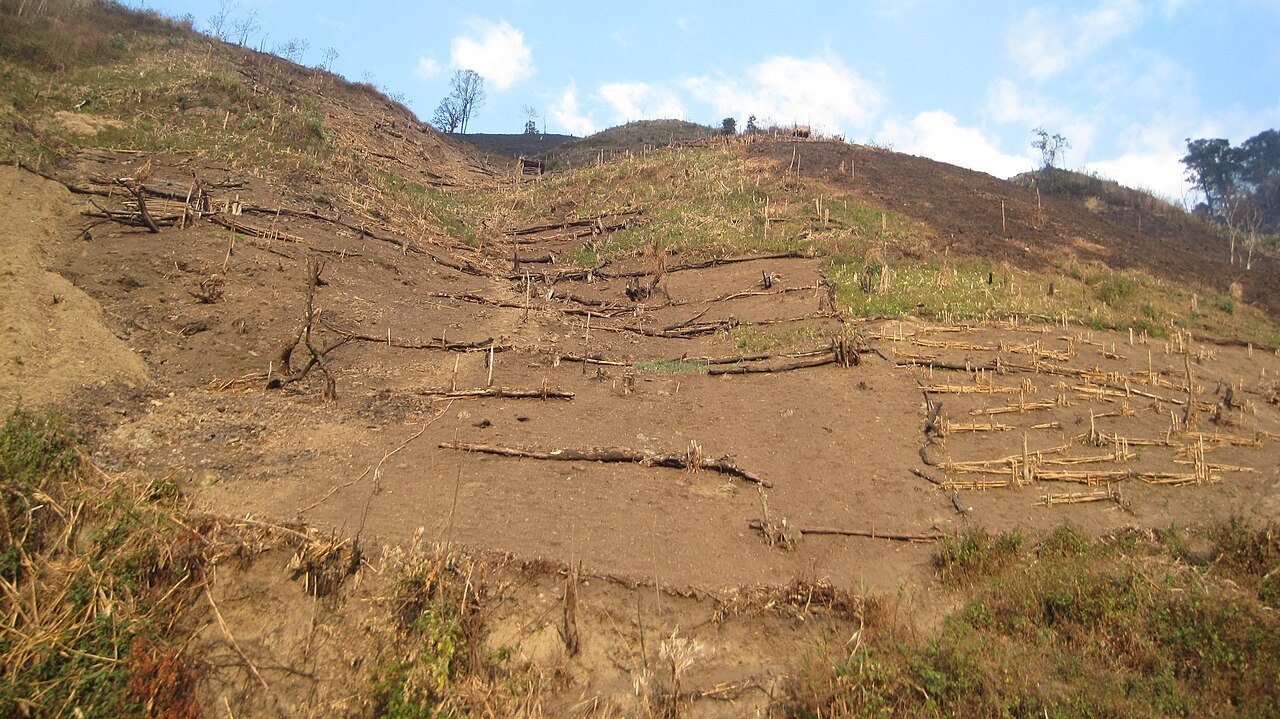
Shifting cultivation (“slash and burn”)
- Where: thickly forested areas of the Amazon basin, tropical Africa, parts of southeast Asia and Northeast India.
- Why there: these areas get heavy rainfall, and the vegetation grows back quickly (quick regeneration).
- It is also known as “slash and burn” agriculture.
| Local name of shifting cultivation | Region |
|---|---|
| Jhumming | North-East India |
| Milpa | Mexico |
| Roca | Brazil |
| Ladang | Malaysia |
The book’s Exercise 1(iii) asks for them. Build them from the book’s own description: (1) forests are cut down and burnt; (2) the soil loses its fertility after a few years, so the land is abandoned; (3) the farmer has to keep moving to a new plot, so more forest is cleared each time; (4) it gives only a small output, enough for the family.
Nomadic herding
- Where: the semi-arid and arid (dry) regions of the Sahara, Central Asia and some parts of India like Rajasthan and Jammu and Kashmir.
- Herders keep moving with their animals in search of fodder and water, and they follow fixed (defined) routes.
- This movement happens because of climatic constraints (limits set by the climate) and the terrain.
- Animals: sheep, camel, yak and goats.
- The animals supply the herders’ families with milk, meat, wool, hides and more.
6 Commercial farming
Commercial farming: Farming in which crops are grown and animals are reared for sale in the market. It uses a large area and a lot of capital (money), and machines do most of the work.
Subsistence farming
- Grows food for the farmer’s own family
- Low technology, household labour
- Small plots, small output
- Example: intensive subsistence in monsoon Asia
Commercial farming
- Grows crops and rears animals for sale in the market
- Large area and large capital
- Most work done by machines
- Example: grain farming in temperate grasslands
(a) Commercial grain farming
- Grain is grown to be sold. The usual grains are wheat and maize.
- Where: the temperate grasslands of North America, Europe and Asia.
- Few people live there (sparsely populated), and each farm covers hundreds of hectares.
- Severe winters shorten the growing season, so only a single crop can be grown.
(b) Mixed farming
- The land is used for growing food and fodder crops and for rearing livestock.
- Where: Europe, eastern USA, Argentina, southeast Australia, New Zealand and South Africa.
(c) Plantation agriculture
Plantations: A type of commercial farming in which a single crop of tea, coffee, sugarcane, cashew, rubber, banana or cotton is grown.
- They need a large amount of labour and capital.
- The crop is often processed on the estate or in factories close by, so good transport (a transport network) is a must.
- Major plantations are in the tropical regions of the world.
| Plantation crop | Example country in the book |
|---|---|
| Rubber | Malaysia |
| Coffee | Brazil |
| Tea | India and Sri Lanka |
7 Major crops
Many crops are grown to feed the growing population. Crops also supply raw materials for agro based industries (industries that use farm products, like cotton textile mills).
Food crops
Wheat, rice, maize and millets
Fibre crops
Jute and cotton
Beverage crops
Tea and coffee
Rice
- The major food crop of the world; the staple diet (main food) of the tropical and sub-tropical regions.
- Needs high temperature, high humidity and rainfall.
- Grows best in alluvial clayey soil, which can hold water.
- Producers: China leads, followed by India, Japan, Sri Lanka and Egypt.
- In places with a very favourable climate, such as West Bengal and Bangladesh, farmers take two to three rice crops a year.
Wheat
- Needs moderate temperature and rainfall during the growing season, and bright sunshine at harvest time.
- Grows best in well drained loamy soil.
- Grown widely in the USA, Canada, Argentina, Russia, Ukraine, Australia and India. In India it is grown in winter.
Millets
- Also known as coarse grains. A hardy (tough) crop.
- Can grow on less fertile and sandy soils; needs low rainfall and high to moderate temperature.
- Jowar, bajra and ragi are grown in India. Other producers: Nigeria, China and Niger.
Maize
- Needs moderate temperature, rainfall and lots of sunshine, and well-drained fertile soils.
- Grown in North America, Brazil, China, Russia, Canada, India and Mexico.
- Maize is also known as corn; many colourful varieties are found across the world.
Cotton
- Needs high temperature, light rainfall, 210 frost-free days and bright sunshine.
- Grows best on black and alluvial soils.
- Leading producers: China, USA, India, Pakistan, Brazil and Egypt.
- One of the main raw materials for the cotton textile industry.
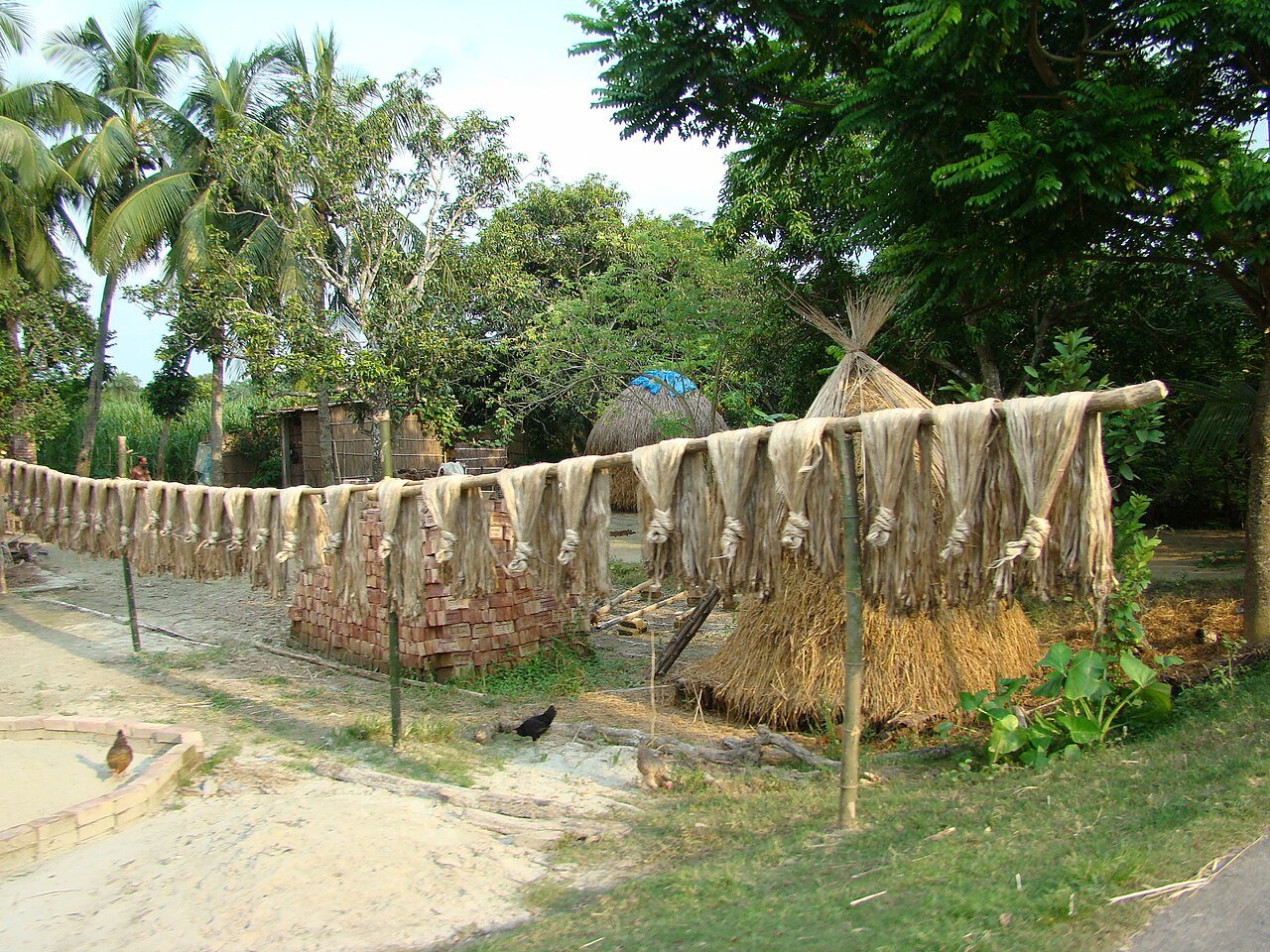
Jute
- Known as the “Golden Fibre”.
- Grows well on alluvial soil; needs high temperature, heavy rainfall and a humid climate. Grown in tropical areas.
- Leading producers: India and Bangladesh.
Coffee
- Needs a warm and wet climate and well-drained loamy soil.
- Hill slopes are more suitable for it.
- Brazil is the leading producer, followed by Colombia (spelt “Columbia” in the book) and India.
There are different stories. In about AD 850, Kaldi, an Arab goat-herder, was puzzled by the strange behaviour of his goats. He tasted the berries of the evergreen bush the goats were eating, felt very lively and cheerful, and told the world about his discovery.
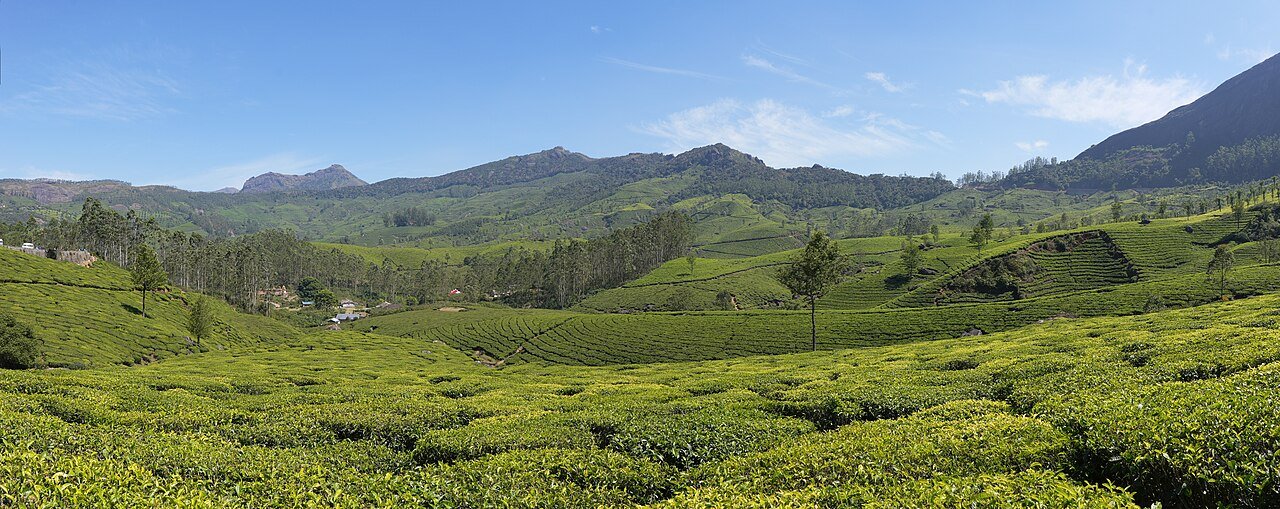
Tea
- A beverage crop grown on plantations.
- Needs a cool climate and well distributed high rainfall throughout the year for its tender leaves to grow.
- Needs well-drained loamy soils and gentle slopes.
- A large number of labourers is needed to pick the leaves.
- The world’s best quality tea comes from Kenya, India, China and Sri Lanka.
All eight crops in one table
| Crop | Climate | Soil | Leading producers (book) |
|---|---|---|---|
| Rice | High temperature, high humidity, rainfall | Alluvial clayey | China, India, Japan, Sri Lanka, Egypt |
| Wheat | Moderate temperature and rainfall; bright sunshine at harvest | Well drained loamy | USA, Canada, Argentina, Russia, Ukraine, Australia, India |
| Millets | Low rainfall; high to moderate temperature | Less fertile, sandy | India, Nigeria, China, Niger |
| Maize | Moderate temperature, rainfall, lots of sunshine | Well-drained fertile | North America, Brazil, China, Russia, Canada, India, Mexico |
| Cotton | High temperature, light rainfall, 210 frost-free days, bright sunshine | Black and alluvial | China, USA, India, Pakistan, Brazil, Egypt |
| Jute | High temperature, heavy rainfall, humid | Alluvial | India, Bangladesh |
| Coffee | Warm and wet; hill slopes | Well-drained loamy | Brazil, Colombia, India |
| Tea | Cool; well distributed high rainfall all year; gentle slopes | Well-drained loamy | Kenya, India, China, Sri Lanka |
Each crop needs its own temperature, rainfall, sunshine and soil. Rice needs high temperature, humidity and clayey soil, while wheat needs moderate temperature and loamy soil, and millets grow on poor sandy soil with little rain. Since these conditions differ from region to region, each region grows the crops that suit it.
8 Agricultural development
Agricultural development: The efforts made to increase farm production in order to meet the growing demand of an increasing population.
Ways to achieve it:
More area
Increasing the cropped area
More crops
Increasing the number of crops grown
Irrigation
Improving irrigation facilities
Fertilisers
Using fertilisers
HYV seeds
Using high yielding variety seeds
Machines
Mechanisation of agriculture
The ultimate aim of agricultural development is to increase food security.
Food security: Food security exists when all people, at all times, have access to sufficient, safe and nutritious food to meet their dietary needs and food preferences for an active and healthy life.
Agriculture has developed differently in different parts of the world. Developing countries with large populations usually practise intensive agriculture on small holdings, mostly for subsistence. Larger holdings suit commercial agriculture, as in the USA, Canada and Australia. The book compares two farms to show this.
9 A farm in India
- Munna Lal is a small farmer in the village Adilabad in Ghazipur district of Uttar Pradesh. He farms about 1.5 hectares and lives in the main village.
- Once in every two years (every alternate year) he buys high yielding variety (HYV) seeds.
- His fertile land gives at least two crops a year, usually wheat or rice and pulses.
- He takes advice from friends, elders and government agricultural officers.
- He hires a tractor on rent to plough; some friends still use bullocks. He also takes a nearby tubewell on rent to irrigate.
- He has two buffaloes and a few hens, and sells milk at the co-operative store in the nearby town. The co-operative society advises him on fodder, on keeping his animals healthy and on artificial insemination (a method of breeding animals).
- All the family members help in the farm work.
- For HYV seeds and tools he sometimes borrows (takes credit) from a bank or the agricultural co-operative society.
- He sells his produce in the mandi in the nearby town. Like most farmers, he has no proper storage, so he must sell even when prices are poor. The government has lately begun building storage facilities.
10 A farm in the USA
- US farms are far bigger than Indian ones; a typical one is about 250 hectares, and the farmer usually lives on the farm.
- Major crops: corn, soyabean, wheat, cotton and sugarbeet.
- Joe Horan, a farmer in the Midwest USA, in Iowa State, owns about 300 hectares. He grows corn after making sure the soil and water suit the crop, and takes steps to control pests.
- A soil testing laboratory checks samples of his soil for nutrients, and he uses the results to plan a scientific fertiliser programme.
- A satellite link to his computer shows him an exact picture of the field. So he uses chemical fertilisers and pesticides only where they are needed.
- He uses tractors, seed drills, leveller, combined harvester and thresher.
- The grain is stored in automated grain storage or sent to market agencies.
- The farmer in the USA works like a businessman and not like a peasant farmer.
The two farms side by side
| Point | Munna Lal (India) | Joe Horan (USA) |
|---|---|---|
| Farm size | About 1.5 hectares | About 300 hectares (typical US farm about 250) |
| Where the farmer lives | In the main village | On the farm |
| Crops | Wheat or rice and pulses (at least two crops a year) | Corn |
| Machines and irrigation | Tractor and tubewell on rent; some use bullocks | Tractors, seed drills, leveller, combined harvester, thresher |
| Advice and science | Friends, elders, government agricultural officers, co-operative society | Soil testing laboratory, computer linked to a satellite |
| Labour | All family members help | Uses many machines for farm operations |
| Money | Credit from a bank or co-operative society | Runs the farm like a business |
| Storage and sale | Lacks storage; sells in the mandi even at poor prices | Automated grain storage or market agencies |
| Type | Small holding, mostly intensive subsistence | Large holding, commercial |
11 All definitions in one place
12 Quick revision
- Primary (agriculture, fishing, gathering) → secondary (steel, bread, cloth) → tertiary (transport, trade, banking, insurance, advertising).
- Agriculture: ager/agri = soil, culture = cultivation; a primary activity.
- 50 per cent of the world’s people and two-thirds of India’s people depend on farming.
- Sericulture = silk worms; pisciculture = fish; viticulture = grapes; horticulture = vegetables, flowers, fruits.
- Farm system: inputs (seeds, fertilisers, machinery, labour) → operations → outputs (crops, wool, dairy, poultry).
- Type depends on geographical conditions, demand, labour, technology.
- Intensive subsistence: small plot, more labour, rice; monsoon Asia.
- Shifting cultivation: slash and burn; Jhumming, Milpa, Roca, Ladang.
- Nomadic herding: Sahara, Central Asia, Rajasthan, Jammu and Kashmir; sheep, camel, yak, goats.
- Commercial: grain (temperate grasslands, one crop), mixed (crops + livestock), plantation (one crop, labour, capital, transport).
- Rice: China leads; wheat: winter in India; millets: jowar, bajra, ragi; maize = corn.
- Cotton: 210 frost-free days; jute: Golden Fibre; coffee: Brazil, hill slopes, Kaldi; tea: Kenya, India, China, Sri Lanka.
- Agricultural development aims at food security.
- Munna Lal: 1.5 ha, Adilabad, Ghazipur (UP). Joe Horan: 300 ha, Iowa, works like a businessman.
- Can I define the three economic activities with two examples each?
- Can I explain the farm system with inputs, operations and outputs?
- Can I describe shifting cultivation and give its disadvantages and local names?
- Can I distinguish subsistence and commercial farming?
- Can I give the climate, soil and producers of any crop asked?
- Can I compare Munna Lal’s farm with Joe Horan’s farm in five points?