
- What a Constitution is, and how India’s Constitution was made between 1946 and 1949
- Why a democratic country needs a Constitution: four reasons, each with the book’s own example
- What happened in Nepal, and what “constitutive rules” means
- What tyranny of the majority is, and the difference between inter-community and intra-community domination
- The challenges the Constituent Assembly faced, and Dr Ambedkar’s role
- The five key features: federalism, parliamentary form of government, separation of powers, Fundamental Rights and secularism
- The six Fundamental Rights, the Directive Principles of State Policy, the Fundamental Duties, and the difference between the State and the government
This is Chapter 1 of the old NCERT Civics book “Social and Political Life III” for Class 8. It is still taught in many schools and state boards. Everything here follows that book’s own text, dates and names. A few useful extra facts that are not in the NCERT text are clearly marked as extra.
1 What is a Constitution?
A Constitution is a written document that contains the basic (fundamental) rules by which a country is governed and run. It also sets out the ideals that the country wants to stand for.
India’s Constitution was not handed over by the British. Indians demanded the right to write it themselves:
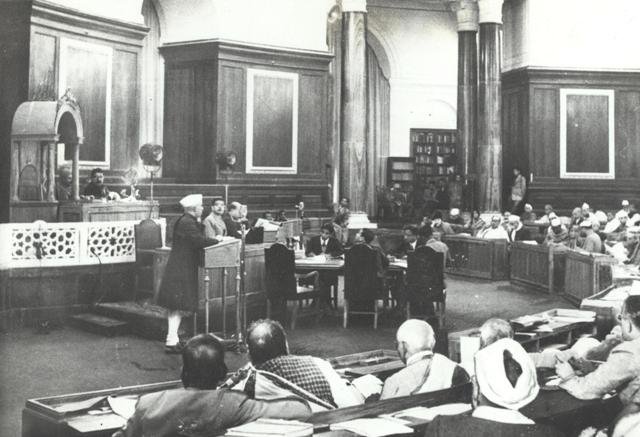
The Constituent Assembly was the body of Indian members that wrote India’s Constitution. Around 300 people became its members in 1946, and they met from time to time over the next three years.
- After 150 years of British rule, Indians were finally free to shape their own future.
- The members came to this task with great idealism (a strong belief in high goals) that the freedom struggle had created in them.
2 Why does a country need a Constitution?
Most countries in the world today have a Constitution. But note one point carefully:
All democratic countries are likely to have a Constitution, but a country that has a Constitution is not necessarily democratic. (Nepal’s 1990 Constitution, below, gave final authority to a King.)
The chapter explains why we need a Constitution through four examples. Each example shows one purpose:
Lays out the ideals
It tells us the fundamental nature of our society. Example: Nepal.
Defines the political system and stops misuse of power
It says who rules and puts limits on leaders. Example: Suresh, the class monitor.
Protects minorities from the majority
It stops a dominant group from using its power against weaker groups. Example: basketball or cricket.
Saves us from ourselves
It stops us from taking hasty decisions that harm our long-term interests. Example: Shabnam and the TV.
2.1 Purpose 1: it lays out the ideals of the country
- A country is made up of different communities. They share some beliefs but do not agree on every issue.
- A Constitution gives a set of rules and principles that everyone can agree on as the basis of how the country should be governed.
- This agreement covers two things: the type of government, and the ideals the country should uphold.
An ideal is a goal or a principle in its most excellent or perfect form.
2.2 The example of Nepal
Nepal borders India on the north. Until recently it was a monarchy (ruled by a King). Its story shows why a new kind of country needs a new Constitution.
Why did the people of Nepal want a new Constitution? The old 1990 Constitution did not reflect the ideals of the country they wanted Nepal to be and had fought for. A democracy cannot run on rules written for a King.
Constitutive rules are the basic rules that make something what it is. Change them and the thing itself changes. Example: change the basic rules of football and you get a different game altogether. Nepal, moving from monarchy to democracy, had to change all its constitutive rules.
2.3 Purpose 2: it defines the political system and guards against misuse of power
- A Constitution defines the nature of a country’s political system. Nepal’s earlier Constitution said the country would be ruled by the King and his council of ministers.
- In a democracy, we choose leaders to use power responsibly on our behalf. But leaders may misuse their authority.
- The Constitution gives safeguards against this. In India, many of these rules are in the section on Fundamental Rights.
The class teacher, Mrs Rao, leaves the room and asks Suresh, the class monitor (and a bully), to mind the class. Suresh picks on Anil for no reason, orders him to write “I will not disobey the class monitor” 100 times, and then falsely tells Mrs Rao that Anil was talking loudly. Suresh is misusing the power given to him, and Anil suffers an injustice.
The Right to Equality is one such safeguard: no citizen can be discriminated against on grounds of religion, race, caste, gender and place of birth.
2.4 Purpose 3: it stops the majority from dominating the minority
In the games period, the girls want to play basketball for a change. The boys want cricket. The teacher settles it by a show of hands; the boys are in a majority, so cricket wins. The girls complain that they always have to do what the boys want, and wish for another way of deciding so that their wishes are also heard.
Tyranny of the majority is when a majority keeps forcing decisions that exclude minorities and go against their interests. (Tyranny means the cruel and unjust use of power or authority.)
A Constitution has rules to make sure minorities are not excluded from anything that is normally available to the majority. Domination can be of two kinds:
Inter-community domination
- One community dominates another community.
Intra-community domination
- Some members of a community dominate other members of the same community.
INTER = between (like inter-school match) · INTRA = within (like intra-class quiz)
2.5 Purpose 4: it saves us from ourselves
Shabnam has a test tomorrow with two chapters left to revise, but her favourite TV programme is on. She asks her family to keep the TV off for everyone that night, so she will not be tempted. Next day the test has many questions from those two chapters, and she is glad she did not watch TV.
- Like Shabnam, a whole people may sometimes feel strongly about something that goes against their larger, long-term interests.
- Example from the book: people may get so fed up with bitter party politics that they want a strong dictator to “set things right”. They may not realise that dictatorship goes against all their interests in the long run.
- A good Constitution does not let such passing moods change its basic structure. It does not allow the easy overthrow of the rules that guarantee citizens’ rights and freedom.
2.6 Recap: the four examples and their constitutive rules
| Example | What the Constitution does |
|---|---|
| Nepal adopts a new Constitution after the people’s movement for democracy | Lays down the ideals that define the kind of country we want to live in |
| Suresh, the class monitor, wrongly picks on Anil | Defines the political system and guards against misuse of authority by leaders |
| The girls cannot play basketball because the boys are a majority | Prevents tyranny of the majority; protects minorities |
| Shabnam revises instead of watching TV | Saves us from ourselves; protects the basic structure from passing moods |
3 Making the Indian Constitution
3.1 Why free India had to be a democracy
- By the start of the twentieth century, the Indian national movement had been fighting British rule for decades. Nationalists spent much time imagining what free India would be like.
- Under the British, Indians had to obey rules they had almost no part in making. This long experience of authoritarian (all-powerful, not answerable to the people) colonial rule convinced them that free India must be a democracy, where everyone is treated equally and can take part in government.
- What was left was to work out how a democratic government would be set up and what rules it would follow. This was done not by one person but by the Constituent Assembly.
3.2 The challenges before the Constituent Assembly
Great diversity
Many communities with different languages, religions and cultures.
Partition
The division of the country into India and Pakistan was about to happen.
Princely States
Some Princely States had not yet decided their future.
Poverty
The social and economic condition of most people was very poor (dismal).
The members rose to the occasion. The Constitution they produced is a visionary document that shows:
- respect for diversity while keeping national unity;
- a concern to remove poverty through social and economic reforms;
- the important role of the people in choosing their representatives.
There was a remarkable sense of unity among the members. Each provision was discussed in great detail, and they sincerely tried to reach agreement by consensus (general agreement). Sardar Vallabhbhai Patel was a prominent member.
3.3 Dr B.R. Ambedkar
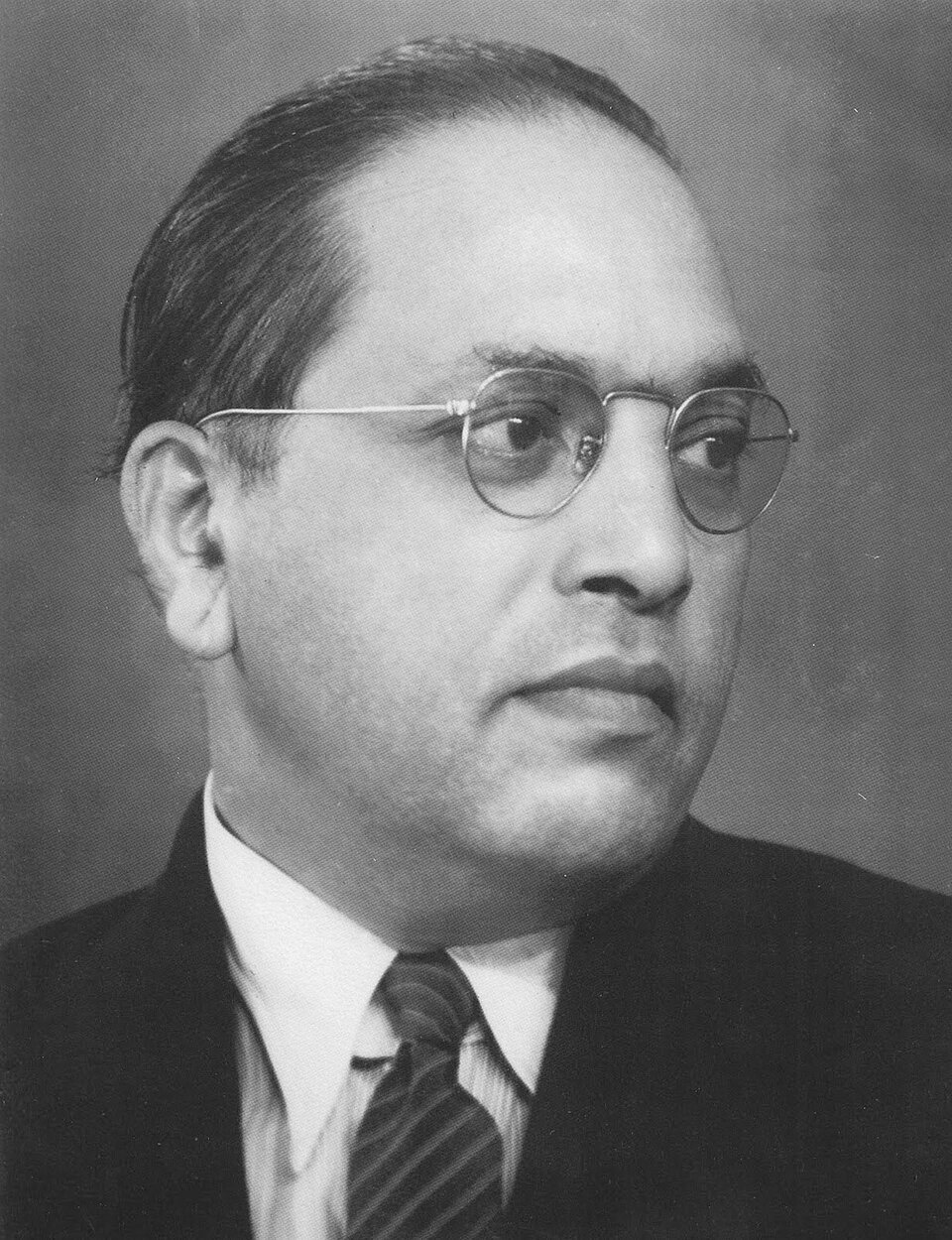
- Baba Saheb Dr Ambedkar is known as the Father of the Indian Constitution.
- He believed his part in the Constituent Assembly helped the Scheduled Castes get some safeguards in the draft Constitution.
- But he warned that even with these laws, Scheduled Castes still had reason to fear, because the laws would be carried out by ‘caste Hindu officers’.
- So he urged Scheduled Castes to join the government and the civil services.
| Post in the Constituent Assembly | Person |
|---|---|
| Chairman, Drafting Committee | Dr B.R. Ambedkar |
| President (permanent) | Dr Rajendra Prasad |
| Temporary (provisional) chairman | Dr Sachchidananda Sinha |
| Chairman, committee on Fundamental Rights and Minorities | Sardar Vallabhbhai Patel |
| Chairman, Union Powers Committee | Jawaharlal Nehru |
| Constitutional Adviser | B.N. Rau |
4 Key features of the Indian Constitution
The book lists five key features. While reading them, remember the four concerns of the makers: diversity, unity, socio-economic reform and representation.
4.1 Federalism
Federalism means the existence of more than one level of government in the country. In India there are governments at the centre and in the states, and Panchayati Raj is the third tier.
- Why it was needed: India has a vast number of communities. Decisions for everyone could not be taken only by people sitting in New Delhi. Each state needed its own government to decide for that area.
- Each state enjoys autonomy (freedom to decide) on certain issues, but on subjects of national concern all states follow the laws of the central government.
- The Constitution contains lists of the subjects on which each tier can make laws, and also says where each tier gets its money from.
- The states are not merely agents of the central government: they draw their authority from the Constitution too.
- Every person in India is governed by laws and policies made at each of these levels.
| List | Who makes laws | Examples |
|---|---|---|
| Union List (97 subjects at the start, in 1950) | Central government | Defence, foreign affairs, currency, banking |
| State List (66 subjects at the start) | State governments | Police, public health, agriculture |
| Concurrent List (47 subjects at the start) | Both centre and states | Marriage and adoption, criminal law; education and forests were moved here from the State List by the 42nd Amendment (1976) |
4.2 Parliamentary form of government
- Every tier of government is made up of representatives elected by the people.
- The Constitution guarantees universal adult suffrage for all citizens.
- The people of India have a direct role in electing their representatives.
- Every citizen, whatever his or her social background, can also contest elections.
- These representatives are accountable (answerable) to the people.
Universal adult suffrage (or universal adult franchise) means that every adult citizen has the right to vote, whatever their religion, caste, class, gender, wealth or education.
Why did the Assembly choose universal adult suffrage?
When the Assembly adopted universal adult franchise, member Shri A.K. Ayyar said it was done “with an abundant faith in the common man and the ultimate success of democratic rule, and in the full belief that the introduction of democratic government on the basis of adult suffrage will bring enlightenment and promote the well-being, the standard of life, the comfort, and the decent living of the common man”.
Quoted in Austin, G. 1966. The Indian Constitution: Cornerstone of a Nation. Clarendon Press, Oxford.
When the Constitution began, the voting age was 21 years. The 61st Constitutional Amendment Act, 1988 lowered it to 18 years. Today every citizen aged 18 or above can vote.
4.3 Separation of powers
The Constitution creates three organs of government:
| Organ | Who it is (as in the book) | Main job, in general |
|---|---|---|
| Legislature | Our elected representatives | Makes laws |
| Executive | A smaller group of people | Implements laws and runs the government |
| Judiciary | The system of courts in the country | Settles disputes and interprets laws |
- Why separate them? To prevent the misuse of power by any one branch, each organ uses different powers.
- Each organ acts as a check on the others, so there is a balance of power among all three.
- The members of the Assembly feared that the executive might become too strong and ignore its responsibility to the legislature. So they added several provisions to limit and control the executive.
4.4 The State and the government are not the same
State
- A political institution that represents a sovereign people living in a definite territory.
- Examples: the Indian State, the Nepali State.
- Wider: the government is only one part of it.
Government
- Responsible for administering and enforcing laws.
- Can change with elections.
- The government (executive) is one part of the State.
In this chapter “State” with a capital S does not mean a state government like Bihar or Kerala. The two words cannot be used in place of each other. The Indian State has a democratic form of government.
Sovereign, in this chapter, means an independent people. A polity is a society with an organised political structure; India is a democratic polity.
4.5 Fundamental Rights
Fundamental Rights are the basic rights that the Constitution guarantees to every citizen and protects against misuse of power. The section on Fundamental Rights is often called the ‘conscience’ of the Indian Constitution.
Why were they included?
- Colonial rule had made the nationalists suspicious of the State. They wanted written rights to guard against misuse of State power in free India.
- Fundamental Rights protect citizens against the arbitrary and absolute use of power by the State. (Arbitrary: not fixed, left to someone’s own choice, with no proper basis.)
- They guarantee the rights of individuals against the State and also against other individuals.
- Minority communities asked for rights to protect their groups, so the Constitution also guarantees the rights of minorities against the majority.
Dr Ambedkar said the object of the Fundamental Rights is two-fold: first, every citizen must be in a position to claim those rights; second, these rights must be binding upon every authority that has the power to make laws.
The six Fundamental Rights in the book:
| Right | What it means |
|---|---|
| 1. Right to Equality | All persons are equal before the law and equally protected by it. No citizen can be discriminated against on the basis of religion, caste or sex. Everyone can use public places such as playgrounds, hotels and shops. The State cannot discriminate in employment (with some exceptions you will read about later). Untouchability has been abolished. |
| 2. Right to Freedom | Freedom of speech and expression; to form associations; to move freely and live in any part of the country; to practise any profession, occupation or business. |
| 3. Right against Exploitation | Bans human trafficking, forced labour and the employment of children under 14 years. |
| 4. Right to Freedom of Religion | Every person can practise, profess and propagate the religion of their choice. |
| 5. Cultural and Educational Rights | All minorities, religious or linguistic, can set up their own educational institutions to preserve and develop their culture. |
| 6. Right to Constitutional Remedies | Citizens can go to court if they believe the State has violated any of their Fundamental Rights. |
Human trafficking is the illegal buying and selling of goods across national borders. In the context of Fundamental Rights, it means the illegal trade in human beings, particularly women and children.
E F E R C R : Equality, Freedom, Exploitation (against), Religion, Culture and education, Remedies
Article 17 of the Constitution abolishes untouchability.
4.6 Directive Principles of State Policy
The Directive Principles of State Policy are a section of the Constitution meant to bring about greater social and economic reforms. They guide the Indian State to make laws and policies that help reduce the poverty of the masses.
Fundamental Rights
- Rights every citizen can claim
- Protect citizens against misuse of State power
- If violated, citizens can go to court
Directive Principles
- Guidelines for the State
- Aim at social and economic reform
- Help reduce poverty of the masses
4.7 Secularism
A secular state is one in which the state does not officially promote any one religion as the state religion. (You will read more about this in Chapter 2.)
5 A changing Constitution, and our duties
- A country’s history often decides the kind of Constitution it adopts.
- The Constitution lays down ideals that all citizens, and the representatives we elect, should follow.
- Just as changing the rules changes a football game, the Indian Constitution has been amended (changed) over the years to reflect new concerns. A major change often means a change in the fundamental nature of the country, as Nepal showed.
Fundamental Duties are the duties the Constitution expects every citizen to perform. There are 11 of them.
- Abide by the Constitution and respect its ideals, institutions, the National Flag and the National Anthem.
- Cherish and follow the noble ideals of the freedom struggle.
- Uphold and protect the sovereignty, unity and integrity of India.
- Defend the country and render national service when called upon.
- Promote harmony and brotherhood among all people, and give up practices that insult the dignity of women.
- Value and preserve our rich composite culture.
- Protect and improve the natural environment, and have compassion for living creatures.
- Develop a scientific temper, humanism and the spirit of inquiry and reform.
- Safeguard public property and give up violence.
- Strive towards excellence in all spheres of activity.
- Parents or guardians to provide opportunities for education to their child aged 6 to 14.
Ten duties were added by the 42nd Amendment (1976); the eleventh was added by the 86th Amendment (2002). Duties matter in a democracy because rights work only when citizens also respect the rights of others and the common good.
6 Signing the Constitution (24 January 1950)
The book’s photos show members signing a copy of the Constitution at the Assembly’s final session on 24 January 1950:
| Person | Post (as given in the book) |
|---|---|
| Pandit Jawaharlal Nehru | Prime Minister |
| Dr Rajendra Prasad | President of the Constituent Assembly |
| Shri Jairamdas Daulatram | Minister for Food and Agriculture |
| Rajkumari Amrit Kaur | Health Minister |
| Dr John Mathai | Finance Minister |
| Sardar Vallabhbhai Patel | Deputy Prime Minister |
| Shri Jagjivan Ram | Labour Minister |
7 All definitions in one place
8 Quick revision
- 1934 INC demand; Assembly convened December 1946; drafted Dec 1946 to Nov 1949; about 300 members; signed 24 January 1950.
- Not every country with a Constitution is democratic.
- Four purposes: ideals (Nepal), defines political system and stops misuse of power (Suresh), protects minorities from tyranny of the majority (basketball), saves us from ourselves (Shabnam).
- Nepal: 1990 Constitution with the King; 2006 movement; 2008 monarchy abolished; 2015 new Constitution.
- Inter-community = between communities; intra-community = within one community.
- Challenges: diversity, Partition, Princely States, poverty. Ambedkar = Father of the Constitution.
- Five features: federalism, parliamentary form, separation of powers, Fundamental Rights, secularism.
- Three organs: legislature, executive, judiciary; each checks the others.
- State is wider than government; government changes with elections.
- Six rights: equality, freedom, against exploitation, freedom of religion, cultural and educational, constitutional remedies.
- Directive Principles guide the State to reduce poverty; Fundamental Duties are 11.
- Can I give four reasons why a democracy needs a Constitution, with one example each?
- Can I explain the difference in who held executive power in Nepal’s 1990 and 2015 Constitutions?
- Can I name the five key features and write why each is important?
- Can I list all six Fundamental Rights, without forgetting the Right to Constitutional Remedies?
- Can I explain the difference between the State and the government?