
- Tell Sudha Murty’s story in the right order, stage by stage, with the key lines in the grandmother’s own words
- Explain how the novel Kashi Yatre works as a story inside the story
- Write character sketches of Krishtakka and the narrator, and the themes and message
- Use the unit’s grammar and vocabulary: past perfect, binomials, prefixes, idioms of learning
- Set out a letter to the editor in the format the book gives
- Explain the poem Bharat Our Land line by line and name each poetic device with its exact line
1 The Unit at a Glance
Unit 1 of Kaveri has two texts: the story How I Taught My Grandmother to Read and the poem Bharat Our Land.
| Main text | Companion text | |
|---|---|---|
| Title | How I Taught My Grandmother to Read | Bharat Our Land |
| Writer | Sudha Murty | Subramania Bharati |
| Form | Prose: a story told in the first person (“I”) by the granddaughter who teaches her grandmother | Poem: an ode praising India |
| Big idea | For learning there is no age bar; education brings independence | India is peerless, so let us praise her |
About the writer. The book’s own introduction tells us that Sudha Murty has been awarded both the Padma Shri and the Padma Bhushan. The story comes from her collection How I Taught My Grandmother to Read and Other Stories (2004). Inside the story the narrator tells us she later became “a teacher in Computer Science” who taught hundreds of students.
A first-person narrator is a character who tells the story using “I”. Here the narrator is the granddaughter, “a girl of about twelve”, who later becomes “a teacher in Computer Science”. The story is widely read as Sudha Murty’s memory of her own grandmother, but the book itself simply calls it a story.
2 The Story, Stage by Stage
2.1 Part I: the village, the serial and the tears
Avva’s life story. She lost her mother as a young girl, and there was nobody to guide her. Her father was busy and married again. “In those days people never considered education essential for girls,” so she never went to school. She married very young, had children and grandchildren, and found happiness in cooking and feeding everyone. At times she regretted not going to school, so she made sure her children and grandchildren studied well.
Avva is what the narrator calls her grandmother. The book explains that it “means mother in the Kannada spoken in north Karnataka.”
2.2 Part II: the resolution, the lessons and the reward
‘I am touching the feet of a teacher, not my granddaughter; a teacher who taught me so well, with so much of affection that I can read any novel confidently in such a short period. Now I am independent. It is my duty to respect a teacher. Is it not written in our scriptures that a teacher should be respected, irrespective of the gender and age?’
Krishtakka, on Dassara day
A tempting wrong answer is that the grandmother asked a neighbour to read the episode. She did not. She says she “could have asked somebody in this village but I was too embarrassed to do so.”
3 Kashi Yatre: a Story Inside the Story
Triveni was “a very popular writer in the Kannada language.” Her style was easy to read and convincing, and her stories dealt with “complex psychological problems in the lives of ordinary people.” She died very young, yet even after forty years people still appreciate her novels.
In Kashi Yatre, an old lady has an “ardent desire” (a keen wish) to go to Kashi, or Varanasi. Most Hindus believe that going to Kashi and worshipping Lord Vishweshwara is “the ultimate punya” (the highest religious merit). But a young orphan girl in the story falls in love and has no money for her wedding. In the end, the old lady gives away all her savings without going to Kashi, saying, ‘The happiness of this orphan girl is more important than worshipping Lord Vishweshwara at Kashi.’
| Point | The old lady in Kashi Yatre | Krishtakka |
|---|---|---|
| Kashi | Longs to go, but never goes | “My grandmother too never went to Kashi” |
| What she values | Another person’s happiness above her own pilgrimage | Her own independence through learning to read |
| Link | Krishtakka “identified herself with the novel’s protagonist”, so she was the most eager of all to hear each episode | |
“What significance does the story of Kashi Yatre have in both the grandmother’s life and the story?” is a Critical Reflection question. Make three points: (1) Krishtakka identifies with its heroine; (2) missing one episode shows her how helpless she is without reading, which leads to her decision to learn the alphabet; (3) the published novel is the gift and the final test that proves she can read.
4 Characters
| Trait | Krishtakka (Avva), the grandmother | The narrator (the granddaughter) |
|---|---|---|
| Age | Sixty-two | About twelve |
| Key quality | Determined: sets a deadline and keeps it | Loving and caring: holds her hand, asks ‘Can I help you in any way?’ |
| Other qualities | Strong-willed (never cried “even in the most difficult situations”); hardworking (“The amount of homework she did was amazing”); humble and respectful (touches her teacher’s feet); values independence over money | Childish at first (“Childishly I made fun of the old lady”); an affectionate teacher (“with so much of affection”); thoughtful (secretly buys the novel as a gift) |
| Change | From “dependent and helpless” to “Now I am independent” | From laughing at Avva to respecting her; she later becomes a teacher of hundreds (“Little did I know then that one day I would become a teacher in Computer Science”) |
5 Themes and Message
5.1 Six themes these notes draw from the story
No age bar for learning
A sixty-two-year-old learns to read “in such a short period”. “For learning there is no age bar.”
Education means independence
Money could not help Avva: “what use is money when I cannot be independent?” Reading gives her freedom.
Respect for the teacher
A teacher deserves respect “irrespective of the gender and age”, so the elder touches the young teacher’s feet.
Girls’ education
Avva missed school because people “never considered education essential for girls.” The story quietly shows what that cost her.
Bond between generations
Grandmother and granddaughter swap roles: the child teaches and the elder learns.
Determination
‘For a good cause if you are determined, you can overcome any obstacle.’
Role reversal is when two people swap their usual positions. Here the elder becomes the student and the child becomes the teacher, and the elder touches the child’s feet, the reverse of the usual custom.
5.2 How the story is told (style)
- First-person memory: an adult looks back on her childhood, so we see both the child’s reactions (“Yet I laughed at her”) and the adult’s understanding.
- Simple, direct language with Kannada and Indian words: Avva, punya, namaskara, puja, Dassara.
- Story within a story: Kashi Yatre mirrors and moves the main plot.
- A happy, circular ending: the book that caused the tears becomes the gift that proves she can read.
6 Words and Grammar from the Story
6.1 Glossary
| Word | Meaning |
|---|---|
| ardent | keen (book’s margin note) |
| savouring | enjoying it to the fullest (book’s margin note) |
| immensely | extremely (book’s margin note) |
| taken aback | surprised by something unexpected (book’s margin note) |
| protagonist · debate · episode · community | main character · discussion · a part of a story · people living in one particular area |
| concentration · eagerly · convincing · guided | focus · excitedly · believable · directed |
6.2 Binomials
Binomials are “expressions consisting of two words, usually linked by a conjunction like ‘and’ or ‘or’, that are commonly used together in a fixed order.” The story uses hide and seek. Other examples: odds and ends, right or wrong.
| Binomial | Meaning | Binomial | Meaning |
|---|---|---|---|
| sink or swim | succeed or fail without help | part and parcel | complete part of or belong to |
| on and off | sometimes, occasionally | pick and choose | choose only the best |
| mix and match | put different things together to get a range of possibilities | sooner or later | at some time in the future |
| all or nothing | something to be done completely or not at all | leaps and bounds | increase or develop very quickly |
6.3 Prefixes that make opposites
A prefix is a group of letters added to the front of a word to change its meaning. The story’s words unhappy, unusual, unfortunately, irrespective, independent use un-, ir-, in- to give an opposite or negative meaning.
| Prefix | Words from the story |
|---|---|
| un- | unpopular, unimportant, uninteresting |
| dis- | disbelief, disrespect, discontinue |
| in- / im- | incorrect · impossible |
| mis- · extra- | misunderstand · extraordinary |
6.4 Idioms about learning
An idiom is a phrase whose meaning is different from the meanings of its separate words. “Passed with flying colours” means outstanding performance.
| Idiom | Meaning |
|---|---|
| to hit the books | to study seriously |
| to draw a blank | to be unable to remember |
| to learn the ropes | to understand how to do an activity |
| to rack one’s brain | to think very hard |
| to learn by heart | to memorise something |
| burn the midnight oil | to study or work late into the night |
6.5 Simple past and past perfect
“Secretly I bought Kashi Yatre which had been published as a novel by that time.” The novel was published first (past perfect); she bought it later (simple past).
“I knew then that my student had passed with flying colours.” The passing came first; the knowing came after.
Do not put both verbs in the past perfect. “By the time I reached the party, everyone had finished eating”: only the earlier action (finishing) gets had.
7 Writing Task: Letter to the Editor
“A letter to the editor is a formal letter in which the writer gives suggestions and creates awareness on an issue of public interest or an issue already raised in an article/write-up/published letter.”
Language: formal, clear and specific; short, to-the-point sentences; purpose stated clearly and concisely; relevant details given. A full model letter on student volunteers in adult literacy camps is in the NCERT Solutions for this unit.
The unit’s “Do you know?” box names the bodies behind different kinds of literacy: the National Literacy Mission Authority (NLMA) and the Directorate of Adult Education (DAE) for adult education; the National Centre for Financial Education (NCFE) for financial literacy; the Early Literacy Project (ELP), which “primarily targets out-of-school children and youth as well as under-achieving school-going children (in Grades 1, 2, and 3)” attending rural government primary schools; and the Centre for Cultural Resources and Training (CCRT) for cultural literacy. The unit also notes that India has 22 major languages according to the Eighth Schedule of the Indian Constitution. The listening text adds digital literacy and the Digital Saksharta Abhiyan (DISHA), also called the National Digital Literacy Mission (NDLM).
“Turncoat is a type of solo debate where the speaker argues for and against a topic, switching sides after a certain period of time.” In this unit you speak for one minute each way.
8 Bharat Our Land: the Poem
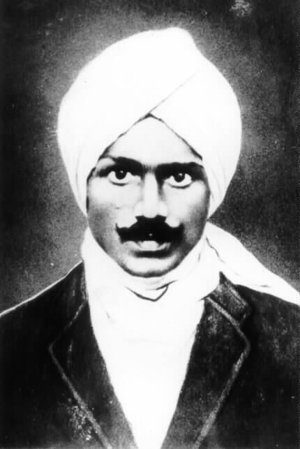
“Bharat Our Land” is by Subramania Bharati; the book’s acknowledgements say it is taken from Poems of Subramania Bharati. The book prints 16 lines of it, in which the poet lists the glories of India, her mountains, river, scriptures, warriors, sages, music and ancient wisdom, and twice ends with the call “she’s peerless, let’s praise her!”
“An ode is a lyrical poem that expresses deep admiration, praise, or reverence for a person, place, object, or idea.” Its language is grand and expressive. “Bharat Our Land” is an ode to India.
8.1 Lines 1 to 8: four things that are “ours”
| Line | What it says | Meaning |
|---|---|---|
| “The mighty Himavant is ours- there’s no equal anywhere on earth.” |
The Himalaya (Himavant) is mighty and has no equal. | Strength and permanence |
| “The generous Ganga is ours- which other river can match her grace?” |
The Ganga gives freely and flows gracefully. | Purity and generosity |
| “The sacred Upanishads are ours- what scriptures else to name with them?” |
No other scriptures can be named beside the Upanishads. | Spiritual and philosophical legacy |
| “This sunny golden land is ours- she’s peerless, let’s praise her!” |
India is bright, rich and without equal. | Richness and glory |
8.2 Lines 9 to 16: people, wisdom and history
- “Gallant warriors have lived here, / many a sage has sanctified this land.” Brave fighters and holy men have made the land great and pure (sanctified = blessed, purified).
- “The divinest music has been heard here, / and here all auspicious things are found.” The finest, most heavenly music belongs here, and so does everything lucky and favourable (auspicious = fortunate, favourable).
- “Here Brahma-knowledge has taken root, / and the Buddha preached his dhamma here.” Deep spiritual knowledge grew here, and the Buddha taught here.
- “Of hoary antiquity is Bharat, / she’s peerless, let’s praise her! …” India is extremely ancient (hoary antiquity = ancient times, time immemorial) and has no equal.
The poem is a tribute to India, celebrating its natural beauty, spiritual heritage and historical greatness. The poet repeatedly asserts that India is peerless and urges everyone to praise her.
8.3 Mood, tone and rhyme scheme
| Feature | Answer |
|---|---|
| Mood (effect on reader) | Proud, patriotic and uplifting |
| Tone (poet’s attitude) | Admiring, reverent and celebratory |
| Rhyme scheme | No regular rhyme scheme. Apart from the end-word “ours” repeated in lines 1, 3, 5 and 7 (repetition, not rhyme), the line endings (earth / grace / them / her) do not rhyme. In the second and third stanzas “here” recurs as a line-end (lines 9, 11 and 14); the music comes from repetition and the refrain instead. |
8.4 Poetic devices, each with its exact line
| Device | What it means | Line from the poem |
|---|---|---|
| Refrain | A line repeated in a poem | “she’s peerless, let’s praise her!” (lines 8 and 16) |
| Personification | Giving human qualities to a thing | India as “she”/”her” (“let’s praise her!”); the Ganga’s “grace” and generosity (“match her grace”) |
| Metaphor | A direct comparison without “like” or “as” | “This sunny golden land”: India is bright and prosperous |
| Imagery | Descriptive language that creates mental pictures | “The mighty Himavant”; “The generous Ganga”; “This sunny golden land” |
| Rhetorical question | A question asked for effect, to emphasise a point | “which other river can match her grace?”; “what scriptures else to name with them?” |
| Hyperbole | Extreme exaggeration for effect | “there’s no equal anywhere on earth”; “The divinest music has been heard here”; “here all auspicious things are found” |
| Allusion | An indirect reference to a well-known person, place, work or idea | “The sacred Upanishads”; “Brahma-knowledge”; “the Buddha preached his dhamma” |
| Symbolism | An object standing for an idea | Himavant (strength, permanence); Ganga (purity, generosity); Upanishads (spiritual and philosophical legacy); warriors and sages (courage, wisdom); Brahma-knowledge and the Buddha’s dhamma (knowledge and enlightenment); sunny golden land (richness and glory) |
| Alliteration | Same first sound in nearby words | “she’s peerless, let’s praise her!” (repeated /p/) |
| Hyphen | A pause mark after “ours-“ | “The mighty Himavant is ours-“ |
Hyperbole “is a figure of speech that involves extreme exaggeration to highlight a point or create a dramatic effect. It is not meant to be taken literally.” Book’s example: “My luggage weighs a tonne.”
Allusion “is a literary device where a writer makes an indirect reference to a well-known person, place, event, literary work, or cultural element without explicitly mentioning it.” Book’s example: “He is a real Einstein in the mathematics class.”
Three effects are correct: they create deliberate pauses that reinforce admiration and pride; they give a measured, chant-like rhythm; and they place a key element of India’s greatness before the hyphen and a strong claim of uniqueness after it. They do not show hesitation, and they do not contrast strengths with weaknesses.
8.5 Suffixes from the poem
| Suffix | Meaning | Word in the poem |
|---|---|---|
| -ous | full of, having the qualities of | generous |
| -ity | the state of | antiquity |
| -est | superlative form | divinest |
| -less | without something | peerless |
9 Quick Revision
- The narrator, a girl of about twelve, reads the serial Kashi Yatre (Triveni, in Karmaveera) every Wednesday to her unlettered grandmother Krishtakka (Avva).
- A week-long wedding trip leaves Avva unable to read an episode; she feels “dependent and helpless” despite being well-off.
- At sixty-two she resolves to read a novel by Saraswati Puja day during Dassara: “For learning there is no age bar.”
- She works hard; on Dassara she touches her teacher’s feet, respecting a teacher “irrespective of the gender and age”, and reads the title of the gifted novel at once.
- Themes: no age bar for learning, education as independence, respect for teachers, girls’ education, role reversal.
- Grammar: past perfect for the earlier of two past actions; binomials; prefixes; idioms of learning; letter to the editor format.
- Bharat Our Land (Subramania Bharati) is an ode: Himavant, Ganga, Upanishads, the sunny golden land, warriors, sages, Brahma-knowledge and the Buddha show India’s greatness.
- Refrain “she’s peerless, let’s praise her!”; no regular rhyme scheme; devices: personification, metaphor, imagery, hyperbole, allusion, symbolism, rhetorical questions.