1Why This Chapter: Native Peoples, Then and Now
1.1 What This Chapter Covers
This chapter tells parts of the history of the native peoples of America and Australia. A different chapter, Theme 8, already covered the Spanish and Portuguese colonisation of South America, so this chapter does not repeat that. From the eighteenth century, more of South America, Central America, North America, South Africa, Australia and New Zealand came to be settled by immigrants from Europe. This pushed many native peoples out into other areas. These European settlements were called colonies. Once the European inhabitants of a colony became independent of their European “mother-country”, that colony became a “state” or country.
A colony is a territory settled and controlled by people from another country. When the European settlers of a colony later became politically independent of their “mother-country” in Europe, the colony became a “state” or country in its own right.
In the nineteenth and twentieth centuries, people from Asian countries also migrated to some of these lands. Today, Europeans and Asians together form the majority in these countries, and the number of native inhabitants is very small: they are hardly seen in the towns, and people have largely forgotten that they once occupied much of the country. Even so, the names of many rivers and towns still come from native words: Ohio, Mississippi and Seattle in the USA, Saskatchewan in Canada, Wollongong and Parramatta in Australia.
Names of native tribes have even become brand names for things completely unrelated to them: Dakota (an aeroplane), Cherokee (a jeep), Pontiac (a car) and Mohawk (a haircut)!
1.2 How Native Histories Went Missing, and Came Back
Till the middle of the twentieth century, American and Australian history textbooks described how Europeans “discovered” the Americas and Australia, and hardly mentioned native peoples except to call them hostile. Native peoples were, however, studied by anthropologists in America from the 1840s. Much later, from the 1960s, native peoples were encouraged to write their own histories, or to dictate them, which is called oral history.
Oral history is history that a community dictates or narrates out loud, from memory and tradition passed down across generations, rather than writing it down themselves. From the 1960s, native peoples in America were encouraged to record their histories this way.
Today, it is possible to read historical works and fiction written by native peoples themselves, and visitors to museums in these countries can see galleries of “native art” and special museums that show the native way of life. The National Museum of the American Indian in the USA has been curated by American Indians themselves.
A one-mark question often asks: “Give two examples of native-derived place names.” Always name one from the USA/Canada (Ohio, Mississippi, Seattle, Saskatchewan) and one from Australia (Wollongong, Parramatta) to show you know both halves of the chapter.
2European Imperialism and the “New World”
2.1 From Trade to Colonies
The American empires of Spain and Portugal did not expand after the seventeenth century. From that time, other countries, namely France, Holland and England, began extending their trading activities and establishing colonies in America, Africa and Asia. Ireland, too, was virtually a colony of England, since its landowners were mostly English settlers.
From the eighteenth century, profit was always the reason for establishing colonies, but the actual style of control varied a great deal by region:
| Region | How European control worked there |
|---|---|
| South Asia | Trading companies such as the East India Company turned themselves into political powers, defeated local rulers and annexed territory. They kept the older, well-developed administrative system, collected taxes from landowners, and later built railways, dug mines and set up big plantations. |
| Africa | Europeans traded only on the coast (except in South Africa), and only ventured into the interior from the late nineteenth century. After that, European countries agreed among themselves to divide up Africa as colonies. |
| America, Ireland, New Zealand, Australia, South Africa | The word “settler” is used here: for the Dutch in South Africa, the British in Ireland, New Zealand and Australia, and Europeans generally in America. |
A settler colony is one where large numbers of Europeans moved in permanently to live on and farm the land themselves, rather than simply trading or administering from a distance. English was the official language in these colonies, except in Canada, where French is also an official language.
2.2 Naming the “New World”
Europeans gave new names to the lands they reached, and these names are still used today. The Geographical Dictionary lists over a hundred place-names in the Americas and Australia that begin with “New”.
| Name | Where it came from |
|---|---|
| “America” | First used after the travels of Amerigo Vespucci (1451-1512) were published |
| “Canada” | From kanata (“village” in the Huron-Iroquois language), as heard by the explorer Jacques Cartier in 1535 |
| “Australia” | A sixteenth-century name for land in the Great Southern Ocean (austral is Latin for “south”) |
| “New Zealand” | Named by Tasman of Holland, the first European to sight the islands, in 1642 (zee is Dutch for “sea”) |
3North America: The Land and Its First Peoples
3.1 The Land
The continent of North America extends from the Arctic Circle to the Tropic of Cancer, and from the Pacific to the Atlantic Ocean. West of the Rocky Mountains lie the deserts of Arizona and Nevada, then further west the Sierra Nevada mountains; to the east are the Great Plains, the Great Lakes, the valleys of the Mississippi and the Ohio, and the Appalachian Mountains. Mexico lies to the south. Forty per cent of Canada is covered with forest, and oil, gas and mineral resources across the region explain the many big industries in the USA and Canada. Wheat, corn and fruit are grown extensively, and fishing is a major industry in Canada.
Mining, industry and extensive agriculture have been developed only in the last 200 years, by immigrants from Europe, Africa and China. But people had been living in North America for thousands of years before Europeans even learnt of its existence.
3.2 The Native Peoples of North America
The earliest inhabitants of North America came from Asia over 30,000 years ago, crossing a land-bridge across the Bering Straits, and moved further south during the last Ice Age, 10,000 years ago. The oldest artefact found in America, an arrow-point, is 11,000 years old. The population began to increase about 5,000 years ago, once the climate became more stable.
“At sunset on the day before America [before the Europeans reached there and gave the continent this name], diversity lay at every hand. People spoke in more than a hundred tongues. They lived by every possible combination of hunting, fishing, gathering, gardening, and farming open to them… Some cultures had endured for millennia…” (William Macleish, The Day before America)
These peoples lived in bands, in villages along river valleys. They ate fish and meat, and cultivated vegetables and maize. They often travelled long distances hunting bison (the wild buffalo that roamed the grasslands); this became easier from the seventeenth century, once natives began riding horses bought from Spanish settlers. But they only killed as many animals as they needed for food.
They did not attempt extensive agriculture, and since they did not produce a surplus, they did not develop kingdoms and empires the way Central and South America did. There were occasional quarrels between tribes over territory, but by and large, control of land was not an issue: they were content with the food and shelter the land gave them, without feeling any need to “own” it. An important part of their tradition was making formal alliances and friendships, and exchanging gifts: goods were obtained not by buying them, but as gifts.
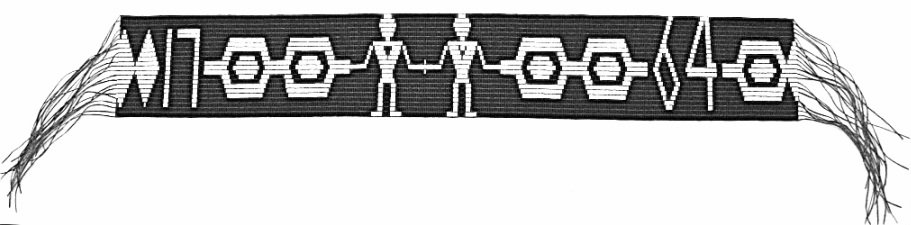
Wampum belts were belts made of coloured shells sewn together, which native tribes of North America exchanged with each other after agreeing to a treaty. They were a way of recording and honouring an agreement without any writing.
Numerous languages were spoken across North America, though none of them were written down. Native peoples believed time moved in cycles, and each tribe carried accounts of their own origins and earlier history, passed on from one generation to the next. They were skilled craftspeople who wove beautiful textiles, and they could “read the land”: understanding climates and landscapes the way a literate person reads a written text.
Do not write that North American natives were “primitive” because they had no kingdoms or empires. NCERT’s own explanation is precise: they did not produce agricultural surplus, and so had no economic need to build kingdoms. This was a choice shaped by how they lived, not a lack of ability.
3.3 Naming the Native Peoples
English uses several different terms for the native peoples of the “New World”, and an exam can ask you to match the term to its meaning:
4Two Ways of Seeing the Same Land
4.1 First Encounters: Trading, Not Yet Taking
“…they got up in the morning and looked out at the sunrise. They looked out across the desert and they saw the Spanish Conquistadores coming, covered in armour, like turtles across the land… So they went out to the Spanish man and they extended their hand hoping for the handshake but into the hand the Spanish man dropped a trinket.” (from a talk by Lee Brown, 1986)
In the seventeenth century, European traders who reached the north coast of North America after a difficult two-month voyage were relieved to find native peoples friendly and welcoming. Unlike the Spanish in South America, who were overcome by the abundance of gold, these adventurers came to trade in fish and furs, helped willingly by natives who were expert hunters. Further south, along the Mississippi, the French found that natives held regular gatherings to exchange handicrafts unique to one tribe, or food not available in other regions.
In exchange for local products, Europeans gave natives blankets, iron vessels (sometimes used instead of clay pots), guns (a useful supplement to bows and arrows), and alcohol. Alcohol was something natives had not known before, and they became addicted to it, which suited the Europeans, since it let them dictate the terms of trade. In turn, Europeans acquired an addiction to tobacco from the natives.
4.2 Mutual Perceptions
In the eighteenth century, western Europeans defined “civilised” people as literate, urban, and belonging to an organised religion. To them, the natives of America appeared “uncivilised”. To some, like the French philosopher Jean-Jacques Rousseau, such people were to be admired precisely because they were untouched by the corruptions of “civilisation”; a popular term for this was “the noble savage”. The English poet William Wordsworth, in a poem, described natives as living “amid wilds” with only limited powers of imagination and emotion, though neither he nor Rousseau had ever actually met a native American.
Thomas Jefferson, third President of the USA, is quoted in the book saying of natives: “This unfortunate race which we have been taking so much pains to civilise… have justified extermination.” NCERT includes this specifically to show it is a quote that “would lead to a public outcry today”. Never present it as a neutral or acceptable historical opinion.
Not every European view was hostile. Washington Irving, who had actually met native people (unlike Wordsworth or Rousseau), wrote that they were “taciturn” only around white men whose goodwill they distrusted, but were “great mimics” and entertained themselves at the expense of whites among their own company, and he criticised white men for treating “the poor Indians as little better than animals”.
What natives thought exchanged goods were
- Gifts, given in friendship
- No sense of a distant European “market” setting prices
- Confused and saddened that prices varied year to year
- Uneasy about Europeans’ greed for furs, which killed hundreds of beavers
What Europeans thought they were
- Commodities, to sell for profit back in Europe
- Prices set by a distant market natives could not see
- An opportunity: natives’ unfamiliarity with alcohol let Europeans dictate trade terms
- A one-sided bargain, though rarely described that way by the traders themselves
4.3 Two Ways of Seeing Land Itself
From the seventeenth century, groups of Europeans persecuted for their religion (Protestants in Catholic countries, or Catholics where Protestantism was official) began leaving Europe to start new lives in America. As long as there was vacant land this was not a problem, but gradually Europeans moved further inland, near native villages, using iron tools to cut down forests and lay out farms.
Natives and Europeans quite literally saw different things when they looked at the same forest: natives identified tracks invisible to Europeans, while Europeans imagined the forest cut down and replaced with cornfields. President Thomas Jefferson’s “dream” was a country of small European-owned farms. Natives, who grew crops only for their own needs and not for sale or profit, thought it wrong to “own” land at all, which, in Jefferson’s view, only made them “uncivilised”.
“Explain the different images Europeans and native Americans had of nature and of each other” (NCERT’s Activity 1) is a favourite 3-mark question. Always give both halves: how each side saw the forest/land, AND how each side saw the other’s culture.
5The Frontier Moves West
5.1 The USA and Canada Take Shape
The countries known as Canada and the United States of America came into existence at the end of the eighteenth century, occupying only a fraction of the land they cover today. Over the next hundred years they extended their control to reach their present size. Large areas were acquired by the USA through purchase: land in the south from France (the “Louisiana Purchase”) and Alaska from Russia, and through war, winning much of southern USA from Mexico. It did not occur to anyone that the consent of the natives living in these areas should have been asked.
The frontier was the shifting western edge of European-American settlement in the USA. As the frontier kept moving west through the nineteenth century, the natives living beyond it were repeatedly forced to move further back.
5.2 New Farms, New Crops, and a Fenced Landscape
The landscape of America changed drastically in the nineteenth century. Some migrants from Britain and France were younger sons who would not inherit their fathers’ property, and were eager to own land in America themselves. Later waves came from Germany, Sweden and Italy, people who had lost their land to big farmers at home and wanted farms of their own, while people from Poland were drawn to the prairie grasslands, which reminded them of the steppes back home, and were excited to buy huge properties cheaply. Settlers introduced crops like rice and cotton, which could not grow in Europe and could therefore be sold there for profit. To protect their huge farms, wolves and mountain lions were hunted to extinction, and settlers felt fully secure only once barbed wire was invented in 1873.
5.3 Slavery in the South
The climate of the southern region was too hot for Europeans to work outdoors comfortably, and the experience of South American colonies had already shown that enslaved natives died in large numbers. Plantation owners therefore bought slaves from Africa instead. Protests by anti-slavery groups led to a ban on the slave trade, but Africans already enslaved in the USA, and their children, remained slaves.
The northern states, whose economy did not depend on plantations, argued for ending slavery as an inhuman practice. In 1861-65, a war was fought between states that wanted to retain slavery and those supporting abolition; the latter won, and slavery was abolished. It was only in the twentieth century, however, that African Americans won the battle for civil liberties, and segregation between “whites” and “non-whites” in schools and public transport finally ended.
5.4 Canada’s Own Political Problem
Canada faced a different, urgent problem that pushed the question of natives even further down the agenda: in 1763, Canada had been won by the British from France after a war, and French settlers repeatedly demanded autonomous political status. This was resolved only in 1867, by organising Canada as a Confederation of autonomous states.
6The Native Peoples Lose Their Land
6.1 Treaties, Cheating, and the Cherokee Case
As settlement expanded in the USA, natives were induced or forced to move after signing treaties selling their land, usually for very low prices, and there were instances where Americans cheated them by taking more land, or paying less, than promised.
Even high officials saw nothing wrong in depriving natives of their land. In the state of Georgia, officials argued that the Cherokee tribe was governed by state laws but could not enjoy the rights of citizens, despite the Cherokees having made more effort than any other tribe to learn English and understand the American way of life.
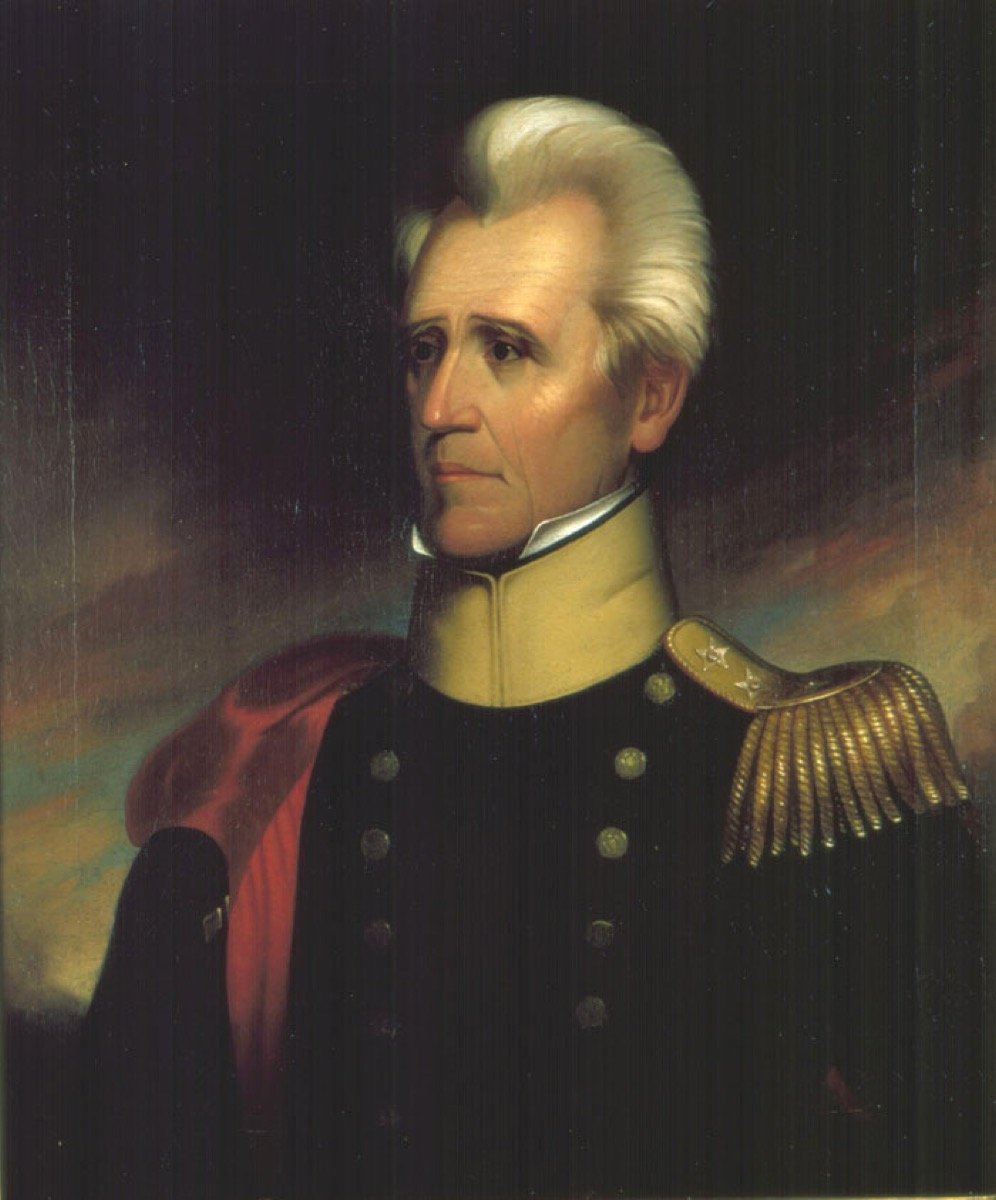
In 1832, US Chief Justice John Marshall announced an important judgment: the Cherokees were “a distinct community, occupying its own territory in which the laws of Georgia had no force”, with sovereignty in certain matters. President Andrew Jackson, otherwise known for fighting economic and political privilege, refused to honour this judgment, and ordered the US army to evict the Cherokees from their land and drive them to the Great American Desert.
Do not write that the “Trail of Tears” was the name of a place. It is the name given to the forced removal itself: of the 15,000 Cherokees driven out, over a quarter died along the way.
Those who took the tribes’ land justified it by arguing that natives did not deserve land they did not use “to the maximum”. They criticised them as lazy for not producing goods for the market with their craft skills, and for not learning English or dressing “correctly” (meaning, like Europeans). “Primitive man will disappear with the primitive animal,” wrote a visiting Frenchman.
| Activity 2: Population, USA 1820 vs Spanish America 1800 (in millions) | |||
|---|---|---|---|
| USA, 1820 | Spanish America, 1800 | ||
| Natives | 0.6 | 7.5 | |
| Whites | 9.0 | 3.3 | |
| Mixed Europeans | 0.1 | 5.3 | |
| Blacks | 1.9 | 0.8 | |
| Total | 11.6 | 16.9 | |
6.2 Reservations, Resistance, and Chief Seattle
Natives pushed westward were given land “theirs in perpetuity”, but often moved again if lead, gold or oil was found on it. Many tribes were forced to share land originally occupied by one tribe alone, which led to quarrels between them. They were locked into small areas called reservations, often land with which they had no earlier connection at all.
A reservation was a small area of land the US or Canadian government confined native peoples to, frequently land they had no earlier connection with, as settlement expanded across the rest of the continent.
Natives did not give up without a fight: the US army crushed a series of rebellions between 1865 and 1890, and in Canada, the Metis (people of mixed native-European descent) staged armed revolts between 1869 and 1885. After that, resistance largely ceased.
It was at this time, from the 1840s, that the subject of “anthropology” (already developed in France) was introduced in North America, driven by curiosity about the differences between “primitive” native communities and “civilised” Europe. Some anthropologists even argued that, just as no “primitive” people remained in Europe, American natives too would eventually “die out”.
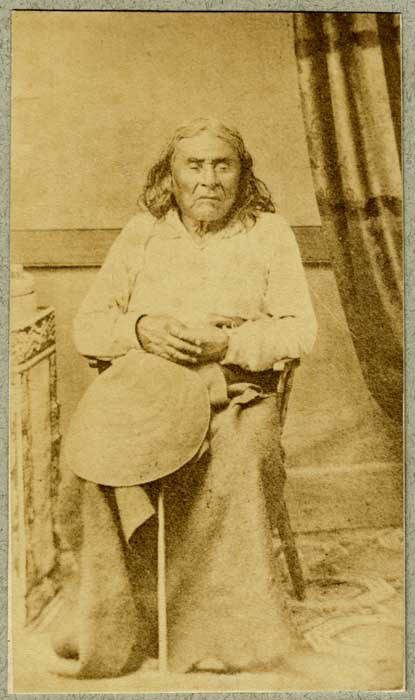
“How can you buy or sell the sky, the warmth of the land? The idea is strange to us… Every part of the earth is sacred to my people… The shining water that moves in the streams and rivers is not just water but the blood of our ancestors.”
7Industry, Rights and Winds of Change
7.1 The Gold Rush and the Growth of Industries
In the 1840s, traces of gold were found in California, sparking the “Gold Rush”, as thousands of eager Europeans hurried to America hoping for a quick fortune. This drove the building of railway lines across the continent, for which thousands of Chinese workers were recruited. The USA’s railway was complete by 1870, Canada’s by 1885. “The old nations creep on at a snail’s pace,” said Andrew Carnegie, a poor Scottish immigrant who became one of the USA’s first millionaire industrialists, “the Republic thunders on at the speed of an express.”
Unlike England, where industry grew out of small peasants losing land to big farmers, North American industry developed to manufacture railway equipment and machinery for large-scale farming. In 1860, the USA had been an undeveloped economy; by 1890, it was the world’s leading industrial power.
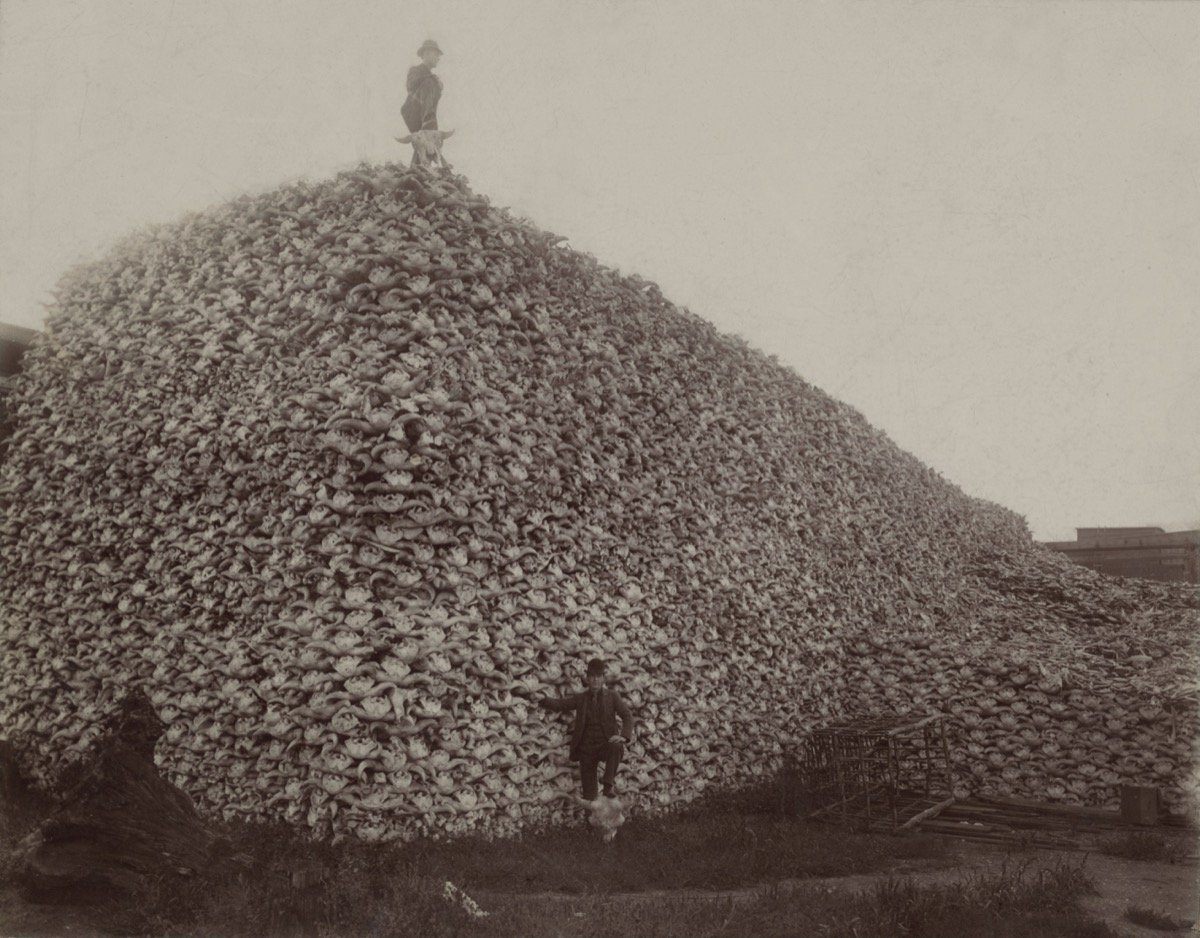
By 1890, the bison had almost been exterminated, ending the way of life natives had followed for centuries by hunting it. In 1892, the USA’s continental expansion was complete: the land between the Pacific and Atlantic was divided into states, and there was no “frontier” left to pull settlers further west. Within a few years, the USA was setting up its own colonies in Hawaii and the Philippines: it had become an imperial power itself.
7.2 Constitutional Rights, But Only for Some
The “democratic spirit” that had been the settlers’ rallying cry in the 1770s came to define US identity against the monarchies and aristocracies of the Old World, and the US constitution’s “right to property” was something the state could not override. But both this democratic right (to vote for Congress and the President) and the right to property applied only to white men.
Karl Marx described the American frontier as “the last positive capitalist utopia… the limitless nature and space to which the limitless thirst for profit adapts itself.” Meanwhile, Canadian native Daniel Paul pointed out in 2000 that Thomas Paine, the great champion of democracy, “used the Indians as models of how society might be organized”. He argued native Americans had, by their own example, sown the seeds of Europe’s own long journey toward democracy.
7.3 The Winds of Change… in the USA and Canada
Not until the 1920s did conditions begin improving for the native peoples of the USA and Canada. A 1928 survey directed by social scientist Lewis Meriam, The Problem of Indian Administration, painted a grim picture of terribly poor health and education facilities on reservations, just before the USA was hit by the Great Depression.
Sympathy for natives who were losing their culture while being denied full citizenship led to a landmark law, the Indian Reorganisation Act of 1934, giving reservation natives the right to buy land and take loans. In the 1950s and 60s, US and Canadian governments tried ending special provisions for natives, hoping they would “join the mainstream”, but natives did not want this. In 1954, the “Declaration of Indian Rights” accepted US citizenship on the condition that reservations and traditions would not be interfered with.
Today, though reduced greatly in numbers from what they were in the eighteenth century, native peoples of both countries have been able to assert their right to their own cultures, and, particularly in Canada, to their sacred lands, in ways their ancestors in the 1880s could not.
Howard Spodek’s line, quoted in Activity 3, that for indigenous peoples the American Revolution’s effects were the opposite of the settlers’ (expansion became contraction, democracy became tyranny, prosperity became poverty, liberty became confinement), is a favourite quote for a 3-mark “explain this statement” question.
8Australia: Settlement and Displacement
8.1 The Aborigines and Their Long History
As in the Americas, human habitation in Australia has a long history. The “aborigines” (a general name for many different societies) began arriving over 40,000 years ago (possibly even earlier) from New Guinea, connected to Australia at the time by a land-bridge. In native tradition, they did not “come” to Australia; they had always been there; the deep past is called the “Dreamtime”, a concept in which the distinction between past and present, so clear to Europeans, is blurred.
The “Dreamtime” is the term for the deep past in Aboriginal Australian tradition, in which the distinction between past and present, so important to Europeans, is blurred, and ancestors and the land remain continuously present.
In the late eighteenth century there were between 350 and 750 native communities in Australia, each with its own language (200 of these are still spoken today). A separate, large group of indigenous people living in the north are called the Torres Strait Islanders; the term “Aborigine” is not used for them, as they are believed to have migrated from elsewhere and belong to a different race. Together, native peoples made up 2.4 per cent of Australia’s population in 2005. Australia is sparsely populated, and even now most towns lie along the coast (where the British first arrived in 1770) because the central region is arid desert.
8.2 First Contact and Its Reversal
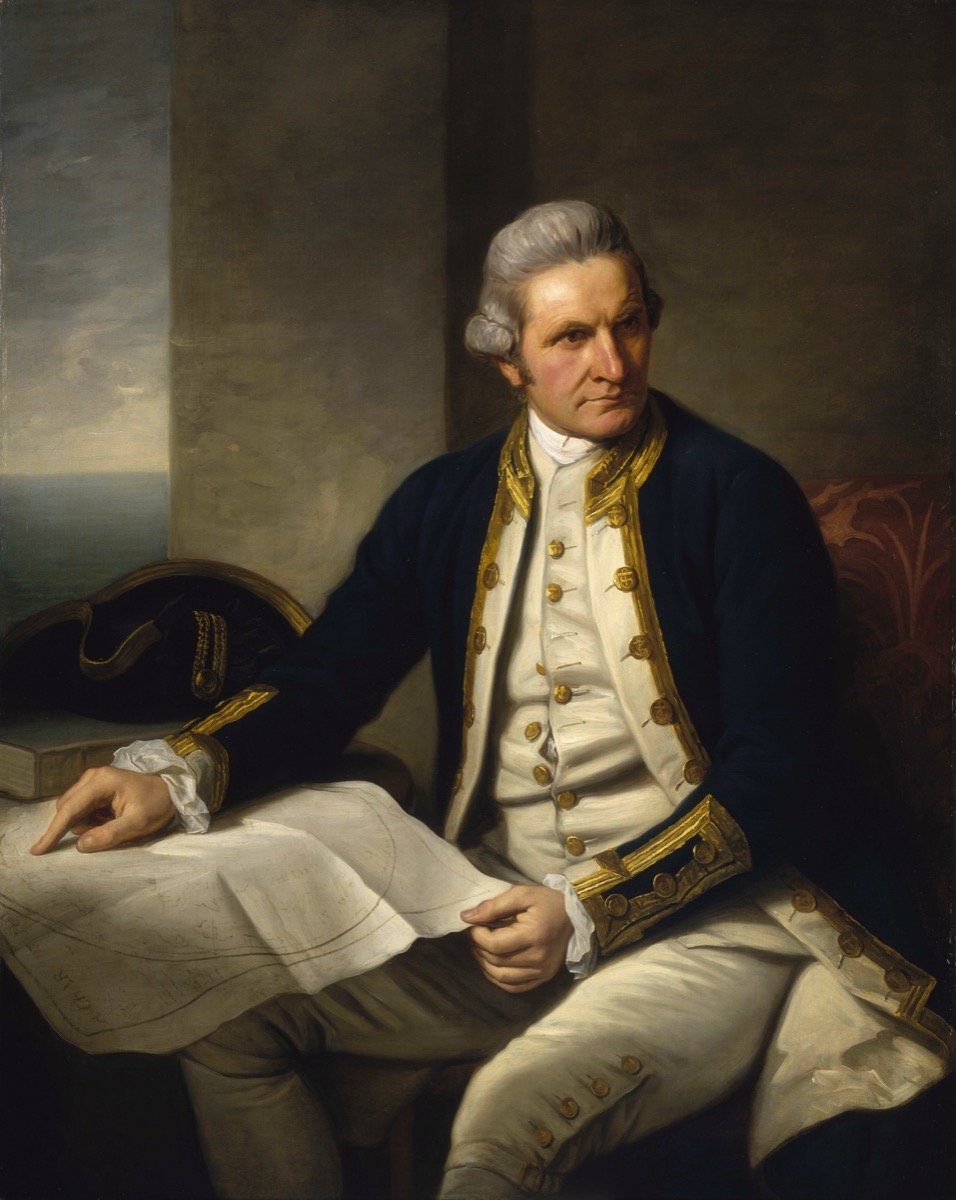
The story of settlers, natives and land in Australia has many parallels with the Americas, though it began almost 300 years later. Captain Cook’s and his crew’s initial reports about their encounters with natives were enthusiastic about their friendliness. But British feeling reversed sharply once Cook was killed by a native, not in Australia, but in Hawaii. As often happened elsewhere, this single incident was used by colonisers to justify subsequent violence toward entirely different peoples.
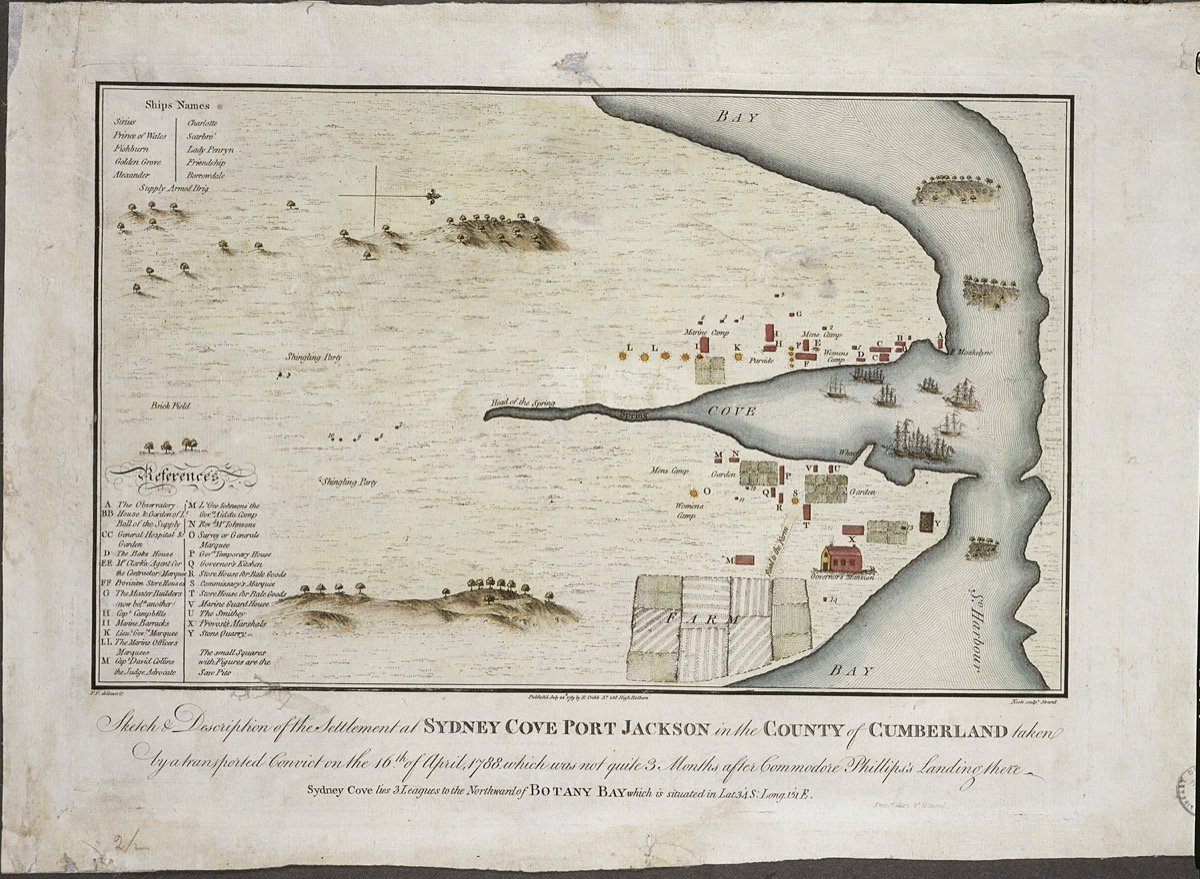
“So what would the Daruk people have thought of all this? To them such large-scale destruction of sacred places and strange, violent behaviour towards their land was inexplicable… There is no doubt the Daruks subsequently avoided the settlement, for the only way to bring them back was by an official kidnapping.” (P. Grimshaw, M. Lake, A. McGrath, M. Quartly, Creating a Nation)
The Daruk people could not foresee that in the nineteenth and twentieth centuries, nearly 90 per cent of them would die: from exposure to European germs, from the loss of their lands and resources, and in battles against the settlers. The British had already tried settling convicts in America until it became independent, and continued the same practice in Australia (an earlier attempt to settle Portuguese convicts in Brazil had been abandoned after violent reprisals from natives there). Most early Australian settlers were convicts, allowed to live freely once their jail term ended, on condition they did not return to Britain, and with no other option for making a life, they felt no hesitation about ejecting natives from land they wanted for cultivation.
8.3 Building a Colony on Taken Land
Australia’s economic development under European settlement was less varied than America’s: vast sheep farms and mining stations came first, followed by vineyards and wheat farming, which became the basis of the country’s prosperity.
In 1911, both New Delhi and Canberra were announced as new national capitals. Canberra was nearly named “Woolwheatgold”; it was ultimately named from kamberra, a native word meaning “meeting place”.
Natives were employed on farms, often “under conditions of work so harsh that it was little different from slavery.” Later, Chinese immigrants provided cheap labour, as in California, but unease about depending on non-white labour led both countries’ governments to ban Chinese immigration. Until 1974, the popular fear that “dark” people from South or Southeast Asia might migrate to Australia in large numbers meant there was an official policy to keep “non-white” people out, later called the “White Australia” policy.
8.4 The Winds of Change… in Australia
In 1968, people were electrified by a lecture from anthropologist W.E.H. Stanner, “The Great Australian Silence”, on historians’ own silence about the aborigines. From the 1970s, as was happening in North America, there was a new eagerness to understand natives as communities with distinct cultures and their own understanding of nature and climate, not as “anthropological curiosities”. Underlying it all was the question Henry Reynolds later put in a powerful book, Why Weren’t We Told?, which condemned the practice of writing Australian history as though it began with Captain Cook’s “discovery”.
Since then, university departments have studied native cultures, museums have added galleries of native art, and natives have begun writing their own life histories. From 1974, “multiculturalism” became official Australian policy, giving equal respect to native cultures and to the different cultures of European and Asian immigrants.
The Australian poet Judith Wright (1915-2000), a lifelong champion of aboriginal rights, wrote of this same loss in her poem “Two Dreamtimes”, written for the aboriginal poet Oodgeroo Noonuccal: “They hadn’t told me the land I loved / Was taken out of your hands.”
Multiculturalism is a policy of giving equal respect and status to different cultural communities within one country, rather than expecting minority cultures to disappear into a single dominant one. It became official Australian government policy from 1974.
From the 1970s, as the term “human rights” began to be heard at meetings of the UNO and other international agencies, Australians realised with dismay that, unlike the USA, Canada and New Zealand, Australia had no treaties with natives formalising the European takeover of land. The government had always called the land terra nullius: “belonging to nobody”.
Terra nullius is Latin for “land belonging to nobody”. It was the Australian government’s own legal term for describing native land before European settlement, used to avoid any treaty process, since land that belonged to no one required no agreement to take.
There was also a long and agonising history of children of mixed native-European blood being forcibly captured and separated from their native relatives. Agitation around these questions led to two important decisions: first, to recognise that natives had strong historic bonds with land that was “sacred” to them, and that this should be respected; second, that while past acts could not be undone, there should be a public apology for the injustice done to these children.
When comparing the USA/Canada and Australia, always lead with this one difference: the USA, Canada and New Zealand made treaties (how ever unequal) with their native peoples; Australia made none at all, because of terra nullius. This single fact answers most “compare” questions on this chapter.
- Native peoples of America and Australia were largely written out of history till the mid-20th century; oral history and native-curated museums have restored their own voice since the 1960s-70s
- France, Holland and England expanded colonies after Spain/Portugal stopped; control style varied: trading-company rule in South Asia, coastal trade then partition in Africa, “settler” colonies in America/Ireland/NZ/Australia
- North American natives lived by hunting, fishing and small-scale farming without a concept of “owning” land; Wampum belts recorded treaties, not writing
- Natives saw exchanged goods as gifts; Europeans saw them as market commodities. This mismatch, plus the natives’ introduction to alcohol, let Europeans dictate trade
- The USA/Canada’s frontier kept shifting west through the 19th century (Louisiana Purchase, war with Mexico), pushing natives back each time
- The 1832 Marshall judgment protected Cherokee land; President Jackson ignored it, leading to the Trail of Tears (15,000 forced out, over a quarter died)
- Bison were nearly exterminated by 1890, ending centuries of native hunting; 1892 marked the “end” of the American frontier
- Rights improved only slowly: Indian Reorganisation Act (USA, 1934), Declaration of Indian Rights (1954), Canada’s Constitution Act (1982)
- Australia’s aborigines arrived 40,000+ years ago; British settlement from 1788 killed nearly 90% of them by disease, land loss and violence, with NO treaties (terra nullius)
- Australia’s own reckoning: Mabo case (1992) overturned terra nullius; National Sorry Day (1999) apologised for forcibly separated mixed-blood children
- Can I explain why North American natives never built kingdoms or empires?
- Can I state what a Wampum belt was used for?
- Can I trace the Cherokee case from the 1832 judgment to the Trail of Tears?
- Can I give the one key difference between USA/Canada and Australia in how natives’ land was taken?
- Can I name at least three events from Australia’s own path to an apology, in order?
- 1 markGive two examples of native-derived place names, one from North America and one from Australia.
- 1 markWhat is a Wampum belt used for?
- 1 markWho wrote The Problem of Indian Administration (1928)?
- 1 markIn which year was the American frontier declared “ended”?
- 1 markWhat does terra nullius mean?
- 1 markWho gave the 1968 lecture “The Great Australian Silence”?
- 1 markIn which case did the Australian High Court declare terra nullius invalid?
- 3 marksComment on any points of difference between the native peoples of South and North America. (NCERT)
- 3 marksWhat did the “frontier” mean to the Americans? (NCERT)
- 2 marksWhy was the history of the Australian native peoples left out of history books? (NCERT)
- 3 marksHow did natives and Europeans see the exchange of goods differently?
- 2 marksWhat was the “Trail of Tears”?
- 3 marksExplain the term “reservation” and why natives were placed in them.
- 2 marksGive two reasons Chinese immigrants faced restrictions in both the USA and Australia.
- 3 marksWhat was terra nullius, and why did it matter that Australia used this term?
- 5 marksHow satisfactory is a museum gallery display in explaining the culture of a people? Give examples from your own experience of a museum. (NCERT)
- 5 marksImagine an encounter in California around 1880 between a former African slave, a Chinese labourer, a German who came in the Gold Rush, and a native of the Hopi tribe, and narrate their conversation. (NCERT)
- 5 marksTrace the steps by which the USA’s native peoples lost their land, from early treaties to the Trail of Tears to reservations.
- 5 marksCompare how native peoples were treated in the USA/Canada with how they were treated in Australia, with reference to treaties (or their absence).
- 5 marks“For the indigenous people, the effects of the American Revolution were exactly opposite to those of the settlers.” Discuss this statement by Howard Spodek.
- 5 marksDescribe the “winds of change” that improved the position of native peoples in the USA, Canada and Australia across the twentieth century.
- 1 markThe earliest inhabitants of North America crossed into it from Asia across:
(a) The Bering Strait land-bridge(b) The Silk Route
(c) The Atlantic Ocean(d) The Panama land-bridge - 1 markWho delivered the 1832 judgement protecting Cherokee sovereignty?
(a) Andrew Jackson(b) John Marshall
(c) Thomas Jefferson(d) Lewis Meriam - 1 markThe Indian Reorganisation Act, giving reservation natives the right to buy land, was passed in:
(a) 1874(b) 1901
(c) 1934(d) 1954 - 1 markWhich invention (1873) gave American settlers a new sense of security for their farms?
(a) The railway(b) Barbed wire
(c) The telegraph(d) The steel plough - 1 markAborigines are believed to have first arrived in Australia from:
(a) New Guinea(b) Indonesia
(c) New Zealand(d) South Asia - 1 markThe Australian High Court declared terra nullius legally invalid in the:
(a) Cherokee case(b) Mabo case
(c) Marshall case(d) Stanner case - 1 mark“National Sorry Day” in Australia falls on:
(a) 26 January(b) 4 July
(c) 26 May(d) 1 January - 1 markThe “White Australia” policy officially ended in:
(a) 1955(b) 1968
(c) 1974(d) 1992
Reason (R): They did not practise extensive agriculture or produce a surplus, since land control was generally not something they needed to fight over.
Reason (R): Jackson ordered the army to evict the Cherokees, leading to the “Trail of Tears”, in which over a quarter of the 15,000 forced to leave died.
Reason (R): Australia alone had no such treaties, because its government had always termed the land terra nullius, “belonging to nobody”.