
- Define psychology and sports psychology, and explain its applications and importance in physical education and sports
- Tell apart the four areas of growth and development and the characteristics of each stage of life
- Use the sports model (Fun, Foundation, Formative, Final phases) to plan training by age
- Explain the problems of adolescence and how each is managed
- Explain team cohesion: task and social cohesion, its determinants and its benefits
- Describe the psychological attributes attention, mental toughness and resilience
In the CBSE Physical Education (048) curriculum for Class XI, this is Unit 9: Psychology and Sports, worth 7 marks. The curriculum lists five topics: definition and importance of psychology in physical education and sports; developmental characteristics at different stages of development; adolescent problems and their management; team cohesion and sports; and an introduction to the psychological attributes attention, resilience and mental toughness. The prescribed book is CBSE’s own Physical Education Class XI textbook.
Case 1: Luis Suarez
- Uruguay’s footballer, with three biting incidents on the field: Otman Bakkal (Ajax v PSV Eindhoven), Branislav Ivanovic (Liverpool v Chelsea, 2013), Giorgio Chiellini (World Cup, Brazil 2014, Uruguay v Italy)
- In his book Crossing the Line he blamed high adrenaline, pressure and pent-up frustration
Case 2: MS Dhoni, “Captain Cool”
- Stayed composed under pressure and guided his team-mates
- Felt the same frustration and anger, but focused on “what needs to be done right now”, and so controlled his emotions better
The two cases show why the mind matters as much as the body on the field. Even a person who never plays competitive sport needs a psychological commitment to exercise regularly. The sense of well-being and confidence that exercise brings gives intrinsic motivation (an inner drive) to keep going. Sports psychology benefits an individual, a group, the masses and the whole society.
1 Definition and Concept of Psychology in Physical Education and Sports
Knowledge of psychology helps athletes achieve their best performance, and also looks at the needs, objectives and quality of action needed for excellence in any competition.
Sport can be described as physical activity for the purposes of recreation, health, competition and education.
1.1 How the meaning of psychology changed
Psychology is the scientific study of behaviour and mental (cognitive) processes. In the modern context it is a science about “understanding of behaviour and cognitive processes”.
Scientific in nature
Gains knowledge by a scientific approach, with key values and standards that are universally accepted and reliable.
Study of behaviours
Behaviours are observable actions and reactions.
Study of cognitive processes
Different aspects of mental life: memory, reasoning, intelligence, attention.
1.2 Sports psychology
The European Federation of Sports Psychology defines sports psychology as “the study of the psychological basis, processes and effects of sport.”
- Sports psychology is an interdisciplinary science: it draws on Kinesiology (the scientific study of movement) and Psychology.
- It studies how psychological factors affect performance, and how taking part in sport and exercise affects psychological and physical factors.
- It is used for team sports as well as individual fitness endeavours.
- The field became an area of proficiency that uses psychological knowledge and skills to address three things: the performance and well-being of athletes; the developmental and social aspects of sports participation; and systemic issues of sports settings and organisations.
- Simply put, it is the study of psychological factors that affect the learning and performance of motor skills.
According to the APA, sports psychology focuses on two main areas: (a) helping athletes use psychological principles to achieve optimal mental health and to improve performance (performance enhancement); (b) understanding how participation in sport, exercise and physical activity affects a person’s psychological development, health and well-being throughout the lifespan.
| Given by | Definition of sports (and exercise) psychology |
|---|---|
| APA (2009) | Exercise and Sports Psychology is the scientific study of the psychological factors that are associated with participation and performance in sport, exercise, and other types of physical activity. |
| R Cox (2007) | A field of study in which the principles of psychology are applied in a sports setting. |
| Richard H. Cox (2012) | Sports Psychology is concerned with the psychological foundations, processes and consequences of the psychological regulation of sports related activities of one or several persons acting as the subject(s) of the activity. |
| Weinberg and Gould (2011) | Sports and exercise psychology is the scientific study of people and their behaviours in sports and exercise activities and the practical application of that knowledge. |
Soul → Mind → Behaviour → Behaviour + Cognition
Four steps in the meaning of psychology. Watson stands at the “Behaviour” step.
2 Application of Psychology in Physical Education and Sports
Many strategies and procedures are used to deal with the problems that athletes and other sports participants face. The book groups the applications into three kinds.

3 Importance of Psychology in Sports and Exercise
3.1 A. Benefits of exercise and physical activity
Cognitive aspect
Physical activity positively affects the brain and improves cognition, mood, attention, problem-solving, strategic planning and academic achievement in students.
Emotional aspect
Gives positive feelings and counters negative mood, depression and anxiety. Motivation helps raise physical capacities such as strength, speed and flexibility. Short (acute) bouts help, but regular (chronic) exercise is needed for long-term benefits.
Social interaction
Group exercise is pleasurable and good for mental health and social well-being. Individual exercise is better for people with low self-esteem or anxiety about body image. Spectators and fans also bond socially.
Distraction ability
Exercise distracts a person from the current mood. A short (acute) dose reduces anxiety; regular exercise has long-term benefits.
3.2 B. Psychological advantages of sports participation
| Advantage | What sport does |
|---|---|
| i. Life skills | Develops sense, sensitivity and sensibility, so participants tackle life’s issues and challenges with positivity |
| ii. Developmental aspects | Builds social relationships, friendships, enjoyment of the team atmosphere and a spirit of healthy competition |
| iii. Behaviour modifications | Increases perceived competence and self-efficacy (belief in one’s own ability); positive experience enhances intrinsic motivation |
| iv. Cognitive and motor skill acquisition | Repeated training and play help in improving attention deficit disorder, developing memory, reasoning ability and decision-making skills |
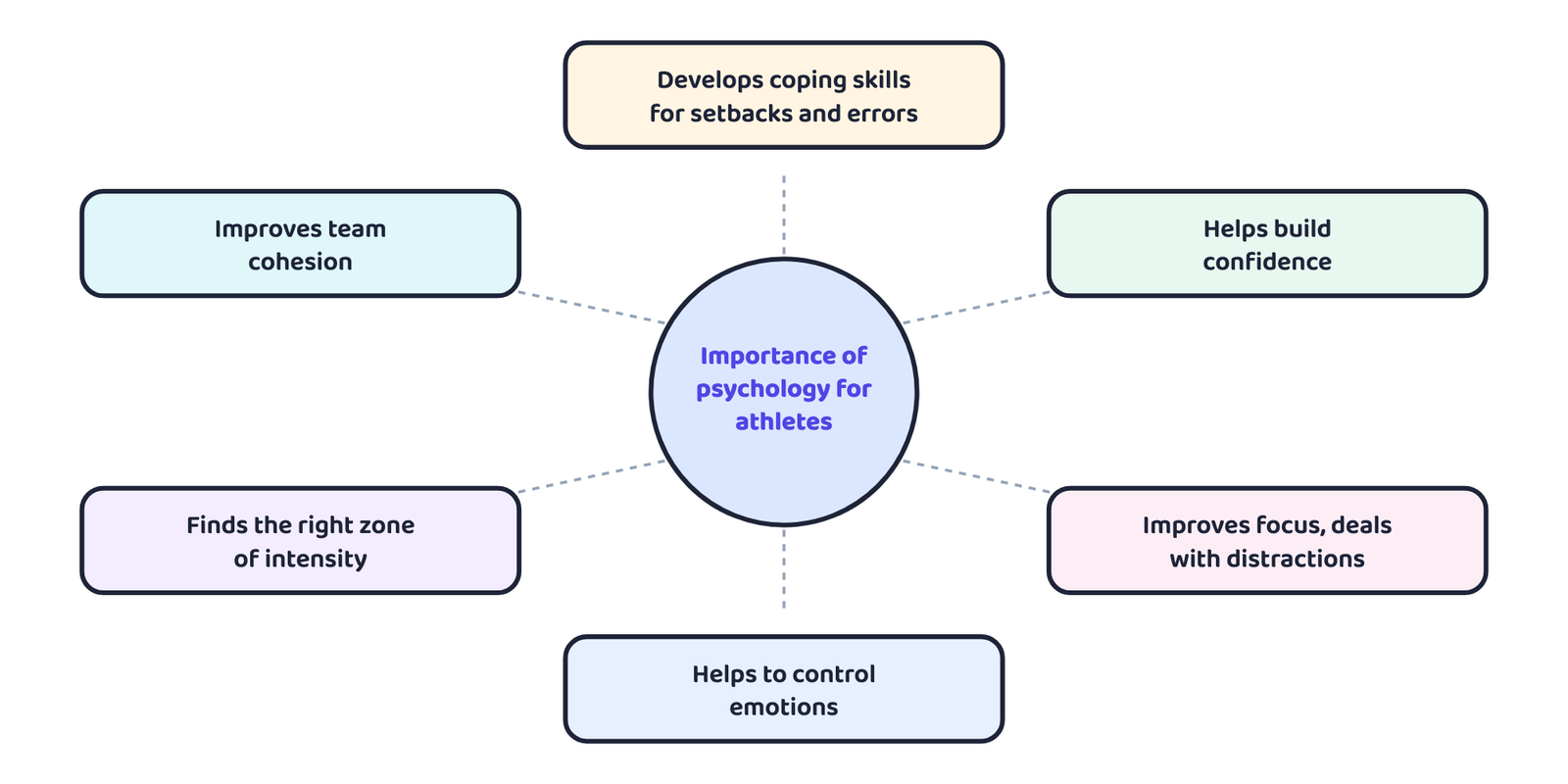
3.3 C. Performance enhancement of athletes through sports psychology
3.4 D. Exercise adherence through psychological interventions
Regular exercise is essential for a healthy lifestyle, yet many people exercise too little, and many who begin stop after a while or “lose steam”. Psychological theories and research study what makes people adhere (stick) to exercise or not, help them keep a lifelong commitment to regular exercise, and help identify potential drop outs.
Exercise adherence means sticking to regular exercise and physical activity over a long time instead of dropping out.
4 Developmental Characteristics of Growth and Development
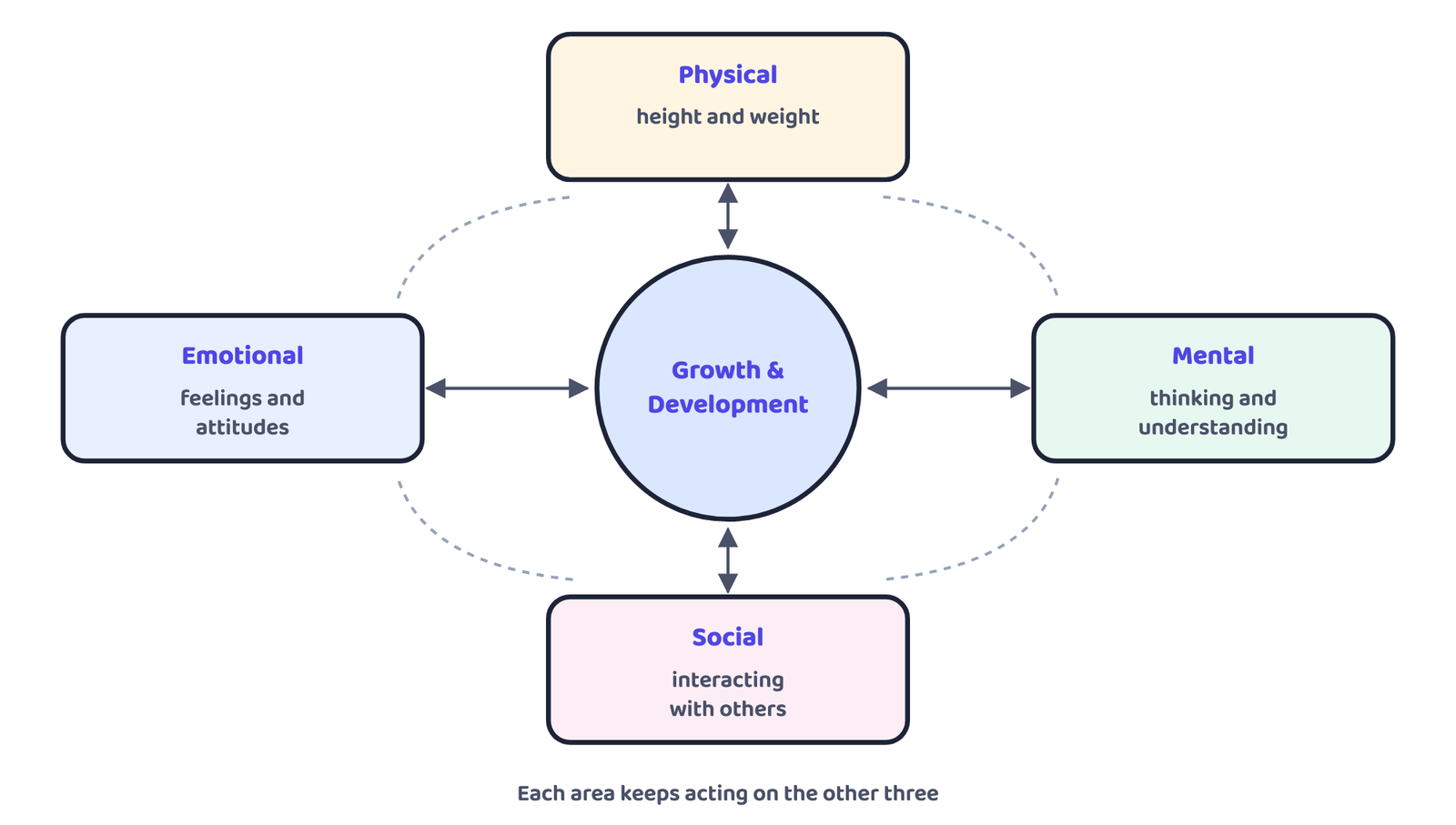
Growth and development are multidimensional: the different aspects have to work together. To understand them, look at the four main areas of development.
| S. No. | Area of growth and development | Characteristics |
|---|---|---|
| 1 | Physical | height and weight |
| 2 | Mental | thinking and understanding |
| 3 | Social | interacting with others |
| 4 | Emotional | feelings and attitudes |
Overall development is the result of a constant interaction between physical, mental, emotional and social aspects.
Physical development is the various physiological changes in a person from birth till death, measured by height, weight, strength, flexibility and other motor abilities.
- Changes in body composition with age influence the other aspects of development.
- Most physical changes are quantifiable and measurable (size, shape, weight), so standard tools exist to assess them.
Cognitive (mental) development is the development of abilities such as memory, perception, language, information processing and thinking, which influence decision-making.
- These abilities change with biological age, growth and maturation.
- There is a general pattern, but each person develops in a unique pattern, shaped by genetic factors, social environment and experience.
- All the abilities are inter-related and develop as a unit.
Social development is the development that comes from a person’s interaction with society. It is also the ability to communicate effectively with members of society and to observe the societal norms of the community according to one’s age group.
Emotion refers to responses made of physiological reactions and expressive behaviours, which may be subjective. Emotional development is the ability to express and control one’s emotions; it is part of personality development.
- It includes control over the body’s psycho-physiological reactions to conditions, environment and situations.
- From childhood to old age, people learn new skills to manage feelings, and the environment affects this strongly.
- Age and gender, along with the quality of emotional experiences, are major factors in a person’s emotional decisions.
5 Stages of Growth and Development
Change is the one inevitable thing in life. It may be visible (weight, height, muscle and fat) or related to understanding, emotional response, social choices or moral values. People around us behave differently mostly because each is at a different stage of development. Stages are temporary, and each has characteristics that are dominant at that stage.
Developmental milestones are the accomplishments that people are expected to attain within their stage of development; they become social expectations. People differ in the time and rate of development, but are expected to reach these within their stages.
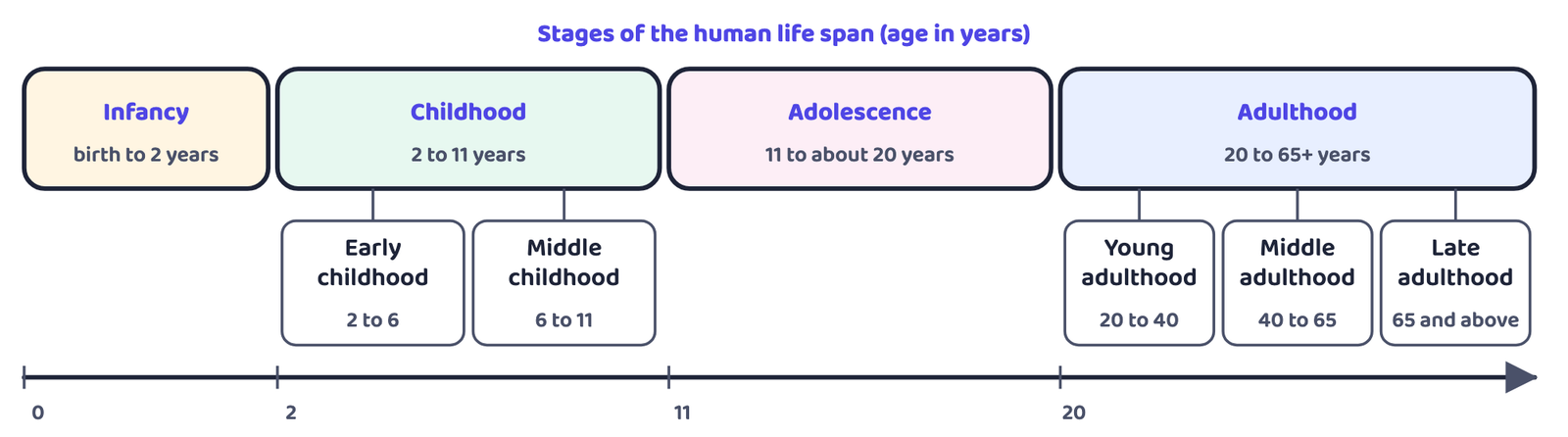
In physical education these changes affect participation and performance, so knowing them is essential for optimal growth. There is no consensus on how to classify the stages, but broadly:
| Stage | Developmental milestones |
|---|---|
| Infancy 0-2 years |
Physical: body weight increases to almost triple the birth weight, and height increases by about one-third in the first year alone; brain size grows rapidly in the first 18 months. Linguistic: starts language ability, learns through sense organs, makes sounds like gurgling and cooing. Social and emotional: expresses joy, anger and sadness by 6 months. Motor skills: controls head and trunk, lifts chest, sits upright, crawls, creeps, stands with help, stands holding objects, starts walking. |
| Early childhood 2-6 years |
Physical: athletic appearance, loses baby chubbiness; brain and head grow rapidly. Cognitive: can classify objects, people or events; imaginative, creates a hypothetical world. Psycho-social: expresses feelings and emotions and communicates needs. Linguistic: speaks in complete sentences. Motor skills: better control of movement and coordination of body parts. |
| Late childhood (pre-adolescence) 6-11 years |
Physical: strength increases as body parts become stronger. Cognitive: concrete thinking: thinks logically and uses mental operations to solve problems, but still lacks abstract thinking. Psycho-social: gender identification and social comparison. Motor skills: uses body parts with appropriate speed. |
| Adolescence 11-20 years |
Physical: height, weight and muscles develop; growth comes in spurts; onset marked by puberty. Psycho-social: argumentative, find fault with authority figures, self-conscious, influenced by the peer group. Cognitive: innovative, interested in learning skills; develop abstract thinking. Motor skills: strength, speed, endurance, flexibility and coordination develop at a rapid rate. |
| Early adulthood 20-40 years |
Responsible, mature, self-supporting and well-integrated into society. |
| Middle adulthood 40-65 years |
Strong social networking, relatively stable personality; life dominated by work and family. |
| Old age 65 years and above |
Decline of health and faculties; people plan to retire; inactiveness and physical limitations. |
Concrete thinking (logical thinking about real things) comes in late childhood, 6-11 years. Abstract thinking (thinking about ideas that cannot be seen) develops only in adolescence.
5.1 Developmental characteristics: a sports model
In sports, an athlete’s stage of growth must be considered while planning training, choosing the activity and grouping athletes by ability. The growth and development stages of athletes are grouped into four phases:

| Phase | Element | Physical | Motor skill | Cognitive | Psycho-social |
|---|---|---|---|---|---|
| Fun Phase below 9 |
Characteristics | Slow but steady increase in height and weight | Learns basic motor skills | Short attention span | Sensitive to criticism |
| Teaching/coaching | Add minimal physical conditioning | Plan fun-oriented activities to develop motor skills | Add variation and variety in drills | Create a stress-free atmosphere | |
| Foundation Phase 10-12 years |
Characteristics | Growth spurt and changes due to puberty | Motor skill development at different rates | Increased perception and logical thinking | High self-confidence; tendency to self-evaluate and compare oneself with others |
| Teaching/coaching | Plan low-intensity physical conditioning | Focus on skill refinement and development | Introduce Small Sided Games (SSG); allow guided discovery | Avoid winning and losing; give positive feedback | |
| Formative Phase 13-15 years |
Characteristics | Physical and hormonal changes | Increase in adaptation | Ability for abstract thinking develops | Sensitive to peer pressure; high level of criticism; self-centred |
| Teaching/coaching | Plan training at match speed; add fitness component | Practise in real match situations; add tactics and strategy | Schedule long and intense playing hours | Allow increased decision making | |
| Final Phase 16-19 years |
Characteristics | All-round development (automatic capacity); specified gym drills prerequisite | Autonomic phase of skill acquisition | Abstract reasoning skills | Emotional autonomy; able to take positives and negatives |
| Teaching/coaching | Prepare for high-intensity match-related drills | Develop motor perceptual abilities; develop tactical and actual game scenarios | Involve and allow decision making in scheduling training | Assign individual roles and responsibilities |
The phases may differ slightly between males and females, because females tend to mature more quickly and reach adolescence earlier.
F-F-F-F: Fun, Foundation, Formative, Final
Ages step up 9, 12, 15, 19. Coaching steps up too: fun, then skills, then match speed, then high-intensity match drills.
6 Adolescent Problems and their Management
Adolescence, as defined by the WHO, includes individuals in the age group of 10-19 years: a period of transition from childhood to adulthood, marked by the onset of puberty.
- Puberty now begins earlier, on average, than in the past.
- The age group is critical because the change from child to adult involves physical, psychological, social and neuro-developmental changes.
- The child becomes an independent individual, forms new relationships, improves social skills and acquires behaviours that last for life, so adolescents need explicit attention and support.
Raman, 14, has just entered Class 9. His body is changing, so he is self-conscious about his appearance and wants more privacy (locks the bathroom door, takes calls in his room). He values his friends and his freedom, and gets irritated by family restrictions. His parents create space for him, listen to his ideas and involve him in sports and outdoor activities to channelise his energy. Such changes are common in adolescence.
6.1 Changes during adolescence
- Physical: changes in height, weight, body composition, skeletal mass and sexual maturation; the growth spurt of puberty brings physical and hormonal changes and changes in energy levels.
- Personal: a strong sense of personal identity, moral and ethical values and self-esteem.
- Cognitive and psycho-social: stronger reasoning, logical and moral thinking, abstract thinking and rational judgement.
- Risks: dissatisfaction and turbulence in behaviour and emotions; exposure to substance abuse (tobacco, drugs), greater risk of violence, emotional drainage leading to depression and suicide tendencies.
The world has more young people than ever before: of 7.2 billion people, over 3 billion are younger than 25, making up 42% of the world population. Around 1.2 billion of them are adolescents aged between 10 and 19 years.
6.2 Stages of adolescence

| Stage | Characteristics |
|---|---|
| Early adolescence 10-14 years |
Adjusts to rapid body changes and sexual changes; very suitable for cognitive development; concrete thinking and the ability to see another person’s point of view; falls short of problem-solving skills for behaviour; early moral idea that there is no one right view; strong peer influence, admiring celebrities. |
| Middle adolescence 14-17 years |
Puberty has passed: conscious of physical appearance and sexual attractiveness; very critical stage: emotional separation from parents, desire for independence and space; abstract thinking, effective verbal communication, conventional morality; peer pressure, acceptance and approval matter more; may try things they think “undesirable”, so prone to smoking, drug abuse and other health-risk behaviour. |
| Late adolescence 17-19 years |
Biological development ends for most; a personal sense of identity; copes better with peer pressure, body image and impulses; moves from concrete to abstract thinking and sets own moral guidelines without needing social acceptance; increased behaviour control, consistency and stability. |
6.3 Adolescence problems
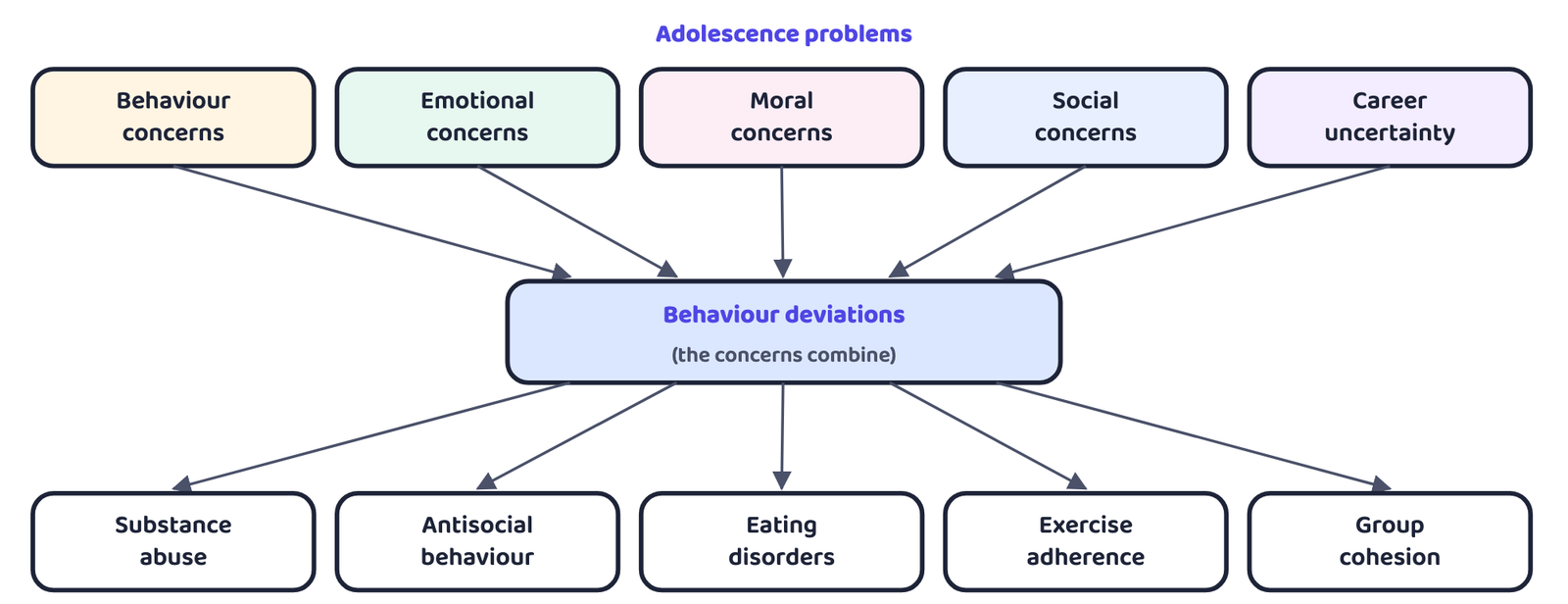
When behaviour concerns, emotional concerns, moral concerns, social concerns and career uncertainty combine, they create behaviour deviations in adolescents. These raise problems at home, at school and in sports teams: substance abuse, eating disorders (anorexia nervosa or bulimia nervosa), anti-social behaviour due to aggression and anxiety, and non-adherence to outdoor activity, sport and exercise. Family, friends, teachers, coaches and relatives must understand and support each adolescent according to his or her needs.
6.4 Problem 1: Substance abuse
One of the major concerns in adolescence. It is behaviour that is neither ethical nor socially acceptable. Drugs are addictive and have lethal effects on health. Alcohol, smoking and drugs attract adolescents because of peer pressure and other factors.
Management: cognitive techniques
- Coaches and parents express concern for the individual
- Set limits on unacceptable behaviour
- Develop behaviour policies for the class, team or group
Management: behaviour techniques
- Involve peers to pass on accepted behaviours
- Engage free time in sports, exercise, recreation or indoor and outdoor activities for constructive change
6.5 Problem 2: Eating disorders
Eating disorders result from psychological states such as anxiety and depression.
Anorexia nervosa
- Bizarre eating patterns and habits
- Unusual starvation due to social or physique anxiety, for weight loss
Bulimia nervosa
- Binge eating patterns
- Due to depression and other psychological fluctuations
Eating disorders are also found in addicted exercisers who stop exercising, start dieting and develop anorexia or bulimia due to depression, especially in females who become conscious of their appearance.
Management (two processes):
- Diet awareness: promote awareness of dietary habits among adolescents at school, home, residential organisations and community events.
- Promotion of fitness: physique and appearance have no substitute for exercise and physical activity with a healthy diet; facilitate fitness activities and sports at all levels of the community.
Seen in adolescents because of psychological turbulence and sudden physical changes, when the community does not support them adequately. Aggression has a larger impact because of changing cognitive abilities.
Catharsis
Aggression is regulated by the discharge of negative feelings. Give adolescents a chance to speak, express their emotions and share their thoughts with their peer group instead of suppressing them.
Circular effect
One act of aggression leads to another, so the circle must be broken. The ideal way to break it is positive reinforcement.
Break the violence cycle
Act as soon as frustration shows, for example when seniors’ aggression is passed on to juniors, or one player’s to another.
Give space to speak
Let players express their opinion; the manager or coach must listen positively.
Catharsis is the regulation of aggression through the fulfilment or discharge of negative feelings.
6.7 Problem 4: Exercise adherence
With physical growth and mental, social and cognitive development, adolescents need energy channelisation. Taking part in indoor and outdoor activity, sport and exercise is essential for lifelong wellness, but dropping out of sport and exercise is common in adolescence. The general reasons:
| (a) Intrapersonal constraints | (b) Interpersonal constraints | (c) Structural constraints |
|---|---|---|
| i. Lack of fun and enjoyment, getting bored ii. Low perceptions of physical competence iii. Low intrinsic motivation and high stress level iv. Negative feelings towards team or coach v. Anxiety and nervousness due to excessive criticism |
i. Family or peer pressure ii. Social priorities iii. Excessive alternate opportunities |
i. Time available for training ii. Sports-related injuries iii. Financial feasibility iv. Insufficient facilities and infrastructure v. Overuse or burnout |
Adherence management: the support of family, teachers, coaches and trainers helps adolescents make exercise an essential part of life.

When a question asks for “problems of adolescence and their management”, write each problem as a heading (substance abuse, eating disorders, anti-social behaviour, exercise adherence) and give its management points directly under it.
7 Team Cohesion and Sports
Team cohesion is a very important social psychological factor for better team performance and members’ feelings of satisfaction.
Group: ‘two or more persons who interact with one another such that each person influences and is influenced by each other person’.
Team: ‘a small number of people with complementary skills who are committed to a common purpose, common performance goals, and an approach for which they hold themselves mutually accountable’.
Group cohesion: “a dynamic process which is reflected in the tendency for a team to stick together and remain united in the pursuit of goals and objectives”. Since a sports team is a group, the same definition applies to team cohesion.
- A team is more than just a group. In sport psychology a team is a group of people who play together and powerfully influence each other, so “group” and “team” are sometimes used interchangeably.
- Group dynamics: members begin to interact the moment a group forms; after that the group stops dealing with outside forces as a collection of individuals would. The team becomes an entity of its own.
- Cohesion literally means sticking together. Team cohesion is the sum of the forces that make members stay part of the team.
- A team is more than the sum of its players: cohesion can matter as much as individual talent. A team of brilliant individuals can underperform when the players fail to “gel”: this is lack of team cohesion.
Team cohesion is a multidimensional construct with two independent components. Coaches must tell them apart; failing to do so can lead to failure in building cohesion.
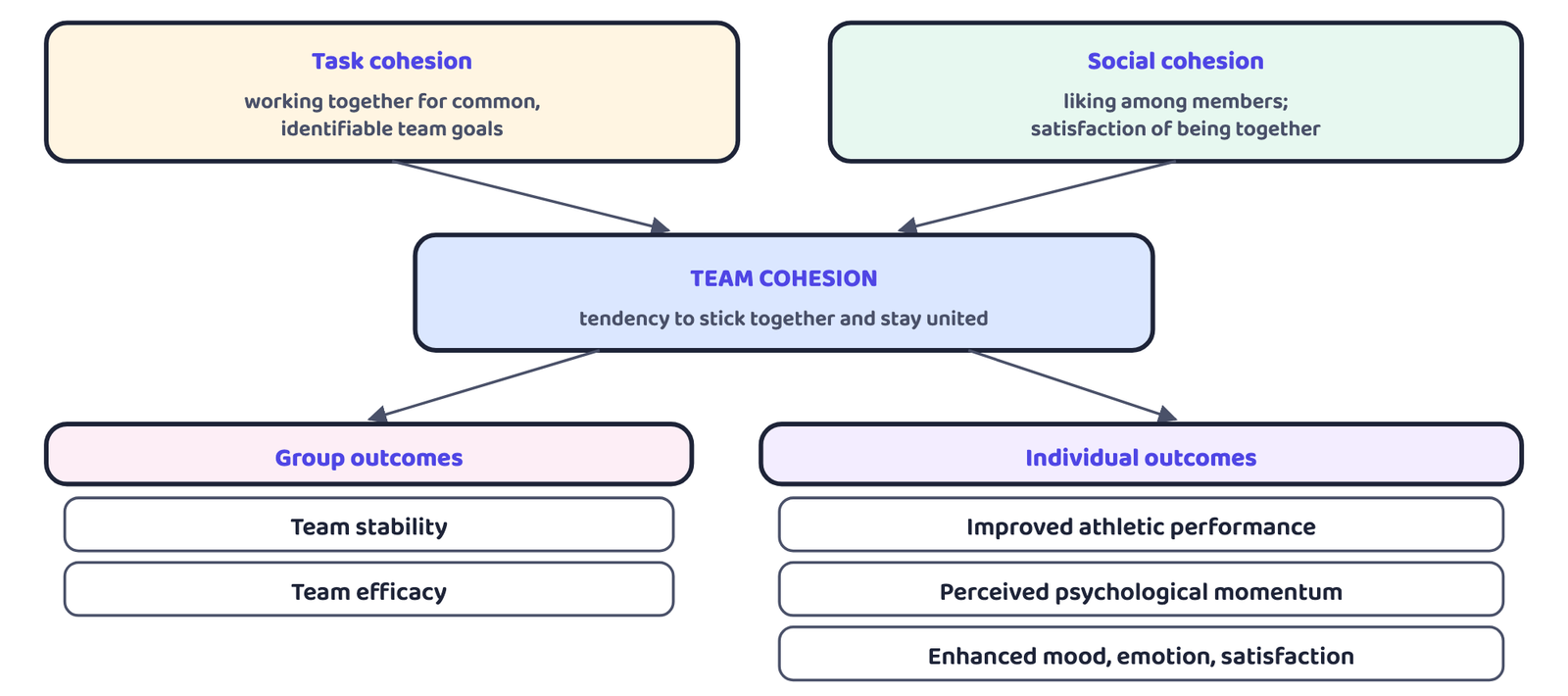
Task cohesion
- The level to which team members work together to achieve common and identifiable team goals in a cohesive environment
Social cohesion
- The level of liking among team members and the personal satisfaction of being together as team members
Teams differ in their task and social cohesiveness, so cohesion must be understood in a comprehensive way to keep teams united in pursuit of their goals.
7.2 Group cohesion and group management
Belonging to a peer group is a key need of an adolescent. Group cohesiveness and its norms help a group achieve more than individuals could alone. A group may face internal conflict at times, but with effective functioning it gives a positive, supportive environment to learn interpersonal skills. Teams are special kinds of groups (see Definition 12), and the coordinated effort of their members creates positive synergy.
a. Goal setting
- Set team goals and take pride in achieving them
- Each player must know his or her role and believe it is important
- Take time to learn something personal about each individual
b. Avoid formation of cliques
- Promote regular meetings and interactions
- Encourage positively on losing; avoid public punishment
- Avoid personal prejudice and the use of scapegoats
- Provide equal opportunity
- Focus on maximum transparency
- Develop team drills and activities for cooperation
- Highlight areas of success even during failure
7.3 Determinants of team cohesion
Determinants are the factors that decide how much cohesion a team will have. The book classifies them into four groups.

7.4 Benefits of team cohesion
| Outcome | Benefit | What it means |
|---|---|---|
| Group outcomes | Team stability | Athletes with high social cohesion are more likely to continue in the team next season; social cohesion strongly predicts the intention to continue. |
| Team efficacy | Cohesion helps a team believe in its abilities and builds self-confidence, so members believe they can succeed. | |
| Individual outcomes | Improved athletic performance | When athletes share common, identifiable team goals (task cohesion), their individual performance improves. |
| Perceived psychological momentum | Highly cohesive teams with high task cohesion are more likely to feel that the momentum of the contest is in their favour. | |
| Enhanced mood, emotion and satisfaction | Athletes in cohesive teams show more positive emotions, self-satisfaction and positive mood than those in less cohesive teams. |
8 Introduction to Psychological Attributes
8.1 Attention
Attention is taking possession by the mind, in clear and vivid form, of one out of what seem several simultaneously possible objects or trains of thought. It implies withdrawal from some things in order to deal effectively with others. More broadly, it is the concentration of mental effort on sensory or mental events.
- In sport, nothing is more important than paying attention to the task at hand, though the process is complex.
- In sports, attention means focusing on one’s own role in relation to team-mates, situations and stimuli on the field, with an increased readiness to receive and respond. Without it, even the most skilled athletes may perform poorly.
- Attention may begin as a conscious decision, as part of social interaction, or as a reaction to an unexpected event.
- Attention focus means attending to relevant environmental cues and eliminating irrelevant cues.
- The old “all-or-none” idea (either you concentrate or you don’t) is not relevant any more. There are different attention styles, each useful for specific sports.

| Dimension | Style | Meaning | Book’s example |
|---|---|---|---|
| A. Width: taking in many cues vs one cue | Broad attention focus | Perceives several occurrences at once; aware of a rapidly changing situation | A batsman focusing on the pace as well as the seam and swing of the ball; a footballer dribbling while aware of the space around |
| Narrow attention focus | Focuses on one particular or important task among many cues | An athlete listening only to team-mates’ instructions | |
| B. Direction: where attention is focused | External attention focus | Focus outward, on objects or cues other than oneself | A hockey player attending to own position, opponents and team-mates |
| Internal attention focus | Focus inward, on own thoughts, without external cues | A basketballer sticking to own position; a shooter focusing only on the target |
8.2 Mental toughness
Mental toughness is a multifaceted construct made up of values, attitudes, cognitions, emotions and behaviours that refer to a person’s ability to thrive through both positively and negatively construed challenges, pressures and adversities.
It is having the natural or developed psychological edge that enables you to:
- (a) generally, cope better than your opponents with the many demands (competition, training, lifestyle) that sport places on a performer;
- (b) specifically, be more consistent and better than your opponents in remaining determined, focused, confident and in control under pressure.
Mental toughness is no longer seen as just a personal disposition: research shows it consists of natural and developed characteristics. It represents what it takes to be an elite athlete at any level.
Ability to thrive through challenge
Factor required for mental toughness
Sport awareness
Factor required for mental toughness
Tough attitude
Factor required for mental toughness
Desire for success
Factor required for mental toughness
Attributes of mental toughness (it can be developed among athletes):
8.3 Resilience and sports
Resilience is the ability to bounce back from adversity, trauma, tragedy, danger or other sources of stress in life; one’s ability to bounce back emotionally in the face of adversity.
- The ability to cope and recover from life’s encounters is resilience. A resilient person adapts to life’s challenges by combining many traits, habits and skills.
- It is the force within a person that drives him or her to confront and overcome adversity, described as an innate righting mechanism.
- Becoming more resilient against inevitable stress improves one’s outlook and health.
- In sport, stress is always present: learning a new skill, injury, fear of training load, the challenge of winning. Despite the best efforts to cope with pressure, the results may be failure, dropouts, loss of interest, lack of confidence, self-harm, aggression or inability to perform learnt skills.
Natural resilience
A natural ability given to a person at conception: openness to new experiences, eagerness to learn, a want to have fun.
Adaptive resilience
When, because of adverse circumstances, one has to learn, adjust and adapt.
Restored (learned) resilience
Restored by learning skills that help cope with life’s challenges; helps deal with past, present and future traumas.
N-A-R: Natural, Adaptive, Restored
Born with it, forced into it, learned it.
- Psychology: psyche (soul) + logas (study); soul, then mind, then Watson’s observable behaviour, then behaviour and cognitive processes.
- Three aspects: scientific, behaviour, cognitive processes. Sports psychology = Kinesiology + Psychology.
- Coleman Griffith, 1925, University of Illinois; APA Division 47, 1986.
- Applications: skills training; counselling and clinical interventions; consultation and training.
- Importance: benefits of exercise (cognitive, emotional, social, distraction); advantages of sport (life skills, development, behaviour, cognitive and motor skills); performance enhancement; exercise adherence.
- Four areas: physical, mental, social, emotional. Stages: infancy 0-2, early childhood 2-6, middle childhood 6-11, adolescence 11-20, adulthood 20-40, 40-65, 65+.
- Sports model: Fun (below 9), Foundation (10-12), Formative (13-15), Final (16-19).
- WHO adolescence 10-19; early 10-14, middle 14-17, late 17-19.
- Problems: substance abuse, eating disorders (anorexia, bulimia), anti-social behaviour (catharsis, circular effect), exercise adherence (intrapersonal, interpersonal, structural constraints).
- Team cohesion: task + social cohesion; determinants: personal, team, leadership, environmental; benefits: stability, efficacy, performance, momentum, mood.
- Attention: broad/narrow (width), external/internal (direction). Mental toughness: four factors, 13 attributes. Resilience: natural, adaptive, restored.
- Can I trace the four steps in the meaning of psychology?
- Can I write two definitions of sports psychology with their authors?
- Can I list the three groups of applications with two examples each?
- Can I give the age range of every stage of growth and of each sports-model phase?
- Can I explain four adolescent problems with their management?
- Can I tell task cohesion from social cohesion and name the four groups of determinants?
- Can I give an example of each attention style and name the three types of resilience?