
- define nutrition and clinical nutrition, and explain the significance of clinical nutrition and dietetics
- explain what FSSAI means by nutraceuticals (foods for special dietary uses), and what medical foods and phytochemicals are
- write the five objectives of diet therapy, the four activities of nutritional care during illness and the role of a dietitian
- tell apart regular and modified diets, liquid, soft and mechanical soft diets, and the feeding routes
- link diet with chronic diseases, and describe the knowledge, skills, qualifications and scope of this career
- Food is more than a biological necessity: it is part of our cultural identity, social and religious practices, and a symbol of hospitality, status and power
- In India the proportion of undernourished people has been high, but overnutrition is now gradually increasing (obesity, heart disease, hypertension, diabetes), while infectious diseases still take their toll
- India is a major producer of fruits, vegetables and milk, yet almost 1/5th to 1/3rd of the produce is wasted
- So the food processing industry has been called the ‘sunrise sector’ of the Indian economy
- Nutrition is the cornerstone of health promotion and of preventing and managing disease; trained dietitians / medical nutrition therapists and public health nutritionists are needed
- Cost of production in India is low and foreign direct investment is high, and the demand for ready-to-eat and processed foods has grown
- Safety of food is crucial; the ‘safety culture’ of an organisation matters, and the Indian government has introduced several legislations and standards of food safety
- People living in institutions (old age homes, hospitals, orphanages, hostels, prisons, ashrams) must be fed nutritious, safe food every day, which needs trained persons; growing tourism and interest in ethnic foods and cuisinology also create demand
- The book says the Unit deals with five areas, and gives the knowledge and skills needed for the professions in each
1 Introduction: Nutrition and Clinical Nutrition
Nutrition is the science of food, nutrients and other substances as well as their digestion, absorption and utilisation by the body. Nutrition is also concerned with the social, psychological and economic aspects of food and eating.
- Optimum nutrition (the best possible nutrition) gives immunity (the body’s power to fight disease) and protection from infection
- It promotes recovery from many illnesses and helps in managing chronic diseases (long-lasting diseases)
- When nutrient intakes are inadequate, the body has difficulty in: maintaining immune defences, healing wounds, utilising medications and supporting organ functions
- Such persons may fall victims to additional complications
In some diseases
nutrition plays a major role in management and treatment
In other diseases
nutrition complements (supports) the medical treatment
- Nutritional status and support, before and after illness, play an important role in three things: prognosis (the likely course of the disease), recovery and the duration of hospitalisation
- Illness can cause nutrient imbalances even in a person who earlier had good nutritional status
- Thus health and nutrition are intimately interlinked: poor nutrition leads to health problems and can also make existing problems worse
The specialised area of nutrition which deals with nutrition during illness is ‘Clinical Nutrition’. In recent times, this field is called Medical Nutrition Therapy.
2 Significance of Clinical Nutrition
Nutritional care has gained importance worldwide, more so in recent times. Clinical nutrition focusses on the nutritional management of patients with established disease.
2.1 How illness affects nutritional status
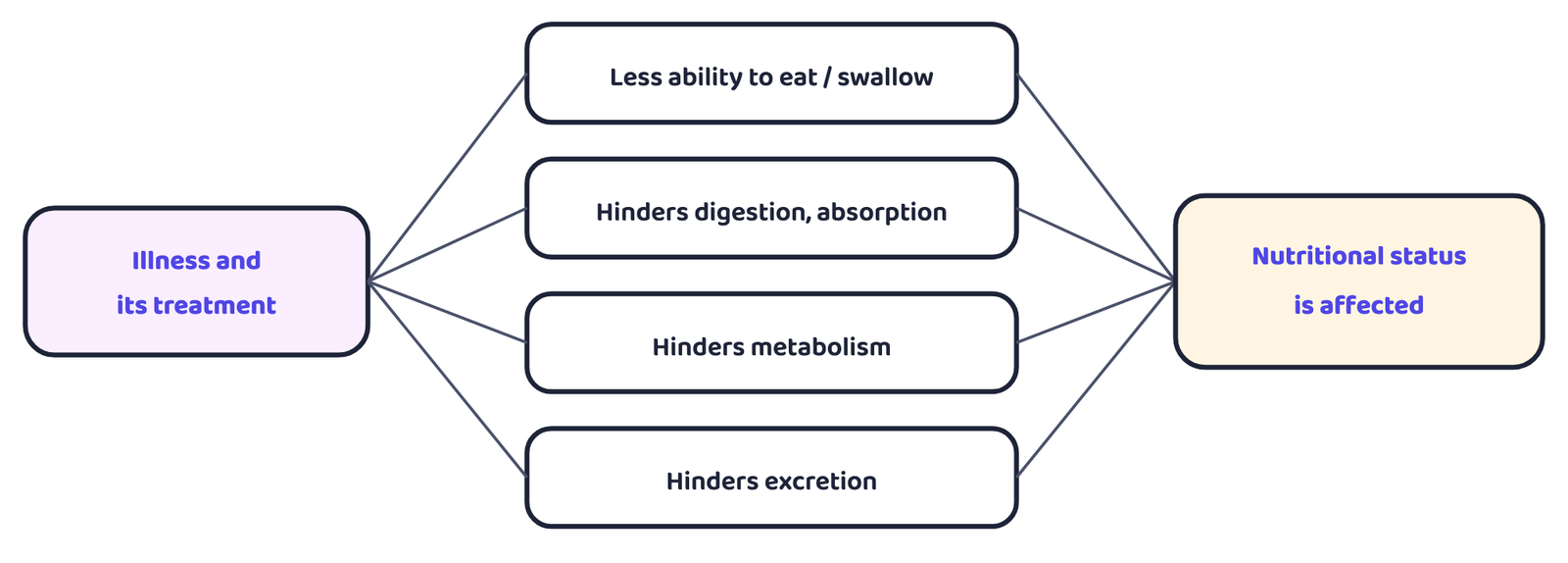
- Even if only one function is affected at first, other body functions may be affected as the problem intensifies
- Disease of any organ, tissue or system can cause problems ranging from minor and acute (sudden, short) to major and chronic (long lasting)
- In all these conditions the person must be adequately nourished, and the service must be given by a trained dietitian / medical nutrition therapist / clinical nutritionist
- The professional uses a systematic and logical approach to the nutrition care process, meets each patient’s unique needs, and works in an individualistic and holistic (whole-person) manner
- The patient is the primary focus of the nutritional care process
2.2 The changing disease picture: why more experts are needed
| Change | What the book says |
|---|---|
| Advances in the 20th and 21st centuries | Medicine and pharmacology have helped control many communicable and infectious diseases |
| Newer diseases | Newer diseases such as HIV/AIDS have emerged |
| Non-communicable diseases | Obesity, heart disease, hypertension and diabetes are increasing and occurring at a much younger age |
| Diabetes | India is likely to be the diabetes ‘capital’ of the world |
| Older persons | They require special attention |
So the proportion of the population that needs nutritional care, support and diet counselling is increasing. The clinical nutritionist also helps in prevention of diseases and promotion of good health, besides recommending therapeutic diets.
2.3 New knowledge has grown the field
- New scientific knowledge on physiological and metabolic disturbances in chronic and acute diseases
- Newer methods of nutritional assessment, newer techniques and supplements for nourishing patients
- Research on nutraceuticals and phytochemicals / bioactive substances
- Individual nutrients are found to play a role in gene expression, metabolic regulation and in preventing and treating disease
- Antioxidants like beta-carotene, selenium, vitamin E and vitamin C, particularly from food, appear to have a protective role
3 Special Foods: Nutraceuticals, Medical Foods and Phytochemicals
According to the FSSAI, foods for special dietary uses or functional foods or nutraceuticals or health supplements are foods which are specially processed or formulated to satisfy particular dietary requirements that exist because of a particular physical or physiological condition or specific diseases and disorders. Their composition must differ significantly from that of comparable ordinary foods.
Such foods may contain one or more of these four kinds of ingredients:
| No. | Ingredient (FSSAI) |
|---|---|
| (i) | Plants or botanicals or their parts in the form of powder, concentrate or extract in water, ethyl alcohol or hydro alcoholic extract, single or in combination |
| (ii) | Minerals, vitamins, proteins, metals or their compounds, or amino acids (not more than the Recommended Daily Allowance for Indians), or enzymes (within permissible limits) |
| (iii) | Substances from animal origin |
| (iv) | A dietary substance that supplements the diet by increasing the total dietary intake |
Medical foods are products specially manufactured for persons with specific needs. They are regulated and can be used only with a doctor’s prescription for the specific dietary management of a disease or condition.
Phytochemicals / bioactive compounds are non-nutrient constituents present in foods that have physiological or biological activity and influence health.
The CBSE sample paper asks which category a plant part in powder, concentrate or extract form belongs to. The answer is nutraceuticals (foods for special dietary uses). Do not confuse it with medical foods, which need a doctor’s prescription.
4 Basic Concepts and Diet Therapy
4.1 Role of the dietitian
- The dietitian / medical nutrition therapist gives advice and translates technical information into dietary guidelines
- Gives advice to patients and, if needed, prescriptions to healthy individuals at every stage of life, from the womb to the tomb (pregnancy, infancy and childhood up to old age)
- Uses nutrition and diet therapy to improve the overall health of patients with a wide range of conditions
| Conditions where diet therapy is used (book’s list) |
|---|
| Diarrhea, vomiting, food allergies, anemia, fever, typhoid, tuberculosis, ulcers, hyperacidity and heart burn, epilepsy, gastrointestinal problems, AIDS, hypertension, cancer, osteoporosis, obesity, burns, metabolic disorders including diabetes, and kidney, liver and pancreatic disorders |
| Patients going for surgery need pre and post operative nutritional intervention / support |
Clinical Nutrition and Dietetics is concerned with the nutritional requirements of patients suffering from different diseases and prescribing the right type of diet for them.
4.2 The five objectives of diet therapy
4.3 Effect of illness on food acceptance: four factors
A dietitian must also look at how illness affects food acceptance and utilisation. The factors considered are:
Nutritional stress
the extra nutritional load the illness puts on the body
Psychological stress
the mental strain of being ill
Effect on food acceptance
illness can change how much and what the patient is willing to eat
Acceptability of modified diets
whether the patient accepts the modified therapeutic diet
5 Nutritional Care during Illness
Nutritional care during illness is an organised group of activities consisting of assessing nutritional status, diagnosing nutritional problems, planning and prioritising nutrition intervention(s), and monitoring and evaluating the outcomes.

The nutritional care process applies to individuals or groups in any setting:
- healthy persons who are clients of fitness / wellness centres or programmes
- pregnant women and elderly persons
- persons treated in private physicians’ clinics
- hospitalised patients, whether in municipal, government, charitable or private hospitals
The CBSE sample paper asks for the components of nutritional care during illness. Write all four in order: assess, diagnose, plan and prioritise, monitor and evaluate.
6 What the Study of Clinical Nutrition Enables
A study of clinical nutrition and dietetics enables the professional to:
- Plan diets to meet nutritional requirements at various stages of the life cycle
- Modify diets in disease, keeping in mind the physical state, occupation, cultural, ethnic and socio-economic background, the treatment regimen and the person’s likes and dislikes
- Plan diets for athletes / sports persons and people in special situations: nutrition in space, persons working in submarines, defence personnel, industrial workers
- Promote the health of patients admitted to hospital, in outpatient clinics and in institutional settings
- Manage food services in institutions such as old age homes, schools and orphanages
- Help patients with chronic diseases such as diabetes and heart disease to prevent complications and improve quality of life
- Promote better community health and better patient care management and holistic care in health institutions, contributing to better survival and recovery
7 Nutritional Assessment
Nutritional assessment is needed to obtain information on the patient’s nutritional status and nutrient needs. It involves four parts:
8 The Dietitian: An Integral Part of the Medical Team

- Physicians are ultimately responsible for making sure all of the patient’s medical needs are met
- Based on the doctor’s diagnosis and the nutritional assessment, the dietitian prescribes the diet, makes sure hospital food follows the diet restrictions, and gives dietary counselling to the patient
- For implementing the diet prescription, the physician relies on the dietitian / medical nutrition therapist
- Clinical nutrition is increasingly part of mainstream medical treatment, and the dietitian forms an integral part of the medical team
The dietitian has the primary responsibility for ensuring that the patient receives the appropriate diet and optimal nutritional care, after assessing the nutritional status, analysing nutrient needs (which change in different illnesses) and developing the nutrition care plan: giving suitable regimens to hospitalised patients or counselling those in the outpatient department (OPD).
8.1 What the dietitian considers while planning a diet
Both normal and therapeutic diets aim to maintain or restore good nutrition. The dietitian takes into account:
Food pattern
food pattern and how often different foods are eaten
Medical details
diagnosis of the disease and the doctor’s prescription
Physical condition
health status; ability to eat, chew, swallow, digest and absorb; feeling of hunger
Lifestyle
physical activity and life style; dietary and other supplements taken
Culture and faith
cultural / ethnic practices and religious beliefs
9 Types of Diets: Regular and Modified
Any nutritional care plan provides an adequate intake of all nutrients according to the person’s age, sex, physiological state, occupation and health status.
A standard, normal or regular diet is one that includes all groups of foods and meets the needs of healthy individuals. In hospitals, however, a regular diet would be low in fried fatty foods, sweets, spices and condiments.
Modified diets are those that are adjusted to meet the medical needs of a patient.
| Kind of modification | Examples from the book |
|---|---|
| (1) Change in consistency and/or texture | Fluid and soft diets |
| (2) Increase or decrease in energy intake | More or fewer calories |
| (3) Greater or lesser amounts of one or more nutrients | More protein in surgery; lower protein in kidney failure; high or low fibre; lower fat; restricted sodium; restricted fluid; restricted foods rich in a non-nutritive constituent, e.g. spinach, which is rich in oxalates |
| (4) Change in the number of meals, intervals of feeding or a special plan when the route of feeding is altered | Tube or intravenous feeding (section 11) |
A hospital’s regular diet is low, not high, in fried fatty foods, sweets, spices and condiments. And protein goes up after surgery but down in kidney failure; students often swap these two.
10 Changes in Consistency
Depending on the condition, a patient may be advised a liquid, soft or regular diet.

| Point | Liquid diet | Soft diet |
|---|---|---|
| Consistency | Primarily fluid at room temperature; also called full fluid diet | Semi-solid foods, lightly seasoned |
| Features | Free from fibre and nutritionally adequate | Not much fibrous or gas-forming food; easy to chew and digest |
| Advantage / aim | Nutrients easily absorbed if the gastrointestinal tract works normally | Minimises risk of indigestion, abdominal distention (swelling), nausea, cramping |
| Given to | Persons unable to chew or swallow normally | Patients who need easy-to-chew, easy-to-digest food |
| Examples | Coconut water, fruit juice, soup, milk, buttermilk, milk shakes | Khichdi, sago kheer |
| Limitation | Not easy to meet the person’s nutritional requirements completely | – |
A clear liquid diet is a variation of the liquid diet that is even thinner in consistency, e.g. clear soups, juices without pulp and very light tea. It is prescribed just after surgery.
10.1 Mechanical soft diet versus soft diet
Mechanical soft diet
- A modification made even for normal adults in the older age group
- Soft, mashed and pureed foods
- For elderly people with problems in chewing
Soft diet (therapeutic)
- A therapeutic modification (part of treatment)
- Soft; only simple, easily digestible food with no harsh fibre, high fat or spicy foods
- Given when rest to the digestive system is recommended
Remember the word that tells them apart: mechanical soft is about chewing (the elderly), the therapeutic soft diet is about digestion (resting the digestive system).
11 Feeding Routes
The best and most preferred route for feeding a patient is orally (by mouth). Some patients cannot chew or swallow, for example if the person is unconscious or has a problem with the esophagus (food pipe). For them there are two options:
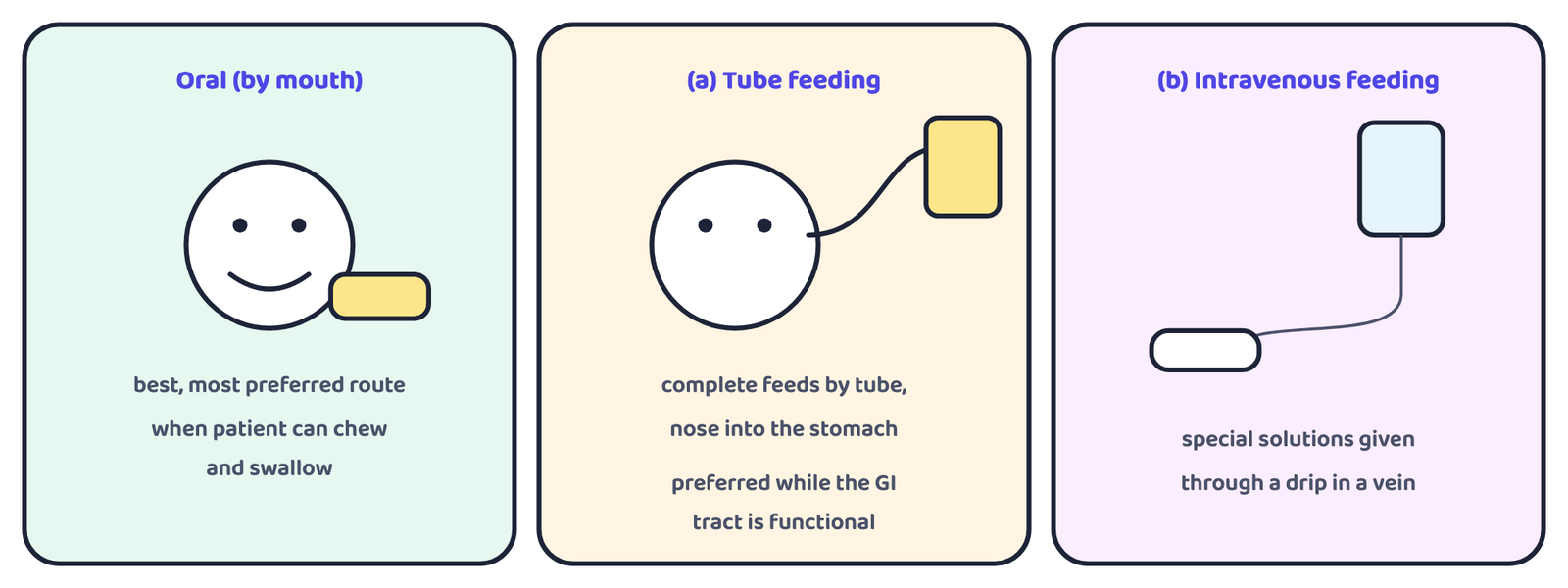
In tube feeding, nutritionally complete feeds are delivered through a tube introduced through the nose into the stomach. It is preferred over intravenous feeding as long as the gastrointestinal tract is functional and the person can digest and absorb what is fed.
Intravenous feeding means the patient is nourished with special solutions given through a drip in a vein.
12 Prevention of Chronic Diseases
- Diet and good nutrition, along with a healthy lifestyle, can control chronic diseases and delay their age of onset
- Today’s foods, especially processed foods, contain many additives, are high in fat and/or sugar, are made from highly refined foods, and are therefore low in fibre and other health-giving constituents
- This is why we need help in making the right food choices
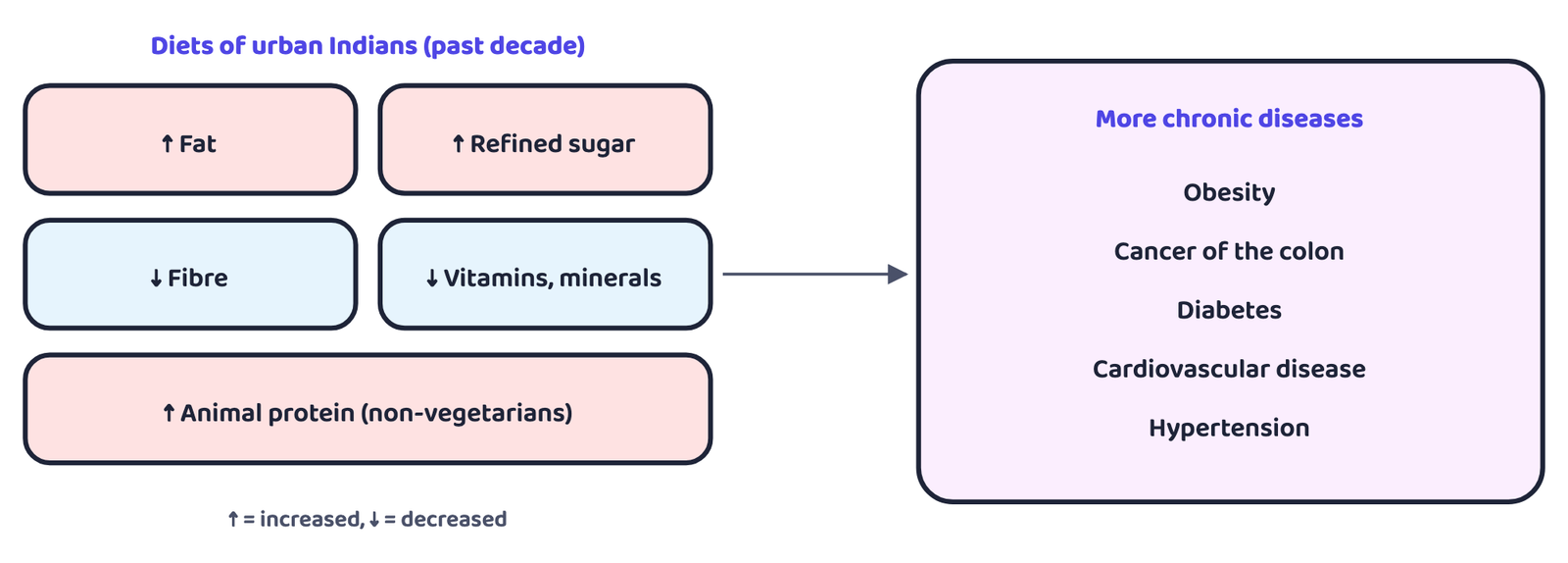
| Disease | Dietary and lifestyle causes (book) |
|---|---|
| Obesity and diabetes | More sugar and fat, less fibre, less physical activity |
| Hypertension (high blood pressure) | High intake of highly salted convenience foods and processed foods with high sodium; less potassium-rich fruits, vegetables, grains and legumes; possibly low calcium intake; less physical activity; stress |
Clinical nutritionists can prevent such problems through diet counselling and guidance, and can be appointed to guide groups such as schools and colleges.
- In a clinical study of 20,000 men, eating fish once a week was linked to a 52 per cent reduction in the risk of sudden death from heart attack
- Fish is high in omega-3 fatty acids, which are essential components of cells and can protect the heart from abnormal heart rhythm
- In another clinical study of more than 42,000 women, those who ate lots of fruits, vegetables, whole grains, low-fat dairy products and only lean meats lived longer
- A high intake of fruits, vegetables and legumes was linked with a lower risk of heart disease
Conclusion: (a) a wrong diet can help cause disease; (b) the right diet can help prevent it. The full answer is in the NCERT Solutions post.
13 Preparing for a Career: Knowledge and Skills
| The professional must have | What it covers |
|---|---|
| Knowledge | Physiological changes in disease; changes in RDAs (Recommended Daily Allowances) / nutrient requirements in illness; types of dietary modification; traditional and ethnic cuisines |
| Skills | Assessing nutritional status using clinical and biochemical criteria; diet planning for each patient and disease; recommending and administering diets; communication for diet counselling; adapting to the cultural milieu (surroundings); dealing with food taboos and overcoming fads / myths |
Core subjects
Nutrition, food science, food composition, clinical nutrition and dietetics (also called medical nutrition therapy or management), theory and practice
Basic sciences
Chemistry, biology, physiology, biochemistry
Food safety
Microbiology and food microbiology, food quality and assurance, food laws and regulations; physics to use and maintain equipment
Management
Food service management including quantity food production; bookkeeping and accounts, record-keeping, personnel management
Counselling
Counselling is an art and a science; needs psychology, sociology, education and counselling
Counselling patients is one of the most important parts of a dietitian’s job, because disease changes both the body and the mind.
- Epidemiology and the patterns of prevalence and incidence of nutritional disorders and diseases
- Skills in surveying patient populations
- Laboratory research using biochemical parameters
- Conducting experimental research with patients on the usefulness of diets, drugs and nutritional supplements
For “areas of knowledge and skills of a successful dietitian” (CBSE sample paper), write: knowledge of disease and RDA changes; assessment and diet planning skills; basic and food sciences with food safety and laws; management; counselling.
14 Preparing for a Career: Qualifications
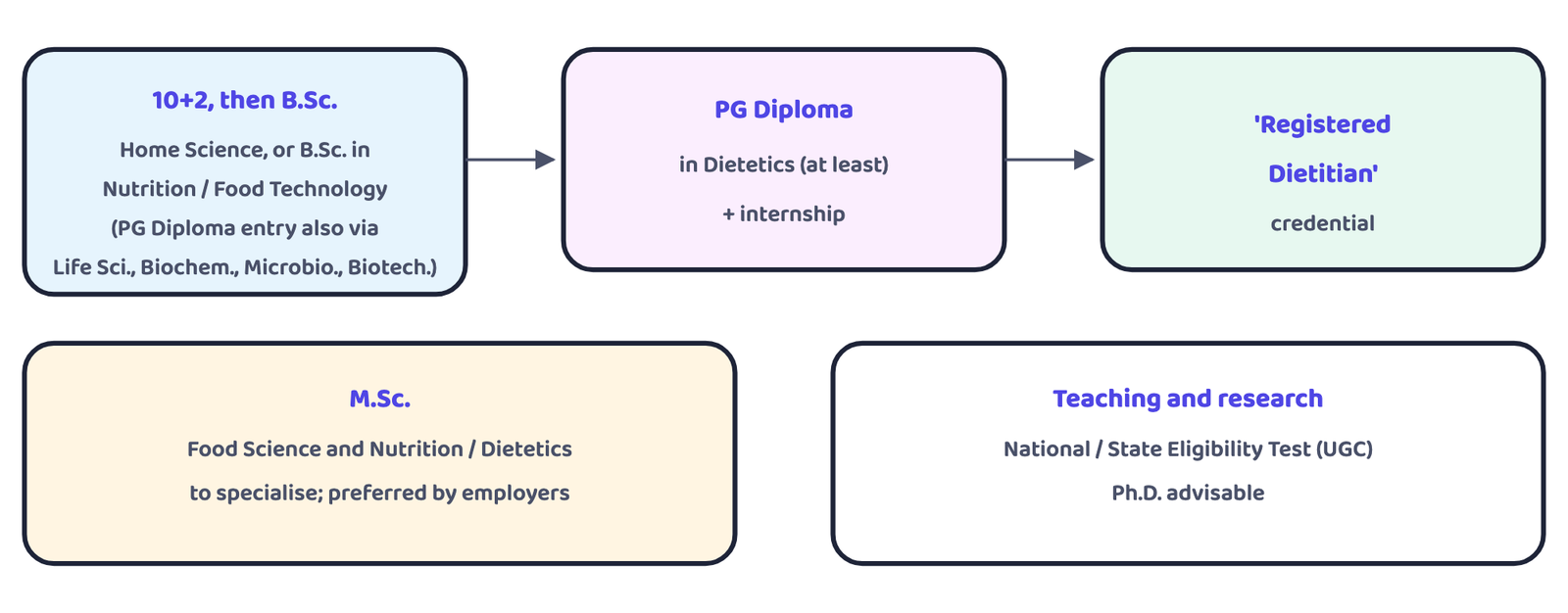
- Pass 10+2, then a B.Sc. in Home Science or a B.Sc. with specialisation in Nutrition / Food Technology
- To be a dietitian you must at least complete a Postgraduate Diploma in Dietetics with an internship to qualify as a registered dietitian
- Graduates in Home Science, Life Sciences, Biochemistry, Microbiology or Biotechnology can enter at the Postgraduate Diploma level
- M.Sc. in Food Science and Nutrition or Dietetics helps one specialise and is preferred by many employers
- After university, a dietitian can qualify for the credential of a “Registered Dietitian”; many countries have regulatory laws on this
- For teaching posts you must clear the National or State Eligibility Tests conducted by the University Grants Commission (UGC); a Ph.D. is advisable for academics or research
15 Scope and Career Avenues
- The field offers a satisfying career as a dietitian, diet counsellor, teacher, researcher or corporate consultant
- In the food industry: research and development (R&D) and production of medical foods, nutraceuticals, tube feeds, nutritional support formulations and functional foods
- The field has a promising future: research into the physiological and psychosocial changes caused by disease is expanding
- Research has led to new drugs and nutritional supplements, rehabilitation of patients in community settings, dietary guidelines and nutrition education
- Clinical nutritionists can help shape public policy and design and run preventive and promotive nutrition programmes against deficiency disorders
- Workplaces: hospitals / clinics, wellness centres, gyms, slimming clinics, universities and colleges, medical research establishments, nutrition research laboratories, companies making therapeutic foods and supplements, food service management in hospitals, or work as a freelancer, diet consultant or a dietitian running your own enterprise
Career avenues listed in the book:
Health clubs, gyms
dietitians with consultants / physicians
Hospitals
including speciality departments; a key member of the nutrition support team
Freelance dietitian
working independently
Catering services
for hospitals, schools, industrial canteens
Entrepreneurs
develop and supply speciality foods for specific health purposes
Teaching and academics
colleges and universities
Research
including clinical research
Nutrition marketing
marketing of nutrition products
Technical writing
writing on nutrition and health
Key terms (book):
16 Practical 1: Modification of a Normal Diet to Soft Diet for an Elderly Person
Theme: modification of a normal diet to a soft diet for an elderly person. In the CBSE practical exam (5 marks) it appears as: modify one family meal for an elderly person and prepare one modified dish.
Purpose: to understand the basic concepts of diet modification for a specific purpose; the importance of a well-balanced, nutritious diet suited to age, sex and health status; and to learn to interview a person and record diet intake.
- Note to the teacher: Tasks 1 and 2 are done with an adult within 60 years of age; Tasks 3, 4 and 5 are done for an elderly person
- Done individually or in pairs; interview an adult man or woman below 60 years in your family or neighbourhood
- Record one day’s diet, including all liquids and beverages, in the given format; assess it with the guide; modify it to a soft diet (easy to chew and swallow); assess the modified diet
- Share the plan with an elderly person, record their comments and suggestions; the teacher holds a class discussion
| Situations for the soft diet (one per student / pair) |
|---|
| (a) An elderly man/woman who has no teeth, age above 70 years |
| (b) An elderly man/woman who has no teeth and has difficulty in swallowing |
| (c) An elderly man/woman who has dentures (age about 60-65 years) |
| (d) An elderly man/woman who does not have molar teeth |
16.1 Record of 24-hour dietary intake (format)
| Time of day | Meal | Menu item | Ingredients | Amount consumed (household measures) | Remarks* |
|---|---|---|---|---|---|
| Early morning | Bed tea | ||||
| Morning | Breakfast | ||||
| Mid morning | |||||
| Afternoon | Lunch | ||||
| Evening | |||||
| Night | Dinner | ||||
| At bed time |
* Note any additional ingredients, e.g. sugar in milk, ghee on chapati or rice, a supplement in milk, sugar, jaggery or honey eaten with bread or chapati. The book’s example: 6.30 am bed tea, 1 mug of tea with 2 tsps sugar; 7.30 am breakfast, bread with omelette (2 slices, 1 tsp butter, 1 omelette) and 1 mug of milk with 1 tsp sugar and 1 tablespoon of a supplement.
16.2 Guide for assessing whether the diet is balanced
| Food group | No. of servings recommended |
|---|---|
| Cereals and millets | Approx 10 |
| Pulses and legumes | 2-3 |
| Green leafy vegetables | 1/2 to 1 katori cooked |
| Other vegetables | 2 katoris cooked (including salads) |
| Roots and tubers | 1/2 to 1 katori |
| Fruits | 2-3 servings (at least one a source of vitamin C) |
| Milk / milk products, e.g. curd | 1 glass / 1 katori |
| Visible fats and oils, including butter, ghee | 6 tsps* |
| Sugar and jaggery | 4 tsps* |
The student fills the other two columns (servings consumed, and the difference between recommended and consumed) from the record. * = the maximum desirable intake.
✓ While changing to a soft diet
- Make food soft, mashed and pureed for chewing problems (mechanical soft diet)
- Keep easy-to-chew, easy-to-digest dishes like khichdi and sago kheer
- Assess the modified diet so that it stays balanced
- Ask the elderly person what they like, to check acceptability
✗ Avoid
- Foods with harsh fibre
- High fat or spicy foods
- Very fibrous or gas-forming foods
- Changing only the texture and leaving the diet short of nutrients
- Nutrition = science of digestion, absorption, utilisation; clinical nutrition = nutrition during illness, now Medical Nutrition Therapy
- Illness affects eating/swallowing, digestion, absorption, metabolism, excretion; the patient is the primary focus
- New disease HIV/AIDS; India likely diabetes ‘capital’; antioxidants: beta-carotene, selenium, vitamins E and C
- FSSAI nutraceuticals: plant parts, minerals/vitamins/proteins, animal origin, dietary supplement; medical foods only on prescription
- 5 objectives of diet therapy; 4 factors (nutritional stress, psychological stress, food acceptance, acceptability); 4 activities of nutritional care
- Nutritional assessment: histories, anthropometric measurements, lab and physical measurements, interpretation
- Physician ultimately responsible; dietitian prescribes and implements the diet, integral part of the medical team
- Regular diet = all food groups for the healthy; modified = adjusted for medical needs; 4 modifications; surgery more protein, kidney failure less
- Liquid (full fluid, fibre free) → soft (khichdi, sago kheer) → regular; clear liquid just after surgery; mechanical soft for the elderly
- Oral is best; tube feeding preferred over intravenous while the GI tract works; intravenous = drip in a vein
- Urban diets: fat, sugar, animal protein up; fibre, vitamins, minerals down; 20,000 men, fish weekly, 52 per cent, omega-3
- Qualification: PG Diploma in Dietetics + internship → registered dietitian; teaching needs the UGC Eligibility Test
- Can I write all five objectives of diet therapy without looking?
- Can I write the four activities of nutritional care during illness in order?
- Can I write the four kinds of diet modification with examples?
- Can I tell liquid from soft diet, mechanical soft from therapeutic soft, and tube from intravenous feeding?
- Can I list the knowledge and skills a dietitian needs, and the path to becoming a registered dietitian?