
- The full story of how King Tutankhamun’s mummy has been investigated, from Howard Carter’s 1922 discovery to a 2005 CT scan
- Who the real people in this article are: Howard Carter, Zahi Hawass and Ray Johnson, and what each one contributed
- What computed tomography (CT) is, and how it is different from an ordinary X-ray
- The dynastic background: Amenhotep III, Akhenaten, Smenkhkare and Tutankhamun
- Every expression the book asks you to notice, the word combinations and the medical terms from “Working with words”, explained in place
- How to answer an extract-based question from this chapter, with a worked example
1About the Article and Its Author
1.1 A. R. Williams and the Article’s Source
A. R. Williams wrote “Discovering Tut: the Saga Continues”. The book’s closing line gives its source as “Source: National Geographic, Vol 207, No. 6”. This is not a short story with invented characters: it is a piece of science journalism, reporting real events and real people, built around one specific night in Egypt when King Tutankhamun’s mummy underwent a CT scan.
Because this chapter is journalism, never call Howard Carter, Zahi Hawass or Ray Johnson “characters” in the literary sense. They are real historical and scientific figures the article quotes and describes, so “key people” is the more accurate term for them.
1.2 What the Article Is About
The article follows King Tut’s mummy through two investigations: Howard Carter’s excavation of the tomb in the 1920s, and, almost 80 years later, a modern CT (computed tomography) scan carried out on the night of 5 January 2005. It asks whether the scan could answer “two of the biggest questions still lingering about him”: how did Tut die, and how old was he at the time of his death?
Computed tomography, or CT, is a scanning method in which hundreds of X-rays taken in cross section are put together, “like slices of bread,” to create a three-dimensional virtual body. The book asks what more a CT scan would reveal of Tut than the 1968 X-ray.
2The Investigation, Stage by Stage
Two investigations, almost 80 years apart (the book’s own figure), are woven together in this article. Here is the shape of both in one glance, in the order the book tells them.
2.1 Stage One: Howard Carter’s 1922 Discovery
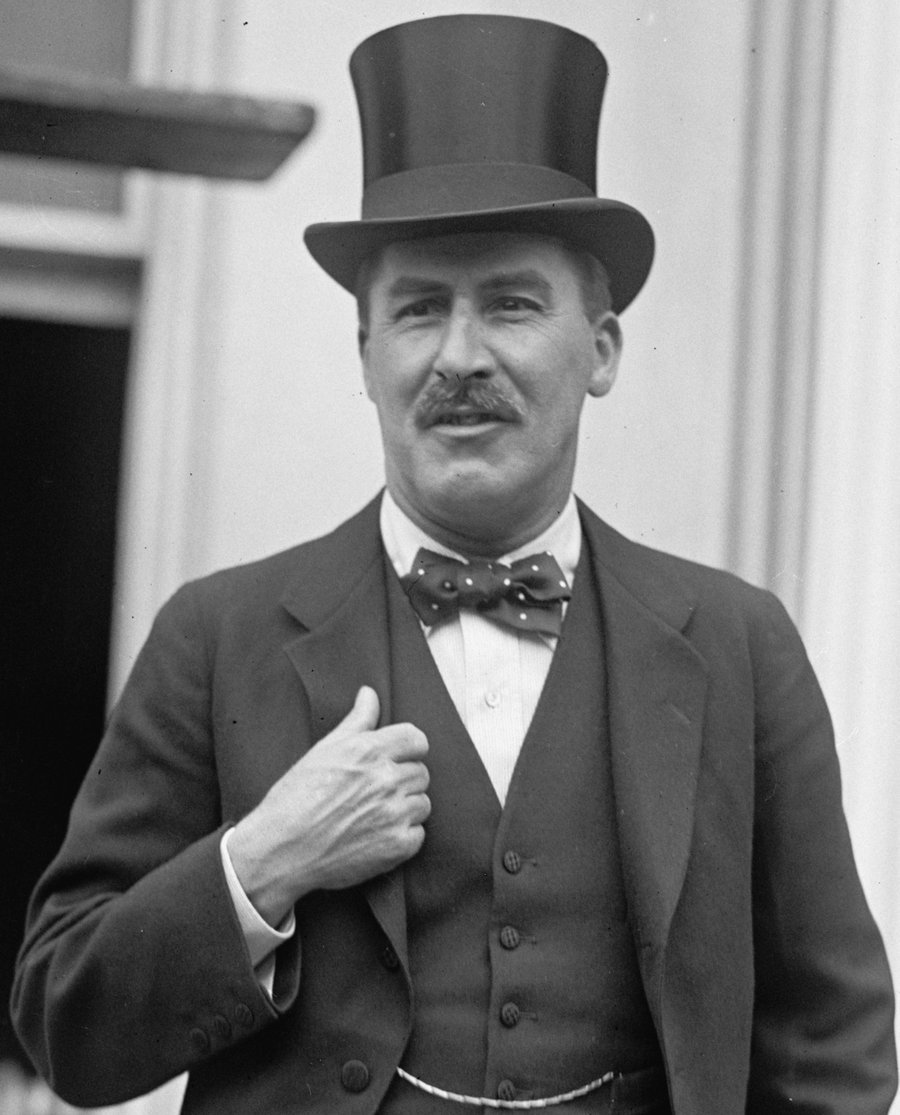
In 1922, the British archaeologist Howard Carter discovered Tut’s tomb after years of futile searching. Although its contents had been hastily ransacked in antiquity, they remained “the richest royal collection ever found.” Alongside stunning gold artefacts, meant to guarantee resurrection, Tut had also been buried with everyday things he might want in the afterlife: board games, a bronze razor, linen undergarments, food and wine.
Opening the first of Tut’s three nested coffins, Carter found a shroud decorated with garlands of willow and olive leaves, wild celery, lotus petals and cornflowers, evidence that the burial had taken place in March or April. But reaching the mummy itself, Carter ran into a serious problem.
Do not leave out either side. Zahi Hawass blames Carter: “The mummy is in very bad condition because of what Carter did in the 1920s.” The article also defends him: the hardened ritual resins had cemented Tut to his solid gold coffin, and “In his defence, Carter really had little choice”, because otherwise thieves would have ripped the mummy apart to remove the gold.
2.2 The Resin Problem
The ritual resins used in mummification had hardened, “cementing Tut to the bottom of his solid gold coffin.” Carter wrote, “No amount of legitimate force could move them … What was to be done?” He first tried using the Egyptian sun to loosen the resins, leaving the mummy outside in blazing sunshine that heated it to 149 degrees Fahrenheit, but “nothing budged.” He reported, with what the book calls “scientific detachment,” that the resin “had to be chiselled away from beneath the limbs and trunk before it was possible to raise the king’s remains.”
“No amount of legitimate force could move them … What was to be done?”
Howard Carter, on the hardened resins

2.3 Why Carter Dismembered the Mummy
In Tut’s time, royals were fabulously wealthy and thought, or hoped, they could take their riches with them, so the young king was buried with glittering gold: precious collars, inlaid necklaces and bracelets, rings, amulets, a ceremonial apron, sandals, sheaths for his fingers and toes, and the now-iconic inner coffin and mask. To separate Tut from these treasures, Carter’s men removed the mummy’s head and severed nearly every major joint, then reassembled the remains on a bed of sand inside a padded wooden box, the same box in which Tut still rests today.
The book is careful to defend Carter here: “If he hadn’t cut the mummy free, thieves most certainly would have circumvented the guards and ripped it apart to remove the gold.” This is the article’s defence of Carter’s cutting the mummy free. The separate “Give reasons” item (Understanding the text, Q1 iii) asks why Carter had to chisel away the resins; the book’s answer is that they had hardened and cemented Tut to his coffin.
2.4 Stage Two: The 1968 X-Ray
Archaeology, the article notes, has changed a great deal since Carter’s time: it now focuses less on treasure and more on the details of life and the mysteries of death, using more sophisticated tools, including medical technology. In 1968, more than forty years after Carter’s discovery, an anatomy professor X-rayed the mummy and found a startling fact: beneath the resin caking Tut’s chest, his breastbone and front ribs were missing.
2.5 Stage Three: The Egyptian Mummy Project and the 2005 CT Scan
Regardless of Tut’s fame, the article reminds us that he is only one mummy among many in Egypt: nobody knows exactly how many. The Egyptian Mummy Project, which began an inventory in late 2003, has recorded almost 600 mummies so far, and is still counting. The project’s next phase was scanning these mummies with a portable CT machine donated by the National Geographic Society and Siemens, its manufacturer. King Tut, fittingly, became one of the first mummies scanned; the book calls this “one of the first mummies to be scanned — in death, as in life, moving regally ahead of his countrymen.”
On the night of 5 January 2005, a CT machine scanned the mummy head to toe, producing 1,700 digital cross-sectional X-ray images. Tut’s head was scanned in slices 0.62 millimetres thick to register its intricate structures; it “takes on eerie detail in the resulting image.” A team of specialists in radiology, forensics and anatomy then began to study what the scan revealed.
Workmen carried Tut from the tomb in his box “like pallbearers,” up a ramp and a flight of stairs, then on a hydraulic lift into the trailer holding the scanner. Twenty minutes in, the million-dollar scanner quit because of sand in a cooler fan; a guard joked nervously, “Curse of the pharaoh.” Two men sprinted for a nearby office and returned with a pair of white plastic fans, and the substitute fans worked well enough to finish the procedure.
After checking that no data had been lost, the technicians returned Tut to the workmen, who carried him back to his tomb, less than three hours after he had been removed. In the trailer, a technician pulled up the scan images on a computer screen: a grey head took shape from a scattering of pixels and could be spun and tilted in every direction; other images revealed neck vertebrae “as clearly as in an anatomy class,” a hand, several views of the rib cage, and a transection of the skull.
“I didn’t sleep last night, not for a second … I was so worried. But now I think I will go and sleep.”
Zahi Hawass, once the scan was safely completed
3The Dynastic Background
To understand why Tut’s death mattered so much, the article steps back into his family history: the last chapter of a once-powerful royal line.
Tut’s death was significant because he was the last of his family’s line: his funeral, the book says, “was the death rattle of a dynasty.” His family had ruled Egypt and its empire for centuries. The book adds that “the particulars of his passing away and its aftermath are unclear.”
3.1 Ray Johnson on Akhenaten
Ray Johnson, director of the University of Chicago’s research centre in Luxor (the site of ancient Thebes), gives the article’s most memorable quote about this period of upheaval:
“It must have been a horrific time … The family that had ruled for centuries was coming to an end, and then Akhenaten went a little wacky.”
Ray Johnson, on the reign of Akhenaten
4Key People in the Article
4.1 The Three People the Article Quotes Directly
Howard Carter
The British archaeologist who discovered Tut’s tomb in 1922 after years of searching. He carefully recorded the funerary treasures, then had to chisel away hardened resins and dismember the mummy to free it from its gold coffin. The article defends this (“Carter really had little choice”), but Zahi Hawass blames him: “The mummy is in very bad condition because of what Carter did in the 1920s.”
Zahi Hawass
Secretary General of Egypt’s Supreme Council of Antiquities at the time of the 2005 scan. He comments on the mummy’s poor condition, oversees the scanning night with visible anxiety (“I was so worried”), and is “visibly relieved that nothing had gone seriously wrong” once the procedure is over.
Ray Johnson
Director of the University of Chicago’s research centre in Luxor. He provides the historical context on Akhenaten’s unusual and disruptive reign, saying, “It must have been a horrific time.”
5Themes of the Chapter
5.1 Three Ideas at the Heart of the Chapter
Science advancing our knowledge of history
One reading of the article: each new technology, X-rays in 1968, CT scans in 2005, reveals more about Tut than the last. The book itself says that archaeology “has changed substantially” and “uses more sophisticated tools, including medical technology.”
Respect for the dead versus the pursuit of knowledge
Carter’s dismemberment of the mummy, and the very act of CT-scanning a 3,300-year-old king, raise the debate that “Talking about the text” item 3 sets: “Traditions, rituals and funerary practices must be respected.”
Mystery and the limits of certainty
Even after the CT scan, the article does not claim to have solved how Tut died or exactly how old he was; it ends on the night scene and Orion. One reading is that some historical mysteries are not settled even by modern technology.
6How the Article Is Written
A. R. Williams uses several techniques typical of good science journalism to keep a technical subject engaging.
Forensic reconstruction means using scientific evidence, here, CT-scan data, to build an accurate picture of what a person (or, as here, a long-dead pharaoh) actually looked like and how they may have died, rather than relying on guesswork or legend.
6.1 Vivid, Atmospheric Description
The opening paragraph sets a dramatic scene with an “angry wind,” “ghostly dust devils” and clouds “veiling the stars in casket grey” before the factual reporting begins. This technique draws the reader into the tension and mystery of the night, even though the subject is a scientific procedure.
| Description from the article | Effect it creates |
|---|---|
| “An angry wind stirred up ghostly dust devils” | Builds suspense and an eerie, almost supernatural mood before the scan |
| “The world’s most famous mummy glided head first into a CT scanner” | Contrasts an ancient king with cutting-edge modern technology |
| “Curse of the pharaoh,” joked a guard nervously | Shows how old superstitions still surface even in a scientific setting |
| Orion “watching over the boy king” (the closing line) | Ends the article by returning to ancient Egyptian belief, framing science and myth side by side |
6.2 Direct Quotations from Real People
The article quotes Howard Carter (“Carter wrote later”) alongside Zahi Hawass and Ray Johnson’s modern remarks, so several of its claims come from named sources. Other details, such as the 1968 X-ray by an unnamed anatomy professor, are reported without a named source.
7Words to Know
The book itself asks you to notice these eight expressions before you read the article. Learn them as the book presents them; the article’s context gives their meaning.
| Expression | Meaning as used in the article |
|---|---|
| forensic reconstruction | using scientific evidence to build an accurate picture of how someone looked or died |
| funerary treasures | valuable objects buried with the dead for use in the afterlife |
| scudded across | moved quickly across (used of clouds) |
| circumvented | found a way around, evaded |
| casket grey | the dull grey colour of a coffin, used here for the darkening evening sky |
| computed tomography | a scanning method combining many cross-sectional X-rays into a 3-D image |
| resurrection | rising again after death; what Egyptian gold artefacts were believed to guarantee |
| eerie detail | strange, unsettling clarity or sharpness of an image |
The “Working with words” exercise (Q1) asks why these ten word combinations have been used together:
| Collocation | Why the words are combined |
|---|---|
| ghostly dust devils | “ghostly” gives the whirling dust an eerie, supernatural quality fitting the ancient burial site |
| desert sky | places the scene in the open desert around the Valley of the Kings, the sky across which the clouds “scudded” |
| funerary treasures | “funerary” marks these treasures as things buried with the dead for the afterlife |
| dark-bellied clouds | compares the underside of the clouds to a dark belly, making the sky look heavy |
| casket grey | the dull grey of a casket (coffin), used for the evening sky over a tomb |
| stunning artefacts | “stunning” stresses how visually striking Tut’s gold objects are |
| eternal brilliance | the gold’s shine was meant to last forever, matching its role of guaranteeing resurrection |
| scientific detachment | Carter records difficult, gruesome details in a calm, unemotional, professional tone |
| ritual resins | “ritual” ties the resins to the rites of mummification: “The ritual resins had hardened” |
| virtual body | the 3-D CT image is a computer-built model, not the physical body itself |
“Working with words” Q2 asks for the meanings of these commonly used medical terms (general meanings; the article itself uses only CT and X-ray):
| Term | Meaning |
|---|---|
| CT scan | computed tomography scan: many cross-sectional X-rays combined into a 3-D image |
| MRI | magnetic resonance imaging: images of organs and soft tissue made with magnetic fields and radio waves, not X-rays |
| tomography | any imaging method that shows the body in cross-sectional slices |
| autopsy | a medical examination of a dead body to find the cause of death |
| dialysis | removing waste and extra fluid from the blood by machine when the kidneys cannot do it |
| ECG | electrocardiogram: a record of the heart’s electrical activity |
| post mortem | “after death”; an examination of a body after death, the same as an autopsy |
| angiography | X-ray imaging of blood vessels, using a dye, to find blockages |
| biopsy | taking a small sample of tissue from a living body to examine it |
7.1 Thinking about Language: Egyptian and Coptic
The book’s “Thinking about language” section quotes David Crystal’s The Encyclopedia of Language: “Egyptian is now extinct”. Its history dates from before the third millennium B.C., preserved in hieroglyphic inscriptions and papyrus manuscripts. Around the second century A.D. it developed into Coptic, which is still used as a religious language by Monophysite Christians in Egypt. The book then asks you to discuss why languages become extinct, whether it is important to preserve them, and how we could help prevent the extinction of languages and dialects.
7.2 Things to Do
The book’s “Things to do” section links Orion to the legend of Osiris and asks you to find the astronomical descriptions and legends of Ursa Major (Saptarishi mandala), Polaris (Dhruva tara), Pegasus (Winged horse), Sirius (Dog star) and Gemini (Mithuna). It also asks which of the burial leaves and flowers (willow, olive, celery, lotus, cornflower) are common in our country, and which leaves and flowers are used as adornments here. Model answers are in the NCERT Solutions post.
8Why “Discovering Tut: the Saga Continues”?
The book does not explain its title, but one reading is this: the word “continues” suggests that the story did not end with the discovery in 1922. Carter’s excavation, the 1968 X-ray, the 2003 Mummy Project and the 2005 CT scan can each be read as a new episode in an ongoing “saga”, and the article ends without final answers.
9Answering Extract-Based Questions
A passage-based question is one way to practise this chapter. The method below works for any extract from this article.
Extract: “In his defence, Carter really had little choice. If he hadn’t cut the mummy free, thieves most certainly would have circumvented the guards and ripped it apart to remove the gold.”
Q. Why does the writer defend Howard Carter’s decision to dismember the mummy?
Step 1: Find the detail just before the extract: the hardened resins had cemented Tut to his gold coffin, and the mummy was lavished with gold.
Step 2: Connect it to the extract: the writer says Carter “really had little choice”, because thieves would otherwise have taken the gold.
Answer: The writer says Carter “really had little choice”: the resins had cemented Tut to his gold coffin, and if Carter had not cut the mummy free, thieves would most certainly have circumvented the guards and ripped it apart to remove the gold.
Always quote a short phrase from the extract itself in your answer (“circumvented the guards,” for instance). A short quoted phrase shows you have read the exact words, and it supports your answer.
- Author: A. R. Williams; source: National Geographic, Vol 207, No. 6
- 1922: Howard Carter discovers Tut’s tomb; has to chisel away hardened resins and dismember the mummy to free it from its gold coffin
- 1968: an anatomy professor’s X-ray finds Tut’s breastbone and front ribs missing
- 2003: the Egyptian Mummy Project begins an inventory of Egypt’s mummies (almost 600 recorded)
- 5 January 2005: Tut becomes one of the first mummies given a CT scan, producing 1,700 digital cross-sectional images
- Dynastic sequence: Amenhotep III → Akhenaten (Amenhotep IV) → Smenkhkare → Tutankhamun
- Ray Johnson calls Akhenaten’s reign “a horrific time”; Zahi Hawass is “visibly relieved” once the scan is over
- The two big open questions: how did Tut die, and how old was he at death; neither is finally answered in the article
- Themes (one reading): science advancing historical knowledge, respect for the dead vs the pursuit of knowledge, the limits of certainty
- Closing image: Orion, believed by ancient Egyptians to be the soul of Osiris, “watching over the boy king”
- Can I narrate the investigation’s stages in the correct order, from 1922 to the 2005 scan?
- Can I explain why Howard Carter had to dismember the mummy?
- Can I explain what a CT scan is, and how it differs from an ordinary X-ray?
- Can I list the dynastic sequence from Amenhotep III to Tutankhamun?
- Can I explain why Ray Johnson describes Akhenaten’s reign as he does?
- Can I describe what happened on the night of the 2005 scan, including the fan malfunction?
- Can I explain the two questions the CT scan hoped to answer, and whether the article answers them?
- Can I use the terms “computed tomography” and “forensic reconstruction” correctly about this chapter?