
- Why carbon shares electrons instead of forming ions, and what a covalent bond actually is
- How the same element, carbon, exists as diamond, graphite and fullerene with completely different physical properties
- Why carbon alone forms millions of compounds: catenation and tetravalency
- How to build, name and classify carbon compounds: chains, rings, functional groups, homologous series
- The everyday chemistry of combustion, ethanol, ethanoic acid, soaps and detergents, with every reaction written as a proper equation
homologous seriesfunctional groupstructural isomers
combustionoxidising agentesterificationsaponification
micellehydrophilic and hydrophobic
Food, clothes, medicines, books and all living structures are based on carbon, yet the amount of carbon in nature is quite meagre: the earth’s crust has only 0.02% carbon, in the form of minerals (like carbonates, hydrogencarbonates, coal and petroleum), and the atmosphere has 0.03% of carbon dioxide. In spite of this small amount, carbon’s importance is immense, and this chapter is about the properties that make it so.
1 Bonding in Carbon: The Covalent Bond
Ionic compounds such as sodium chloride and magnesium oxide are built when one atom fully gives away electrons and another fully takes them; this is why they have high melting and boiling points and conduct electricity once dissolved or melted. Carbon compounds behave completely differently.
| Compound | Melting point (K) | Boiling point (K) |
|---|---|---|
| Acetic acid () | 290 | 391 |
| Chloroform () | 209 | 334 |
| Ethanol () | 156 | 351 |
| Methane () | 90 | 111 |
Every one of these carbon compounds has a low melting and boiling point compared to an ionic compound. Low melting and boiling points mean the forces of attraction between the molecules are weak, and since these compounds are also poor conductors of electricity, no ions are being formed at all.
“Why do carbon compounds have low melting and boiling points?” is a very common 2-mark question. Answer in two parts: (1) the bond within the molecule (covalent) is strong, but (2) the force of attraction between molecules is weak: it is the second part students forget to write.
Carbon’s atomic number is 6, so it has 4 electrons in its outermost shell. To reach the stable, filled-shell arrangement of a noble gas, carbon would need to either gain or lose 4 electrons, and both options are difficult for the same underlying reason: carbon’s nucleus has only 6 protons, which is too small a charge to manage either move comfortably.
- Gaining 4 electrons would make a ion, but a nucleus with just 6 protons cannot hold on to 10 electrons (4 extra) with any real stability.
- Losing 4 electrons would make a ion, but removing 4 electrons takes a large amount of energy, and it would leave a cation (a positively charged ion) with only 2 electrons held by 6 protons, which again is very unstable.
A covalent bond is a chemical bond formed by the sharing of a pair of electrons between two atoms, so that both atoms attain a completely filled outermost shell (noble gas configuration).
Carbon solves its 4-electron problem by sharing, not transferring. The same sharing idea also explains simple molecules of other elements: hydrogen, chlorine, oxygen and nitrogen all become stable the same way, and comparing them is the easiest way to see single, double and triple bonds side by side.

The same logic builds methane, , the simplest carbon compound. Carbon is tetravalent (it has 4 valence electrons), so it shares one electron each with 4 separate hydrogen atoms, and every atom in the molecule ends up with a full outer shell.
Try drawing the electron-dot structure of (chlorine, atomic number 17, single bond) and of water, (one oxygen sharing with two separate hydrogens, single bonds only) before reading on. Both are simpler versions of the H₂ and O₂ pictures above.
The two in-text questions of this section ask for two more molecules drawn the same way: carbon dioxide and the S₈ ring of sulphur. Here the carbon (or one sulphur atom) is shown with dots and the oxygen (or the next sulphur atom) with crosses.

1.2 Allotropes of carbon
An allotrope is one of two or more different physical forms of the same element. The atoms are identical and the chemical properties stay the same, but the way the atoms are arranged and bonded to each other is different, so the physical properties (hardness, appearance, ability to conduct electricity) come out completely different.
Carbon occurs in nature in more than one such allotropic form, all made of nothing but carbon atoms and yet strikingly different to look at and touch. The difference between them comes entirely from how the carbon atoms are bonded to each other.
Diamond
- Each carbon atom bonded to 4 other carbon atoms
- Rigid three-dimensional network
- Hardest substance known
- Does not conduct electricity
Graphite
- Each carbon atom bonded to 3 other carbon atoms, in one plane
- One of these three bonds is a double bond, so carbon’s valency is fully satisfied
- Flat hexagonal sheets, stacked in layers
- Soft, smooth and slippery
- Conducts electricity, unusual for a non-metal
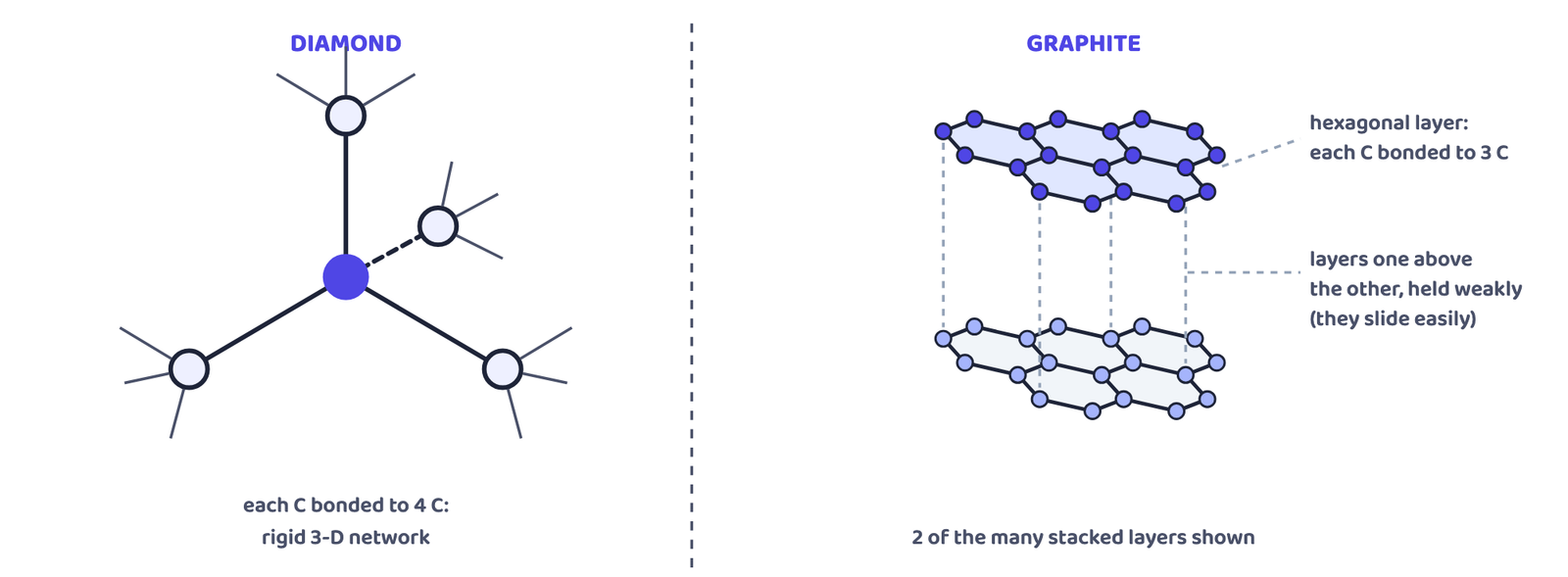

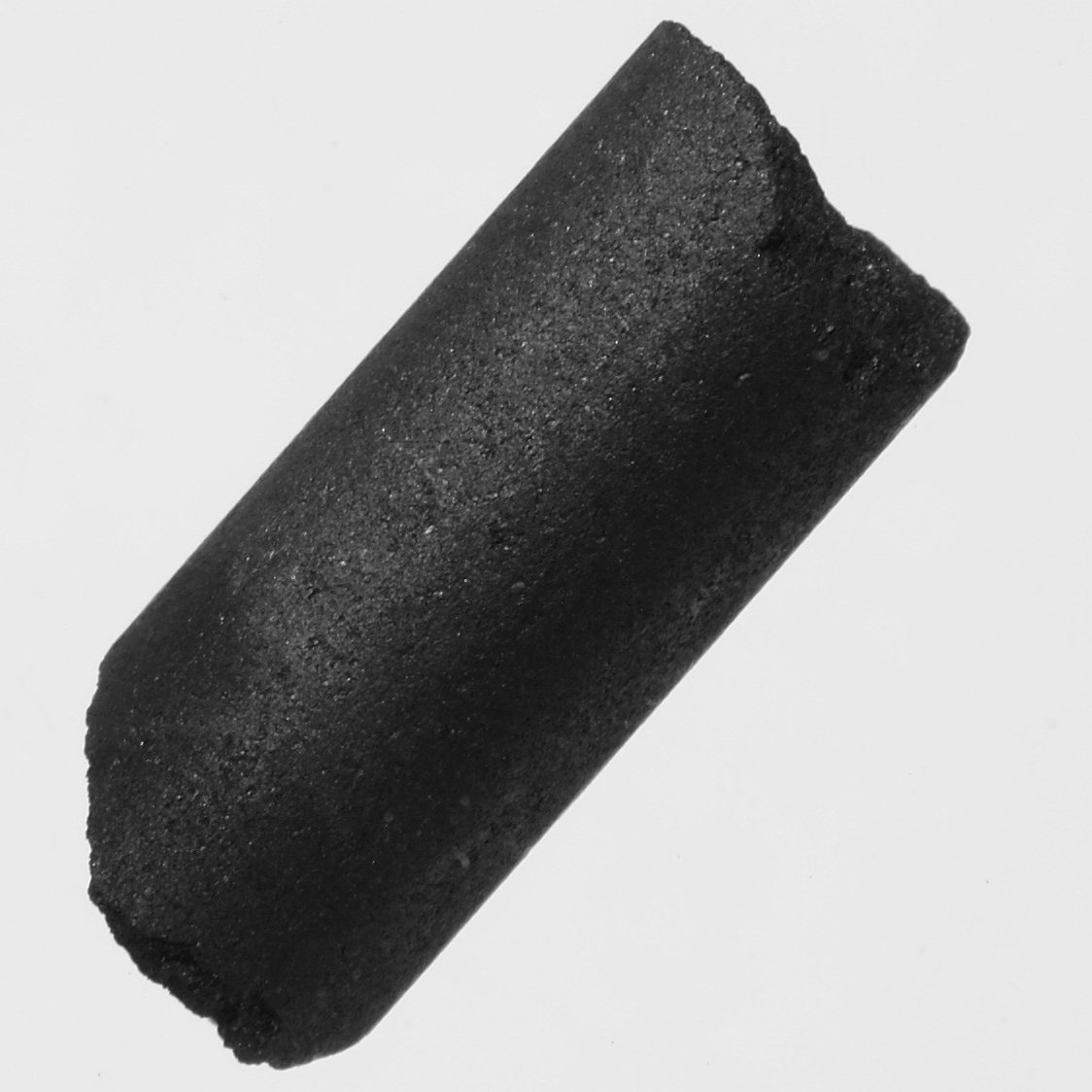
Diamond and graphite have exactly the same chemical properties (both are pure carbon) but completely different physical properties, purely because of how their atoms are arranged. Synthetic diamonds can be made by subjecting pure carbon to very high pressure and temperature, and are otherwise indistinguishable from natural ones.
Fullerenes form another class of carbon allotropes. The first one identified, C-60, has 60 carbon atoms arranged in the shape of a football. It was named “fullerene” after the US architect Buckminster Fuller, because its shape looked like the geodesic dome that he designed.
- In-textWhat would be the electron dot structure of carbon dioxide, ?
- In-textWhat would be the electron dot structure of a molecule of sulphur made of 8 sulphur atoms joined in a ring?
2 The Versatile Nature of Carbon
The number of known carbon compounds was recently estimated to be in the millions. This single element outnumbers, by a huge margin, the compounds formed by every other element put together. Two properties of carbon, and only carbon, explain this.
Catenation is carbon’s unique ability to form bonds with other atoms of carbon, giving long chains, branched chains, or rings. No other element shows catenation to the extent carbon does: silicon can chain with hydrogen too, but only up to 7 or 8 atoms, and those compounds are very reactive. The carbon-carbon bond is strong and stable, so carbon’s chains stay stable however long they get.
Tetravalency is carbon’s valency of four: every carbon atom can bond to 4 other atoms, whether more carbon atoms or atoms of another element (oxygen, hydrogen, nitrogen, sulphur, chlorine, and more). Carbon’s bonds are unusually strong partly because carbon is a small atom: its nucleus holds on to the shared electron pairs tightly, and bigger atoms form weaker bonds.
2.1 Saturated and unsaturated carbon compounds
The structure of any simple carbon compound is built the same way: first link the carbon atoms with a bond, then use hydrogen atoms to fill whatever valency (the number of bonds an atom can still form) is left over.
Carbon compounds joined by only single bonds between the carbon atoms are saturated compounds, and they are normally not very reactive. Compounds with a double or triple bond between carbon atoms are unsaturated compounds, and they are more reactive than saturated compounds.
| Compound | Formula | C-C bond | Type |
|---|---|---|---|
| Ethane | single | saturated | |
| Propane | single | saturated | |
| Ethene | double | unsaturated | |
| Ethyne | triple | unsaturated |
Ethane is built by joining two carbon atoms with a single bond, and then satisfying the three remaining valencies of each carbon with hydrogen atoms. In ethene, each carbon carries only two hydrogens, so after the C-C bond, each carbon still has one bond spare, and the two spare bonds pair up to form a second bond between the carbons, a double bond. In ethyne, each carbon carries only one hydrogen, so two bonds are spare on each carbon; those pair up into two extra bonds, giving a triple bond.
2.2 Chains, branches and rings
| Carbon atoms | Name | Formula |
|---|---|---|
| 1 | Methane | |
| 2 | Ethane | |
| 3 | Propane | |
| 4 | Butane | |
| 5 | Pentane | |
| 6 | Hexane |
Structural isomers are compounds with the same molecular formula but different structures. Butane () is a clear example: its four carbon atoms can form either one straight chain or one branched skeleton, and both are valid, different compounds sharing the one formula.

Carbon atoms can also close into a ring instead of staying a chain: cyclohexane () is a ring of six single-bonded carbons, and benzene () is a ring compound too. Straight chains, branched chains and rings can each be saturated or unsaturated.
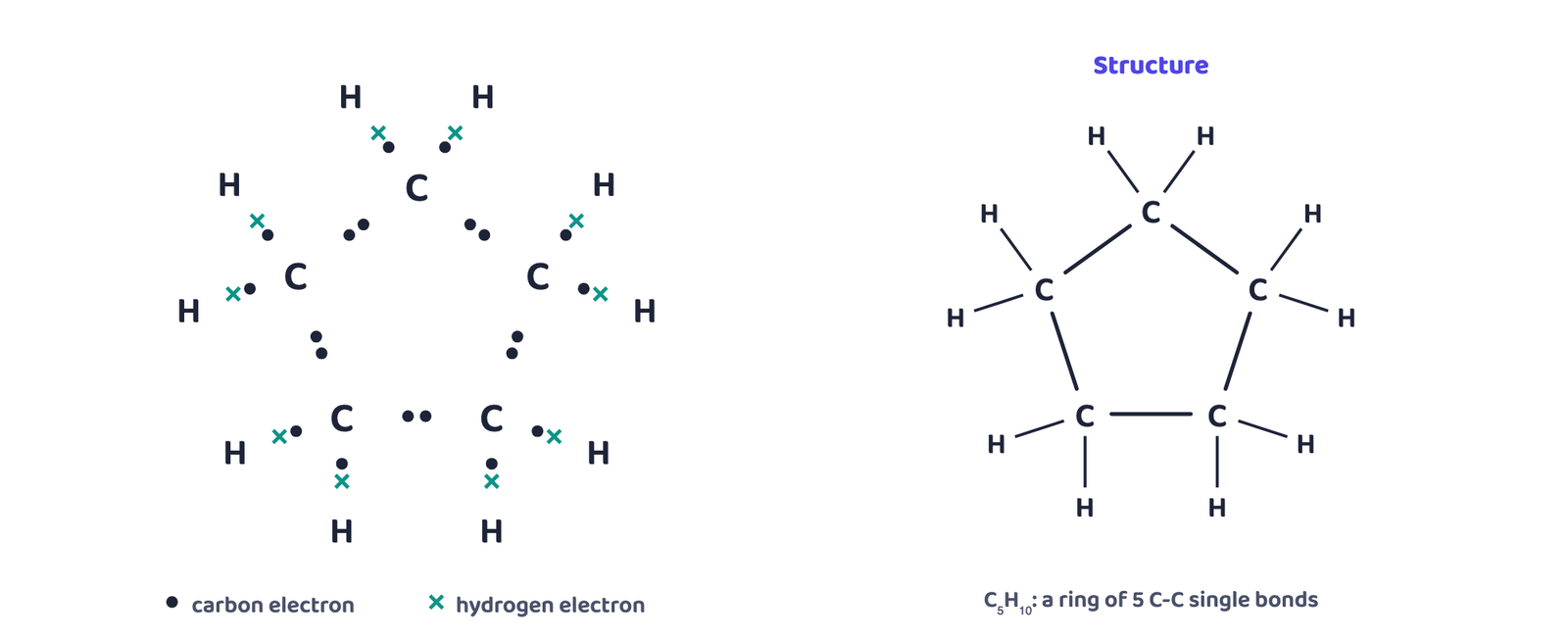
Cyclopentane, C₅H₁₀, is the five-carbon ring. Each carbon shares one pair with each of its two neighbouring carbons and one pair with each of two hydrogen atoms (an NCERT in-text question asks for this structure):
2.3 Heteroatoms and functional groups
Carbon also bonds with halogens (a family of reactive non-metals: fluorine, chlorine, bromine, iodine), oxygen, nitrogen and sulphur. In a hydrocarbon chain, one or more hydrogen atoms can be replaced by one of these elements without upsetting carbon’s valency.
A heteroatom is the atom that replaces hydrogen in a hydrocarbon chain. A functional group is that heteroatom (or the small group containing it) that gives the compound its specific chemical properties, regardless of how long or short the rest of the carbon chain is.
| Heteroatom | Class of compound | Functional group |
|---|---|---|
| Cl / Br | Halo- (chloro/bromo) alkane | -Cl, -Br |
| Oxygen | 1. Alcohol | -OH |
| Oxygen | 2. Aldehyde | -CHO |
| Oxygen | 3. Ketone | -CO- (within the chain) |
| Oxygen | 4. Carboxylic acid | -COOH |
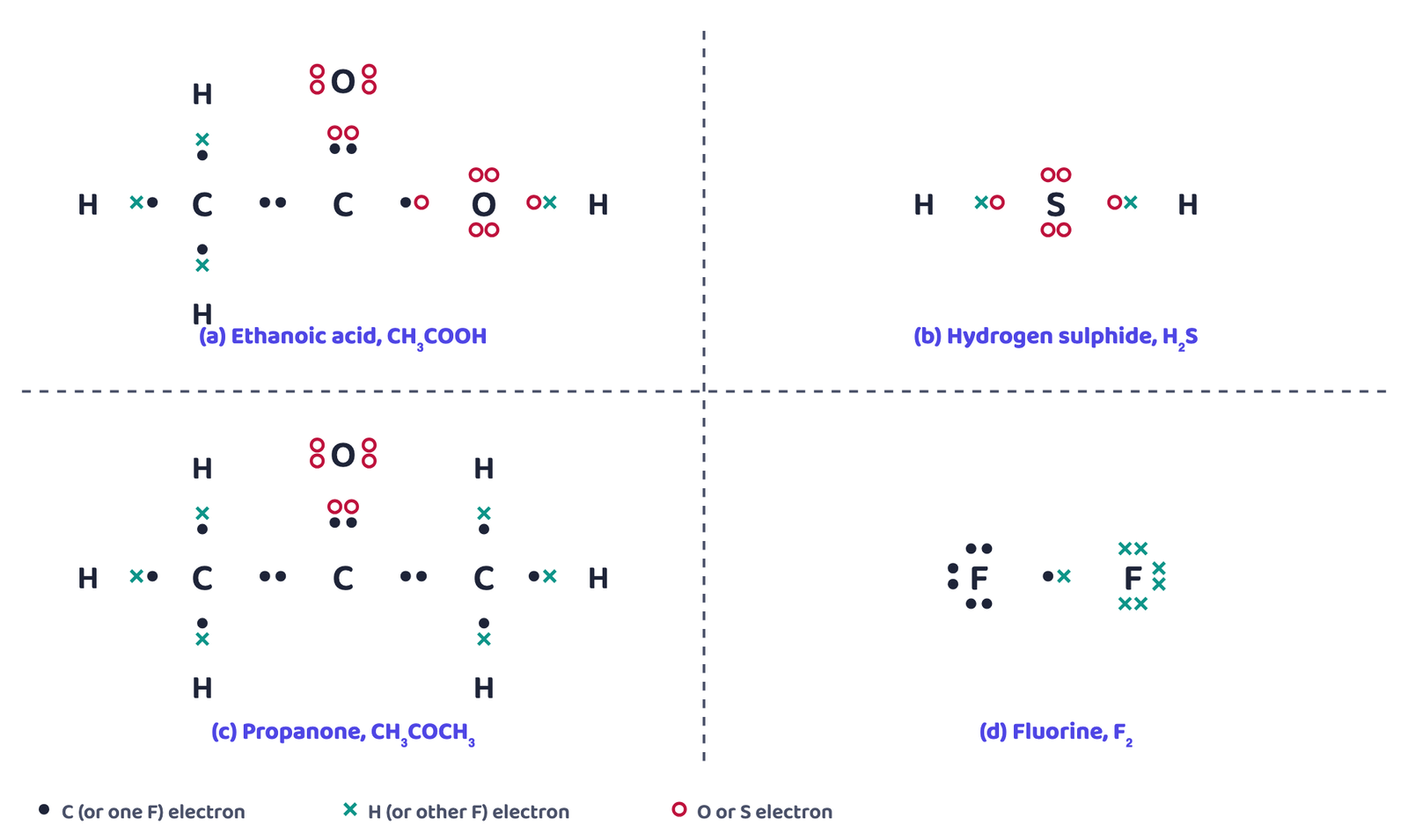
Electron dot structures are drawn the same way when oxygen, sulphur or a halogen is present: every shared pair sits between the two atoms it bonds, and the remaining valence electrons are shown as lone pairs. NCERT Exercise 5 asks for these four:
2.4 Homologous series
, , and all carry the same -OH functional group, and their chemical properties turn out to be very similar despite the different chain lengths.
A homologous series is a series of compounds in which the same functional group substitutes for hydrogen in a carbon chain. Successive members differ by a unit, which is a mass difference of 14 u (carbon = 12 u, hydrogen = 1 u).
Alkanes have 2 more hydrogens than the matching alkene ( vs ), so their general formula is . Alkynes have 2 fewer hydrogens than the alkene ( vs ), so theirs is . Work these out for yourself the same way whenever you forget them: compare the formula to the matching alkene and adjust the hydrogen count.
As molecular mass rises along a homologous series, melting point, boiling point and solubility all show a steady gradation, but the chemical properties stay similar throughout the series, because they are decided only by the functional group.
2.5 Naming carbon compounds
| Class of compound | Prefix / Suffix | Example |
|---|---|---|
| Halo alkane | Prefix: chloro-, bromo- | Chloropropane, Bromopropane |
| Alcohol | Suffix: -ol | Propanol |
| Aldehyde | Suffix: -al | Propanal |
| Ketone | Suffix: -one | Propanone |
| Carboxylic acid | Suffix: -oic acid | Propanoic acid |
| Alkenes | Suffix: -ene | Propene |
| Alkynes | Suffix: -yne | Propyne |
Step 1: Count the carbon atoms to get the base chain name (3 carbons = propane).
Step 2: A functional group present in the compound is shown by a prefix or suffix.
Step 3: If the suffix starts with a vowel, drop the chain name’s final “e” first: propan(e) − e + one = propanone.
Step 4: If the chain is unsaturated, replace the final “ane” with “ene” (double bond) or “yne” (triple bond): propene, propyne.
The structures asked for in the NCERT in-text question (ethanoic acid, bromopentane, butanone and hexanal) are drawn below with every atom and bond shown:
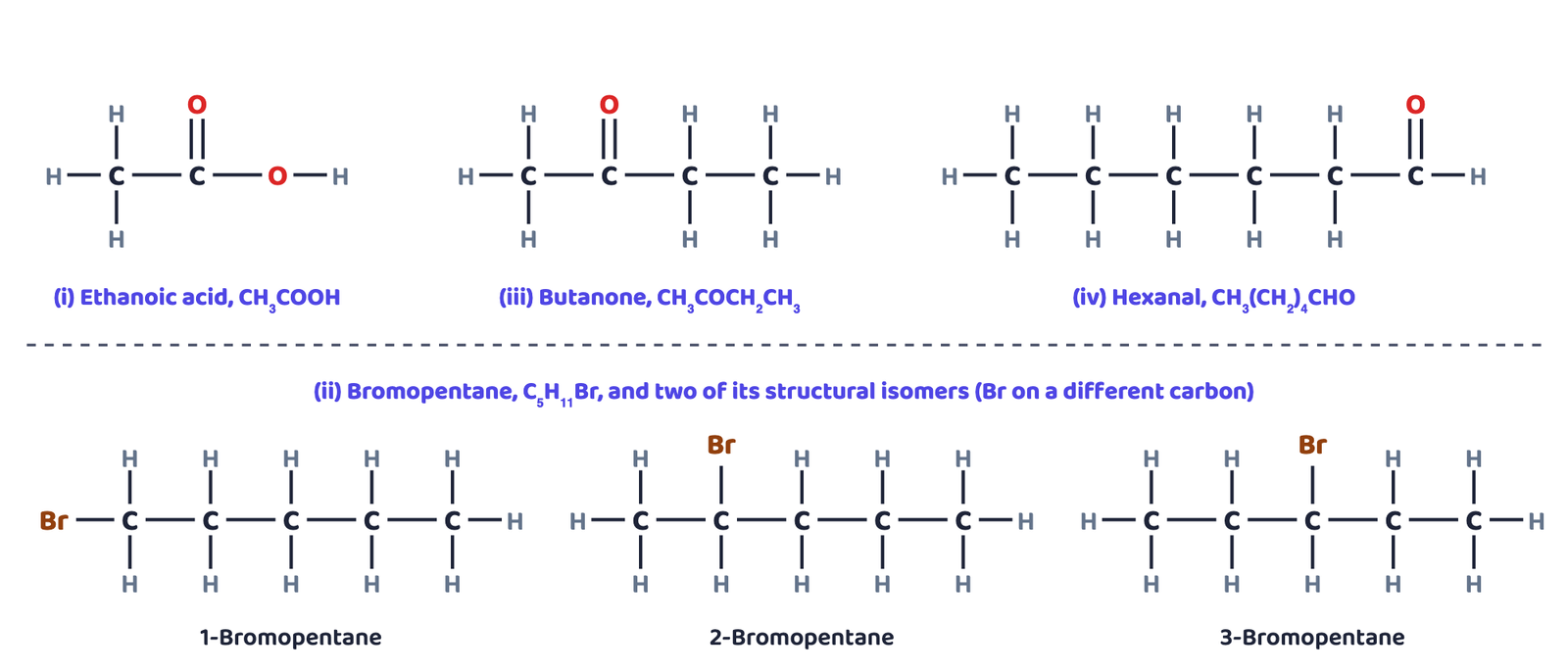
- In-textHow many structural isomers can you draw for pentane?
- In-textWhat are the two properties of carbon that lead to the huge number of carbon compounds we see around us?
- In-textWhat is the formula and electron dot structure of cyclopentane?
3 Chemical Properties of Carbon Compounds
3.1 Combustion
Carbon, in every one of its allotropic forms, burns in oxygen to give carbon dioxide, releasing heat and light. Most carbon compounds burn the same way, and these are all oxidation reactions: reactions in which oxygen is added to a substance.
(i)
(ii)
(iii)
Practise balancing combustion equations like the ones above; it is asked directly almost every year.
When there is not enough oxygen, combustion is incomplete and some carbon is left over unburnt as fine black particles: this is soot. A flame carrying soot burns yellow instead of clean blue, and this is exactly the difference between how a saturated and an unsaturated hydrocarbon burn.
Saturated hydrocarbon
- Clean flame
- Complete combustion (enough air)
Unsaturated hydrocarbon
- Yellow, sooty flame
- Black smoke, sooty deposit on a plate held above it
Even a saturated hydrocarbon gives a sooty flame if the air supply is limited: that is incomplete combustion. A gas or kerosene stove has air inlets exactly so the fuel burns in a clean blue flame; if a vessel’s bottom is turning black, the air holes are blocked and fuel is being wasted. Coal and petroleum also carry some nitrogen and sulphur, and burning them forms oxides of sulphur and nitrogen, both major environmental pollutants.
A flame appears only when a gaseous substance is burning. When wood or charcoal is lit, its volatile substances (ones that turn into gas easily) vaporise and burn with a flame at first; once those are used up, the remaining charcoal simply glows red and gives out heat with no flame at all, because nothing is vaporising any more. A luminous flame forms when heated gas atoms start to glow, and the colour is characteristic of the element (try heating a copper wire in a gas flame). It is these glowing soot particles that give a candle flame its yellow colour.
3.2 Oxidation
An oxidising agent is a substance capable of adding oxygen to another substance. Alkaline potassium permanganate and acidified potassium dichromate both oxidise alcohols to (carboxylic) acids, so both are oxidising agents.
Warm ethanol with a little alkaline potassium permanganate, or with acidified potassium dichromate, and the ethanol is oxidised all the way to ethanoic acid:
(ethanol → ethanoic acid)
This is exactly why it counts as an oxidation reaction: oxygen has been added to the starting material, ethanol, to give ethanoic acid.
3.3 Addition reaction
A catalyst is a substance that makes a reaction happen, or proceed at a different rate, without being changed by the reaction itself. Unsaturated hydrocarbons add hydrogen in the presence of a catalyst, palladium or nickel, to become saturated hydrocarbons. This is called an addition reaction, and it is used industrially to hydrogenate vegetable oils with a nickel catalyst.
Vegetable oils generally have long unsaturated carbon chains, while animal fats have saturated carbon chains. Fatty acids are simply the long-chain carboxylic acids (compounds carrying the -COOH functional group) that make up oils and fats, which is why oils containing unsaturated fatty acids are marketed as the “healthy” choice for cooking, compared with saturated animal fats.
3.4 Substitution reaction
A substitution reaction is one where an atom or group of atoms takes the place of another. Saturated hydrocarbons are otherwise fairly unreactive, but in sunlight, chlorine substitutes hydrogen atoms one by one, very fast: . With higher alkanes, a whole mixture of products usually forms.
- In-textWhy is the conversion of ethanol to ethanoic acid an oxidation reaction?
- In-textA mixture of oxygen and ethyne is burnt for welding. Why is a mixture of ethyne and air not used instead?
4 Ethanol and Ethanoic Acid
4.1 Properties and reactions of ethanol
Ethanol (commonly called “alcohol”) is a liquid at room temperature (melting point 156 K, boiling point 351 K) and the active ingredient of every alcoholic drink. Being a good solvent, it is also used in medicines such as tincture iodine, cough syrups and tonics, and it dissolves in water in all proportions.
“Absolute alcohol” means pure ethanol. Students sometimes write it as if it were a different, stronger drink. Even a small quantity of pure ethanol can be lethal, and long-term consumption of ordinary dilute ethanol causes serious health problems.
Reaction 1: with sodium. alcohols evolve hydrogen gas when they react with sodium.
(sodium ethoxide)
Reaction 2: dehydration to ethene. heating ethanol at 443 K with excess concentrated sulphuric acid removes water from it.
(conc. = dehydrating agent)
Students often treat methanol and ethanol as “basically the same alcohol”, but they are not. Large quantities of ethanol slow metabolic processes and depress the central nervous system, causing lack of coordination and drowsiness. Methanol is far more dangerous: even a small quantity can kill, because the liver oxidises it to methanal (also called formaldehyde, the substance methanol is converted into inside the body), which coagulates the protoplasm (the living contents of a cell) much as heat coagulates an egg, and damages the optic nerve, causing blindness. This is exactly why industrial ethanol is deliberately poisoned with methanol and dyed blue, called denatured alcohol, to stop people drinking it.
Sugarcane plants are extremely efficient converters of sunlight into chemical energy. Sugarcane juice is made into molasses (a thick, dark syrup left over from refining sugar), which is fermented (broken down by yeast, without oxygen, into a simpler substance) to give ethanol, and some countries already blend this alcohol into petrol as a cleaner-burning fuel additive.
4.2 Properties and reactions of ethanoic acid
Ethanoic acid (commonly called acetic acid) belongs to the group of carboxylic acids. A 5-8% solution of it in water is vinegar, widely used to preserve pickles. Pure ethanoic acid has a melting point of 290 K, so it often freezes in a cold winter, which is exactly why it is also called glacial acetic acid.
Carboxylic acids are acidic, but unlike mineral acids such as (which ionise completely), carboxylic acids are weak acids: they ionise only partially in water.
Reaction 1: esterification. an acid and an alcohol combine, with an acid catalyst, into a sweet-smelling ester (used in perfumes and flavouring agents).
(Ethanoic acid + Ethanol → Ester)
Saponification is the reverse reaction: treating an ester with sodium hydroxide (an alkali) converts it back to an alcohol and the sodium salt of the carboxylic acid. This is the reaction used to make soap.
(saponification)
Reaction 2: with a base. like mineral acids, ethanoic acid reacts with sodium hydroxide to give a salt and water.
(sodium ethanoate / sodium acetate)
Reaction 3: with carbonates and hydrogencarbonates. the gas produced turns lime water milky, confirming it is carbon dioxide.
Ethanol
- Neutral to litmus
- Reacts with sodium → gives H₂ gas
- No reaction with
- Liquid, MP 156 K, BP 351 K
Ethanoic acid
- Turns blue litmus red (acidic)
- Also reacts with sodium → gives H₂ gas
- Reacts with → brisk fizzing, gas
- MP 290 K (freezes in winter, “glacial”)
- In-textHow would you distinguish experimentally between an alcohol and a carboxylic acid?
- In-textWhat are oxidising agents?
5 Soaps and Detergents
Soap molecules are sodium or potassium salts of long-chain carboxylic acids. Every soap molecule has two very different ends: an ionic end that mixes with water, and a long carbon-chain (hydrocarbon) end that mixes with oil, and this one molecule doing both jobs is the entire secret of how soap cleans.
A soap molecule’s ionic end is hydrophilic (water-loving) and its hydrocarbon tail is hydrophobic (water-fearing, oil-loving). In water, many soap molecules cluster with their hydrophobic tails pointing inward and their hydrophilic ends facing outward into the water: this cluster is called a micelle.

Micelles stay suspended in water as a colloid (tiny particles spread evenly through a liquid, neither settling down nor clumping together) rather than separating out, because their outward-facing ionic ends all repel each other. They are also just large enough to scatter light, which is why a soap solution looks faintly cloudy.
Hard water is water with calcium and magnesium salts dissolved in it, typically water drawn from a tubewell or hand-pump rather than rain or distilled water. Soap does not clean well in hard water: the calcium and magnesium salts react with soap and use it up before it can form a proper lather.
Hard water + soap
- Calcium and magnesium salts react with soap
- Forms an insoluble, curdy white precipitate (a solid that separates out of the solution), called scum
- Foam forms with difficulty, more soap is wasted
Hard water + detergent
- Detergents are sodium salts of sulphonic acids (acids related to sulphuric acid), or ammonium salts with chloride or bromide ions, but with the same long hydrocarbon-chain design as soap
- Their charged ends do not form an insoluble precipitate with Ca²⁺/Mg²⁺
- Stay effective in hard water, used in shampoos and clothes-washing products
“Explain the cleaning action of soap” is asked almost every year for 3 marks. Write it as three separate points: (1) the hydrocarbon tail dissolves into the oily dirt, (2) the ionic head stays in the water, forming a micelle, (3) agitation (rubbing, shaking, a washing machine) pulls the whole micelle, dirt and all, away from the cloth and into the water.
- In-textWould you be able to check if water is hard by using a detergent?
- In-textWhy is agitation necessary to get clothes clean after adding soap?
Carbon forms more compounds than every other element combined, for exactly two reasons: it can bond to itself endlessly (catenation), and it can bond to four atoms at once (tetravalency).
This chapter in one line
- Can I explain why carbon shares electrons instead of forming ions?
- Can I state how many bonds each carbon atom forms in diamond, and in graphite?
- Can I define catenation and tetravalency, and say which one is unique to carbon?
- Can I name the functional group and give one example for alcohol, aldehyde, ketone and carboxylic acid?
- Can I write all three reactions of ethanoic acid (esterification, with a base, with a carbonate) as balanced equations?
- Can I explain micelle formation in my own words, in three steps?
- Carbon compounds have low melting/boiling points and do not conduct electricity, because their bonds are covalent, not ionic
- Covalent bond = shared electron pair; H₂, O₂, N₂ show single, double and triple bonds
- Diamond: 4 bonds/carbon, rigid 3-D, hardest substance. Graphite: 3 bonds/carbon, hexagonal layers, conducts electricity. Fullerene: C-60, football-shaped, named after Buckminster Fuller
- Millions of carbon compounds exist because of catenation (self-bonding) and tetravalency (bonds to 4 atoms)
- Saturated = single bonds only (alkanes); unsaturated = double bonds (alkenes) or triple bonds (alkynes)
- Functional groups: -OH alcohol, -CHO aldehyde, -CO- ketone, -COOH carboxylic acid, -Cl/-Br haloalkane
- Homologous series: same functional group, each member 14 u (one -CH₂-) heavier than the last
- Combustion: saturated → clean flame; unsaturated or limited air → yellow, sooty flame; oxidising agents add oxygen (alkaline KMnO₄, acidified K₂Cr₂O₇)
- Ethanol reacts with sodium (→ H₂) and dehydrates to ethene at 443 K with conc. H₂SO₄; pure methanol can cause blindness or death
- Ethanoic acid = vinegar (5-8%), glacial acetic acid (freezes at 290 K), a weak acid; reacts by esterification, with a base, and with carbonates/hydrogencarbonates (all give CO₂ with the last)
- Soap cleans by forming micelles: hydrocarbon tail in oil, ionic head in water; hard water forms scum with soap but not with detergents