
- The full story of the author’s relationship with his grandmother, in the three phases the book itself asks you to trace
- A complete character sketch of the grandmother, and how the author’s grandfather is shown to us too
- The main ideas the chapter can be read as exploring: old age, faith, and a bond that keeps changing shape
- How Khushwant Singh uses small, repeated details, dogs, sparrows, a rosary, to say something much bigger
- Every difficult word and phrase the book itself flags, explained in place
- How to answer an extract-based question from this chapter, with a worked example
1Meet the Author and the Kind of Text This Is
1.1 About Khushwant Singh
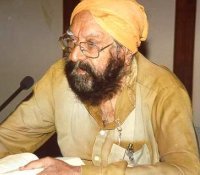
Khushwant Singh is the author of “The Portrait of a Lady,” printed as the chapter’s byline directly under its title. The chapter gives no biographical note about him beyond his name as author. Do not write invented career details about him as if the book stated them; treat this chapter as what it is, a personal memory in his own words.
If a question asks “who wrote The Portrait of a Lady,” the only safe, book-based answer is “Khushwant Singh.” Do not add unverified biographical claims the chapter itself never makes.
1.2 What Kind of Writing This Is
“The Portrait of a Lady” is not a short story with invented characters. It is an autobiographical sketch, a short piece of true, personal writing in which the author looks back on someone from his own life. Here that someone is his own grandmother, remembered from his boyhood in a village, through the years he grew up in a city, and up to the day she died. The “I” is the author’s own voice, as is usual in an autobiographical sketch; the book’s own notes for teachers call the chapter an “autobiographical account.”
An autobiographical sketch is a short piece of writing in which a real author recalls a real person or event from their own life, told in the first person (“I”), rather than an invented story with fictional characters.
2The Story, Step by Step
The whole chapter moves through the different stages of one relationship, from the author’s early childhood to his grandmother’s death. Before the details, here is the shape of that relationship in one glance.
2.1 Grandmother and Grandfather, First Introduced
The chapter opens not with the grandmother in person but with a description of her, and of a portrait of the grandfather hanging above the mantelpiece: a big turban, loose-fitting clothes, a long white beard, looking “at least a hundred years old.” The author tells us she had been old and wrinkled for the twenty years that he had known her, and that the idea of her ever having been young and pretty seemed “almost revolting,” a phrase the book itself asks you to notice. She had “always been short and fat and slightly bent,” her face “a criss-cross of wrinkles running from everywhere to everywhere.”
The author says his grandmother “could never have been pretty; but she was always beautiful,” comparing her to “the winter landscape in the mountains, an expanse of pure white serenity breathing peace and contentment.”
One reading is that this simile presents beauty as something calm and inward, not tied to youth.
The author’s parents left him with his grandmother when they moved to the city, so the two were “constantly together.” She woke him each morning, dressed him while singing her prayers in a “monotonous sing-song,” and packed his wooden slate, ink-pot and red pen for school. After a breakfast of a stale chapatti with butter and sugar, she walked him to the village school, which was attached to the temple, carrying extra chapattis for the village dogs. While the children chanted the alphabet in the verandah, she sat inside reading the scriptures; on the walk home, the village dogs met them at the temple door and followed them home, fighting over the chapattis the two threw to them.
One way to read the village dogs: they are the first of two sets of animals (dogs, later sparrows) that go with the grandmother’s two homes. You can use this pairing in an answer about the chapter’s style.
2.3 The Turning-Point: Moving to the City
When the author’s parents were “comfortably settled” in the city, they sent for him and his grandmother. The book itself calls this “a turning-point” in their friendship. Although they still shared a room, the grandmother no longer walked him to school; he now travelled by motor bus to an English school. With no street dogs in the city, she began feeding sparrows in the courtyard instead, the animal companion that stays with her for the rest of the chapter.
2.4 Phase Two: Early City Years, and a Widening Gap
For a while she still woke him and asked what his teacher had taught him, but his answers, English words and “little things of western science and learning” such as the law of gravity, Archimedes’ Principle, and the world being round, made her unhappy: she could not help with such lessons, and was distressed that the English school taught nothing of God or the scriptures. When the author announced he was being given music lessons, she was “very disturbed,” since to her music had “lewd associations,” it was “the monopoly of harlots and beggars and not meant for gentlefolk.” She said nothing, but her silence “meant disapproval,” and she “rarely talked to me after that.”
Grandmother’s world
- Prayer, scripture, the temple school
- Village dogs as companions
- Distrust of English-school science
- Sees music as improper for gentlefolk
The author’s new world
- An English school, reached by motor bus
- Gravity, Archimedes’ Principle, a round earth
- Formal music lessons
- Growing distance from village ways
2.5 Phase Three: University, and “Seclusion with Resignation”
When the author went to university and was given a room of his own, “the common link of friendship was snapped.” The book’s own phrase for what followed is that his grandmother “accepted her seclusion with resignation,” rarely leaving her spinning-wheel to talk to anyone. From sunrise to sunset she sat spinning and reciting prayers, relaxing only in the afternoon to feed the sparrows that gathered around her in a “veritable bedlam of chirrupings,” some perching on her legs, shoulders, even her head. She never shooed them away, and the book tells us this was “the happiest half-hour of the day for her.”
Do not sum up the grandmother’s later years as simply “lonely and sad.” The chapter says she “accepted her seclusion with resignation,” and that feeding the sparrows “used to be the happiest half-hour of the day for her.” Resignation here means calm acceptance.
2.6 Going Abroad, and the Reunion Five Years Later
When the author decided to study abroad, he expected his grandmother to be upset; instead, at the railway station, she showed no emotion at all. Her lips moved in prayer, her fingers told her rosary beads, and “silently she kissed my forehead”; he cherished the moist imprint “as perhaps the last sign of physical contact between us.” Five years later she met him at the station again, “did not look a day older,” and still had “no time for words,” reciting her prayers even while she embraced him. Her happiest moments on his first day back were still with her sparrows, whom she fed longer, “with frivolous rebukes,” the book’s own flagged phrase for her scolding, affectionate manner with the birds.
2.7 The Last Evening: Singing Instead of Praying
That evening, “a change came over her.” Instead of praying, she gathered the women of the neighbourhood, got hold of an old drum, and sang of “the home-coming of warriors” for hours, thumping “the sagging skins of the dilapidated drum” until the family had to persuade her to stop. The book marks this plainly: “That was the first time since I had known her that she did not pray.”
This evening can be read as foreshadowing. Once the grandmother stops praying, for the first time since the narrator had known her, an alert reader may sense the story is moving toward her death, which comes the very next day.
2.8 Her Death, and the Silent Sparrows
The next morning she was taken ill with a mild fever; the doctor told the family it would go, but the grandmother “thought differently.” She told the family her end was near. She said that, since “only a few hours before the close of the last chapter of her life she had omitted to pray,” she was not going to waste any more time talking to them. The family protested, but she ignored their protests. She lay peacefully, praying and telling her beads, until her lips stopped moving and the rosary fell from her lifeless fingers; “a peaceful pallor spread on her face and we knew that she was dead.”
She was laid on the ground, covered with a red shroud, as custom required. That evening, when the family went to carry her for cremation, they found thousands of sparrows sitting silently over the verandah and her room, all the way up to where she lay. There was no chirruping. The author’s mother broke bread into little crumbs for the birds, the way the grandmother used to, but “the sparrows took no notice of the bread.” When the corpse was carried off, they flew away quietly; the next morning, the sweeper swept the bread crumbs into the dustbin.
“There was no chirruping. We felt sorry for the birds.”
the narrator, on the sparrows the evening his grandmother died
3Character Sketch
3.1 The Grandmother
The book’s own picture of her: she “hobbled about the house in spotless white with one hand resting on her waist to balance her stoop and the other telling the beads of her rosary. Her silver locks were scattered untidily over her pale, puckered face, and her lips constantly moved in inaudible prayer.”
Deeply religious
In the village she read the scriptures at the temple school; in later life she sat at her spinning-wheel “from sunrise to sunset” reciting prayers. When she falls ill, she says her end is near and, because she had omitted to pray, she will not waste any more time talking.
Traditional, and wary of modern learning
She distrusts the English school’s science and its silence on God, and disapproves of music as unfit for “gentlefolk,” showing a worldview shaped by village and temple life.
Loving, in a quiet, undemonstrative way
In her later years she says little and shows almost no outward emotion. As a boy she woke the author every morning and walked him to school; after the move she no longer came to school with him, but for some time still woke him and asked what the teacher had taught him. Her love is shown mainly through steady, patient action rather than words.
Strong in character, calm before death
She accepts each change, the move to the city, her grandson’s growing distance, her own old age, without complaint, and faces her own death calmly, lying peacefully in bed praying and telling her beads.
Two more figures are worth remembering, though neither speaks in the chapter: the author’s grandfather, known to us only through his portrait above the mantelpiece, and the author’s parents, who move to the city first and later send for both the author and his grandmother.
3.2 The Grandmother’s Life in Three Phases
| Phase | Where the relationship stands | Her animal companions |
|---|---|---|
| The village | Constant, shared companionship: “constantly together” for school, prayers and walks | The village dogs, fed and followed home from the temple school |
| The city, early years | Still close, but a widening gap over English-school learning and music | Sparrows, fed for the first time in the city courtyard |
| University and after | “The common link of friendship was snapped”; she accepts her own seclusion | Sparrows, now her main daily companionship and happiness |
4Themes of the Chapter
4.1 Four Ideas at the Heart of the Chapter
Old age, death and acceptance
The grandmother faces both her advancing age and, finally, her own death calmly, lying “peacefully in bed praying”; she tells the family her end is near, and she dies that same day.
Faith as the rhythm of a life
Prayer structures her day for years; the one evening she does not pray is, the narrator says, “the first time since I had known her that she did not pray,” and it comes just before her death.
A relationship that changes shape, but does not end
The bond between the author and his grandmother moves from constant physical closeness to near-silence, yet one reading is that real affection survives every change, right up to her death.
Tradition meeting modern, English-medium education
The grandmother’s worldview, built on scripture and the temple school, cannot make room for gravity, Archimedes’ Principle or formal music lessons, showing a generational and cultural gap between the grandmother’s world and the English-school education the author receives.
5How the Chapter Is Told
Khushwant Singh does not simply state that his grandmother was a remarkable woman. He builds the whole sketch out of small, concrete, repeated details that carry the idea without announcing it. Notice these techniques below.
5.1 First-Person, Autobiographical Narration
The chapter is told entirely through the author’s own memory, in the first person. This lets the reader feel the relationship changing exactly as he experienced it: close and unquestioned as a child, then increasingly distant, then, at the very end, a shared loss.
A motif is an image or idea that repeats through a piece of writing to build a larger meaning. One reading treats the animals here, first dogs, then sparrows, as a motif: each goes with the grandmother’s companionship at a different stage of her life.
Foreshadowing is a hint, early in a piece of writing, of something that will happen later. The grandmother not praying on her last evening, the first time the narrator had known her not to, and singing with the neighbourhood women instead, can be read as foreshadowing her death the next day.
Symbolism is when a writer uses an object or image to stand for a larger idea. The sparrows sitting silently, taking no notice of the bread crumbs, and flying away quietly when the body is carried off, can be read as a symbol of a shared, wordless mourning that goes beyond the human family. The book itself gives no reason for what the sparrows do.
| Detail in the chapter | One way to read it |
|---|---|
| The grandfather’s portrait above the mantelpiece | A literal portrait, in the first paragraph, that can be read as mirroring the word portrait of the grandmother the whole chapter goes on to draw |
| The village dogs, then the sparrows | Companionship that changes shape but never disappears, moving with her from the village to the city |
| The spinning-wheel and the daily prayers | A steady rhythm of faith running through her later life, broken only on the evening of the drum |
| The one evening she does not pray | Foreshadowing: the reader senses, before the family does, that her end is near |
| The silent sparrows at her death | A shared mourning that extends beyond her human family, closing the chapter on the same note of quiet devotion it began with |
6Words to Know
The book itself asks you to notice these expressions before you read the chapter and to infer their meaning from the context. These are the chapter’s own expressions, shown here with their meanings in context.
| Expression | Meaning as used in the chapter |
|---|---|
| the thought was almost revolting | the idea felt genuinely unpleasant, used for imagining the grandmother as ever young and pretty |
| an expanse of pure white serenity | a wide, calm, untroubled scene, the simile for the grandmother’s beauty |
| a turning-point | a moment after which things change permanently, used for the move to the city |
| accepted her seclusion with resignation | calmly accepted being left alone, without complaint |
| a veritable bedlam of chirrupings | a truly wild, noisy scene of birds all chirping together |
| frivolous rebukes | light, playful scoldings, not meant seriously |
| the sagging skins of the dilapidated drum | the worn, loosened surface of an old, run-down drum |
A few more words from the chapter are worth knowing on their own:
| Word | Meaning |
|---|---|
| hobble | to walk with difficulty because the legs or feet are in bad condition |
| monotonous | staying at the same level or tone throughout, without variety |
| dilapidated | old, worn out and falling into disrepair |
| resignation | calm, uncomplaining acceptance of something that cannot be changed |
| pallor | an unusual paleness of the face, often associated with death or illness |
6.1 Working with Words: Senses of “Tell” and “Take”
The book’s own exercise highlights how one common word can carry several different meanings.
| Use of “tell” in the chapter | Its sense here |
|---|---|
| “telling the beads of her rosary” | counting while reciting |
| “I would tell her English words” | make something known, in spoken words |
| “one could never tell” | be sure |
| “she told us that her end was near” | give information to somebody |
The chapter also uses two fixed phrases with “take”: to take to something means to begin doing it as a habit (she “took to feeding sparrows”), and to take ill means to suddenly become sick (“the next morning she was taken ill”).
6.2 Words for a Manner of Walking
The exercise asks which words, alongside “hobble,” also describe a manner of walking. From the given list, shuffle, stride, waddle, swagger, trudge and slog all describe ways of walking (to slog is to walk steadily with great effort); haggle, ride and wriggle do not (to wriggle is to twist and turn the body). Paddle is a borderline case: it usually means moving a boat with a paddle, but it can also mean walking barefoot in shallow water, as in the next piece in Hornbill, “A Photograph” (“went paddling”), so it may also be ticked.
7Noticing Form: The Past Perfect Tense
NCERT asks students to notice the past perfect form in five sentences from the chapter, for example “She had been old and wrinkled for the twenty years that I had known her” and “It was the first time since I had known her that she did not pray.” This form is used when recounting something from the more distant past, an event that had already happened before another past moment the narration is describing.
Whenever a sentence uses “had” plus a past participle inside a story already told in the past tense, it is marking an event that happened even earlier. NCERT asks you to notice this form in five sentences from the chapter, and says “When we recount things in the distant past we use this form.”
8Why “The Portrait of a Lady”?
The book does not explain the title, but one reading is that it works on two levels at once. On the surface, “lady” refers directly to the author’s grandmother, the one central figure the whole chapter is about. “Portrait” can also be read as an echo of a literal portrait: the first paragraph describes the grandfather’s portrait hanging above the mantelpiece, and the chapter then spends the rest of its pages painting an equally detailed, equally affectionate word-portrait of the grandmother herself, feature by feature, phase by phase, right up to the moment of her death. Read this way, the title tells you, before you read a word of the story, that you are about to meet someone worth remembering in exactly that much detail.
9Answering Extract-Based Questions
An extract-based question gives you a short passage from the chapter and asks questions on it. The method below works for any extract from this chapter.
Extract: “There was no chirruping. We felt sorry for the birds and my mother fetched some bread for them… The sparrows took no notice of the bread.”
Q. Why do the sparrows ignore the bread offered to them?
Step 1: Find the detail just before the extract: the grandmother has just died, and it is her habit of feeding these very sparrows that the bread is meant to continue.
Step 2: Connect it to the rest of the chapter: in her later years her happiest moments were with her sparrows, and feeding them “used to be the happiest half-hour of the day for her.”
Answer: The book does not state the reason. One reading is that the sparrows are mourning the grandmother’s death in their own way: their silence and their taking no notice of the bread suggest it was her presence, not merely the food, that they had gathered for, and they fly away quietly when her body is carried off.
Always quote a short phrase from the extract itself in your answer (“took no notice of the bread,” for instance). Quoting a short phrase shows you have read the passage closely, not just the general idea.
- Author: Khushwant Singh; an autobiographical sketch, not a fictional short story
- Grandfather known only through his portrait; grandmother described first as old, wrinkled, “always beautiful,” like “the winter landscape in the mountains”
- Village phase: constant companionship, temple school, village dogs
- Turning-point: the family moves to the city; the friendship visibly starts to change
- City phase: her disapproval of English-school science and music lessons; growing silence
- University phase: “seclusion with resignation,” the spinning-wheel, sparrows as her main companions
- At the station, leaving and returning: calm and wordless, praying both times
- Last evening: sings and drums instead of praying, the first time the narrator had known her not to pray; this can be read as foreshadowing her death
- Death: calm, self-predicted, mid-prayer, beads falling from her lifeless fingers
- The silent sparrows: take no notice of the bread, fly away quietly when the body is carried off
- Key devices: first-person autobiographical narration, simile (winter landscape), motif (dogs and sparrows), foreshadowing (the drum evening), symbolism (the silent sparrows); the last three are terms from literary study, not the book’s
- Can I name and describe the three phases of the author’s relationship with his grandmother?
- Can I explain what the “turning-point” was and how it changed things?
- Can I give three reasons the grandmother was disturbed by the author’s city schooling?
- Can I describe how the grandmother spent her days after the author grew up?
- Can I explain the odd way the grandmother behaved the evening before she died?
- Can I explain how the sparrows expressed their sorrow when she died?
- Can I use the words “motif,” “foreshadowing” and “symbolism” correctly about this chapter?