
- The full meaning of every stanza, in the order the poem gives them, with the exact refrain line quoted
- What the title “Refugee Blues” can be read to suggest, and how the poem’s refrain works
- The historical crisis the poem itself names directly: Hitler and German Jews, with the wider background clearly marked as context, not an NCERT fact
- The poem’s central contrast: free animals and birds set against trapped, stateless human beings
- The four devices the NCERT exercises name by name: refrain, pathos, irony and sarcasm, plus juxtaposition and the symbolism of “blue”
- The points needed for the book’s Understanding the Poem and Try This Out questions, including the title question and the list of other colours
This chapter is in the NCERT book but is not in the CBSE 2026-27 English Elective syllabus, so it is not assessed in the CBSE board paper this year. Study it for other boards that use the NCERT book, or for practice.
1About the Poet
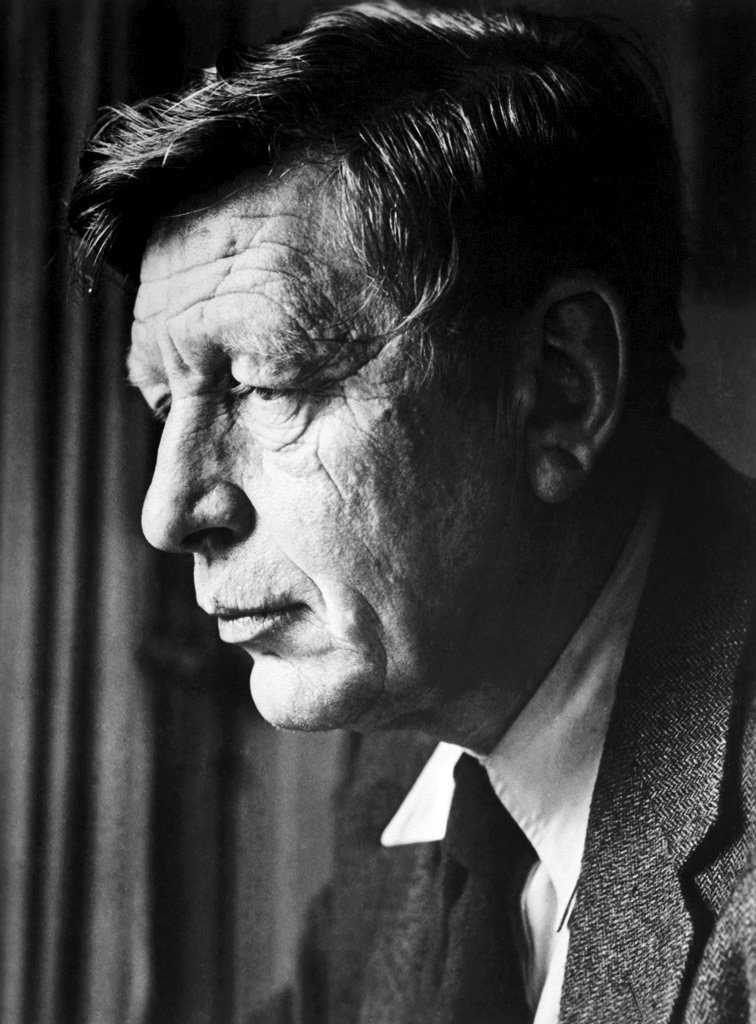
Wystan Hugh Auden (1907-1973) was a student and later a Professor of Poetry at
Oxford University. The NCERT note calls him “one of the most important poets of the
century” (from his dates, the twentieth century), and says he “has published several
collections of poems noted for their irony, compassion and wit.”
The NCERT textbook’s own note says: “Although a modern poem, ‘Refugee Blues’ uses the
ballad form of narration.” A ballad tells a story in simple, songlike stanzas, and
this poem works that way: a speaker narrates one small scene after another, each ending
on a line built the same way.
The NCERT textbook’s “Suggested Reading” for this poem lists two more of Auden’s poems:
“Taller Today we Remember” and “Our Hunting Fathers.”
2Historical Background
The poem never needs an outside history lesson to be understood: it names its own crisis
directly. Stanza 7 hears “the thunder rumbling in the sky” and identifies it as
“Hitler over Europe, saying: ‘they must die'”, and stanza 8 names the persecuted group
outright: “they weren’t German Jews.” These two lines are all the poem itself states
about the historical crisis behind it.
Auden wrote this poem in March 1939, soon after moving from England to New York, in the
years just before the Second World War, when Nazi Germany was persecuting Jewish citizens
and many were trying, often without success, to find a country that would take them in.
None of this dating or wider history is printed in the NCERT textbook itself; it is added
here only so the poem’s two direct references, Hitler and German Jews, make sense in
context.
Statelessness (a general term; the poem and the book do not use the word) is the
condition of having no country willing to legally recognise or protect you. One reading
is that the speaker and “my dear” are stateless: “Old passports can’t do that,” and the
consul treats a person with no passport as “officially dead.”
3The Poem, Stanza by Stanza
The poem has 13 stanzas. Every stanza follows the same pattern: two lines set a
small scene, and the closing line (in the book it runs onto a fourth printed line in most
stanzas) states the refugees’ situation, repeated twice within itself and joined by the
words “my dear.” Reading the stanzas in four groups makes the poem’s
argument easy to follow.
3.1 A home that is no longer home (Stanzas 1-3)
| Stanza | Scene | Refrain line (quoted exactly) |
|---|---|---|
| 1 | A city of “ten million souls”: “Some are living in mansions, some are living in holes” | “Yet there’s no place for us, my dear, yet there’s no place for us.” |
| 2 | The lost homeland is still on the map, but cannot be reached | “We cannot go there now, my dear, we cannot go there now.” |
| 3 | A churchyard yew tree renews itself every spring; an old passport cannot renew itself the same way | “Old passports can’t do that, my dear, old passports can’t do that.” |
The city has room for ten million people, in mansions and in holes alike, yet “there’s
no place for us.” The homeland is not gone in any physical sense, it is still “in the
atlas,” but “We cannot go there now.” The yew “blossoms anew” every spring, but “Old
passports can’t do that.” One reading: a refugee’s legal life cannot renew itself the way
a living thing can.
3.2 Bureaucracy and hostility (Stanzas 4-7)
| Stanza | Scene | Refrain line (quoted exactly) |
|---|---|---|
| 4 | The consul “banged the table” and declared: “If you’ve got no passport you’re officially dead” | “But we are still alive, my dear, but we are still alive.” |
| 5 | A committee offers a chair and politely asks the speaker to “return next year” | “But where shall we go today, my dear, but where shall we go today?” |
| 6 | A public speaker warns a crowd: “If we let them in, they will steal our daily bread” | “He was talking of you and me, my dear, he was talking of you and me.” |
| 7 | What the speaker took for thunder “was Hitler over Europe,” saying “they must die” | “We were in his mind, my dear, we were in his mind.” |
Do not claim that every official in these stanzas is calm and polite: the consul
“banged the table” before speaking, and the public speaker warns a crowd that “they will
steal our daily bread.” The institutions work through ordinary, procedural means (the
consul’s “officially dead,” the committee’s “return next year”); the poem then escalates
to open threat and pursuit: Hitler “saying: ‘they must die'” and ten thousand soldiers
“Looking for you and me.”
3.3 Freedom denied: the contrast with animals and birds (Stanzas 8-11)
| Stanza | Scene | Refrain line (quoted exactly) |
|---|---|---|
| 8 | A poodle wears “a jacket fastened with a pin”; “a door opened and a cat let in” | “But they weren’t German Jews, my dear, but they weren’t German Jews.” |
| 9 | From the quay, fish are seen “swimming as if they were free” | “Only ten feet away, my dear, only ten feet away.” |
| 10 | Birds in a wood have “no politicians” and sing at ease | “They weren’t the human race, my dear, they weren’t the human race.” |
| 11 | A dreamed building with “a thousand floors, A thousand windows and a thousand doors” | “Not one of them was ours, my dear, not one of them was ours.” |
One reading of these stanzas is that they hold the poem’s sharpest irony: a poodle wears
a jacket fastened with a pin and a cat is “let in,” “But they weren’t German Jews.” The fish
swim “as if they were free,” and the birds “had no politicians and sang at their ease: They
weren’t the human race.” Even in a dream, of a thousand doors “Not one of them was
ours.”
3.4 No escape (Stanzas 12-13)
| Stanza | Scene | Refrain line (quoted exactly) |
|---|---|---|
| 12 | At a railway station, tickets are asked for “to Happiness” | “But every coach was full, my dear, every coach was full.” |
| 13 | Ten thousand soldiers march on a snow-covered plain | “Looking for you and me, my dear, looking for you and me.” |
The poem closes by turning “Happiness” into an ordinary, impossible train ticket, and then
drops the small, sad joke entirely: the final image is not exclusion but active pursuit, ten
thousand soldiers searching the snow for exactly this couple. The poem moves from being shut
out to being hunted.
4The Central Contrast: Free Creatures and Trapped People
Three separate stanzas (9, 10 and part of 8) build the same comparison from different
animals. Reading them side by side is the fastest way to answer “what do the references to
birds and animals suggest?” (Understanding the Poem, Q3).
Animals and birds
- A poodle wears “a jacket fastened with a pin”; a cat is “let in”
- Fish swim in the harbour “as if they were free”
- Birds have “no politicians” and sing “at their ease”
- “They weren’t the human race” (one reading: they are outside human politics)
The refugee speaker and “my dear”
- Turned away by the consul and the committee; a public speaker warns against them
- Cannot even reach the fish, “only ten feet away”
- Named directly as targets by a political leader (Hitler)
- One reading: they are trapped inside human politics
For “How does the poet juxtapose the human condition with the behaviour of the political
class?” (Q4), use the consul, the committee and the public speaker as your three examples:
the consul is forceful (“banged the table”), the committee works through polite procedure
(“Asked me politely to return next year”), and the public speaker stirs a crowd with a
warning that “they will steal our daily bread”; all three close a door on the refugees.
5Poetic Devices
The exercise “Try This Out” (Q1) names four devices to elaborate. Learn each in its own
box, with the exact line that shows it.
Refrain is a line or phrase repeated at fixed points in a poem, usually at the end
of each stanza. Every stanza here ends with a variation of the same shape: “[situation], my
dear, [situation repeated],” for example “But we are still alive, my dear, but we are still
alive.”
Pathos is language that appeals directly to the reader’s pity and sorrow. “But we
are still alive, my dear, but we are still alive” is pathos: a plain, quiet insistence on
being human, set right after being called “officially dead.”
Irony is a contrast between what is said or expected and what actually happens.
It runs through the whole poem: a poodle and a cat are sheltered while “German Jews” are
not; a committee’s polite chair-offer and a consul’s forceful “banged the table” declaration
both end the same way, with the refugees left nowhere to go.
Sarcasm is a bitter or mocking edge inside otherwise ordinary words. “Asked for two
tickets to Happiness; But every coach was full” turns an ordinary request for railway tickets into a
bitter joke: happiness itself is sold out.
Juxtaposition is the device of placing two things side by side to sharpen a contrast: the poem sets
the refugees’ desperation directly beside the officials they meet, the consul’s forceful
table-banging, the committee’s polite, procedural manner and the public speaker’s hostile
warning, so that
the difference between suffering and indifference stands out either way.
Try This Out Q2 asks what the colour “blue” suggests. The book does not explain it, so
this is a reading: in everyday English “feeling blue” means feeling sad, and “the blues”
is also a song form built on sorrow and repeated lines (a term from music; the book names
only the ballad form). Either way, the colour in the title signals the poem’s mood of
sorrow.
Title (Understanding Q1): one reading is that “Refugee” names the poem’s subject,
people with “no place for us,” and “Blues” names its sorrow, so the title states the theme
before the first line is read.
Other colours (Try This Out Q2): in common English usage, red for anger, danger or
passion; black for grief or fear; white for peace or purity; green for envy or hope; grey
for gloom or dullness.
6Themes
Statelessness
Losing a passport means losing a legal identity, to the point of being called
“officially dead” while still alive.
Exclusion amid abundance
A city of ten million and a building of a thousand doors still hold no place for the
refugees.
Freedom of nature vs captivity of humans
Fish swim “as if they were free” and birds “had no politicians and sang at their ease”;
the poodle and the cat are admitted, while the speaker is shut out.
Political indifference and hostility
A committee’s delay and a public speaker’s warning both close doors without ever
raising a hand.
Persecution and pursuit
The poem ends not with exclusion but with active pursuit: soldiers searching the snow
for “you and me.”
7Glossary
8Recap and Self-Check
- W.H. Auden (1907-1973) writes this poem in “the ballad form of narration,” though it is a modern poem (the book’s note); its title can be read as suggesting the “blues” song form (not stated in the book)
- 13 stanzas, each ending in a refrain: “[situation], my dear, [situation repeated]”
- Stanzas 1-3: a home that is no longer home (the city, the lost homeland, the yew tree vs old passports)
- Stanzas 4-7: bureaucracy and hostility (the consul, the committee, the public speaker, Hitler)
- Stanzas 8-11: freedom denied, contrasted with a poodle, a cat, fish and birds
- Stanzas 12-13: no escape, ending in active pursuit by ten thousand soldiers
- Devices named by the exercises: refrain, pathos, irony, sarcasm, plus juxtaposition and the “blue” symbolism
- Themes: statelessness, exclusion amid abundance, freedom of nature vs human captivity, political indifference, persecution
- Can I quote the refrain line from at least five different stanzas, exactly as printed?
- Can I explain the poem’s ballad form and what the word “Blues” in the title can be read to suggest?
- Can I name the two direct historical references the poem itself makes (Hitler, German Jews)?
- Can I explain all four named devices (refrain, pathos, irony, sarcasm) with my own quoted example each?
- Can I explain the contrast between the animals/birds and the human refugees, using at least three creatures?
- Can I explain what “two tickets to Happiness” means in one sentence?