
- Retell the writer’s journey to Antarctica and explain why she went there
- Explain how Antarctica’s geological history (Gondwana) connects India to the rest of the world
- Explain the climate-change argument the essay makes, and the “Students on Ice” programme’s purpose
- Identify and quote the essay’s own literary devices: simile, metaphor, open questions
- Answer every Reading with Insight question and extract-based questions confidently
1Meet the Author and the Essay
1.1 About the Author
“Journey to the End of the Earth” is written by Tishani Doshi, an Indian writer. She writes in the first person about a real journey she made to Antarctica as part of an educational programme called Students on Ice. The essay is not a story with invented characters. It is a travelogue, a piece of non-fiction in which the writer records her own experience, thoughts and feelings during a real trip.
If a question asks you to name the genre of this piece, write “travelogue” or “personal essay / travel account,” not “short story.” There is no plot or invented character here: every event described actually happened to the writer.
1.2 Before You Read
The chapter opens, under the heading “Before you read”, with the framing line: “If you want to know more about the planet’s past, present and future, the Antarctica is the place to go to. Bon Voyage!” One reading of this line: Antarctica will be treated as a key to understanding the Earth itself, not just as a cold and distant place.
2The Essay, Step by Step
2.1 The Journey Begins
The writer boards a Russian research vessel, the Akademik Shokalskiy, heading towards Antarctica, described as “the coldest, driest, windiest continent in the world.” Her journey began 13.09 degrees north of the Equator in Madras, and involved crossing nine time zones, six checkpoints, three bodies of water, and at least as many ecospheres. By the time she actually set foot on the continent, she had been travelling over 100 hours by car, aeroplane and ship.
Her first emotion on facing Antarctica’s “expansive white landscape and uninterrupted blue horizon” was relief, quickly followed by “an immediate and profound wonder”: wonder at the continent’s immensity and isolation, but mainly at the astonishing fact that India and Antarctica were once part of the same landmass.
2.2 Part of History: Gondwana
Gondwana was a giant amalgamated southern supercontinent that existed 650 million years ago, centred roughly around present-day Antarctica. Humans had not yet appeared, the climate was much warmer, and it hosted a huge variety of flora and fauna.
To visit Antarctica now, says the writer, “is to be a part of that history”: to understand Cordilleran folds, pre-Cambrian granite shields, ozone and carbon, evolution and extinction, all at once.
“How do geological phenomena help us to know about the history of humankind?”
the essay’s own margin question, beside this section
The essay answers this by tracing how the landmasses moved: Gondwana “was forced to separate into countries,” and visiting Antarctica helps us “get a grasp of where we’ve come from and where we could possibly be heading.” It gives two chains:
Possible question (Reading with Insight, Q1): “‘The world’s geological history is trapped in Antarctica.’ How is the study of this region useful to us?” Answer from the book’s chains: India pushing north against Asia buckled the crust to form the Himalayas; South America drifting to join North America opened the Drake Passage and set up the cold circumpolar current that keeps Antarctica frigid. Studying Antarctica’s geological history gives “a grasp of where we’ve come from and where we could possibly be heading.”
Today, 90 per cent of the Earth’s total ice volumes are stored in Antarctica. The writer describes the experience with a vivid simile: it is “like walking into a giant ping-pong ball devoid of any human markers — no trees, billboards, buildings.” She loses “all earthly sense of perspective and time” there. The visual scale ranges from the microscopic (midges and mites) to the mighty (blue whales and icebergs “as big as countries,” the largest recorded iceberg was the size of Belgium). Days pass in a surreal 24-hour austral summer light, and a “ubiquitous silence” is broken only by an occasional avalanche or calving ice sheet.
2.3 Human Impact: Climate Change and Students on Ice
Human civilisations, the writer reminds us, have existed for “a paltry 12,000 years — barely a few seconds on the geological clock.” In that short time, humans have built villages, towns, cities and megacities, and the unmitigated burning of fossil fuels has created a “blanket of carbon dioxide” that is slowly raising the average global temperature.
“What are the indications for the future of humankind?”
the essay’s own margin question, beside this section
Do not write that the essay gives an exact figure for how much the West Antarctic ice sheet will melt or by when. The essay asks three open questions: “Will the West Antarctic ice sheet melt entirely? Will the Gulf Stream ocean current be disrupted? Will it be the end of the world as we know it?” Its reply to these is: “Maybe. Maybe not.” Inventing a definite prediction here is a factual error.
The essay calls climate change “one of the most hotly contested environmental debates of our time,” and says Antarctica is central to that debate for two reasons: it is the only place on Earth that has never sustained a human population, so it remains relatively “pristine”; and its ice-cores hold half-a-million-year-old carbon records trapped in layers of ice, a direct archive of the planet’s past climate.
The programme the writer was travelling with, Students on Ice, takes high-school students to the ends of the world to give them “inspiring educational opportunities” that build “a new understanding and respect for our planet.” It has run for six years and is headed by the Canadian Geoff Green.
Geoff Green’s own reason for running it, in the essay’s words, is that he “got tired of carting celebrities and retired, rich, curiosity-seekers who could only ‘give’ back in a limited way.” Through Students on Ice he instead offers “the future generation of policy-makers a life-changing experience” at an age when they are “ready to absorb, learn, and most importantly, act.” The programme succeeds, the writer observes, because “it’s impossible to go anywhere near the South Pole and not be affected by it”: it is easy to be blasé about polar ice-caps melting from the comfort zone of our own latitude, but “when you can visibly see glaciers retreating and ice shelves collapsing, you begin to realise that the threat of global warming is very real.”
Antarctica’s simple ecosystem and lack of biodiversity make it the perfect place to study how small environmental changes cause big repercussions, and the essay illustrates this with one example.
Phytoplankton are microscopic, single-celled plants the essay calls “those grasses of the sea.” They nourish and sustain the entire Southern Ocean’s food chain, using the sun’s energy to assimilate carbon and make organic compounds through photosynthesis.
“In the parable of the phytoplankton, there is a great metaphor for existence: take care of the small things and the big things will fall into place.”
the essay’s own stated moral
2.4 Walk on the Ocean
The writer’s best epiphany came just short of the Antarctic Circle, at 65.55 degrees south. The Shokalskiy had wedged herself into thick ice between the peninsula and Tadpole Island, blocking further progress. Before the Captain turned the ship back north, everyone, all 52 of them, climbed down the gangplank and walked on the ocean itself, “kitted out in Gore-Tex and glares.”
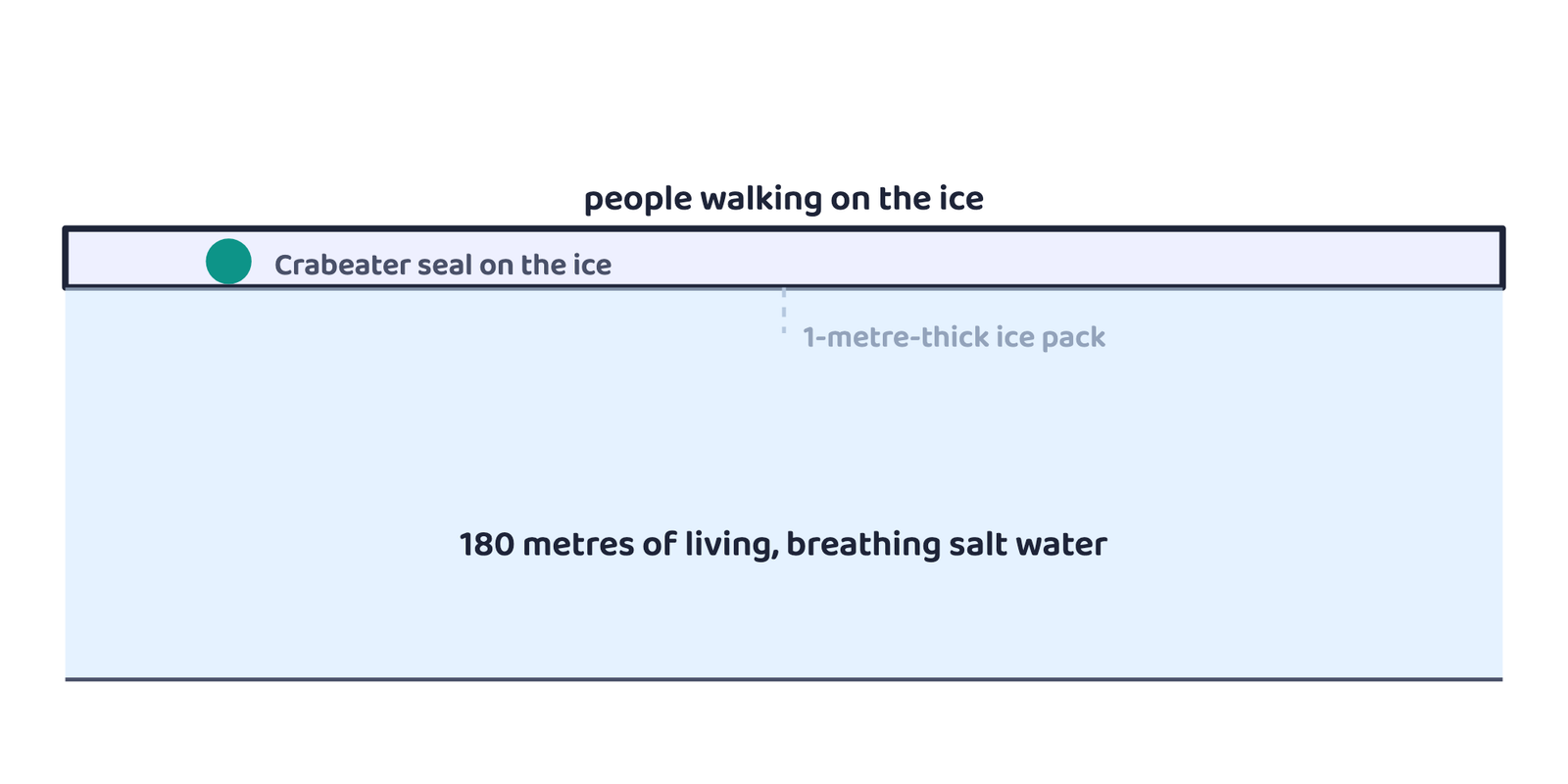
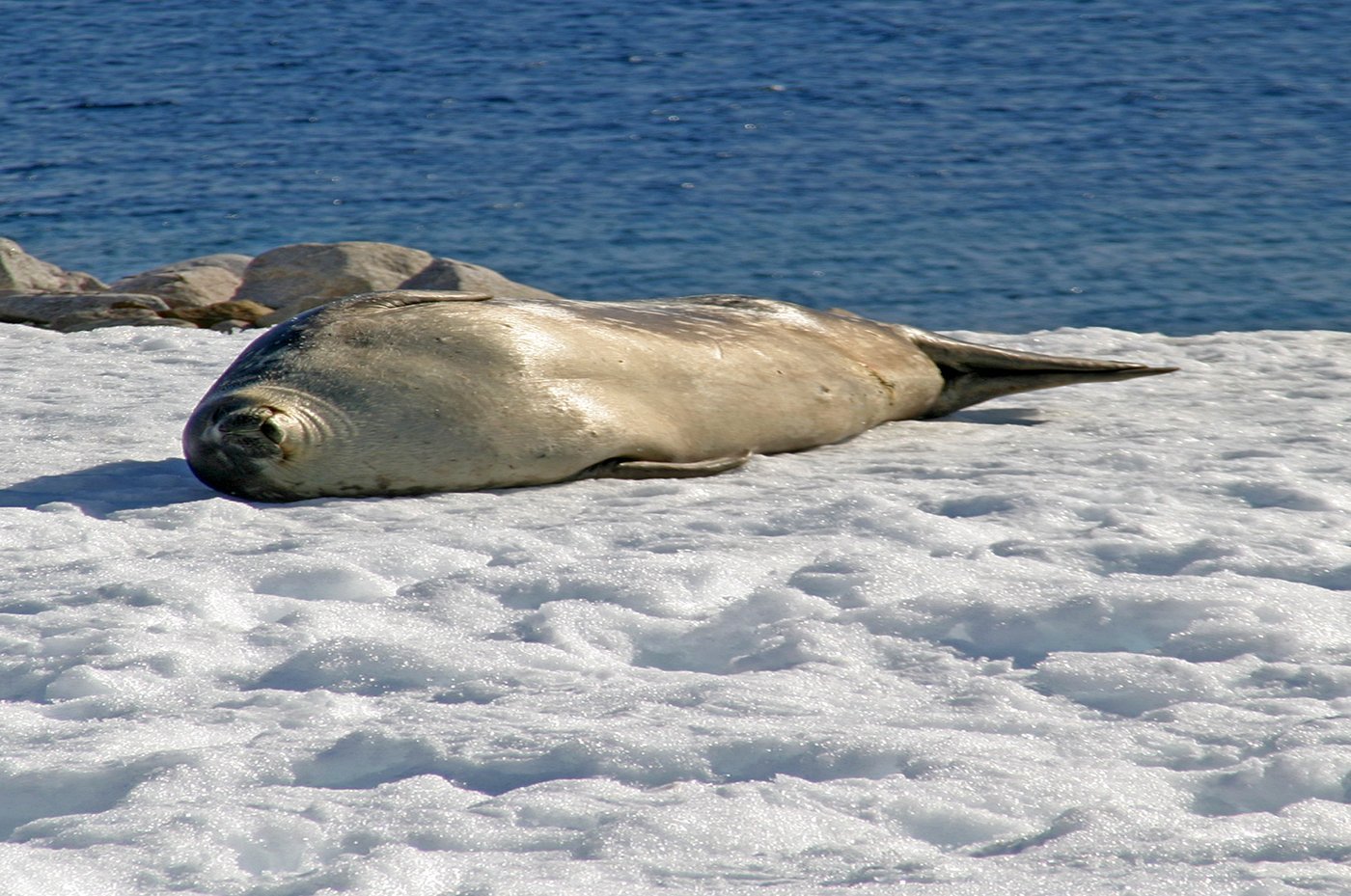
In the periphery, Crabeater seals were “stretching and sunning themselves on ice floes” much like stray dogs do under the shade of a banyan tree. It was, the writer says, “nothing short of a revelation: everything does indeed connect.” Reflecting on nine time zones, six checkpoints and many ecospheres later, she wonders how it would feel if Antarctica became warm again one day, and whether humans would be around to see it, or would have gone the way of the dinosaurs, mammoths and woolly rhinos. After two weeks with teenagers who “still have the idealism to save the world,” she ends on a single memorable line:
“A lot can happen in a million years, but what a difference a day makes!”
the essay’s closing line
The chapter closes with a real footnote: “For more information on Students on Ice visit www.studentsonice.com.”
3Themes of the Essay
Deep geological time
Seeing 12,000 years of human history against 650 million years of Gondwana teaches humility: humans are a tiny, recent part of the Earth’s story.
Climate change and responsibility
Fossil-fuel burning and a rising carbon-dioxide “blanket” are shown as a real, present danger, argued through Antarctica’s relatively “pristine” condition, because it has never sustained a human population.
Small things, big consequences
The phytoplankton parable, caring for the small things so the big things fall into place, is the moral the essay names “a great metaphor for existence”, namely that small things matter for the big ones.
Seeing for yourself
The essay gives the programme’s success as the writer’s observation: “it’s impossible to go anywhere near the South Pole and not be affected by it”; seeing glaciers retreat and ice shelves collapse makes you “realise that the threat of global warming is very real.”
Wonder and interconnectedness
From the opening “profound wonder” to the realisation “everything does indeed connect,” and finally to the closing line “A lot can happen in a million years, but what a difference a day makes!”, one reading of the essay’s emotional arc is a move from awe at Antarctica’s scale to a felt sense of connection.
4How the Essay Is Told
4.1 A Traveller’s Own Voice
The essay is written in the first person (“I found myself,” “my journey began”), which is what makes it a travelogue rather than reportage. The tone moves in a clear arc across the essay: relief on arrival, then wonder at Antarctica’s scale and history, then concern over climate change, and finally hope, carried by the idealistic teenagers on the expedition.
Simile
“It’s like walking into a giant ping-pong ball devoid of any human markers.” Also: the seals sunning “much like stray dogs will do under the shade of a banyan tree.”
Metaphor
“In the parable of the phytoplankton, there is a great metaphor for existence”: the small-to-big idea is explicitly named a metaphor by the writer herself.
Open questions
“Will the West Antarctic ice sheet melt entirely? Will the Gulf Stream ocean current be disrupted? Will it be the end of the world as we know it?” The writer does not settle them; her reply is “Maybe. Maybe not.”
Vivid, numbers-rich imagery
Precise figures (100 hours, 9 time zones, 52 people, 180 metres of water) sit beside sweeping images (“giant amalgamated southern supercontinent,” “ubiquitous silence”): a travel-writer’s mix of fact and feeling.
4.2 Why This Title?
“Journey to the End of the Earth” fits on two levels. Literally, Antarctica is about as far from everywhere as it is possible to travel. Figuratively, one reading treats it as the “end” in the sense of a limit-case for understanding the Earth itself: its deepest past (Gondwana) and its most uncertain future (climate change) both come into focus only at this one extreme place.
5Words to Know
| Word | Meaning in this essay |
|---|---|
| Ecosphere | A self-contained environment or ecological zone |
| Austral | Southern (as in “austral summer,” summer in the southern hemisphere) |
| Amalgamated | Combined or united into one whole |
| Prognosis | A forecast or prediction of how something will develop |
| Biodiversity | The variety of plant and animal life in a place |
| Blasé | Unconcerned, indifferent, as if bored by something others find important |
| Epiphany | A sudden, striking realisation or moment of insight |
| Pristine | Untouched, still in its original, unspoiled condition |
| Unmitigated | Not lessened or reduced in any way; complete |
| Circumpolar | Surrounding one of the Earth’s poles |
| Gangplank | A movable ramp used to board or leave a ship |
| Ice floe | A large, flat sheet of floating sea ice |
| Calving (of ice) | A chunk of ice breaking away from a larger glacier or ice sheet |
| Ubiquitous | Present or seeming to be present everywhere |
6Answering Extract-Based Questions
Extract-based questions can be set on any part of this essay; the method below works for any extract from this chapter.
Extract: “It’s like walking into a giant ping-pong ball devoid of any human markers — no trees, billboards, buildings. You lose all earthly sense of perspective and time here.”
Q. What does the simile in this extract suggest about Antarctica, and how does the writer feel as a result?
Step 1: Identify the device: a simile comparing Antarctica’s blank white landscape to the inside of a ping-pong ball.
Step 2: Explain what the comparison means: a featureless, enclosing whiteness with none of the usual human landmarks (trees, billboards, buildings) that normally help a person judge scale, distance or time.
Answer: The simile suggests that Antarctica’s landscape is so vast, blank and free of human markers that ordinary reference points disappear, which is exactly why the writer says she loses “all earthly sense of perspective and time” there.
Always quote a short phrase from the extract itself in your answer (“giant ping-pong ball,” for instance). Quoting a short phrase from the extract shows you have read its exact words.
- Author: Tishani Doshi. Genre: travelogue / personal essay, first-person, non-fiction
- Journey: aboard the Akademik Shokalskiy from Madras (13.09°N) to Antarctica, crossing 9 time zones and 6 checkpoints in 100+ hours
- Gondwana: a supercontinent 650 million years ago, thrived 500 million years, was forced to separate into countries around the time the dinosaurs were wiped out; India pushing into Asia formed the Himalayas, and South America drifting to join North America opened the Drake Passage and the cold circumpolar current
- 90% of Earth’s ice is in Antarctica; the largest recorded iceberg was the size of Belgium
- Human civilisation is only 12,000 years old; fossil-fuel burning is raising global temperature
- Students on Ice: 6-year-old programme, headed by Canadian Geoff Green, takes high-schoolers (future policy-makers) instead of rich tourists
- Phytoplankton parable: ozone depletion affects phytoplankton, which affects marine animals/birds, which affects the global carbon cycle; moral: “take care of the small things and the big things will fall into place”
- Walk on the ocean: at 65.55°S near the Antarctic Circle, all 52 people walked on a metre-thick ice pack over 180 metres of water, near Tadpole Island
- Closing line: “A lot can happen in a million years, but what a difference a day makes!”
- Key devices: simile (ping-pong ball, stray dogs), metaphor (the phytoplankton parable), open questions, numbers-rich imagery