
- The complete story of the peddler, the crofter, the ironmaster and Edla Willmansson, in the order it happens
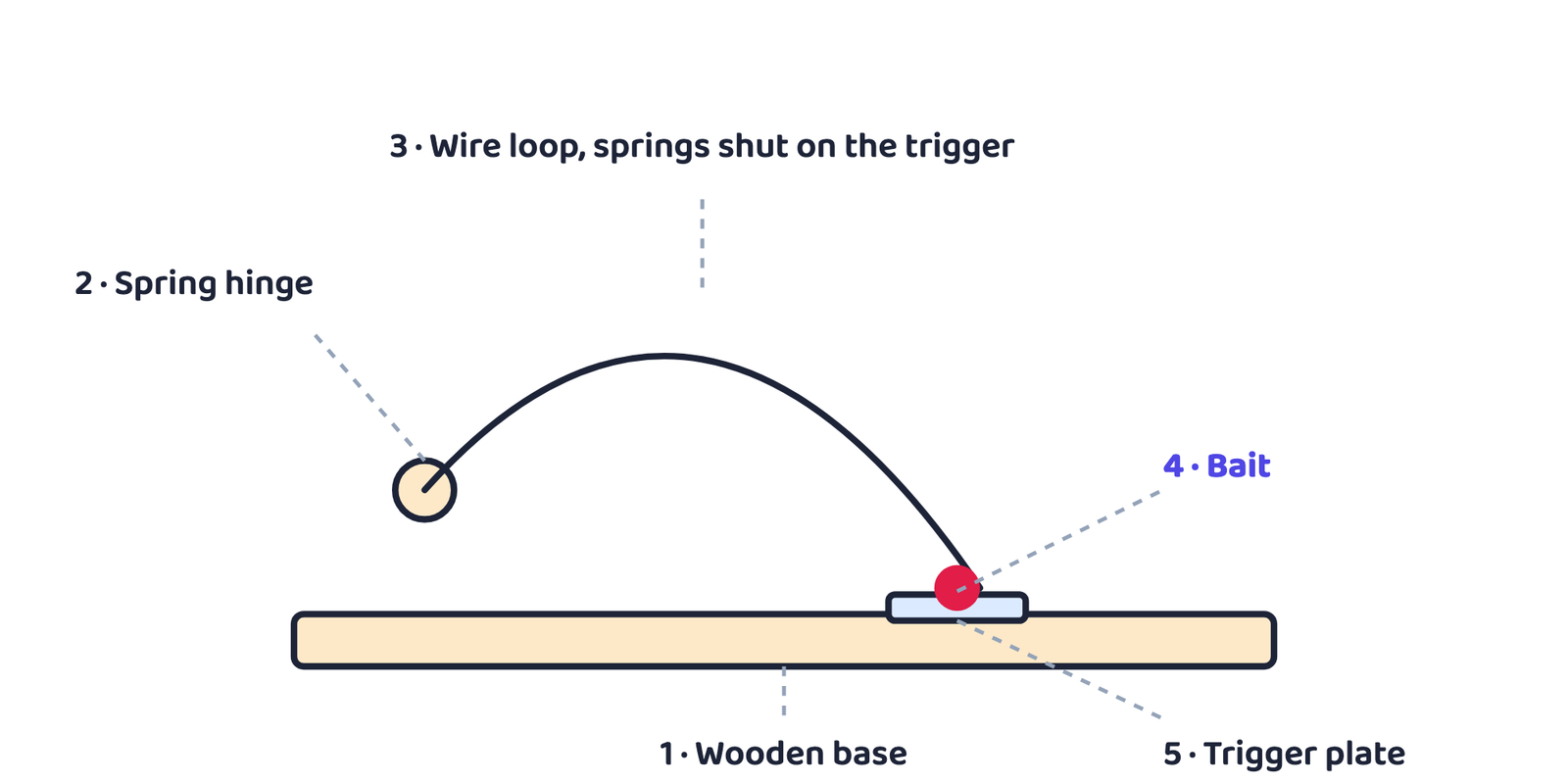
- How the “rattrap” idea can be read at three levels in the story, not just one
- How to write a character sketch of the peddler, Edla Willmansson and the ironmaster
- The theme and sub-theme of the story, in words you can use directly in an answer
- The grammar and vocabulary points the book itself builds into this chapter: reflexive pronouns, and words for tired movement
1 About the Author and the Story
The story is written by Selma Lagerlöf (1858-1940), a Swedish writer. The book’s own note about her says her stories carry one idea running through all of them: a belief that the essential goodness in a human being can be awakened through understanding and love; one reading is that this is what happens to the peddler in this story. The story is set amidst the mines of Sweden, rich in iron ore, and the book itself says it is “told somewhat in the manner of a fairy tale.”
The book says only that the story is “told somewhat in the manner of a fairy tale.” It does not define the phrase. One clear sign in the text: the story opens with “Once upon a time”. (In general usage, a fairy-tale manner also suggests a simple telling and a chance meeting that changes a life; that is general knowledge, not the book’s statement.)
2 The Story at a Glance
Before the detailed summary, see the whole plot as one sequence. This is useful for revising the order of events fast.
3 Detailed Summary
3.1 The Peddler and His “Rattrap” Philosophy
A poor peddler travels the roads selling small wire rattraps that he makes himself from begged material. His trade is “not especially profitable”, so he also resorts to begging and petty thievery “to keep body and soul together”. Walking alone, sad and hungry, one idea entertains him: the whole world is nothing but a big rattrap. It offers riches, joy, shelter, food, heat and clothing exactly the way a rattrap offers cheese and pork, and the moment anyone is tempted to touch the bait, the trap closes and everything comes to an end. Because the world has never been very kind to him, thinking of it this way gives him unwonted joy.
The peddler’s rattrap philosophy: the world offers “riches and joys, shelter and food, heat and clothing, exactly as the rattrap offered cheese and pork”; anyone who is tempted to touch the bait is caught, “and then everything came to an end.”
3.2 The Crofter’s Cottage
One dark evening he asks for shelter at a small grey cottage. The old man living there, a lonely former crofter of Ramsjö Ironworks who now lives off his cow’s milk, welcomes him warmly with porridge, tobacco, and a card game called “mjolis” before bed. The peddler seems not to believe the crofter’s boast of thirty kronor from his cow’s milk, so, trustingly, the old man gets up and actually shows off his savings: three ten-kronor notes in a leather pouch hung by the window. The two part as friends the next morning, but half an hour later the peddler comes back, smashes the window, steals the money, and hangs the empty pouch carefully back in its place before disappearing into the woods.
Crofter, as the book itself defines it: a person who rents or owns a small farm, especially in Scotland. The old man had been a crofter at Ramsjö Ironworks and had worked on the land; now his cow supports him.
3.3 Lost in the Forest
Afraid to use the open road with stolen money in his pocket, the peddler cuts through the forest and gets hopelessly lost, walking around in the same part of it. All at once he recalls his thoughts about the world and the rattrap, and the irony strikes him: he has fallen into his own trap. “He had let himself be fooled by a bait and had been caught” (the book does not name the bait); the forest “closed in upon him like an impenetrable prison from which he could never escape.” As darkness falls he sinks to the ground, tired to death, thinking his last moment has come. Just then he hears the rhythmic thump of hammers from an iron mill nearby, and drags himself towards the sound.
3.4 At Ramsjö Forge
He reaches the forge of the Ramsjö Ironworks, which the narrator says “are now closed down” but were once a large plant with a smelter, rolling mill and forge (in the story itself the forge is still working). The master smith and his helper let him warm himself by the furnace without a word, the way they would any tramp on a cold night. But the ironmaster, doing his nightly round of inspection, looks closely at the ragged stranger and is startled: “But of course it is you, Nils Olof!” He has mistaken the peddler for an old regimental comrade fallen on hard times.
The book gives the reason: if the fine gentleman thought he was an old acquaintance, “he might perhaps throw him a couple of kronor. Therefore he did not want to undeceive him all at once.”
3.5 The Invitation, and the Refusal
The ironmaster insists the “captain” come home for Christmas, since Elizabeth is dead and his boys are abroad, and “it was too bad we didn’t have any company for Christmas.” But the peddler, quite alarmed, thinks that going to the manor would be like throwing himself voluntarily into the lion’s den with the stolen money still in his pocket, refuses again and again. Before leaving, the ironmaster remarks pointedly to the blacksmith Stjernstrom that “Captain von Stahle” preferred to stay in the forge, a sign he has not given up on the idea.
3.6 Edla Willmansson Is Sent
The ironmaster sends his daughter, Edla Willmansson, hoping she can persuade the stranger where he could not. She introduces herself, apologises for his hard time, and, noticing that he looks afraid, privately suspects that either he has stolen something or else he has escaped from jail. Even so, she promises he may leave exactly as freely as he came, and asks only that he stay through Christmas Eve. Her genuine warmth wins him over where the ironmaster’s mistaken warmth could not; he accepts, throws over his rags the big fur coat the valet hands him, and while riding up to the manor house he has evil forebodings: “Why the devil did I take that fellow’s money?”
3.7 Christmas Eve: the Unmasking
The next day is Christmas Eve. At breakfast, the ironmaster is already planning to help his old regimental comrade, telling Edla they must get “a little flesh on his bones” and find him better work than selling rattraps. Edla, more perceptive, remarks that there was nothing about the man last night to show he had once been an educated man, an observation her father brushes aside as mere embarrassment that will fall away with the “tramp clothes.” Bathed, shaved and dressed in the ironmaster’s own clothes, the peddler then looks transformed, but in clear daylight the ironmaster realises at once that this well-dressed stranger is not his old comrade Nils Olof. “What does this mean?” he demands. The peddler does not try to lie: he says he never pretended to be anything but a poor trader, and that at worst he can put on his rags again and go away. When the ironmaster hints at calling the sheriff, the peddler strikes the table and delivers his speech, warning the ironmaster that he too could one day be tempted by “a big piece of pork” and get caught in the trap, a line the ironmaster finds amusing enough to let go, on Christmas Eve at least, telling the man simply to leave.
3.8 Edla Intervenes
Just as the peddler is leaving, Edla stops him: “I think he ought to stay with us today. I don’t want him to go.” Pressed by her father, she explains herself in her own words: the man walks and walks the whole year long, and “there is probably not a single place in the whole country where he is welcome”, always afraid of arrest, and she wants him to have a day of peace, just one in the whole year. She also feels bound by their own earlier invitation and promise: she does not think they ought to chase away a human being whom they themselves asked to come. The ironmaster gives in, telling her she preaches worse than a parson.
The Ironmaster
- Kind only because of a mistaken identity
- Turns suspicious and harsh once the mistake is revealed
- Still assumes the worst the very next morning, asking how many silver spoons are left
Edla Willmansson
- Kind even after guessing he may be a thief or an escaped convict
- Keeps her word regardless of who he turns out to be
- One reading: her kindness, not her father’s, is what changes the peddler (his letter thanks her)
3.9 Christmas Eve at Ramsjö, and the Gift of the Suit
The peddler spends almost the whole of Christmas Eve asleep, waking only for meals and for a moment when the Christmas tree is lit. That same night, after the Christmas dinner, as he goes round thanking each person and saying good night, Edla tells him that her father means the suit he is wearing to be a Christmas present he need not return, and that if he wants to spend next Christmas Eve somewhere he can rest in peace, he will be welcomed back again. He says nothing. He only stares at her in boundless amazement.
3.10 The Truth Comes Out, and the Parting Gift
The next morning, at church, Edla learns that a crofter nearby was robbed by a man selling rattraps: the very theft from the story’s opening. Her father immediately assumes the worst about his own house’s silver. But the valet reports that the stranger has gone, taking nothing, and instead leaving behind a small package for Miss Willmansson. Inside is a small rattrap containing the stolen thirty kronor and a letter, asking her to give the money back to the old crofter, who has the money pouch hanging on the window frame as a bait for poor wanderers, and calling the rattrap itself “a Christmas present from a rat who would have been caught in this world’s rattrap if he had not been raised to captain, because in that way he got power to clear himself.” He signs it “Captain von Stahle,” the name the ironmaster had already used for him at the forge: since Edla had been nice to him all day “as if I was a captain,” he wants to be nice to her in return “as if I was a real captain,” and being raised to captain is what gave him the “power to clear himself.” Edla gives “a little cry of joy” when she sees the gift. The book does not say why; one reading is that it shows her trust in him was not misplaced.
“I want to be nice to you, in return, as if I was a real captain — for I do not want you to be embarrassed at this Christmas season by a thief;”
The peddler’s letter to Edla Willmansson
4 The Rattrap: the Story’s Central Metaphor
The title is not just about a wire trap. The rattrap idea works on three levels in this story. The book calls the world “nothing but a big rattrap” and the gift “a Christmas present from a rat”; reading the forest as a rattrap is an interpretation, built on the line “he recalled his thoughts about the world and the rattrap”.
“How does the metaphor of the rattrap serve to highlight the human predicament?” is a direct NCERT question. Answer using all three levels above, in order.
5 Character Sketches
The Peddler (the “Rattrap Man”)
Never named in the story. Poor, dishonest out of necessity through begging and petty theft, and deeply cynical about the world at the start. Has a subtle sense of humour, seen in his own rattrap speech to the ironmaster. Capable of real change: he leaves the stolen money with Edla, asking her to give it back to the crofter. Edla’s kindness is one reading of what moves him: she treats him kindly even after guessing he may be a thief, and his letter thanks her for being “so nice to me all day long”. The book does not state the cause.
Edla Willmansson
The ironmaster’s daughter. Modest and shy, but firm once she decides something is right. Notices the peddler’s fear and privately suspects the truth, yet treats him with unconditional compassion anyway. She is the only character who introduces herself by full name (“My name is Edla Willmansson”).
The Ironmaster
Owner of Ramsjö Ironworks. Generous and warm at first, but only because of a mistaken identity. Quick to turn suspicious once the mistake is revealed, and quick to assume the worst about the stranger the very next morning. One reading: not a bad man, but his kindness is conditional in a way his daughter’s is not.
6 Theme and Message
Theme, in the book’s own words: “The trap of material benefit that most human beings are prone to fall into.”
Sub-theme, in the book’s own words: “The human tendency to redeem oneself from dishonest ways.”
One reading, in simple words: hardship can pull a person towards dishonesty, as an animal is pulled towards a bait, but genuine kindness, Edla’s rather than the ironmaster’s conditional warmth, can awaken goodness even in someone hardened by the world.
The book also raises two further ideas for discussion (Talking about the text). First, human loneliness and the need to bond with others: the old crofter, “an old man without wife or child, was happy to get someone to talk to in his loneliness”, and Edla says of the peddler that there is “probably not a single place in the whole country where he is welcome and can feel at home.” Second, why the reader sympathises with the peddler from the start: the story’s first paragraph shows his poverty and hunger (“his clothes were in rags, his cheeks were sunken, and hunger gleamed in his eyes”) at the same time as it names his begging and petty thievery.
The peddler is never given a real name anywhere in the story. He is called peddler, stranger, tramp, vagabond and ragamuffin by the narrator, and “Captain von Stahle” by the ironmaster in the forge, and uses it as his own signature at the end, though he says he “never pretended to be anything but a poor trader”. Even his moment of honesty is signed with the title, and his letter says that being “raised to captain” gave him “power to clear himself.”
7 Literary Devices Used
Extended metaphor: a comparison, here the world and the gift called a “rattrap” (and the forest, on one reading, felt as one), that is developed and returned to across an entire story rather than used just once.
Situational irony: when the outcome of a situation is the opposite of what is expected. Here, the peddler who found the idea of the world as a rattrap “entertaining”, and enjoyed thinking ill of the world, ends up trapped by a bait himself; and the tramp whom the ironmaster threatened with the sheriff, and then let go, repays kindness with honesty.
The book says the story is told “somewhat in the manner of a fairy tale”; it opens “Once upon a time”, turns on a chance meeting, and uses character labels such as peddler, stranger, tramp and Captain that shift depending on who is speaking and how they see him at that moment.
8 Language Focus (from the NCERT Chapter Itself)
8.1 Reflexive Pronouns (“Noticing Form”)
The book picks out four sentences from the story to teach reflexive pronouns, formed as pronoun plus -self.
| # | Sentence from the story | How the reflexive pronoun is used |
|---|---|---|
| 1 | He made them himself at odd moments. | Emphasis |
| 2 | He raised himself. | Stands in for the personal pronoun; same subject |
| 3 | He had let himself be fooled by a bait. | Stands in for the personal pronoun; same subject |
| 4 | A day may come when you yourself may want to get a big piece of pork. | Emphasis |
Learn the rule in the book’s own two-part form. Sentences 1 and 4 use the reflexive pronoun for emphasis. Sentences 2 and 3 use it to signal that the pronoun refers to the same subject as the sentence’s own doer.
8.2 Vocabulary: Words for Tired Movement
The story uses plod, trudge and stagger, all meaning movement done wearily. The NCERT “Working with words” exercise asks you to find five other such words: for example drag, lumber, shuffle, stumble and totter.
plod
to walk slowly and heavily
trudge
to walk slowly with great effort, as if tired
stagger
to walk unsteadily, as if about to fall
8.3 Ironworks and Crofter Vocabulary
Words tied to the forge, such as smelter, forge, furnace, maw of the furnace, bellows, pig iron and anvil, belong to the specific terminology of ironworks, exactly as the book’s “Thinking about Language” section points out. Mjolis is a card game of Sweden. The book then asks you to name indoor games from your own region, with ‘Chopar’ as one example. It also asks for other uncommon terms for “a small farmer”, such as smallholder, cotter or sharecropper (in Hindi, bataidar is a sharecropper).
8.4 Surprises in the Story
The book asks you to pick out “instances of these surprises” (Understanding the text, Q3). Among them: the crofter’s warm welcome to a stranger; the ironmaster’s mistake (“But of course it is you, Nils Olof!”); Edla’s welcome even after she suspects he may be a thief; her insistence that he stay after the unmasking; the gift of the suit; and the peddler’s letter, which leaves the stolen money for the crofter.
9 Quick Self-Check
- Can I narrate the story’s events in the correct order without looking?
- Can I explain all three levels of the rattrap metaphor, not just the first one?
- Can I write a character sketch of the peddler, Edla and the ironmaster separately, using evidence from the text?
- Can I state the theme and sub-theme in the book’s own words?
- Do I know why the peddler signs himself “Captain von Stahle” at the end?
- A poor peddler believes the whole world is a “rattrap” that traps anyone tempted by its baits
- He steals thirty kronor from a kind old crofter, then gets lost in the forest and realises he has trapped himself
- At Ramsjö forge, the ironmaster mistakes him for an old comrade, “Nils Olof,” and invites him home
- He refuses out of fear, until Edla Willmansson’s genuine kindness, even after she guesses he may be a thief, persuades him
- Unmasked in daylight, he defends himself with his own rattrap speech; the ironmaster wants him gone, but Edla insists he stay
- He leaves quietly, leaving the stolen money in a small rattrap for Edla, with a letter signed “Captain von Stahle” asking her to give it back to the crofter; one reading: kindness, not force, is what redeems him
- Theme: the trap of material benefit. Sub-theme: the human tendency to redeem oneself from dishonest ways