
- Narrate the story of Dr Sadao, Hana and the wounded American prisoner, in the story’s own order of events
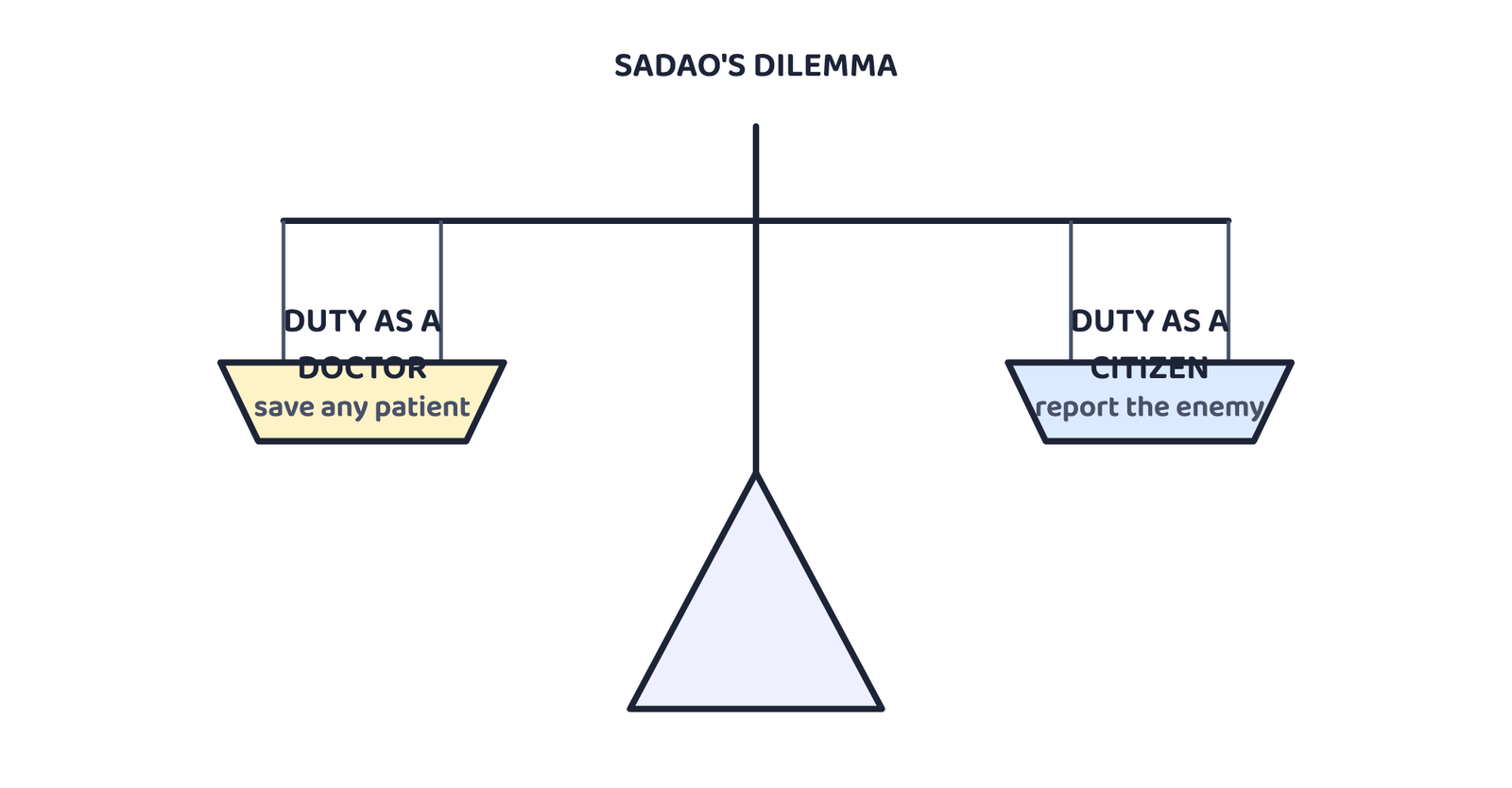
- Explain the central conflict between Sadao’s duty as a doctor and his duty as a wartime Japanese citizen
- Sketch the character of Dr Sadao, Hana, Tom and the old General with evidence from the text
- Identify and quote the story’s own literary devices: irony, symbolism, foil and simile
- Answer every Reading with Insight question and extract-based question confidently
1Meet the Author and the Story
1.1 About the Author
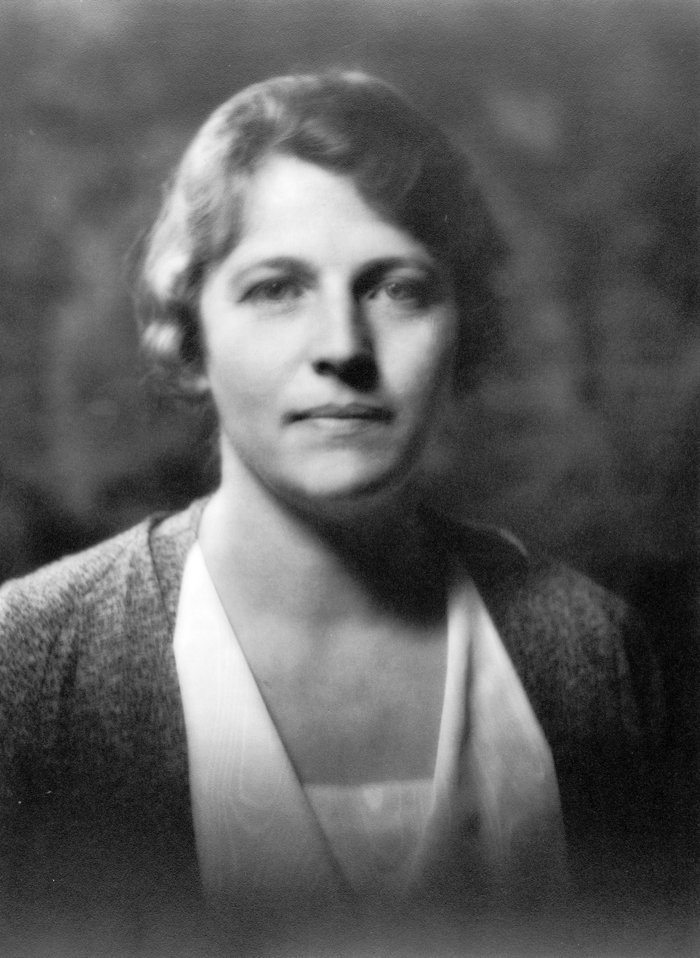
Pearl S. Buck was an American novelist who grew up in China as the daughter of missionaries, which gave her a rare, close understanding of Asian life and thought. This background is exactly why she is able to write “The Enemy” so convincingly from inside a Japanese household’s own point of view, showing a Japanese surgeon and his wife as thinking, feeling people rather than as a faceless “enemy” nation.
If asked about the viewpoint, say the story stays close to Sadao and Hana and never enters Tom’s mind.
1.2 Before You Read, and the Genre
The book’s own framing line, printed before the story begins, states the whole dilemma in one breath: “It is the time of the World War. An American prisoner of war is washed ashore in a dying state and is found at the doorstep of a Japanese doctor. Should he save him as a doctor or hand him over to the Army as a patriot?”
A short story is a short work of fiction, with invented (or partly invented) characters and events, built around a single central conflict. Unlike Chapter 3’s travelogue, “The Enemy” has no real-life narrator: Dr Sadao, Hana and Tom are characters created by Pearl S. Buck to dramatise a moral dilemma of wartime Japan.
The story is told in the third person, past tense, and stays close to Sadao and Hana throughout. The reader is never shown Tom’s private thoughts directly, only what he says and does, which keeps the moral struggle firmly inside the Japanese household rather than the American soldier’s mind.
2The Story, Step by Step
2.1 Dr Sadao’s World
Dr Sadao Hoki’s house stands on rocks above a narrow, pine-lined beach on the Japanese coast, the very spot where he played as a boy. His father, “who never joked or played with him but who spent infinite pains upon him,” took him often to see the islands of the South Seas and always said the same thing: “Those islands yonder, they are the stepping stones to the future for Japan.” This line shows how Sadao was raised to see Japan’s future in the islands of the South Seas, long before the story’s dilemma begins.
Sadao was sent to America at twenty-two to learn “all that could be learned of surgery and medicine,” and returned at thirty already known as both a surgeon and a scientist. He is not sent abroad with the troops for two reasons: he is perfecting a discovery that would make wounds “entirely clean,” and there is “some slight danger” that the old General he treats might need an operation. In America he met Hana by chance, at Professor Harley’s house, but “waited to fall in love with her until he was sure she was Japanese,” since his father would only accept a wife “pure in her race.” After they returned to Japan, the marriage was arranged in the old Japanese way, even though the couple had “talked everything over beforehand” themselves.
2.2 The Man Washed Ashore
Thick fog rolls in from the ocean as Sadao and Hana stand on the veranda. Out of the mist a man is “flung up out of the ocean… to his feet by a breaker,” staggers, and collapses face down on the sand. Sadao at first guesses “a fisherman… washed from his boat,” but when they reach him they find the sand already stained red: a gunshot wound on his lower right back has been reopened by the rocks.
“Who was Dr Sadao? Where was his house?”
the story’s own margin question, printed beside the opening paragraph (2.1)
Turning him over, Hana whispers, “A white man!” His cap still carries the faint lettering “U.S. Navy”: he is an escaped American prisoner of war, shot in the back while getting away. Sadao and Hana argue, almost calmly, over what “ought” to be done: put him back in the sea (the “kindest” choice), or shelter an enemy and risk arrest. Neither of them can actually do either. “Since he is wounded…” Sadao begins, and Hana finishes the thought for him: “Then there is only one thing to do. We must carry him into the house.” They decide to tell the servants they mean to hand him over to the police, and carry the man inside, to the disused, entirely Japanese room that belonged to Sadao’s late father.
“Will Dr Sadao be arrested on the charge of harbouring an enemy?”
the story’s own margin question, repeated at two points in the plot
2.3 Sheltering the Enemy: The Operation
Hana hesitates over ruining the fine silk quilt in the old man’s room, and is distressed by how dirty the stranger is. When Hana asks the maid, Yumi, to wash him, she refuses flatly: “I have never washed a white man… and I will not wash so dirty a one now.” Overcoming her own fear through anger at Yumi’s stubbornness (“Stupid Yumi… Is this anything but a man? And a wounded helpless man!”), Hana washes the man’s upper body herself, alone.
“Will Hana help the wounded man and wash him herself?”
the story’s own margin question, beside this scene
Sadao returns already dressed for surgery: he has decided to operate. The blood has already ruined the floor matting. He tells Hana she will have to give the anesthetic if the man needs it, but as he probes the wound she chokes, her face “the colour of sulphur,” and runs outside to be sick; Sadao, unable to stop (“If I stop now the man will surely die”), grows impatient and irritable with the patient instead. His thoughts turn coldly hostile: “This man,” he thinks, “there is no reason under heaven why he should live.” Hana comes back and, on Sadao’s brisk instruction, gives anesthetic for the first time in her life: “Simply saturate the cotton and hold it near his nostrils.” When his instrument strikes the bullet “dangerously near the kidney,” Sadao, forgetting that this is his enemy, murmurs “my friend” to the unconscious patient, as he always does out of surgical habit. The bullet comes out cleanly, and the patient briefly mutters in English, “Guts… they got… my guts,” his first sign of returning life.
Even as Sadao thinks, “But certainly I do not want this man to live,” his trained hands never stop working to save him. One reading: this is the story’s central irony in miniature, professional duty overpowering personal will.
It is during this operation that Hana first notices “deep red scars on his neck, just under the ear,” a detail the story never explains. Sadao “did not ask” what they were, and the reader is left, like Sadao, to wonder whether the young sailor had already suffered some cruelty of his own before washing ashore. Hana’s own fear that an enemy soldier could be treated cruelly is not baseless: she recalls rumours of men like General Takima, who “beat his wife cruelly” at home yet was never criticised once he had “fought so victorious a battle in Manchuria,” a reminder that wartime silence can hide real brutality on her own side too.
2.4 Recovery, and the Household Turns Against Them
The young man wakes terrified. On the third day he asks Sadao, “Are you going to hand me over?” Sadao will not promise anything, and stops him from saying more: “Do not even tell me your name unless I ask it.” Later Tom tells Hana, unasked, “Anyway, let me tell you that my name is Tom,” but she only bows “her little distant bow.” Sadao even begins typing an official report to the Chief of Police (“On the twenty-first day of February an escaped prisoner was washed up…”) but leaves it unfinished, put into a secret drawer of his desk: he neither reports Tom nor commits to protecting him.
Dr Sadao’s reaction
- Cold, clinical, professional detachment
- Operates from trained habit, not personal sympathy
- Delays every decision instead of choosing a side
Hana’s reaction
- Physical revulsion and real fear, yet compassion
- Washes and feeds Tom despite “not liking him”
- Voices the story’s central question aloud
Meanwhile the servants, hired to the household but not bound to it by blood, see the situation far more simply than their employers do. The old gardener, the same man who had once made one of the finest moss gardens in Japan for Sadao’s father, says the white man “ought to die”; the cook says contemptuously that the young master “is so proud of his skill to save life that he saves any life”; Yumi worries what will happen to the children “if their father is condemned as a traitor.” Yumi reports that the servants are saying the couple were so long in America that they “have forgotten to think of our own country first,” and the three speak their minds within Hana’s hearing on purpose. A week later all three servants quit together, tying their belongings into cotton kerchiefs, leaving Hana to do all the housework herself. It is at this point that Hana asks Sadao the question the whole story is really about:
“Why is it we cannot see clearly what we ought to do? Even the servants see more clearly than we do. Why are we different from other Japanese?”
Hana, after the servants leave
2.5 The General’s “Solution”, and Its Failure
A messenger arrives and Hana, fearing “The servants must have told already,” is terrified it is an arrest. It is only the old General, in pain again and asking for Sadao. The General reveals he once studied at Princeton, which is why he “understands” Sadao’s predicament, and he needs Sadao free and available for his own future operation, so he will not allow him to be arrested. The General jokes that it is a pity “we cannot better combine the German ruthlessness with the American sentimentality” in one doctor, then admits, “I had rather not be the test case.”
“What will Dr Sadao and his wife do with the man?”
the story’s own margin question, printed beside Tom waking and being fed (2.4)
Instead, the General offers a cold solution: “It would be best if he could be quietly killed.” He offers to send two of his own “private assassins,” who “make no noise and they know the trick of inward bleeding,” if Sadao simply leaves the outer partition of the room open, as it already is every night. He even offers to have the body removed afterward. Sadao agrees, “That perhaps would be best, Excellency,” “thinking of Hana.” In the book’s words, “In this way the whole thing would be taken out of his hands.” Sadao also reflects that such persons “were essential in an absolute state such as Japan was. How else could rulers deal with those who opposed them?”
Do not write that Sadao personally decides to have Tom killed out of loyalty to Japan. He agrees to the General’s plan, “thinking of Hana,” to protect his household, and the nights he spends waiting for the assassins leave him sleepless and strained, not satisfied. He never protects Tom from them; he waits for them to come.
Back home that evening, Sadao finds Tom out of bed, feeling well again. Tom thanks him warmly: “If I hadn’t met a Jap like you — well, I wouldn’t be alive today. I know that.” Sadao “bowed but he could not speak,” unable to accept the compliment or reject it. Tom goes on anyway: “I guess if all the Japs were like you there wouldn’t have been a war.”
Three nights pass in growing dread, each time Sadao thinking “the second night must be the night,” then the third: he lies awake thinking he hears footsteps; one night a crash frightens them both, and its cause is never explained. So far as Sadao knows, the assassins never come. Realising he “could not go through another night” of this strain, Sadao finally decides to solve the problem himself, without waiting on the General any longer.
2.6 The Escape
“What will Dr Sadao do to get rid of the man?”
the story’s own margin question, beside the escape plan
Sadao tells Tom he must row out that night to a small offshore island, so close to the coast that it has never been worth fortifying, and uninhabited only because it floods under the sea in storms, though it is not currently storm season, and wait there until he sees a passing Korean fishing boat. In secret, after dark, Sadao prepares a boat with food, bottled water and two pawn-shop quilts; at the last moment he dresses Tom in Japanese clothes he has given him and wraps a black cloth about his blond head. After hesitating “a good deal,” he also gives Tom his own small flashlight, to signal with from the island.
Tom shakes Sadao’s hand in silence, without a word, and walks off through the dark garden toward the boat. Sadao sees his flashlight flash twice as he makes his way down, then once more from the shore just before he leaves, simply Tom finding his way, not a distress signal, and nothing that would arouse suspicion.
2.7 The Final Night
The General falls seriously ill with a gall-bladder emergency and needs Sadao for a night operation; for about a week afterward, recovering, he cannot be asked about the assassins. Once the American is gone, the servants quietly return, and Yumi burns sulphur in the guest room to remove “the white man’s smell.”
When the General is finally well enough to be asked, he simply admits he “forgot” his promise to have Tom killed (“In short, I forgot my promise to you”), not out of any change of heart, but because, in his own words, “I thought of nothing but myself” while he was suffering. Sadao suddenly realises the General is “in the palm of his hand,” and that he himself is “perfectly safe.” That night, Sadao searches the dark sea from his house for any light on the island: there is “no prick of light” at all. No one is on the island; Tom is gone, “safe, doubtless,” Sadao thinks, since he had warned him to wait only for a Korean fishing boat.
Looking out at the sea, Sadao’s mind drifts to other white faces he has known: Professor Harley and his talkative wife, his old professor of anatomy who insisted that “ignorance of the human body is the surgeon’s cardinal sin,” and his “fat and slatternly” American landlady, whom he still found “repulsive” even though she had once nursed him through influenza. The story ends without an answer, on Sadao’s own unresolved thought, quoted exactly as the book prints it:
“Strange,” he thought. “I wonder why I could not kill him?”
the story’s final line
3Meet the Characters
Dr Sadao Hoki
A brilliant, America-trained surgeon torn between his professional duty to save any patient and his nation’s demand for loyalty in wartime. He acts decisively twice (to operate; to send Tom away by boat), but never frames either act as a choice between nation and duty, and in between he agrees to the General’s plan to have Tom killed.
Hana
Sadao’s wife, also educated in America. Physically repelled by the wounded man yet unable to abandon him, she is the character who actually says the story’s central question out loud: why can they not see clearly what they ought to do?
Tom
A young, badly wounded American sailor of the U.S. Navy, escaped from captivity and shot in the back. Grateful and good-humoured once he recovers, he carries unexplained scars on his neck that hint at suffering the story never spells out.
The Old General
A self-absorbed, unwell official who needs Sadao free for his own future operations. He offers his private assassins to have Tom quietly killed, then forgets his promise once his own illness takes over. Tom survives because Sadao operates on him and then sends him away by boat; the General’s forgetting only means the assassins never come.
The Servants (Yumi, the Cook, the Gardener)
Plain-spoken servants who quit rather than stay in a house that shelters an enemy; the cook scorns Sadao’s pride in saving life. Hana says, “Even the servants see more clearly than we do.”
4Themes of the Story
Humanity versus national loyalty
The story’s central conflict: Sadao’s duty as a doctor, to save any patient regardless of nationality, pulls directly against his duty as a Japanese citizen at war with America.
Conscience and moral courage
Sadao and Hana repeatedly say the “correct” wartime thing (hand him to the police, throw him back to the sea) but cannot bring themselves to actually do it.
Prejudice exists on both sides
Sadao’s own bitter memory of America, where he “had had great difficulty in finding a place to live… because he was a Japanese” and “the Americans were full of prejudice,” mirrors the servants’ prejudice against Tom; and Sadao’s contempt for the “ignorant and dirty” landlady who finally housed him, and even nursed him, shows the same prejudice in him. The story refuses to let either nation claim the moral high ground.
The dehumanising language of war
Almost every character calls Tom “the enemy” or “the white man” rather than by name, until he gives his own name unasked, an act that quietly restores his individuality.
Duty performed without being chosen
Sadao never says he saves Tom out of compassion: “I am not doing this for my own pleasure. In fact, I do not know why I am doing it.” One reading: professional habit can override even a wartime enemy’s dehumanising label.
Power in an absolute state
Sadao reflects that such persons (the assassins) “were essential in an absolute state such as Japan was. How else could rulers deal with those who opposed them?” The General’s plan shows how the state deals with those who oppose it.
5How the Story Is Told: Literary Devices
Pearl S. Buck builds the story’s meaning as much through structure and image as through plot. Notice each device below.
5.1 Narrative Technique
The story is narrated in the third person, staying close to Sadao and Hana’s thoughts throughout and never showing Tom’s inner mind directly. This keeps the moral dilemma firmly inside the Japanese household, and it is also why the ending can stay genuinely open: the narrator gives Sadao’s thoughts but leaves his final feeling unresolved.
Irony is when the actual outcome is the opposite of what would be expected. The General promises to have Tom killed, then forgets, so the assassins never come; Tom himself has already been saved by Sadao’s surgery and sent away by Sadao’s boat.
Symbolism is when a writer uses an object or place to stand for a larger idea. Sadao’s late father’s room, strictly, traditionally Japanese, kept Japanese for an old man “who would never in his own home sit on a chair or sleep in a foreign bed,” becomes, ironically, the sickroom where the American “enemy” is sheltered and healed: old, rigid Japan literally housing the intrusion of the war.
A foil is a character whose attitude highlights another character’s by contrast. The cook, who kills a fowl so its blood can feed a vine, can be read as a foil to Sadao, who operates on his own declared “enemy” with “the cleanest and most precise of incisions.”
A simile compares two unlike things using “like” or “as.” Buck describes Tom’s wasted body as they carry him: “He was very light, like a fowl that had been half-starved for a long time until it is only feathers and skeleton.”
Notice too how the story opens and closes with the same fog and sea imagery. The sea, through a breaker, flings Tom up out of the mist onto the sand in the first place; his safe departure at the end is confirmed the same way, by the sea, through the absence of a light on the dark island. One reading: nature simply brings Tom and takes him away again without judging him as “enemy” or “friend,” unlike every human character around him.
| Detail in the story | Literary device it shows |
|---|---|
| Tom is saved by Sadao’s surgery and released by Sadao’s boat; the General’s forgetting only means the promised murder never happens | Situational irony |
| Sadao’s father’s traditional Japanese room becomes Tom’s sickroom | Symbolism |
| The cook’s killing of a fowl for its blood, beside Sadao’s precise surgery | Foil |
| “Like a fowl that had been half-starved… only feathers and skeleton” | Simile |
| Fog and sea “deliver” Tom at the start and confirm his safe escape at the end | Imagery (the sea/fog as a morally neutral force) |
| Sadao murmurs “my friend” to a man he calls his enemy | Irony (of language) |
| The unexplained scars on Tom’s neck | Unresolved/open detail (used to deepen theme, not decorative) |
| The story’s final line is a question Sadao cannot answer | Open/unresolved ending |
6Why “The Enemy”?
On the surface, the title names Tom exactly as the characters do throughout: “the enemy,” “the white man,” a wartime label, not a person. By the story’s end, though, the title turns back on itself. Sadao cannot explain why he could not kill a man he calls his enemy, and one reading is that the story’s real question becomes: is the “enemy” a nationality at all, or is it the hatred and prejudice that both sides carry?
7Words to Know
| Word / Phrase | Meaning as used in the story |
|---|---|
| Haori | A loose outer garment worn over a kimono (the story’s own footnote) |
| Tokonoma | A niche or alcove in a Japanese home for displaying art or flowers (the story’s own footnote) |
| Slatternly | Untidy and slovenly in appearance or habits |
| Dereliction (of duty) | Shameful failure to do what one is supposed to do |
| Voluble | Talking a great deal, fluently and rapidly |
| Assuage | To make an unpleasant feeling less intense |
| Ruthless | Having no pity or compassion for others |
| Contemptuous | Showing scorn or disrespect |
| Gaunt | Very thin, especially from suffering or hardship |
| Pallor | Unusual paleness of the face, often from illness or fear |
| Haggard | Looking exhausted or worn from suffering or lack of sleep |
| Resolution | Firmness of purpose; a firm decision |
8Answering Extract-Based Questions
The method below works for any extract from this chapter.
Extract: “‘Strange,’ he thought. ‘I wonder why I could not kill him?'”
Q. What does Sadao’s final thought reveal about him, and about the story’s message?
Step 1: Sadao has just learned that Tom escaped. He reflects on why he could not bring himself to kill Tom, though he had agreed to the General’s assassination plan.
Step 2: Sadao called Tom “my enemy” and thought “But certainly I do not want this man to live”, yet he operated on him, had Hana feed him, and sent him away alive.
Answer: The line shows that Sadao’s instinct to preserve human life ran deeper than his wartime hatred, even though he himself cannot fully explain or admit it; the story leaves the question open to suggest that shared humanity can outlast hatred and fear, even when the person feeling it does not recognise it in himself.
Always quote the exact words of the extract in your answer. Quoting the exact words of the extract shows close reading of the text.
- Author: Pearl S. Buck. Genre: short story (fiction), third-person narration close to Sadao and Hana
- Dr Sadao Hoki: America-trained surgeon (age 22 to 30), kept in Japan for his research and to treat the old General
- Hana: met Sadao in America at Professor Harley’s house, married the traditional Japanese way, two children
- Tom: a U.S. Navy sailor (not a pilot), escaped POW, shot in the back, unexplained scars on his neck
- Man washed ashore in fog; found with a reopened gunshot wound; identified as American by his “U.S. Navy” cap
- Sadao operates on him in his late father’s traditional Japanese room; Hana gives anesthetic for the first time
- Servants (Yumi, the cook, the old gardener) quit together, saying the couple “have forgotten to think of our own country first”; Hana asks, “Why are we different from other Japanese?”
- The old General offers his “private assassins” to kill Tom quietly; Sadao agrees, “thinking of Hana”; the General then forgets his promise after his own emergency operation
- Sadao himself arranges Tom’s escape to a small offshore island, with a signal code, to wait for a Korean fishing boat
- Closing line: “Strange,” he thought. “I wonder why I could not kill him?”, an unresolved ending
- Key devices: irony (the General forgets his promise to have Tom killed, after Sadao has already saved and sent him away), symbolism (the father’s Japanese room), foil (the cook vs Sadao), simile (the starved fowl)