
- The complete Champaran episode, from Rajkumar Shukla’s first approach to Gandhi to the final settlement, in the order it happens
- Exactly what the indigo-sharecropping system was, and how synthetic indigo changed it
- Gandhi’s method of working in Champaran: fact-finding, peaceful defiance, mass mobilisation, negotiation and constructive work
- How to answer two questions the book’s own exercises ask: why Champaran was a “turning-point” (Understanding the text, Q1) and the qualities of a good leader (Talking about the text, Q2)
- The grammar and vocabulary points the book itself builds into this chapter: direct speech, the comma rule, and legal-procedure words
1 About the Author and the Piece
This chapter is written by Louis Fischer (1896-1970), born in Philadelphia. He served as a volunteer in the British Army between 1918 and 1920, then made a career as a journalist, writing for The New York Times, The Saturday Review and other European and Asian publications, and later taught at Princeton University. “Indigo” is an excerpt from his book “The Life of Mahatma Gandhi,” which the Times Educational Supplement reviewed as one of the best books ever written on Gandhi.
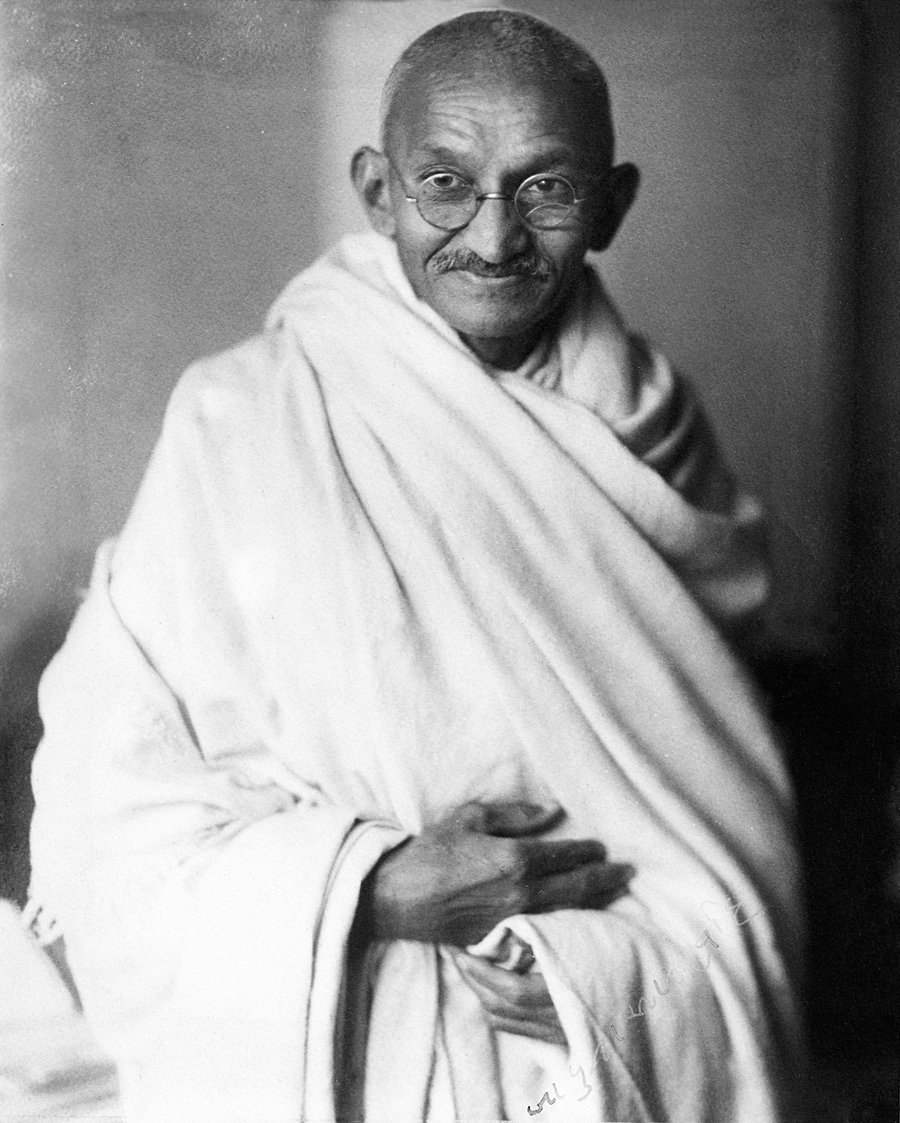
This is not a short story. It is journalistic, biographical writing: a real historical episode, told using Gandhi’s own words and the words of people who were actually there, such as Rajendra Prasad and Reverend J.Z. Hodge. This is exactly why the NCERT exercises ask you to notice the use of direct speech and quotation marks in the narration.
2 The Episode at a Glance
Before the detailed account, see the whole episode as one sequence. This is useful for revising the order of events fast.
3 Detailed Account
3.1 Rajkumar Shukla Finds Gandhi
In 1942, Gandhi told Fischer how it happened that he decided, in 1917, to “urge the departure of the British.” At the December 1916 Congress convention in Lucknow, attended by 2,301 delegates, a peasant named Rajkumar Shukla approached Gandhi and said, “I am Rajkumar Shukla. I am from Champaran, and I want you to come to my district.” Gandhi had never even heard of Champaran, a district in the foothills of the Himalayas near Nepal, where sharecroppers like Shukla worked under an ancient landlord arrangement.
Sharecropper: a farmer who works land belonging to a landlord and pays rent to the landlord, traditionally as a share of the crop, rather than in cash. Champaran’s peasants were sharecroppers under a long-term contract to plant indigo.
3.2 Shukla’s Tenacity
Though illiterate, Shukla was, in the book’s own word, “resolute.” He followed Gandhi to his commitment in Cawnpore, then all the way to his ashram near Ahmedabad, staying by his side for weeks and begging, “Fix a date.” When Gandhi finally named a date in Calcutta, Shukla sat waiting on his haunches at the appointed spot until Gandhi arrived. The two then travelled to Patna to the house of the lawyer Rajendra Prasad (who later became President of the Congress party and of India), but Prasad was away.
“How was Gandhi able to influence lawyers? Give instances” is a direct NCERT question. Shukla’s own persistence is not the answer to this one, but it belongs in the answer to a related question the book asks: “How do we know that ordinary people too contributed to the freedom movement?” (Understanding the text, Q4).
Prasad’s servants knew Shukla as “a poor yeoman who pestered their master to help the indigo sharecroppers”, so they let him and his companion, whom they took to be another peasant, stay on the grounds. That companion was Gandhi. He was not permitted to draw water from the well “lest some drops from his bucket pollute the entire source”: the book itself asks, pointedly, how the servants knew that he was not an untouchable.
Most of Champaran’s arable land was divided into large estates owned by Englishmen and worked by Indian tenants. Indigo was the chief commercial crop. Landlords compelled every tenant, by long-term contract, to plant 15 per cent (three-twentieths) of their land with indigo and surrender the entire indigo harvest as rent. When the landlords learned that Germany had developed synthetic indigo, they obtained agreements from the sharecroppers to pay them compensation for being released from the 15 per cent arrangement. (The book does not state the landlords’ motive; its margin question asks you to think about the impact of synthetic indigo on the prices of natural indigo.) The sharecropping arrangement was irksome to the peasants, and many signed willingly. Those who resisted engaged lawyers; the landlords hired thugs. Meanwhile, the information about synthetic indigo reached the illiterate peasants who had signed, and they wanted their money back.
3.4 Gandhi’s Fact-Finding
Gandhi went first to Muzzafarpur, on the way to Champaran, to gather fuller information than Shukla alone could give. He telegraphed Professor J.B. Kripalani of the Arts College there, whom he had met at Tagore’s Shantiniketan school. The train arrived at midnight on 15 April 1917; Kripalani was waiting with a large body of students, and Gandhi stayed two days at the home of Professor Malkani, a teacher in a government school. Gandhi commented that it was an extraordinary thing “in those days” “for a government professor to harbour a man like me”. In smaller localities, the Indians were afraid to show sympathy for advocates of home-rule.
News of Gandhi’s mission spread quickly, and Muzzafarpur’s lawyers briefed him on the sharecroppers’ court cases, mentioning the size of their fees. Gandhi chided them for collecting big fees from the sharecroppers. He told them that taking such cases to the courts did little good: “Where the peasants are so crushed and fear-stricken, law courts are useless. The real relief for them is to be free from fear.”
To get the facts directly, Gandhi first visited the secretary of the British landlords’ association, who refused to give any information to an “outsider.” Gandhi replied that he was no outsider. He then called on the British official commissioner of the Tirhut division, in which Champaran lay, who, Gandhi reports, “proceeded to bully me and advised me forthwith to leave Tirhut.”
3.5 Motihari: the Notice to Quit, and the Trial
Gandhi did not leave. He went instead to Motihari, the capital of Champaran, where a vast crowd greeted him at the station. While investigating a report that a peasant had been maltreated nearby, the police superintendent’s messenger overtook Gandhi on his way and ordered him back to town, where he was served an official notice to quit Champaran immediately. Gandhi signed the receipt for the notice, writing on it that he would disobey the order, and was summoned to appear in court the next day.
That night, Gandhi stayed awake making arrangements: he telegraphed Rajendra Prasad to come with influential friends, sent instructions to his ashram, and wired a full report to the Viceroy. Morning found Motihari “black with peasants”. They did not know Gandhi’s record in South Africa; they had merely heard that a Mahatma who wanted to help them was in trouble with the authorities. Their spontaneous demonstration, in thousands, around the courthouse was, in the book’s own words, “the beginning of their liberation from fear of the British.” The officials felt powerless without Gandhi’s cooperation, and he helped them regulate the crowd. He was polite and friendly, and he was giving the officials “concrete proof that their might, hitherto dreaded and unquestioned, could be challenged by Indians.”
The government was baffled. The prosecutor requested the judge to postpone the trial; Gandhi protested against the delay and read a statement pleading guilty. He told the court he was involved in a “conflict of duties”: on the one hand not to set a bad example as a lawbreaker, on the other to render the “humanitarian and national service” for which he had come. He disregarded the order to leave, he said, “not for want of respect for lawful authority, but in obedience to the higher law of our being, the voice of conscience,” and asked for the penalty due. The magistrate said he would pronounce sentence after a two-hour recess and asked Gandhi to furnish bail for those 120 minutes; Gandhi refused, and the judge released him without bail. When the court reconvened, the judge said he would not deliver the judgment for several days, and meanwhile allowed Gandhi to remain at liberty.
3.6 “The Battle of Champaran Is Won”
Rajendra Prasad, Brij Kishor Babu, Maulana Mazharul Huq and other prominent Bihar lawyers arrived and conferred with Gandhi. Gandhi asked what they would do if he was sentenced to prison. The senior lawyer replied that they had come to advise and help him; if he went to jail there would be nobody to advise and they would go home. “What about the injustice to the sharecroppers,” Gandhi demanded. Prasad later recorded that the lawyers realised going home while a complete stranger risked prison for the peasants “would be shameful desertion,” so they returned and told Gandhi they were ready to go to jail with him. “The battle of Champaran is won,” Gandhi exclaimed, and divided them into pairs with an order for court arrest.
Several days later, Gandhi received a written communication from the magistrate informing him that the Lieutenant-Governor of the province had ordered the case to be dropped. The book gives no reason for the order. “Civil disobedience had triumphed, the first time in modern India.”
Gandhi and the lawyers now conducted a far-flung inquiry into the peasants’ grievances: depositions of about ten thousand peasants were written down, other evidence and documents collected, and the whole area, in the book’s own words, “throbbed with the activity of the investigators” and the landlords’ vehement protests.
Margin question in the book itself: “Can you identify some instances of this method and link them to his ideas of satyagraha and non-violence?” The five headings above are a study summary of the book’s episodes, not a list printed in the book; use them to organise instances of Gandhi’s method and link each to satyagraha and non-violence.
3.7 The Inquiry and the Settlement
In June, Gandhi was summoned to Sir Edward Gait, the Lieutenant-Governor. Before going, he met leading associates and again laid detailed plans for civil disobedience if he should not return. Four protracted interviews led Gait to appoint an official commission of inquiry into the indigo sharecroppers’ situation, made up of landlords, government officials, and Gandhi as the sole representative of the peasants. Gandhi remained in Champaran for an initial uninterrupted period of seven months, then made several shorter visits: a task undertaken casually on an unlettered peasant’s entreaty, expecting it to last only a few days, occupied almost a year of his life.
The inquiry assembled a “crushing mountain of evidence” against the big planters, who agreed in principle to refund the peasants and asked Gandhi how much they must pay. They thought he would demand repayment in full of the money they had “illegally and deceitfully extorted” from the sharecroppers. He asked only 50 per cent.
“There he seemed adamant. Thinking probably that he would not give way, the representative of the planters offered to refund to the extent of 25 per cent, and to his amazement Mr. Gandhi took him at his word, thus breaking the deadlock.”
Reverend J.Z. Hodge, British missionary, eyewitness to the settlement
The commission adopted this 25 per cent settlement unanimously. Gandhi explained that the amount of the refund was less important than the fact that the landlords had been obliged to surrender part of the money and, with it, part of their prestige. As far as the peasants were concerned, the planters had behaved as “lords above the law”; now the peasant saw that he had rights and defenders, and he learned courage. Events justified Gandhi’s position: within a few years the British planters abandoned their estates, which reverted to the peasants. “Indigo sharecropping disappeared.”
Legal Justice Alone
- Courts are “useless” for peasants who are already “crushed and fear-stricken”
- Big lawyer fees, taken from people with almost nothing
- Taking such cases to the courts “does little good”, Gandhi said
Freedom from Fear (Gandhi’s Approach)
- The peasants’ spontaneous demonstration was “the beginning of their liberation from fear of the British”
- After the settlement, the peasant “saw that he had rights and defenders. He learned courage.”
- Gandhi’s view, as reported in the book: “The real relief for them is to be free from fear.”
NCERT’s own discussion prompt: “Freedom from fear is more important than legal justice for the poor.” Use the comparison above, and support your view with examples from the chapter, such as the courthouse demonstration.
3.8 Constructive Work After the Victory
The book says that Gandhi “never contented himself with large political or economic solutions.” Seeing the cultural and social backwardness in Champaran’s villages, he appealed for teachers: Mahadev Desai and Narhari Parikh, two young disciples, and their wives, volunteered, and more came from Bombay, Poona and elsewhere. Devadas, Gandhi’s youngest son, and Kasturbai, his wife, also arrived. Primary schools opened in six villages, and Kasturbai taught the ashram’s own rules on personal cleanliness and community sanitation.
Health conditions were miserable. Gandhi got a doctor to volunteer for six months, working with only three medicines: castor oil for a coated tongue, quinine plus castor oil for malaria, and ointment plus castor oil for skin eruptions. Noticing the filthy state of women’s clothes, he asked Kasturbai to speak to them; one woman took Kasturbai into her hut and said, “Look, there is no box or cupboard here for clothes. The sari I am wearing is the only one I have.” During his long stay in Champaran, Gandhi kept a long-distance watch on the ashram by mail, once writing that it was time to fill in the old latrine trenches and dig new ones, otherwise the old ones would begin to smell bad.
3.9 Why Champaran Was a Turning Point
Gandhi’s own verdict was modest: “What I did was a very ordinary thing. I declared that the British could not order me about in my own country.” But the book is careful to note that Champaran did not begin as an act of defiance at all; it grew out of an attempt to relieve the distress of poor peasants. This, Fischer says, was the “typical Gandhi pattern”: his politics were intertwined with the practical, day-to-day problems of the millions. In the book’s words, “His was not a loyalty to abstractions; it was a loyalty to living, human beings.” In everything he did, he tried to mould a new, free Indian who could stand on his own feet, and so make India itself free.
3.10 The Charles Freer Andrews Episode
Charles Freer Andrews, an English pacifist and devoted follower of Gandhi, came to bid him farewell early in the Champaran campaign, before a tour of duty to the Fiji Islands. Gandhi’s own lawyer-friends thought it would help to have Andrews, an Englishman, stay on in Champaran. Gandhi was vehemently opposed.
“You think that in this unequal fight it would be helpful if we have an Englishman on our side. This shows the weakness of your heart. The cause is just and you must rely upon yourselves to win the battle. You should not seek a prop in Mr. Andrews because he happens to be an Englishman.”
Gandhi, to his own lawyer-friends
Rajendra Prasad admitted, “He had read our minds correctly… Gandhi in this way taught us a lesson in self-reliance.” The book’s closing line ties the whole episode together: self-reliance, Indian independence and help to sharecroppers were all bound together.
3.11 Qualities of Leadership at Champaran
The book’s “Talking about the text” asks you to discuss the qualities of a good leader. The chapter gives evidence for each of these qualities (the labels are a study summary; the evidence is the book’s):
The book ends with a project: choose an issue that has provoked a controversy, like the Bhopal Gas Tragedy or the Narmada Dam Project, in which the lives of the poor have been affected; find out the facts of the case, present your arguments, and suggest a possible settlement. It mirrors Gandhi’s own steps here: investigation of facts, presentation of arguments, settlement. A model approach is in the NCERT Solutions.
4 Theme and Message
Theme, in the book’s own words: “The leadership shown by Mahatma Gandhi to secure justice for oppressed people through convincing argumentation and negotiation.”
Sub-theme, in the book’s own words: “Contributions made by anonymous Indians to the freedom movement.”
Put simply: Gandhi wins justice for the Champaran peasants not through force but through fact-finding, open defiance of an unjust order, peaceful mass action, and hard negotiation, and he treats the legal victory as only half the work, following it with schools, healthcare and sanitation. Alongside him, an unlettered peasant’s persistence and a group of lawyers’ choice to risk jail show that the freedom movement was built by many hands, not one.
Gandhi settled for exactly half of what he had asked for, 25 per cent instead of 50 per cent. Hodge writes that the planters’ representative, who probably thought Gandhi would not give way, made the offer, and “to his amazement Mr. Gandhi took him at his word”. Gandhi explained that the amount of the refund was less important than the fact that the landlords had been obliged to surrender part of the money and part of their prestige.
5 Style: How Fischer Tells It
Journalistic/biographical narration: writing that reports real events using verified facts and the exact words of the people involved, rather than inventing dialogue. Fischer draws heavily on Gandhi’s own recollections and eyewitness quotations (Rajendra Prasad, Reverend Hodge), which lend the account authority. This is what the NCERT “Thinking about language” exercise asks you to notice.
6 Language Focus (from the NCERT Chapter Itself)
6.1 The Comma with Subordinate Clauses (“Thinking about Language”)
The book picks three of its own sentences to teach one comma rule.
| # | Sentence from the text | Comma rule shown |
|---|---|---|
| 1 | When I first visited Gandhi in 1942 at his ashram in Sevagram, he told me what happened in Champaran. | Comma used: the subordinate clause comes before the main clause |
| 2 | He had not proceeded far when the police superintendent’s messenger overtook him. | No comma: the subordinate clause comes after the main clause |
| 3 | When the court reconvened, the judge said he would not deliver the judgment for several days. | Comma used: subordinate clause again comes first |
The rule in one line: use a comma when the subordinate (“when…”) clause comes first; skip the comma when the main clause comes first.
6.2 Vocabulary: Words for Legal Procedure (“Working with Words”)
The book’s own example is deposition. Words from this exact chapter that belong to the same legal-procedure family:
6.3 Vocabulary from the Chapter’s Own “Notice These Expressions” Box
Urge the departure
To strongly press for someone to leave; here, the British leaving India
Conflict of duties
Being torn between two competing responsibilities, here between respecting the law and serving the peasants
Harbour a man like me
To shelter or host someone, especially at some personal risk
Seek a prop
To lean on someone or something for support instead of relying on oneself
7 Quick Self-Check
- Can I narrate the Champaran episode’s events in the correct order without looking?
- Can I give several instances of Gandhi’s method, not just “civil disobedience”?
- Can I name the qualities of a good leader Gandhi shows, each with a line from the book?
- Can I explain why Champaran was a turning point in Gandhi’s own words, and in Fischer’s?
- Do I know why Gandhi accepted 25 per cent instead of the 50 per cent he asked for?
- Can I explain the Charles Freer Andrews episode and what “self-reliance” meant there?
- Rajkumar Shukla’s persistence brings Gandhi to Champaran to investigate the indigo-sharecropping system
- Under it, tenants were forced to plant 15 per cent of their land with indigo and hand over the whole crop as rent; when the landlords learned of synthetic indigo, they obtained agreements from the sharecroppers to pay them compensation for release from the arrangement
- Gandhi disobeys an official notice to quit; thousands of peasants gather around the courthouse; he pleads guilty; several days later the Lieutenant-Governor orders the case dropped (the book gives no reason): “Civil disobedience had triumphed”
- An official inquiry commission is formed; Gandhi asks only 50 per cent as a refund and accepts the planters’ offer of 25 per cent: the amount mattered less than the landlords surrendering part of the money and their prestige
- Gandhi follows the legal win with schools, healthcare and sanitation work in Champaran’s villages
- He refuses to let his lawyers lean on Charles Freer Andrews just because Andrews is an Englishman, teaching them “a lesson in self-reliance”
- Theme: leadership through argumentation and negotiation. Sub-theme: the contribution of anonymous Indians to the freedom movement