
decibelsolid wastepush and pull factors
slumSwachh Bharat Missionland degradation
NRSCwatershed management
1Pollution: Meaning and Types
Environmental pollution is the result of the waste products of human activities: the substances and energy human beings release into the environment. There are many types of pollution, and they are classified on the basis of the medium through which the pollutants are transported and diffused.
Pollution is the result of the release of substances and energy from the waste products of human activities into the environment, making it unfit or harmful for use.
| Pollution type | Pollutants involved | Main sources |
|---|---|---|
| Air | Oxides of sulphur and nitrogen, carbon monoxide, hydrocarbons, ammonia, lead, aldehydes, asbestos, beryllium | Combustion of coal/petrol/diesel, industrial processes, solid waste disposal, sewage disposal |
| Water | Odour; dissolved/suspended solids; ammonia and urea; nitrates and nitrites; chlorides, fluorides, carbonates; oil and grease; insecticide and pesticide residue; tannin; coliform MPM (bacterial count); sulphates and sulphides; heavy metals (lead, arsenic, mercury, manganese); radioactive substances | Sewage disposal, urban run-off, toxic industrial effluents, run-off from cultivated land, nuclear power plants |
| Land | Human/animal excreta, viruses and bacteria, garbage, pesticide and fertiliser residue, alkalinity, fluorides, radioactive substances | Improper human activity, disposal of untreated industrial waste, use of pesticides and fertilisers |
| Noise | Sound level above the tolerance limit | Aircraft, automobiles, trains, industrial processes, advertising media |
Based on NCERT Table 9.1: Types and Sources of Pollution.
2Water Pollution
Growing population and industrial expansion have led to indiscriminate use of water, degrading its quality considerably. Surface water from rivers, canals and lakes is never completely pure: it always carries small quantities of suspended particles and organic/inorganic substances. Water becomes polluted when the concentration of these substances rises so high that it becomes unfit for use, and the water’s own self-purifying capacity can no longer clean it.
Water pollutants come from both natural sources (erosion, landslides, decay of plants and dead animals) and human activities, industrial, agricultural and cultural. Among these, industry is the most significant contributor: leather, pulp and paper, textiles and chemical industries dump toxic waste into rivers, lakes and reservoirs, destroying the bio-system of these water bodies.
Agriculture pollutes water too: inorganic fertilisers, pesticides and herbicides wash into rivers, lakes and tanks, and also infiltrate the soil to reach the groundwater. Fertiliser use raises the nitrate content of surface water. Cultural activities, pilgrimage, religious fairs, tourism, add to it as well. Almost all of India’s surface water sources are now contaminated and unfit for human consumption.
2.1 Pollution of the Ganga and the Yamuna
| River | Polluted stretches | Main polluters |
|---|---|---|
| Ganga (Uttar Pradesh, Bihar, West Bengal) | Downstream of Kanpur and Varanasi; the Farakka Barrage | Industrial pollution from Kanpur, Prayagraj, Varanasi, Patna, Kolkata; domestic waste released by these urban centres; carcasses dumped into the river |
| Yamuna (Delhi, Uttar Pradesh) | Delhi to its confluence with the Chambal; Mathura and Agra | Water extraction by Delhi/Haryana/UP for irrigation; agricultural run-off raising micro-pollutant levels; Delhi’s domestic and industrial waste flowing into the river |
Based on NCERT Table 9.2: Sources of Pollution in the Ganga and the Yamuna Rivers.
According to the World Health Organization, about one-fourth of the communicable diseases in India are water-borne. Diseases commonly caused by contaminated water include diarrhoea, intestinal worms and hepatitis.
National Mission for Clean Ganga
Initiated by the government to improve the condition of the river, which flows through one of India’s most populous regions and carries national importance.
Namami Gange Programme
Launched by the Union Government with objectives that include: developing sewerage treatment systems in towns; monitoring industrial effluents; developing the river front; afforestation along the banks to increase biodiversity; cleaning the river surface; developing “Ganga Grams” in Uttarakhand, UP, Bihar, Jharkhand and West Bengal; and creating public awareness against adding pollutants to the river, even in the form of rituals.
3Air Pollution
Air pollution is the addition of contaminants, such as dust, fumes, gas, fog, odour, smoke or vapour, to the air, in a substantial proportion and for a duration that can harm flora, fauna and property.
With the growing use of different fuels as an energy source, toxic gas emissions into the atmosphere have risen sharply. The combustion of fossil fuels, mining and industries are the main sources of air pollution, releasing oxides of sulphur and nitrogen, hydrocarbons, carbon dioxide, carbon monoxide, lead and asbestos.
Air pollution causes diseases related to the respiratory, nervous and circulatory systems. This is a favourite short-answer question.
Smoky fog over cities, called urban smog, is caused by atmospheric pollution and is very harmful to human health. Air pollution can also cause acid rain: rainwater analysis of urban areas shows the pH of the first rain after summer is always lower (more acidic) than the rain that follows it.
4Noise Pollution
Noise pollution is the state of unbearable and uncomfortable sound for human beings, caused by noise from different sources. It has become a serious concern only in recent years, due to a variety of technological innovations.
The main sources are factories, mechanised construction and demolition work, automobiles and aircraft, with added periodical noise from sirens and loudspeakers used at festivals and programmes. The level of steady noise is measured in decibels (dB).
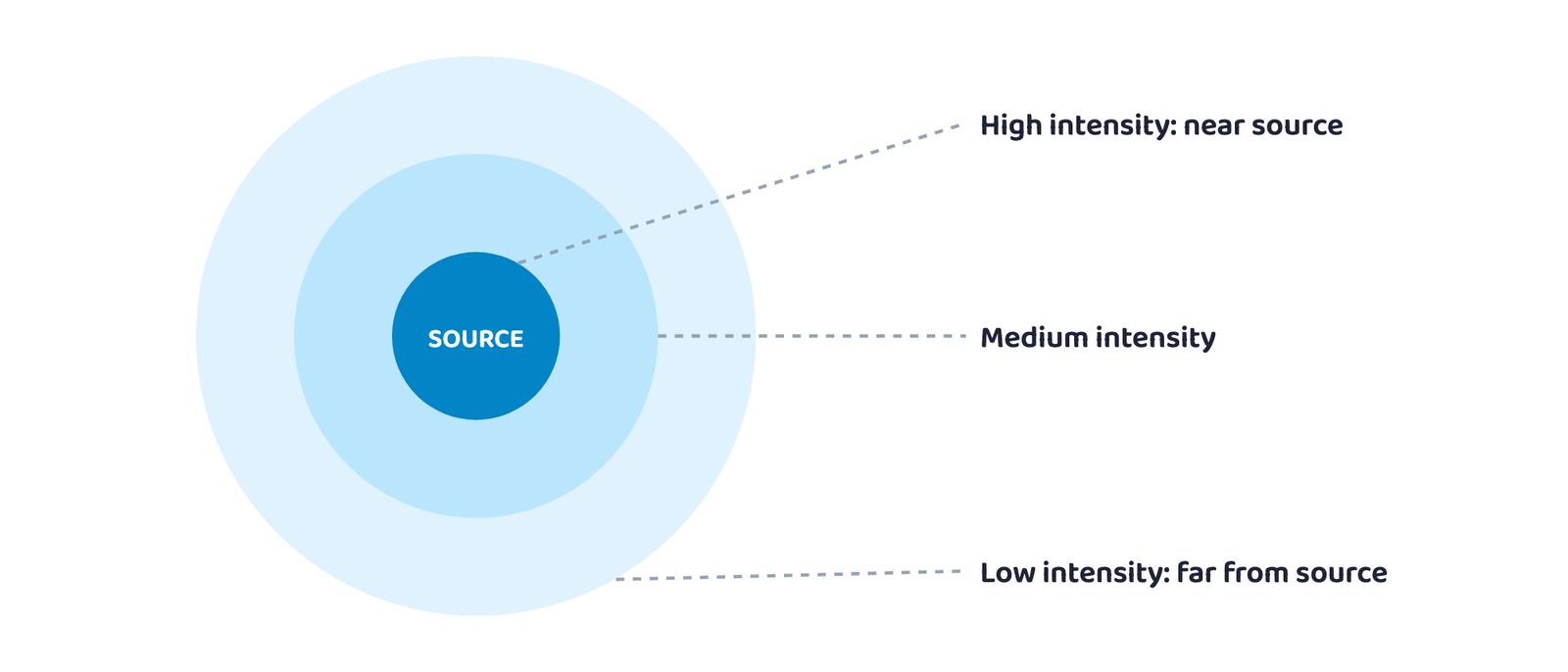
Of all sources, the biggest nuisance is traffic noise, because its intensity depends on the type of vehicle, aircraft or train and on the condition of the road or vehicle. In sea traffic, noise pollution is confined to harbours, from loading and unloading activity. Industries also cause noise pollution, with intensity varying by the type of industry. Noise pollution is hazardous in many of India’s big metropolitan cities.
5Urban Waste Disposal
5.1 Solid waste and how it is disposed of
Urban areas are marked by overcrowding, congestion and facilities inadequate for their fast-growing population, leading to poor sanitary conditions and foul air. Solid waste, old and used articles such as stained metal pieces, broken glassware, plastic containers, polythene bags, ash, floppies and CDs, is dumped at different places, and is also called refuse, garbage or rubbish.
Household / domestic waste
- Disposed of on public lands or at private contractors’ sites
Industrial / commercial waste
- Collected and disposed of through public (municipal) facilities at low-lying public grounds: landfill areas
The huge turn-out of ashes and debris from industries, thermal power houses and building constructions or demolitions has also posed problems of serious consequences.
Solid waste is a health hazard: it creates obnoxious smell and shelters flies and rodents, which carry diseases such as typhoid, diphtheria, diarrhoea, malaria and cholera. Careless handling lets it spread further by wind and rain.
Industrial units concentrated in and around urban centres also dump industrial waste into rivers, causing water pollution; river pollution from city-based industries and untreated sewage leads to serious health problems downstream. Waste should instead be treated as a resource for generating energy and compost. Untreated waste ferments slowly and releases toxic biogas, including methane, into the atmosphere.
- 2 marksWhat is the “Polluter Pays” principle, and how did it apply at Daurala?
- 2 marksName two concrete steps taken at Daurala to restore its groundwater and water supply.
6Rural-Urban Migration
6.1 Causes: push and pull factors
Population flow from rural to urban areas is caused by many factors: high demand for labour in urban areas, low job opportunities in rural areas, and an unbalanced pattern of development between urban and rural India.
Pull factors (draw people to cities)
- High demand for labour in urban areas
- Better livelihood opportunities in mega cities
Push factors (drive people out of villages)
- Low job opportunities in rural areas
- Unbalanced development between urban and rural areas
Urban population grows through natural increase (birth rate exceeding death rate), net in-migration (more people moving in than out) and, sometimes, reclassification of formerly rural settlements as urban.
Poor people from smaller and medium-sized cities, where opportunities are limited, often bypass those cities altogether and move straight to the mega cities for their livelihood.
- 3 marksWhat kind of jobs do poor, semi-illiterate rural migrants like Ramesh typically end up doing in the city, and why?
- 2 marksWhy does the rural-urban migration stream in India stay dominated by males?
Because wages in the informal urban sector are too low to support the whole family at the destination, spouses are often left behind in the village to look after children and the elderly. This is why the rural-urban migration stream in India remains dominated by males.
7Problems of Slums
Settlement geography defines “Urban” or “Urban Centre” to differentiate it from “Rural”, a concept that, as the book Fundamentals of Human Geography notes, is defined differently in different countries. India has a predominance of rural population (about 69% of the total in the 2011 Census), villages that Mahatma Gandhi considered India’s ideal republics, and most rural areas are still poor, performing mainly primary activities, existing as the hinterland of the nearest urban centre.
Indian urban centres are not undifferentiated: they range from farm houses and high-income localities, with wide roads, streetlights, water and sanitation, lawns, green belts, parks and security, to slums, jhuggi-jhopari clusters and shanty colonies at the other extreme.
A slum is a residential area of the least choice: dilapidated houses, poor hygienic and ventilation conditions, and a lack of basic amenities such as drinking water, light and toilet facilities, marked by open defecation, unregulated drainage and overcrowded narrow streets.
Slums are inhabited mainly by people forced to migrate from rural areas in search of livelihood, who cannot afford proper housing because of high rents and high land costs, and end up occupying environmentally degraded, incompatible areas. Most of the slum population works in low-paid, high-risk, unorganised sectors of the urban economy, leaving them undernourished, prone to disease and unable to give their children a proper education. This poverty makes them vulnerable to drug abuse, alcoholism, crime, vandalism, escapism, apathy and, ultimately, social exclusion.
The NCERT chapter includes a description (from Seabrook, 1996) of Mumbai’s Dharavi: a cramped, densely packed settlement of temporary multi-storey buildings on land reclaimed from the sea, originally settled by Scheduled Castes and poor Muslims, with rotting garbage and stagnant water alongside it. Yet Dharavi is also a major production hub: its narrow lanes produce ceramics, embroidery and zari work, leather goods, garments, metalwork and jewellery that reach markets across India and abroad.
The Swachh Bharat Mission (SBM) is part of the urban renewal mission launched by the Government of India to improve the quality of life in urban slums.
8Land Degradation
Pressure on agricultural land keeps rising, both because its availability is limited and because its quality keeps deteriorating, through soil erosion, waterlogging, salinisation and alkalinisation.
Land degradation is a temporary or permanent decline in the productive capacity of land, caused by its continuous use without managing its fertility. Not all degraded land is wasteland, but unchecked degradation can convert it into wasteland.
Two processes cause land degradation: natural and human-induced. The National Remote Sensing Centre (NRSC) has classified India’s wastelands, using remote sensing, according to the process that created them, and shows that wasteland caused by human (man-made) processes is more important than wasteland caused by natural processes.
- 3 marksWhich two ministries fund the watershed management programmes in Jhabua, and what do such programmes link together?
- 2 marksWhat is “social fencing”, as practised by the Bhils of Sat Rundi hamlet?
- Pollution is classified by the medium of transport/diffusion: water, air, land, noise (NCERT Table 9.1).
- Water pollution: rising population + industrial expansion degrade water; industry is the biggest human contributor; Ganga polluted downstream of Kanpur/Varanasi/Farakka, Yamuna from Delhi to the Chambal and at Mathura/Agra (Table 9.2). WHO: ~1/4 of India’s communicable diseases are water-borne. Namami Gange Programme and National Mission for Clean Ganga target river cleanup.
- Air pollution: fossil fuel combustion, mining and industry are the main sources; causes respiratory, nervous and circulatory disease; can cause urban smog and acid rain (first post-summer rain has lower pH).
- Noise pollution: measured in decibels; traffic is the biggest source; intensity is location-specific and falls with distance from the source.
- Urban waste disposal: solid waste from household/domestic and industrial/commercial sources; metros collect ~90%, other cities leave 30-50% uncollected; poor disposal spreads typhoid, diphtheria, diarrhoea, malaria, cholera. Daurala (Meerut) case study: “Polluter Pays”, NGO-led restoration, 2003, 12,000 residents, 900 m pipeline, 1,000 trees.
- Rural-urban migration: pull = urban labour demand; push = rural job scarcity and unbalanced development. World: 55% urban now, 68% by 2050. India: ~29% of post-1961 urban growth from rural-urban migration; stream is male-dominated because low urban wages leave spouses behind. Ramesh case study: Talcher to Ludhiana to Surat, ₹20,000/year remittance.
- Slums: India ~69% rural (2011); urban India is highly differentiated, from high-income localities to slums/jhuggi-jhopari clusters. Slums lack water/light/toilet facilities; slum-dwellers work low-paid, unorganised jobs. Dharavi (Mumbai) is Asia’s largest slum. Swachh Bharat Mission targets urban slum quality of life.
- Land degradation: temporary/permanent decline in land’s productive capacity, from erosion, waterlogging, salinisation, alkalinisation. NRSC classifies wastelands as mainly-natural, natural+human, or mainly-human; human-caused wasteland is more important. Jhabua (MP) case study: Bhil tribal district, Rajiv Gandhi Mission for Watershed Management treated ~20% of the district in 5 years; Petlawad block’s “social fencing” of common pasture land.
- 1 markDefine pollution.
- 1 markName the four types of pollution classified by the medium of transport and diffusion.
- 1 markIn which unit is the level of noise pollution measured?
- 1 markName the two sources from which urban solid waste is disposed of.
- 1 markWhat share of India’s total population lived in rural areas, according to the 2011 Census?
- 1 markName the programme launched by the Union Government to clean the river Ganga.
- 1 markWhich agency classified India’s wastelands using remote sensing techniques?
- 1 markIn which state is Jhabua district located?
- 2 marksWhat is the difference between pollution and pollutants?
- 3 marksDescribe the major sources of air pollution.
- 3 marksMention the major problems associated with urban waste disposal in India.
- 2 marksWhat are the effects of air pollution on human health?
- 3 marksWhat are push and pull factors in rural-urban migration? Give one example of each.
- 2 marksWhy is the rural-urban migration stream in India dominated by males?
- 2 marksWhat is land degradation? Name two processes that cause it.
- 3 marksList any four objectives of the Namami Gange Programme.
- 2 marksWhy does industrial waste dumped into rivers destroy the bio-system of those waters?
- 2 marksDistinguish between the two routes by which urban solid waste is disposed of.
- 2 marksWhat is the “Polluter Pays” principle? Name the case study built on it.
- 3 marksName any three types of wasteland caused mainly by natural agents, as classified by the NRSC.
- 5 marksDescribe the nature of water pollution in India.
- 5 marksDescribe the problem of slums in India.
- 5 marksSuggest measures for the reduction of land degradation.
- 5 marksExplain the causes and consequences of rural-urban migration in India, with reference to the case study of Ramesh.
- 5 marksDescribe the Daurala case study as a model for ecological restoration and safeguarding human health.
- 5 marksExplain how the community of Petlawad block in Jhabua district successfully managed its watershed and common property resources.
- 1 markWhich one of the following rivers is highly polluted?
(a) Brahmaputra(b) Satluj(c) Yamuna(d) Godavari - 1 markWhich one of the following diseases is caused by water pollution?
(a) Conjunctivitis(b) Diarrhoea(c) Respiratory infections(d) Bronchitis - 1 markWhich one of the following is a cause of acid rain?
(a) Water pollution(b) Land pollution(c) Noise pollution(d) Air pollution - 1 markPush and pull factors are responsible for:
(a) Migration(b) Land degradation(c) Slums(d) Air pollution - 1 markThe level of noise pollution is measured in:
(a) Decibels(b) Lumens(c) Lux(d) Hertz - 1 markThe Namami Gange Programme plans “Ganga Grams” in Uttarakhand, UP, Bihar, Jharkhand and:
(a) West Bengal(b) Odisha(c) Chhattisgarh(d) Rajasthan - 1 markThe Rajiv Gandhi Mission for Watershed Management, described in the chapter’s case study, has been implemented in:
(a) Barmer district(b) Jhabua district(c) Wayanad district(d) Bastar district - 1 markIn Indian cities other than metropolitan cities like Mumbai, Kolkata, Chennai and Bengaluru, the share of urban solid waste typically left uncollected is:
(a) 5-10%(b) 30-50%(c) 70-90%(d) almost 100%
Options for each item: (a) Both A and R are true, and R is the correct explanation of A; (b) Both A and R are true, but R is not the correct explanation of A; (c) A is true, but R is false; (d) A is false, but R is true.
Reason (R): Natural sources such as erosion, landslides and the decay of plants and animals also produce water pollutants.
Reason (R): Farm houses and high-income localities exist in the same cities as slums and jhuggi-jhopari clusters.
Reason (R): Wages at the destination are often too low to support the whole family, so spouses are left behind to look after children and the elderly.
Reason (R): Unchecked processes of land degradation may lead to the conversion of degraded land into wasteland.