
- WHO’s physical activity, screen time and sleep guidelines for every age group, from infants to adults over 65
- What posture is, and the seven common postural deformities: how each looks, why it happens and how it is corrected
- The corrective asanas named in the book, drawn as stick figures
- Why women’s participation in sport matters, and its physical, psychological and social benefits
- Menarche, the normal menstrual cycle and the eight menstrual disorders
- The female athlete triad: its old and revised components, eating disorders and low bone mineral density
In the CBSE Physical Education (048) curriculum this is Unit 2: Children and Women in Sports, worth 7 marks in the 70-mark theory paper. The curriculum lists five topics: WHO exercise guidelines for different age groups; the seven postural deformities and their corrective measures; women’s participation in sports and its benefits; special considerations (menarche and menstrual dysfunction); and the female athlete triad. The paper uses 1-mark MCQs (including match-the-following on deformities), 2- and 3-mark short answers, 4-mark case studies and 5-mark long answers.
1 Exercise Guidelines of WHO for Different Age Groups
The World Health Organisation (WHO) has identified physical inactivity as the fourth leading risk factor for global mortality, causing about 6% of deaths globally. Regular physical activity and sport keep a person physically, mentally and socially healthy.
Mind
More self-confidence and self-esteem, better control over emotions, less stress, anxiety and depression.
Body
Healthy weight; strong muscles and bones in children.
Life
Social interaction, and better performance in academics.
Children and young people should not sit for long hours watching TV, playing computer games or travelling by car.
WHO’s guidelines are called the Global Recommendations on Physical Activity for Health. Their aim is to guide national and regional policy makers on the frequency, duration, intensity, type and total amount of physical activity needed to prevent Non-Communicable Diseases (NCDs), also called lifestyle diseases.
1.1 Words used in the guidelines
The guidelines use a few exact terms. Learn them first; the tables below are built from them.
Intensity is the rate at which an activity is being performed, or the magnitude of the effort required to perform an activity or exercise.
Duration is the length of time for which an activity or exercise is performed, generally expressed in minutes.
Frequency is the number of times an exercise or activity is performed, generally expressed in sessions, episodes or bouts per week.
Volume of aerobic exercise is the product of bout intensity, frequency, duration and longevity of the programme.
| Term | Meaning in the guidelines |
|---|---|
| Type of physical activity | Aerobic, strength, flexibility, balance |
| Moderate intensity | 3.0 to 5.9 times the intensity of rest; usually 5 or 6 on a personal scale of 0 to 10 |
| Vigorous intensity | 6.0 or more times the intensity of rest for adults, typically 7.0 or more for children and youth; usually 7 or 8 on a scale of 0 to 10 |
| Aerobic activity | Also called endurance activity; improves cardiorespiratory fitness. Examples: brisk walking, running, bicycling, jumping rope, swimming |
| Sedentary behaviour | Very low energy expenditure, such as sitting, reclining or lying down |
| Sleep behaviour | Duration and timing of sleep; for children under 5 it includes night sleep and daytime naps |
| Toddler | A child aged 1 to under 3 years (12.0 to 35.9 months) |
| Tummy time | Time an infant spends lying on her/his stomach (prone position) while awake, with unrestricted movement of the limbs |
| Nap | A period of sleep, usually in the daytime, in addition to the usual night-time sleep |
1.2 The age groups at a glance
1.3 Children under 5 years
Early childhood is a period of rapid development. Children under five should spend less time sitting in front of screens or restrained in prams and seats, so they sleep better and have more time for active play. The guidelines apply to all healthy children under 5, irrespective of gender, race, ethnicity, cultural background or the family’s socio-economic status; they are also relevant for children with different abilities, but a child with a medical condition or disability should consult a health professional first. The recommendations have three components: physical activity, sedentary behaviour and sleep.
| Age | Physical activity | Sedentary behaviour | Sleep |
|---|---|---|---|
| Less than 1 year (infant) | Physically active several times a day through interactive floor-based play, including 30 minutes of tummy time | Not restrained for more than 1 hour at a time. No screen time. Reading and storytelling when sedentary | 14 to 17 hours (0 to 3 months); 12 to 16 hours (4 to 11 months), including naps |
| 1 to 2 years (toddler) | At least 180 minutes of varied activity, including moderate to vigorous activity, spread through the day | Not restrained for more than 1 hour. No screen time for 1-year-olds; for 2-year-olds, screen time no more than 1 hour. Reading and storytelling | 11 to 14 hours, including naps, with regular sleep and wake-up times |
| 3 to 4 years (child) | At least 180 minutes at any intensity, of which at least 60 minutes is moderate to vigorous, spread through the day | Not restrained for more than 1 hour. Screen time no more than 1 hour; less is better. Reading and storytelling | 10 to 13 hours, which may include a nap, with regular sleep and wake-up times |
- Infants: give enough space and an open environment to move and explore. Before crawling, encourage reaching and grasping, pulling and pushing, and moving the head, body and limbs during supervised floor play. Toys must not be small enough to swallow, must not have sharp edges and must not be made of toxic material. Crawling and rolling should be done on a mat or sheet at least 7 feet by 4 feet.
- Toddlers: once they can sit and stand, encourage fundamental activities: walking, running, jumping, catching, throwing, leaping. Avoid long restraint in prams, strollers, high chairs or on a caregiver’s back.
- Children 3 to 4: the 180 minutes can include light activity (standing up, moving around, rolling, playing) and energetic activity (skipping, hopping, running, jumping). Active play such as a climbing frame, riding a bike, playing in water, chasing games and ball games is the best way for this group to move.
For “guidelines for under 5” write the three components for each sub-group: activity, sedentary time (with screen time) and sleep. Less sedentary time and more moderate to vigorous activity, with enough sleep, give additional health benefits.
1.4 Children and youth (5 to 17 years)
These apply to all healthy children and youth of 5 to 17 years. Those with a medical condition or disability may follow them under the advice of a medical official or the school special education teacher. Activities are done progressively: simple to complex, with frequency, duration and intensity raised gradually. The chief aim is to improve cardiorespiratory and muscular fitness, bone health, cardiovascular and metabolic health biomarkers, and to reduce symptoms of anxiety and depression.
| Feature | Guideline (5 to 17 years) |
|---|---|
| Intensity | Moderate to vigorous |
| Volume / duration | At least one hour a day; more than 60 minutes gives additional health benefits |
| Frequency | One session of 1 hour or two sessions of 30 minutes each |
| Types | Aerobic, basic muscle-strengthening exercises, fundamental activities (jumping, running, throwing, turning, twisting) |
| Benefits | Develops the musculo-skeletal system (bones, muscles, joints), cardiovascular system (heart and lungs), neuromuscular system (coordination, movement control, motor learning) and healthy body composition; psychological gains (emotional control, less anxiety and depression, stress management); social gains (interaction, integration, leadership); healthy behaviour (avoiding tobacco, alcohol, drugs); better academic performance |
| Activities | Play, games, sports, recreation, physical education, unplanned to planned exercise with family, school and community |
1.5 Adults (18 to 64) and older adults (65 and above)
Both groups follow the same aerobic and strength numbers; older adults add balance work. The 65+ recommendations are also relevant for individuals suffering from chronic NCD conditions. People with a medical condition follow medical advice, and those with disabilities adjust to their capacity. Older adults with conditions such as cardiovascular disease and diabetes may need extra precautions and medical advice. In both groups activity is progressive, from simple to complex.
| Feature | Adults 18 to 64 | Older adults 65 and above |
|---|---|---|
| Intensity | Moderate to vigorous | |
| Types | Muscle strengthening + aerobic | Muscle strengthening + aerobic + balance-enhancing |
| Aerobic | 150 to 300 minutes a week at moderate intensity, or 75 to 150 minutes a week at vigorous intensity; each aerobic bout at least 10 minutes | |
| Muscle strengthening | Activities involving the major muscles, two or more days a week | |
| Balance | Not listed | Older adults with poor mobility: activity to enhance balance and prevent falls on 3 or more days a week |
| Benefits | Lower risk of all-cause mortality (heart disease, blood pressure, stroke, type 2 diabetes, metabolic syndrome, colon and breast cancers, depression) and of hip or vertebral fractures; higher cardiorespiratory and muscular fitness; healthy weight and body composition; bone health; lower risk of NCDs | All the adult benefits, and also a lower risk of cognitive decline |
| Activities | Walking, jogging, swimming, weight training, dancing; occupational work; household work (car wash, gardening); games, sports, recreation; transport (walking, cycling); planned exercise with family and community | |
The 65+ guideline does not lower the minutes; it keeps the adult numbers. What is extra is balance work on 3 or more days a week. The minimum vigorous activity for both groups is 75 minutes a week.
2 Posture
Posture is the attitude assumed by the body either with support during the course of muscular activity, or as a result of the coordinated action performed by a group of muscles working to maintain stability.
Dynamic posture
- How one holds oneself while moving
- Walking, running, bending to pick something up
- Forms an efficient basis for movement; muscles and non-contractile structures adapt to changing circumstances
Static posture
- How one holds oneself while stationary
- Sitting, standing, sleeping
- Body segments held in fixed positions by muscle groups working statically against gravity and other forces
In a good posture all body parts are aligned so that the least stress falls on joints and muscles. This prevents fatigue, improves productivity in work and keeps a person physically and mentally stress-free.
Heredity · disease · injury · poor habits · improper clothing · unhygienic living conditions · improper diet · improper exercise or lack of exercise · obesity · socio-economic status.
Corrective exercises should be done under the advice and supervision of a physician or a physiotherapist.
3 Common Postural Deformities
The curriculum names seven. Two are of the legs (knock knees, bow legs), one of the feet (flat foot), and four of the shoulders and spine (round shoulders, kyphosis, lordosis, scoliosis).
3.1 Knock knees (Genu valgum)

Knock knees, also known as Genu valgum, is a knee misalignment that turns the knees inward, so that both knees touch or knock against each other in a normal standing posture but there is a gap of 3 to 4 inches between the ankles.
- Usually first noticed in early childhood; in most cases it corrects itself by 7 to 8 years, but may continue till adolescence.
- Causes: injury or infection in the knee or leg, rickets, severe lack of vitamin D and calcium, obesity, arthritis in the knee.
- Effects: hinders walking, running and other leg movements, so performance drops. If it persists: stiff joints, knee pain, walking with a limp, pain in hips, ankles or feet. If only one knee is out of line, the stance is unbalanced.
- Horse-riding; keeping a pillow between the knees and standing erect for some time.
- Yoga: Padmasana and Gomukhasana strengthen the leg muscles and realign the knees.
- Simple strengthening: leg raises while seated or lying down.
- Walking callipers help at the pre-puberty stage.
- An overweight person should lose weight through diet and exercise, as extra weight strains the knees.
3.2 Bow legs (Genu varum)
Bow legs, also known as Genu varum, is a position of the knees in which the legs look like a bow: the legs curve outward at the knees while the feet and ankles touch.
- Common in infants and toddlers; usually goes away without treatment by 3 to 4 years, and does not affect crawling, walking or running.
- Cause: lack of vitamin D, phosphorus and calcium; easily cured at an early stage. It is not painful and rarely serious.
- Some children walk with toes pointed inward (pigeon-toes), trip a lot or look clumsy. It may lead to arthritis in knees and hips, and can be a sign of Blount’s disease, rickets or arthritis.
- Use of braces and modified shoes, with a sufficient balanced diet.
- Walking on the inner edge of the feet.
Knock = Knees Kiss; Bow = Bow shape
In knock knees the knees touch and the ankles are apart. In bow legs it is the reverse: the ankles touch and the knees are apart.
3.3 Flat foot (pes planus)

Flat foot, also known as pes planus or fallen arches, is a deformity in which the foot has no arch or a very low arch, so the entire sole touches the floor in the standing position.
- Diagnosis: by looking at the arch of the foot, or by the water print test.
- Causes: genetic or environmental; foot or ankle injury, obesity, improper shoes (tight shoes, high heels), carrying heavy weight for a long time, arthritis or rheumatoid conditions; a baby forced to walk too early; age; tarsal coalition (bones of the foot fuse together unusually, giving stiff, flat feet); tight calf muscles may cause temporary flat feet.
- Why arches matter: they give spring to the step, distribute body weight across the feet and legs, and decide how a person walks. Flat feet affect standing posture, walking and running, and can add to ankle and knee problems.
- Most babies are born with flat feet; the arch develops as they grow and become active.
- Walking, standing or jumping on toes and heels in all four directions; skipping rope.
- Picking up marbles with the toes; writing numbers in sand with the toes.
- Yoga: Adho Mukha Svanasana (the downward-facing posture of Surya Namaskar; the book prints it as Adhomukhsavasana, and as Adhomukhasana under scoliosis) and Vajrasana; therapeutic massage.
3.4 Round shoulders, kyphosis and lordosis (side view)

Round shoulders
Round shoulders is a postural deformity in which the shoulders are bent forward from the ideal alignment, giving a narrow curve to the upper back.
- Leads to hyperkyphosis (hunch back) and anterior head carriage (forward head posture); over time these can lead to chronic neck pain, thoracic outlet syndrome and lack of shoulder mobility.
- Causes: poor posture habits (using a smartphone, tablet or computer, driving, carrying heavy weights, sitting for long periods), heredity, muscle imbalance, tight-fitting clothes, injury, disease. Can occur at any age.
- Strengthening and stretching to correct muscle imbalance: chest stretches, T stretch, wall stretch, handclasp stretch, planks, pull ups, reverse shoulder stretch.
- Habit of keeping the spine straight.
- Yoga: Chakrasana, Dhanurasana.
Kyphosis
Kyphosis, also known as hunch back or round upper back, is a condition of the spine in which the curvature of the upper back is exaggerated: an exaggerated, forward rounding of the back. The word comes from the Greek kyph, meaning bent or bowed.
- Causes: heredity, ageing, disease (arthritis, osteoporosis), malnutrition, pulling heavy weight over a period, unstable furniture, poor postural habits, weak muscles.
- Can occur at any age but is most common in older women; age-related kyphosis is often due to weak spinal bones that compress or crack. In infants or teens it can appear due to malformation of the spine or wedging of the spinal bones over time.
- Effects: mild kyphosis causes few problems; severe kyphosis can be painful and disfiguring, and causes instability while walking or running that may lead to falls or injury.
- Exercises that strengthen the back muscles, give stability and flexibility; physical therapy; swimming; gym ball exercises; exercises with bands.
- Yoga: Dhanurasana, Chakrasana, Bhujangasana.
- Sleep on a flat bed with a thin pillow.
Lordosis
Lordosis, also known as sway back, is a spinal deformity in which the normal inward curve (concavity) of the lumbar region of the spine is increased and exaggerated. The word comes from the Greek lordos, meaning bent backward.
- A normal spine curves a little in the neck, upper back and lower back, giving it an S shape: the upper-back curve is called kyphotic, and the neck and lower-back curves lordotic.
- Causes: obesity, improper development of muscles, muscular or skeletal disease or accident, poor posture while standing, sitting and walking, malnutrition; in a few cases the cause is unknown.
- Generally found in children because of weak or tight muscles of the hip area; they easily recover as muscles strengthen. Chronic lordosis can cause pain and discomfort.
- Most people need no medical treatment unless the case is severe; severe cases in children and teens may need braces or even surgery.
- Weight loss, daily physical therapy for strength and range of motion.
- Pelvic-strength exercises: sit-ups; sitting against the wall and pushing the trunk backward; lying on the back and raising the upper extremities and legs together.
- Yoga: Dhanurasana, Halasana. A good posture and a balanced diet also help.
Kyphosis is the upper back (thoracic region) rounding forward; lordosis is the lower back (lumbar region) curving inward. Round shoulders is about the shoulders moving forward, though it can lead to kyphosis.
3.5 Scoliosis
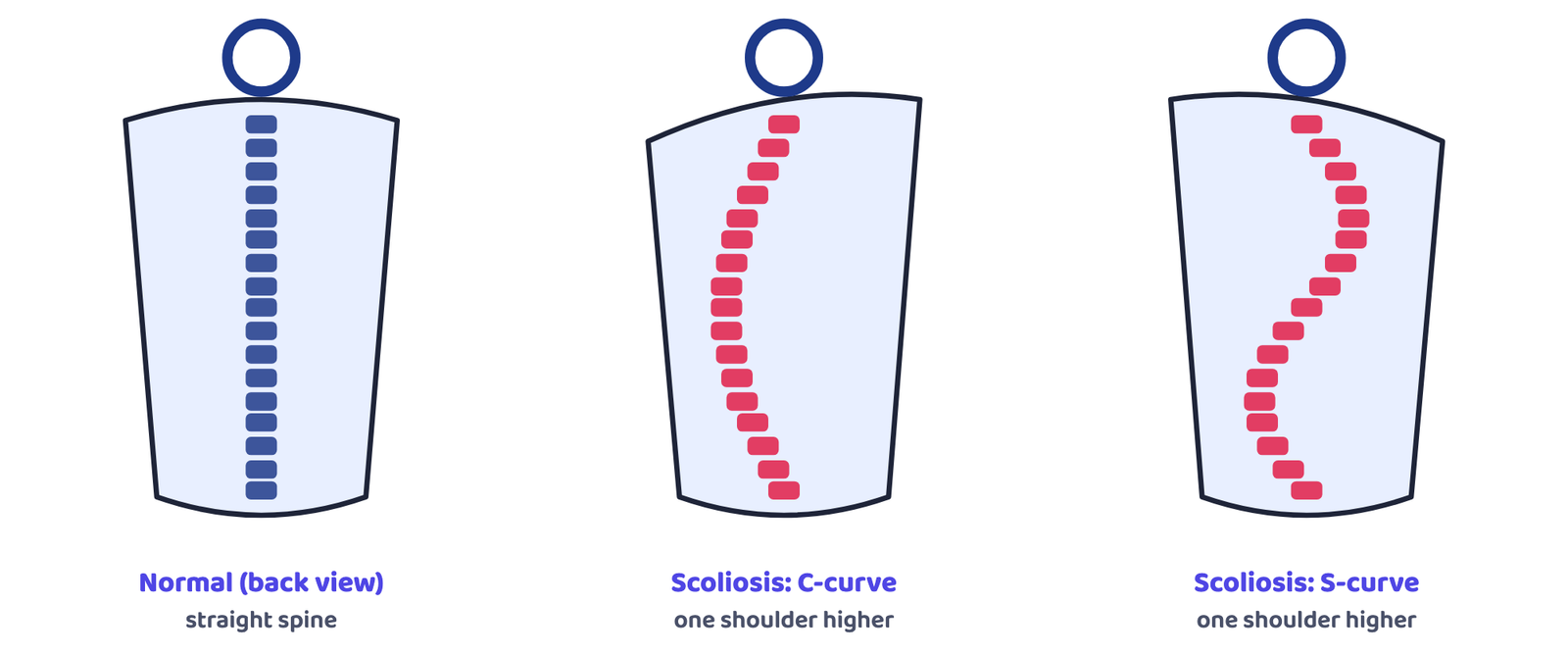
Scoliosis is a position in which the spine is tilted to either side of the body: an exaggerated lateral (sideways) curvature of the spine, in which the spine bends, twists or rotates into a C or an S shape. The word comes from the Greek skolios, meaning bent.
- Found more in girls than boys; can occur at any age but is commoner during the growth spurt just before puberty.
- Most cases are mild; some worsen as children grow. Severe scoliosis can be disabling, and a severe curve can reduce space in the chest, making it hard for the lungs to work.
- Causes: cerebral palsy, muscular dystrophy; diseases like arthritis, paralysis, rickets; lifting heavy weights; an unhealthy environment; standing and sitting in a wrong posture. The cause of most scoliosis is unknown.
- Mild scoliosis needs no treatment; some children wear a brace to stop the curve worsening; others may need surgery.
- Hanging on horizontal bars and swinging, done on the side opposite to the C-shaped curve.
- Slow-paced aerobic activity and breaststroke in swimming.
- Yoga: Trikonasana and Adho Mukha Svanasana.
3.6 All seven at a glance
| Deformity | Other name | Body part | What it looks like | Key correctives |
|---|---|---|---|---|
| Knock knees | Genu valgum | Legs (knees) | Knees touch, 3 to 4 inch gap at ankles | Horse-riding, pillow between knees, Padmasana, Gomukhasana, callipers |
| Bow legs | Genu varum | Legs (knees) | Knees apart, feet and ankles touch | Braces, modified shoes, walking on inner edge of feet, diet |
| Flat foot | Pes planus, fallen arches | Feet | No or very low arch; whole sole on floor | Toes and heels walking, skipping, marbles with toes, Vajrasana |
| Round shoulders | (leads to forward head posture) | Shoulders | Shoulders bent forward | Chest, T, wall, handclasp stretches, planks, Chakrasana, Dhanurasana |
| Kyphosis | Hunch back | Upper back (thoracic) | Exaggerated forward rounding | Back strengthening, swimming, Dhanurasana, Chakrasana, Bhujangasana |
| Lordosis | Sway back | Lower back (lumbar) | Exaggerated inward curve | Sit-ups, pelvic strength, Dhanurasana, Halasana, weight loss |
| Scoliosis | (lateral curvature) | Spine, sideways | C or S curve | Hanging, swinging on opposite side, breaststroke, Trikonasana |
4 Corrective Asanas Named in This Unit
The book names nine asanas as corrective measures. Here is what each looks like and how to get into it. Do them only under the advice and supervision of a physician or a physiotherapist, as the book advises for all corrective exercise. Detailed technique for several of these (Halasana, Dhanurasana, Bhujangasana, Gomukhasana) comes in Unit 3.
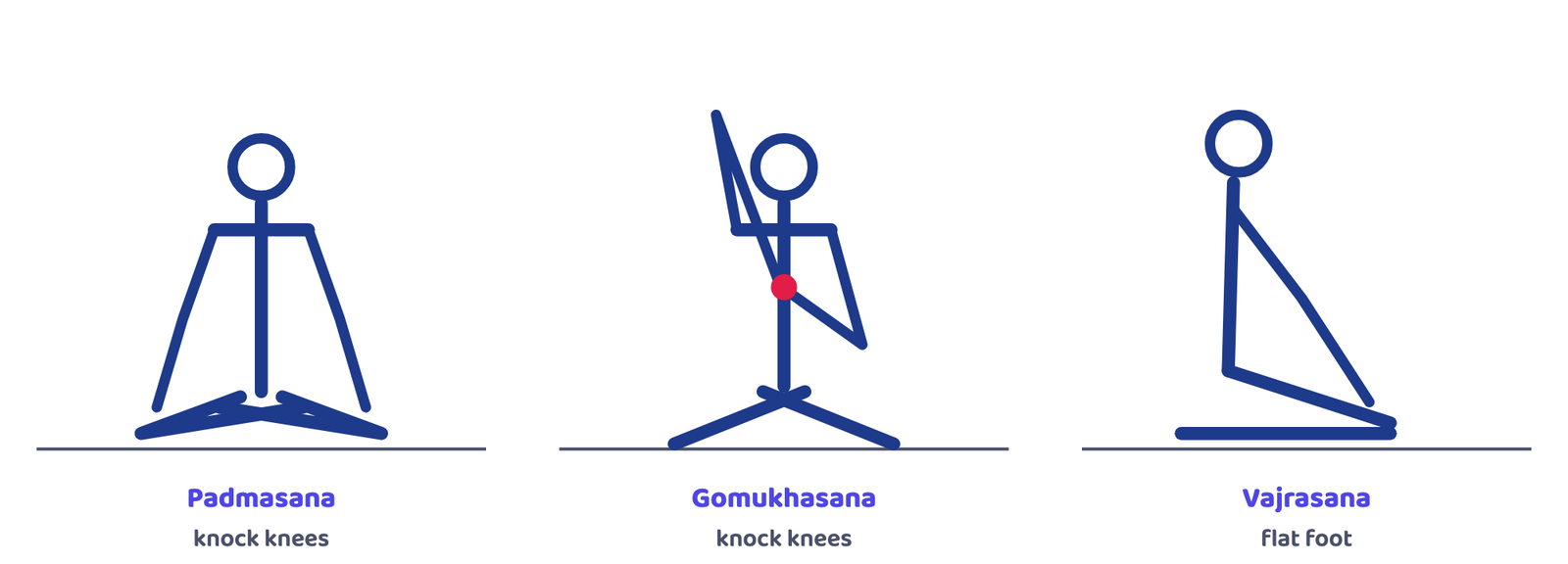

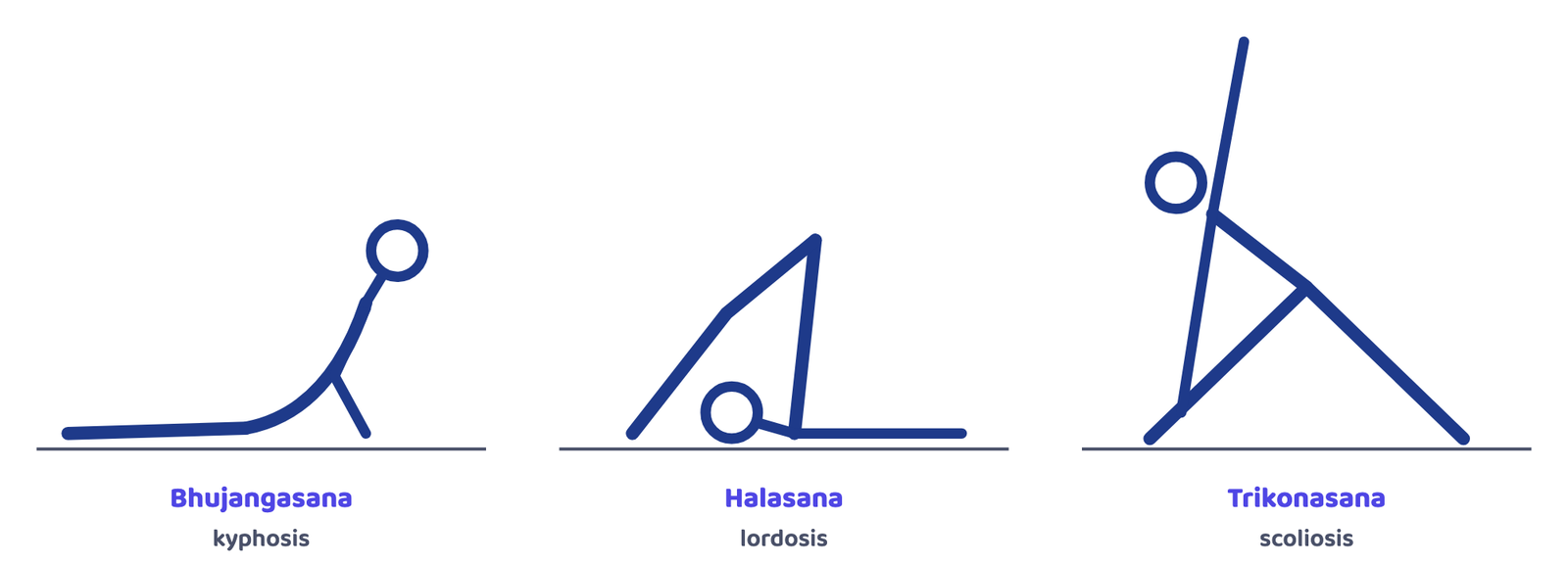
| Asana | How it is done (key steps) | Corrects (as per the book) | Avoid if (general caution, not from Unit 2) |
|---|---|---|---|
| Padmasana (lotus) | Sit with legs stretched; place the right foot on the left thigh and the left foot on the right thigh; spine erect, hands on knees | Knock knees | Knee or ankle pain or injury |
| Gomukhasana (cow face) | Sit; fold the left leg so the foot is under the right hip; place the right thigh over the left; take the left arm up and bend it behind the head, take the right arm from below, and clasp the palms behind the back | Knock knees | Shoulder pain, backache, hip or knee pain, stiff shoulders, pregnancy |
| Vajrasana (diamond) | Kneel with knees together; sit back on the heels with the toes pointing back; keep the spine erect, hands on knees | Flat foot | Knee pain or injury |
| Adho Mukha Svanasana | From hands and knees, lift the hips up and back to make an inverted V; arms and legs straight, heels toward the floor, head between the arms (part of Surya Namaskar) | Flat foot, scoliosis | Wrist or shoulder injury, high blood pressure |
| Chakrasana (wheel) | Lie on the back, bend the knees with feet near the hips, place the palms beside the ears; press and lift the whole trunk into an arch | Round shoulders, kyphosis | Back injury, high blood pressure, pregnancy |
| Dhanurasana (bow) | Lie prone; fold the legs, hold the toes or ankles with the hands; raise the head, chest and thighs so the body forms a bow | Round shoulders, kyphosis, lordosis | High blood pressure, back pain, hernia, headache, migraine, abdominal surgery; pregnancy and during periods |
| Bhujangasana (cobra) | Lie prone; palms beside the shoulders; raise the head and chest, bending the spine backward up to the navel; the navel stays down | Kyphosis | Pregnancy, spondylitis, spinal injury or weak back muscles |
| Halasana (plough) | Lie supine; raise the legs to 30°, 60°, then 90°; take them over the head till the toes touch the ground behind the head | Lordosis | Cervical spondylitis, stiff spine, abdominal injury, hernia |
| Trikonasana (triangle) | Stand with feet wide apart; bend sideways to touch the foot with one hand, the other arm raised straight up, both arms in one line | Scoliosis | Neck or back injury, low blood pressure |
Unit 2 of the book names these asanas only as corrective measures and gives no contraindications for them; the last column is a general safety caution. The book’s own contraindications for Halasana, Dhanurasana, Bhujangasana and Gomukhasana are printed in Unit 3.
When asked for corrective measures, give at least one exercise and one asana for each deformity, and mention that exercises are done under a physician or physiotherapist. In a stick diagram, keep the joints in the right place: knees and ankles for leg deformities, the curve of the spine for spinal ones.
5 Women’s Participation in Sports
Women’s sport has existed throughout the world for centuries. India has a rich record: in the days of the Mahabharata, Shakuntala, Madhuri and Kunti chose physical activities as recreation. Later, Indian women, despite potential and talent, were kept out of sport. At the Tokyo 2020 Olympics the Indian women’s hockey team included players who overcame hardship to play: captain Rani Rampal once played with a broken stick, Salima Tete of Jharkhand with wooden sticks, and Deep Grace Ekka’s family was criticised for letting a girl play. Participation increased dramatically in the last quarter of the 20th century, reflecting a greater emphasis on gender parity, and is generally accepted and promoted today.
- Even so, there is still a large disparity between women’s and men’s participation. To mainstream women’s participation, India runs programmes such as the Khelo India scheme and the National Sports Talent Search Scheme (NSTSS).
- Past constraints were psychological (low self-confidence and self-esteem, higher stress and anxiety), social (lack of family support or positive reinforcement, a male-dominated social structure) and economic. The book calls these a thing of the past.
- Lower participation is a global phenomenon, at all levels and in all domains: playing, administration of associations and federations, and national and international committees.
- Women athletes still face lower pay, less media coverage and different injuries; many have used peaceful protests, playing strikes, social media campaigns and lawsuits.
- The International Olympic Committee (IOC) encourages women in National Olympic Committees and International Federations, and holds regional seminars for female administrators, coaches, technical officials and journalists. In a recent announcement the IOC said 49% women will take part in the next Olympic Games.
- The Constitution of India provides gender equality and ensures elimination of any gender bias or hindrance. Sport is a medium of gender equity and empowerment; it does not discriminate by colour, caste, creed, sex or race, and builds communication, teamwork, leadership, respect, social interaction and sportsmanship.
5.1 Benefits of women’s participation in sports
| Benefit | How sport helps |
|---|---|
| I. Physical benefits | |
| Lifestyle diseases | Staying active lowers the chances of diabetes, high blood pressure, obesity and other lifestyle diseases |
| Bone density | Females have a higher chance of osteoporosis than males; sport increases bone density and gives stronger bones |
| Toned muscles | Regular exercise increases muscle tone, keeping women strong |
| Cardiovascular system | Exercise increases the number of capillaries, helping oxygen intake, so women can play longer without fatigue |
| Obesity | Women have more chances of being obese than men; regular sport keeps them in shape |
| II. Psychological benefits | |
| Stress management | Physical activity releases hormones that keep us happy and reduce stress |
| Control of emotions | Facing difficult game situations regularly makes players emotionally stronger |
| Confidence | Every small win raises confidence, for the winner and for other women players, and it carries into the rest of life |
| Self-esteem | Achieving, or even participating, boosts self-image and self-worth |
| Leadership | Sport brings out leadership qualities that work outside sport too |
| III. Social benefits | |
| Coordination | Learning to work in coordination with team players |
| Communication | Players must talk to each other while playing; women become more vocal and expressive |
| Inter-relationships | Maintaining relationships and respect with team-mates and support staff, on and off the field |
| Cooperation | Cooperating on the field becomes a way of working with others in harmony in life |
Physical: LBTCO · Psychological: SECSL · Social: 4 Cs (Coordination, Communication, Connection, Cooperation)
LBTCO = Lifestyle, Bone, Tone, Cardio, Obesity. SECSL = Stress, Emotions, Confidence, Self-esteem, Leadership. For social, “Connection” stands for inter-relationships.
5.2 How women’s participation can be increased
Institutions
Encourage women’s sport in schools, colleges and universities; hold regular awareness programmes; encourage competitive sport.
Family and media
Encourage families to support girls; more media coverage and sponsorship.
Facilities
Equipment designed for women’s physiology; women coaches; competitions; proper facilities; remove cultural and social negativity.
Incentives
States where social or other factors are a constraint should offer incentives.
5.3 Indian women achievers in the book
| Sportsperson | Sport | Achievement (as in the book) |
|---|---|---|
| Karnam Malleswari | Weightlifting | First Indian woman to win an Olympic medal, Sydney 2000 |
| Mary Kom | Boxing | Five-time world champion; Olympic medal, London 2012 |
| Saina Nehwal | Badminton | Olympic medal, London 2012; 24 international titles including ten Superseries; world no. 1 in 2015, the only Indian woman player to do so |
| Sakshi Malik | Wrestling | Olympic medal, Rio 2016 |
| P.V. Sindhu | Badminton | First ever women’s silver in badminton, Rio 2016; World Championship gold 2019 |
| P.T. Usha, Anju Bobby George | Athletics | Made a name at international level |
| Saikhom Mirabai Chanu | Weightlifting | Gold at CWG 2022 with a total lift of 201 kg |
| Lovlina Borgohain | Boxing | Bronze at the 2020 Olympic Games (Tokyo), women’s welterweight |
Dutee Chand: first Indian to win a 100 m gold at a global event (30th Summer University Games, Napoli, Italy). Hima Das: 5 gold medals in 20 days in July 2019. P.V. Sindhu: first Indian to win the World Championships (bronze 2013 and 2014, silver 2017 and 2018, gold 2019). Manasi Joshi: gold at the BWF Para-Badminton World Championships. P.U. Chitra: 1500 m gold at the Asian Athletics Championship 2019, Doha.
6 Special Considerations: Menarche and Menstrual Dysfunction
6.1 Menarche, menstruation and menopause
Adolescence brings universal physical and biological changes that lead to sexual maturity. The time when sexual maturity is reached is called puberty.
Menarche is the first menstruation, usually considered the point of sexual maturity in girls: the process in which the female reproductive system matures and the body prepares itself for potential pregnancy. It is associated with the development of secondary sexual characteristics.
- Average age of the first period: 8 to 15 years. Possible influences: genetics, socio-economic conditions, general health and well-being, nutritional status, certain types of exercise, seasonality and family size. Over the past century the age at menarche has fallen, for reasons still unknown.
Menstruation (period or bleeding) is the process in a woman of discharging, through the vagina, blood and other materials from the lining of the uterus at about a monthly interval, from puberty until menopause, except during pregnancy. It lasts about 3 to 5 days.
- Women usually have periods until about 45 to 55 years, with menopause usually around 50. Menopause means a woman is no longer ovulating and can no longer get pregnant; its age varies, and the changes may take several years.
6.2 Menstrual dysfunction
Menstrual dysfunction is an abnormal condition in a woman’s menstrual cycle. The normal range of the cycle is 21 to 35 days; a cycle earlier than 21 days or later than 35 days is a problem.
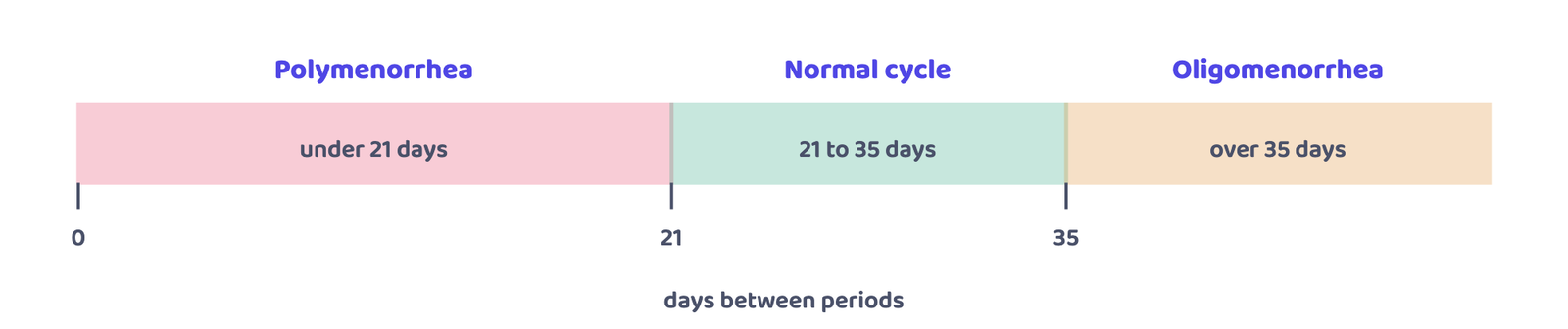
- Other problems: missing three or more periods; flow heavier or lighter than usual; bleeding lasting longer than seven days; pain, cramping or vomiting during the period; bleeding after menopause.
- Causes: overweight, stress, dietary disorder, disease, sudden change in exercise schedule, travel, other medical complications.
- The female hormones oestrogen and progesterone regulate periods and are important for overall health. Intense exercise and extreme thinness can reduce these hormones and prevent or stop monthly cycles.
| Disorder | Meaning |
|---|---|
| 1. Pre-menstrual syndrome (PMS) | Unpleasant or uncomfortable symptoms during the cycle: depression, anxiety, irritation, headache, fainting, vertigo, infection; may last a few hours to a few days. Reduced by moderate exercise, a balanced diet, good sleep and rest |
| 2. Amenorrhea | Missed periods: absence of a normal monthly period. Primary: the cycle does not begin at puberty. Secondary: periods missed for three months or more; the most common type |
| 3. Dysmenorrhea | Menstruation with severe pain or frequent cramps; also lower-abdominal cramps, low back pain, leg pain, nausea, fatigue, weakness |
| 4. Menorrhagia | Heavy and long-term or continuous menstrual bleeding |
| 5. Polymenorrhea | A menstrual cycle shorter than 21 days (frequent menstruation) |
| 6. Oligomenorrhea | Infrequent menstruation: periods at intervals greater than 35 days |
| 7. Metrorrhagia | Missed, delayed or erratic periods, or abnormal bleeding patterns |
| 8. Postmenopausal bleeding | Bleeding that occurs after one year of menopause |
Poly = many (frequent) · Oligo = few (infrequent) · A = none · Dys = painful · Menor-rhagia = heavy flow
Read the prefix and the disorder names itself.
7 Female Athlete Triad
Regular sport gives girls many benefits: lower risk of diabetes, high blood pressure and obesity, better use of fat for energy, and better bone health that prevents osteoporosis, which mostly affects females. Conditions such as cancer, diabetes and coronary heart disease have their origins in childhood and can be aided, in part, by regular activity in the early years. But sport also carries risks:
- Sports like judo, boxing, wrestling and taekwondo put pressure on athletes to maintain their shape and weight.
- Sports like distance running, cycling and cross country demand high energy and a good dietary intake.
Such pressures put the athlete’s health at risk and lead to the female athlete triad.
The female athlete triad is a condition of three interlinked health problems in female athletes, first described by the American College of Sports Medicine in 1992 as disordered eating, amenorrhoea and osteoporosis. It results from an imbalance between energy intake and energy expenditure.
Original components (1992)
- (a) Disordered eating
- (b) Amenorrhoea
- (c) Osteoporosis
Revised components
- (a) Low energy availability with or without eating disorder
- (b) Dysfunction of menstruation
- (c) Low bone density
The terms were revised because all three components can be resolved by proper energy intake and expenditure. If an athlete takes the optimum calories the body needs (energy for physical activity plus energy for body functions), the result is healthy bones and normal menstrual function. All three components are closely interlinked.
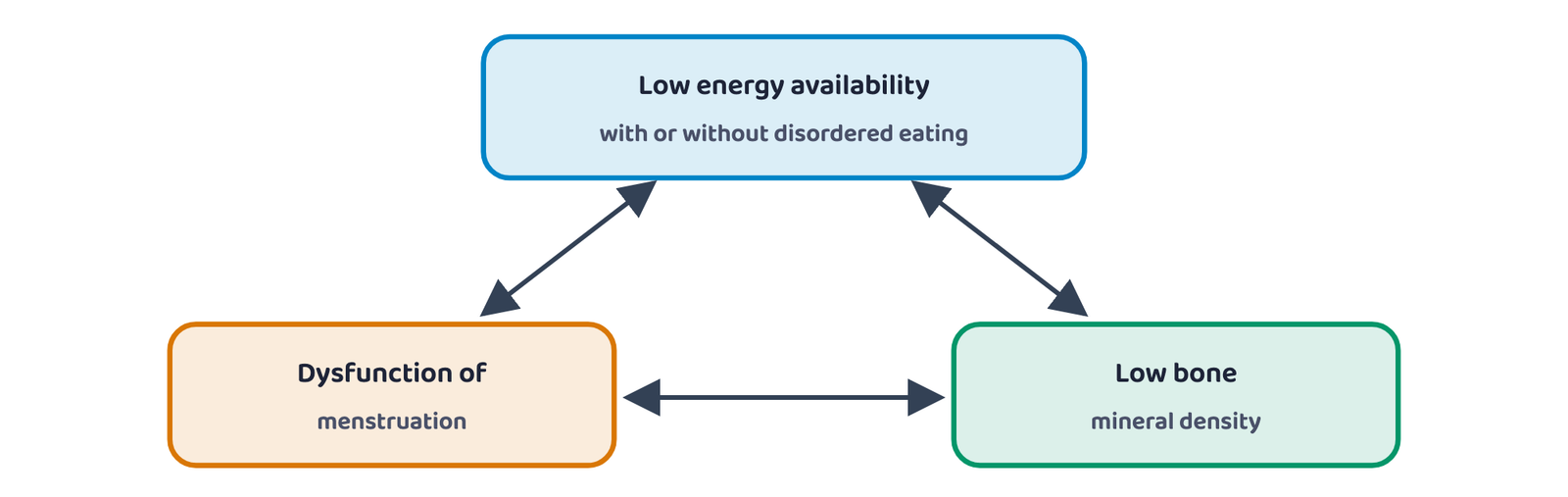
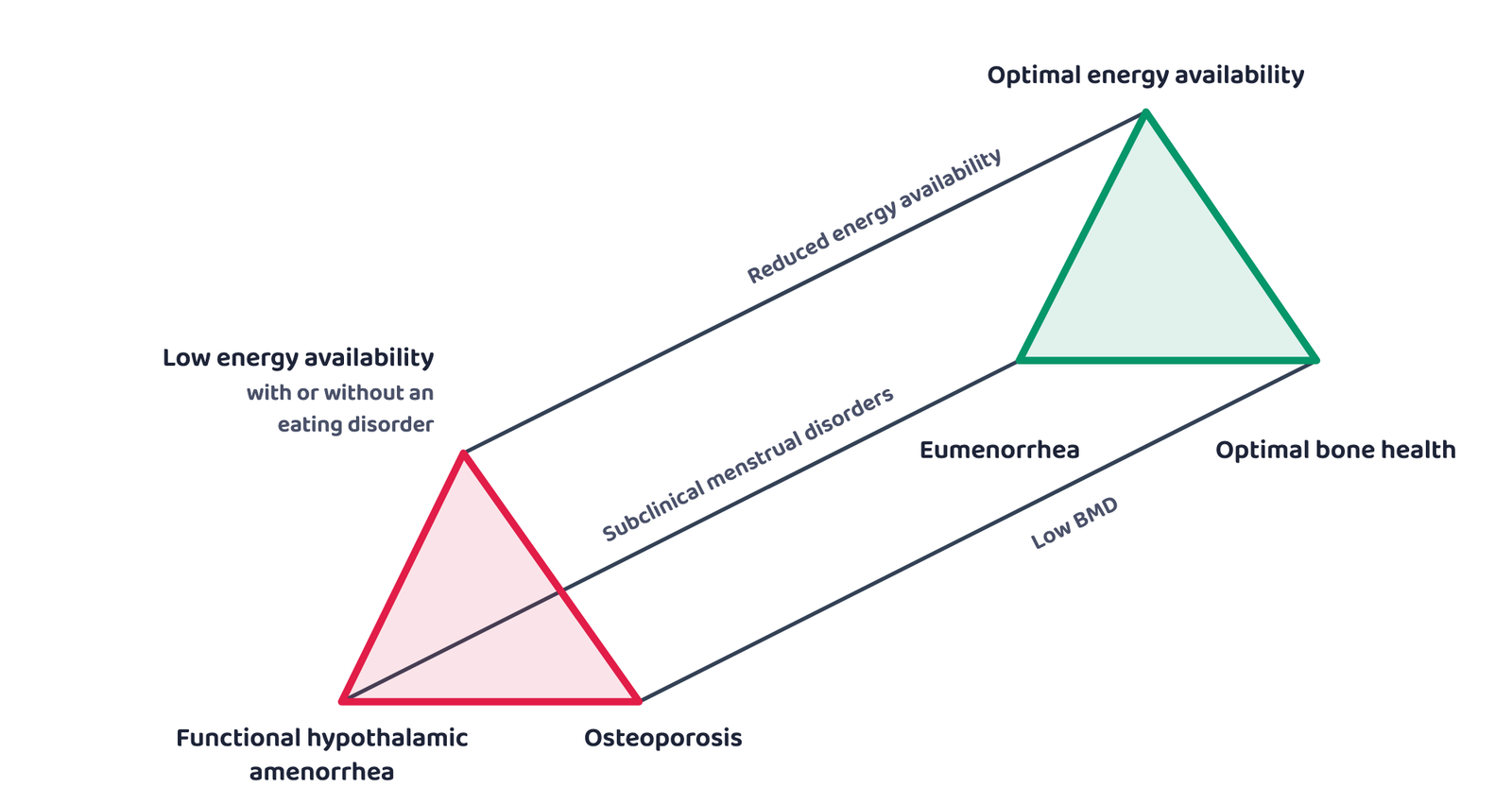
The green triangle is a healthy athlete with a good balance of energy intake and expenditure, so she has a normal menstrual cycle and above-average bone mineral density for her age. The red triangle is an athlete without that balance, which may come from restrictive dieting and/or clinical eating disorders.
7.1 Low energy availability with or without disordered eating
The triad starts from not balancing energy intake and energy expenditure, and an energy imbalance may come from an eating disorder. An athlete must know how to balance energy intake.
An eating disorder is a gross disturbance in eating behaviour. Disordered eating covers a wide range of harmful and often ineffective eating behaviours used to reduce weight, from calorie restriction to the clinical disorders anorexia nervosa and bulimia nervosa.
Athletes in sports where leanness or a specific weight is needed for performance are at higher risk. Coaches, team physicians, parents and support staff should know the symptoms so that the problem is treated in time; otherwise it leads to long-term physiological and psychological effects or, in extreme cases, fatal results.
Anorexia nervosa
- Tries to reduce body weight abnormally, with an intense fear of gaining weight or a wrong idea of own weight
- Severely restricts food; may vomit after eating or misuse laxatives, diet aids or diuretics; may exercise excessively
- Fear of weight gain continues however much weight is lost
- Symptoms: menstrual dysfunction, constipation, diarrhoea, bloating, unexpected weight loss, muscle weakness, stress fracture, bone weakness, overuse injuries, anxiety
Bulimia nervosa
- Eats a large amount of food with loss of control over eating
- Then cuts calories in unhealthy ways: vomiting, laxatives, weight-loss supplements, diuretics, excessive exercise
- A binge-then-purge cycle
- Symptoms: dehydration, dental problems, oedema, electrolyte abnormalities, extreme weight fluctuation, menstrual irregularity, weakness, cramps, depression
7.2 Menstrual dysfunction in athletes
- Menstrual irregularity is one component of the triad and a marker of quality health in female athletes. It is common in sportswomen and often ignored.
- Young athletes should understand the problem and its management; managed in time, it may positively affect performance. Ignored, it may have a prolonged effect on bone mineralisation, and treatment may last months or years.
- Girls with menstrual irregularities often self-select different sports from normally menstruating peers, because with delayed puberty they develop strong bones and taller height; but in the long run the dysfunction may affect performance and lead to complications.
- Recent research says weight training strengthens bones and may not affect adolescent menstrual irregularities.
- Studies show more than 15% of females in the Olympics may have amenorrhea, and the skeletal health of an amenorrhoeic athlete can be lower than that of a sedentary woman.
7.3 Low bone mineral density
Low bone mineral density (previously termed osteoporosis) is a disease marked by increased bone fragility and disturbance in bone structure, including low bone mineral density (BMD), that may result in fractures, pain, deformity and disability.
- Causes: improper diet and amenorrhoea. Low levels of oestrogen and progesterone make the bones weaker and they lose minerals.
- Effects: more injuries, stress fractures, and risk of early osteoporosis after menopause.
- Bone deposition increases in childhood and adolescence and peaks in the 20s and 30s. BMD has a large genetic component: heritability is suggested to be 50 to 85%. Knowing family history helps keep athletes safe, and intensity, volume, frequency and type of activity should be planned with it in mind.
7.4 Management of the triad
- Physical inactivity: 4th leading risk factor for global mortality (6% of deaths). WHO guidance covers frequency, duration, intensity, type and amount.
- Under 1: 30 min tummy time, no screen, 14-17 h / 12-16 h sleep. 1-2: 180 min, no screen at 1, max 1 h at 2, 11-14 h sleep. 3-4: 180 min incl. 60 min MVPA, max 1 h screen, 10-13 h sleep. Not restrained more than 1 h at a time.
- 5-17: at least 60 min a day, moderate to vigorous (one 1-h or two 30-min sessions).
- 18-64 and 65+: 150-300 min moderate or 75-150 min vigorous a week, bouts of 10+ min, strength 2+ days; 65+ adds balance 3+ days.
- Posture: dynamic (moving) vs static (still). Good posture = least stress on joints and muscles.
- Knock knees (Genu valgum): knees touch, ankles apart. Bow legs (Genu varum): knees apart, ankles touch. Flat foot (pes planus): no arch, water print test.
- Round shoulders: shoulders forward. Kyphosis: hunch back, upper back. Lordosis: sway back, lower back. Scoliosis: C or S sideways curve, more in girls.
- Women’s participation: Khelo India, NSTSS, IOC (49% women), Constitution. Benefits: physical (5), psychological (5), social (4).
- Menarche = first period (8-15 yrs); menstruation 3-5 days; menopause ~50; normal cycle 21-35 days.
- Poly under 21 days, oligo over 35 days, primary amenorrhea = never began, secondary = missed 3+ months, dysmenorrhea = painful, menorrhagia = heavy.
- Triad (ACSM 1992): disordered eating, amenorrhoea, osteoporosis; revised: low energy availability, menstrual dysfunction, low BMD. Weight gain is the strongest predictor of recovery.
- Can I draw and label knock knees, bow legs, flat foot, kyphosis, lordosis and scoliosis next to normal posture?
- Can I give one exercise and one asana for each of the seven deformities?
- Can I write the WHO guideline for any age group with the exact minutes and hours?
- Can I name all eight menstrual disorders and the old and revised components of the triad?