
- Describe the position of women and of “low” castes about two hundred years ago
- Explain how printing changed the way people argued about customs
- Name the reformers who fought sati, child marriage and the ban on widow remarriage, with the laws and their years
- Explain why families feared girls’ schools and how women began to speak and organise for themselves
- Describe the caste movements of Ghasidas, Haridas Thakur, Narayana Guru, Phule, Ambedkar and Periyar
- Match each reform organisation with its founder, place and year
These notes cover Chapter 7 of the old NCERT History book “Our Pasts III” (rationalised edition), which many schools and state boards still teach. Every date, name and quotation below has been checked against that book.
1Women Two Hundred Years Ago
Think of a girl in your class today. She studies, perhaps goes on to college and a job, and the law protects her choices. Two centuries back, a girl’s life looked completely different.
| About 200 years ago | Today, under the law |
|---|---|
| Children, girls especially, were usually married very young | A girl has to be an adult before she can legally marry |
| A man, Hindu or Muslim, was allowed several wives | A woman may marry a person of any caste or community she chooses |
| In some regions a widow who died on her husband’s pyre was honoured | A widow is free to marry again |
| Women had very limited rights over property | Every adult woman can vote and contest elections |
| Hardly any woman could study; many believed that reading would make a woman lose her husband | Most middle-class girls attend school and many work |
The book adds a fair warning: even now, not everyone enjoys these rights. Poor families often cannot educate their children, and many women still do not choose whom they marry.
Sati: the name given to a widow who died on her husband’s funeral pyre, by her own choice or by force. The word itself means a “virtuous woman”.
Balthazar Solvyn painted a sati scene in 1813. European painters in India made many such pictures, and Europeans used the custom as proof that the East was “barbaric”.
2Society Divided by Caste
Inequality was not only between men and women. Across most of India, people were also ranked by caste.
- Upper castes believed that “polluting” work could make a person lose caste.
- People at the very bottom were treated as “untouchable”.
- They were kept out of temples.
- They could not take water from the wells the upper castes used, nor bathe in the same ponds.
- In short, they were looked upon as lesser human beings.
Do not write “the Shudras were the untouchables”. In the book, Shudras are peasants and artisans. The “untouchables” are a separate group placed below them, doing work the upper castes called polluting.
Untouchable: a person from the lowest groups in the caste order whom upper castes refused to touch, and who was barred from temples, shared wells and bathing ponds.
During the 1800s and 1900s, many of these rules and attitudes began to shift, slowly. The rest of the chapter traces that shift.
3Steps Towards Change
3.1 Printing changes the debate
From the early 1800s, arguments over customs took a new form, mainly because of new ways of communicating.
3.2 Who is a reformer?
Reformer: someone who believes society must change and unfair customs must end, and who works for this mainly by convincing people to drop old practices and take up a new way of living.
4Raja Rammohun Roy and the Fight Against Sati
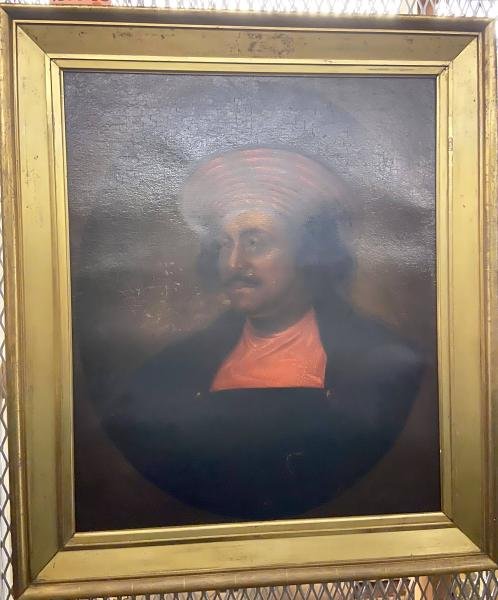
- Raja Rammohun Roy (1772-1833) was one such reformer.
- In Calcutta he set up a reform body called the Brahmo Sabha, which later came to be called the Brahmo Samaj.
- He wanted Western education to spread in India.
- He also wanted women to have more freedom and equality.
- He wrote about how women were tied to housework, kept inside the home and kitchen, and not allowed out to study.
4.1 The campaign
- The suffering of widows troubled Rammohun deeply, so he started a campaign against sati.
- He was a scholar of Sanskrit and Persian and knew several other Indian and European languages.
- In his writings he argued that the ancient texts nowhere approved of burning widows.
- British officials of the time were already criticising Indian customs, so they were ready to hear a man known for his learning.
- The outcome: sati was banned in 1829.
4.2 A method that others copied
“How did knowledge of ancient texts help reformers?” is asked often. Give two cases with years: Rammohun Roy and sati (banned 1829), and Vidyasagar and widow remarriage (law of 1856).
4.3 Source 1: “We first tie them down to the pile”
Rammohun spread his views through pamphlets. Some were written as an argument between someone who defends a custom and someone who attacks it. Here is the gist of the one on sati:
The defender of sati
- Claims women are naturally less intelligent, weak-willed and untrustworthy
- Says many widows want to die with their husbands
- Admits that widows are bound to the pyre so they cannot run from the flames
The critic of sati
- Asks when women were ever given a fair chance to show their ability
- Says only someone who fails after being taught can be called weak
- So, without educating women, nobody can call them inferior
At this popular festival, worshippers had hooks driven through their skin and swung on a wheel. When European officials in the early 1800s began calling Indian rituals barbaric, this was one of the rituals they targeted.
5Vidyasagar and Widow Remarriage
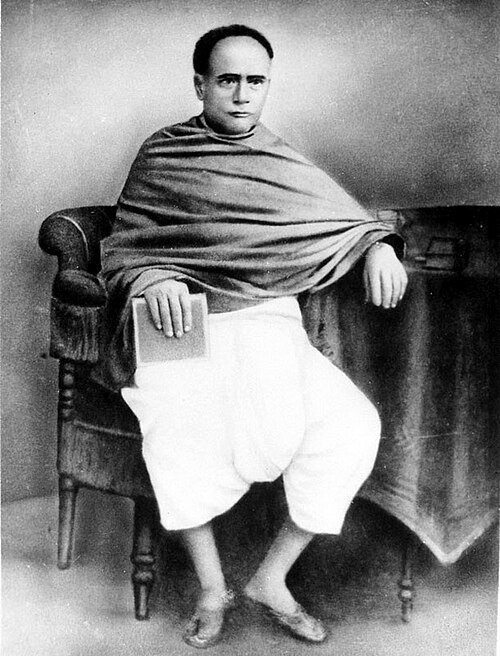
- Ishwarchandra Vidyasagar, a celebrated reformer, used the ancient texts to argue that a widow could marry again.
- The British accepted his proposal, and an 1856 law allowed widows to remarry.
- Those who opposed widow remarriage turned against him and even boycotted him.
In the later 1800s the cause spread well beyond Bengal:
| Region | Reformer | Work |
|---|---|---|
| Telugu-speaking parts of the Madras Presidency | Veerasalingam Pantulu | Set up an association to promote widow remarriage |
| Bombay | A group of young intellectuals and reformers | Took a pledge to work for the same cause |
| North India | Swami Dayanand Saraswati | Backed widow remarriage; founded the Arya Samaj |
Arya Samaj: the organisation set up by Swami Dayanand Saraswati in 1875 to reform Hinduism.
The law did not make widow remarriage common. Very few widows actually remarried, those who did faced social rejection, and orthodox groups kept fighting the law.
6Girls Begin Going to School
Reformers believed that women’s lives would improve only if girls were educated. Vidyasagar opened girls’ schools in Calcutta, and reformers in Bombay did the same.
6.1 Why families were afraid
Leaving home
Parents thought school would pull girls out of the home.
Housework
They thought girls would stop doing household duties.
The road to school
Walking through public streets was believed to spoil a girl’s character.
Public spaces
Many held that girls should keep out of public places altogether.
6.2 Learning at home, and new schools
- So for the whole of the 1800s, most women who could read had been taught at home, by open-minded fathers or husbands.
- A few taught themselves. Rashsundari Debi learnt to read and write in secret, by candlelight at night.
- Towards the end of the century, the Arya Samaj opened girls’ schools in Punjab.
- Jyotirao Phule did the same in Maharashtra.
Early girls’ schools usually gave girls a lighter syllabus than boys. The Hindu Mahila Vidyalaya was among the first to teach girls what boys of that time were taught.
6.3 Muslim women and education
- In wealthy, noble Muslim families of North India, women teachers came home to teach girls to read the Koran in Arabic.
- The reformer Mumtaz Ali gave fresh meanings to verses of the Koran to show that women should be educated.
- From the late 1800s the first Urdu novels were written. One aim was to get women reading about religion and running a home, in a language they understood.
7Women Write About Women
7.1 Educators of Muslim girls
| Who | What she did |
|---|---|
| The Begums of Bhopal | From the early 1900s pushed for women’s education and opened a primary school for girls at Aligarh |
| Begum Rokeya Sakhawat Hossain | Opened schools for Muslim girls in Patna and Calcutta; boldly attacked conservative thinking and said the religious leaders of every faith kept women in a lower place |
7.2 Universities and books
- By the 1880s, Indian women were studying in universities.
- Some of them qualified as doctors; others became teachers.
- Women also began publishing their own criticism of how society treated them.
- Tarabai Shinde, who had studied at home in Poona, wrote Stripurushtulna (“A Comparison between Women and Men”), attacking the unequal treatment of the sexes.
Isn’t a woman’s life as dear to her as yours is to you?
Tarabai Shinde, Stripurushtulna (Source 2)
What Source 2 says: Tarabai describes a widow’s fate. Her head is shaved by the barber, she is kept away from weddings and every happy occasion, and even her face is treated as unlucky, all only because her husband has died.
7.3 Pandita Ramabai
Scholar
A leading Sanskrit scholar, she believed Hinduism treated women harshly.
Author
She wrote a book on the hard lives of upper-caste Hindu women.
Widows’ home
At Poona she opened a home for widows ill-treated by their in-laws, where they learnt skills to earn their own living.

7.4 The orthodox reaction
- These changes upset orthodox people of both communities.
- Many Hindu nationalists feared that women copying Western ways would ruin Hindu culture and weaken family values.
- Orthodox Muslims were equally anxious about where the changes would lead.
7.5 Women organise
Suffrage: the right to vote.
- Jawaharlal Nehru and Subhas Chandra Bose backed women’s demands for equality and freedom.
- National leaders promised that after Independence every man and woman would get the vote.
- Until then, they wanted women to put their energy into the struggle against British rule.
8The Law Against Child Marriage
As women’s groups and writing on women’s issues grew, so did the push for reform. Child marriage was the next custom to be challenged. Several Indian members of the Central Legislative Assembly worked for a law to stop it.
- Unlike the earlier reform laws, this one passed without bitter fights.
- The book’s Fig. 8 shows a child bride of eight from the early 1900s, and notes that more than 20 per cent of Indian girls are still married before 18.
Two years end in “29”. 1829: sati banned. 1929: Child Marriage Restraint Act. The book’s own true/false exercise tests exactly this.
9Caste and Social Reform
9.1 Upper-caste reformers against caste
| Reformer or group | Step against caste |
|---|---|
| Rammohun Roy | Translated an old Buddhist text that criticised caste |
| Prarthana Samaj | Followed the Bhakti tradition, which held all castes equal in spirit |
| Paramhans Mandali (Bombay, 1840) | Set up to work for the abolition of caste |
- Most members of these groups were themselves from upper castes.
- At secret meetings they deliberately broke caste rules about eating and touching, to free their own lives from caste prejudice.
9.2 Christian missionaries
In the 1800s, Christian missionaries opened schools for tribal and “lower”-caste children, giving them some tools to cope with a changing world.
9.3 New work, a way out
Meanwhile, the poor, many of them from low castes, began leaving villages and small towns in search of work.
- Growing cities needed coolies, diggers, porters, bricklayers, sewage cleaners, sweepers, palanquin bearers and rickshaw pullers.
- The work was tough.
- Still, it let low-caste labourers escape the grip of upper-caste landlords and the insults they faced every day.
- Fig. 9 in the book: the coolie ship John Allen, which took Indian labourers, mostly of low caste, to Mauritius.
People who worked with leather were looked down upon, because handling dead animals was thought dirty and polluting. In the First World War, armies needed shoes in huge numbers. Caste prejudice kept others away from leather, so only the traditional leatherworkers and shoemakers would make them. They could therefore charge high prices and earn large profits.
Fig. 10 in the book: the Madigas, an important “untouchable” caste of present-day Andhra Pradesh, skilled at cleaning and tanning hides and stitching sandals.
- The army was another opening (the Mahar Regiment above). B.R. Ambedkar’s father taught at an army school.
Even in 1829, government schools in the Bombay Presidency did not admit untouchables. When some insisted, they were only allowed to sit on the veranda and listen from outside, so that the room used by upper-caste boys would not be “polluted”.
The Dublas of Gujarat worked for upper-caste landlords, farming their fields and doing all kinds of odd jobs in their houses.
10Demands for Equality and Justice
By the later 1800s, people from the Non-Brahman castes themselves were organising against caste discrimination and demanding equality and justice.
| Movement | Leader | Region | Among whom / main idea |
|---|---|---|---|
| Satnami movement | Ghasidas | Central India | Organised leatherworkers to raise their social status |
| Matua sect | Haridas Thakur | Eastern Bengal | Chandala cultivators; challenged Brahmanical texts that justified caste |
| Shri Narayana Guru’s movement | Shri Narayana Guru, of the Ezhava caste | Today’s Kerala | Unity of his people; opposed unequal treatment on the basis of caste |
“oru jati, oru matam, oru daivam manushyanu” (one caste, one religion, one god for humankind)
Shri Narayana Guru, who held that all human beings belong to one caste
- Each of these sects was started by a leader from a Non-Brahman caste, working among his own people.
- They tried to give up habits that made the dominant castes look down on them.
- Above all, they wanted the subordinate castes to gain self-esteem.
11Jyotirao Phule and Gulamgiri
11.1 Phule’s argument
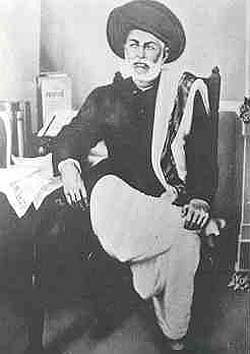
- Jyotirao Phule (born 1827) was one of the boldest “low-caste” leaders. He had studied at missionary schools.
- Brahmans claimed to be superior because they were Aryans. Phule attacked this claim head-on.
- The Aryans, he said, were outsiders who came into the subcontinent and conquered the people already living here.
- Having won, they began to treat the defeated people as low and inferior.
- So the “upper” castes had no real claim to land or power. The land belonged to its original people, the so-called low castes.
- Before the Aryans, Phule said, there had been a golden age, when warrior-peasants farmed and ruled the Maratha countryside fairly.
- He called on Shudras and Ati Shudras (see Definition 6 below) to unite against caste discrimination.
- His association, the Satyashodhak Samaj, spread the message of caste equality.
Shudras and Ati Shudras: in Phule’s usage, Shudras are the labouring castes and Ati Shudras are the untouchables.
11.2 Source 3: “Me here and you over there”
Phule distrusted the anti-British nationalism of upper-caste leaders. In The Cultivator’s Whipcord he said the Brahmans had hidden the weapon of their religion and now posed as patriots, asking Shudra, Muslim and Parsi youth to drop quarrels about high and low and unite. Such unity, he warned, would only serve the Brahmans, and once it had done its job, the old separation would return: “me here and you over there again”.
11.3 Gulamgiri (1873)
Gulamgiri: Jyotirao Phule’s book of 1873. The title means slavery.
- Phule widened his attack on caste into an attack on every kind of inequality.
- He cared about the suffering of upper-caste women, of labourers and of low castes alike.
- In the 1900s, Dalit leaders carried his caste-reform work forward: Dr B.R. Ambedkar in western India and E.V. Ramaswamy Naicker in the south.
12Ambedkar and the Temple Entry Movement
- Ambedkar was born in a Mahar family, so he knew caste prejudice from childhood.
- At school he had to sit on the floor outside the class, and he was not allowed to drink from the taps upper-caste children used.
- After school he won a fellowship to study in the USA.
- Back in India in 1919, he wrote widely about the power of the “upper” castes in society.
- In 1927 he launched a temple entry movement, joined by his Mahar followers. Brahman priests were furious when Dalits drew water from the temple tank.
- Between 1927 and 1935 he led three temple entry movements.
- His purpose: to make the whole of society see how strong caste prejudice was.
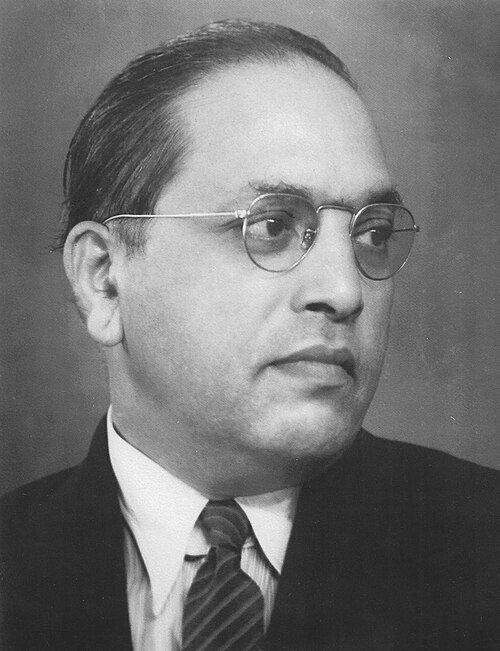
We now want to go to the Tank only to prove that like others, we are also human beings
B.R. Ambedkar, 1927 (Source 4). He added that Hindu society should be rebuilt on two principles, equality and absence of casteism.
Thomas Daniell drew the gateway of the Madurai temple in 1792. Until the temple entry movement began, “untouchables” could not even come close to such gateways.
13The Non-Brahman Movement and Periyar
13.1 The Non-Brahman movement
- It began in the early 1900s.
- It was led by non-Brahman castes that had by now gained education, money and influence.
- Their argument: Brahmans descended from Aryan invaders from the north, who had taken the south from its original people, the Dravidians.
- They also questioned the Brahmans’ claim to power.
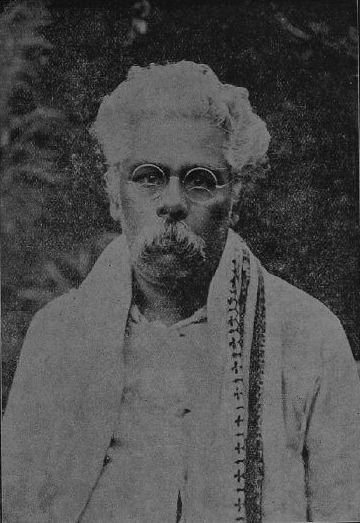
13.2 E.V. Ramaswamy Naicker (Periyar)
Self Respect Movement: Periyar’s movement for the dignity of untouchables, whom he saw as the real bearers of the original Tamil and Dravidian culture that Brahmans had suppressed.
- Periyar believed every religious authority treated inequality as God’s will, so untouchables had to break free of all religions to become equal.
- He sharply criticised Hindu scriptures, above all the Codes of Manu, the Bhagavad Gita and the Ramayana.
- In his view these books had been used to place Brahmans above lower castes, and men above women.
- Source 5: Periyar wrote that words like “Thara Mukurtham” had turned women into their husbands’ puppets, and that fathers told daughters they now belonged to their husband’s home. He blamed this on Sanskrit influence.
13.3 Two responses
Rethinking
- The speeches, writing and movements of lower-caste leaders made some upper-caste nationalist leaders rethink and criticise themselves
Orthodox resistance
- Sanatan Dharma Sabhas and the Bharat Dharma Mahamandal in the north
- The Brahman Sabha in Bengal
- Goal: defend caste as a foundation of Hinduism, backed by scripture
The argument over caste did not end with British rule; it continues in India today.
14Organising for Reform
The chapter closes with short boxes on reform organisations. They supply many one-mark and matching questions.
| Organisation | Year and place | Founder / leader | Key ideas and work |
|---|---|---|---|
| Brahmo Samaj | 1830 | Grew from Rammohun Roy’s Brahmo Sabha; Keshub Chunder Sen was a main leader | Against all idol worship and sacrifice; faith in the Upanishads; members barred from criticising other religions; weighed the good and bad sides of Hinduism and Christianity |
| Young Bengal Movement | 1820s, Hindu College, Calcutta | Henry Louis Vivian Derozio, a teacher there | Students questioned all authority, attacked tradition, demanded education for women and fought for free thought and expression |
| Ramakrishna Mission | Named after Ramakrishna Paramhansa | Swami Vivekananda, his disciple | Salvation through social service and selfless work |
| Veda Samaj | 1864, Madras (Chennai) | Inspired by the Brahmo Samaj | Against caste distinctions; for widow remarriage and women’s education; one God; condemned superstition and ritual |
| Prarthana Samaj | 1867, Bombay | (founder not named in the book) | Against caste restrictions and child marriage; for women’s education and widow remarriage; drew on Hindu, Buddhist and Christian texts |
| Arya Samaj | 1875 | Swami Dayanand Saraswati | Reform of Hinduism; widow remarriage; girls’ schools in Punjab |
| Aligarh Movement | 1875, Aligarh | Sayyid Ahmed Khan | Mohammedan Anglo-Oriental College, later Aligarh Muslim University; modern subjects and Western science for Muslims |
| Singh Sabha Movement | Amritsar 1873, Lahore 1879 | Sikh reform bodies | Free Sikhism of superstition, caste and non-Sikh practices; modern education with Sikh teaching; Khalsa College, Amritsar (1892) |
14.1 Swami Vivekananda
- Swami Vivekananda (1863-1902) was born Narendra Nath Dutta.
- He joined Sri Ramakrishna’s simple teachings to a modern outlook and carried them across the world.
- He spoke at the World Parliament of Religions, Chicago, in 1893; the New York Herald wrote: “We feel how foolish it is to send missionaries to this learned nation”.
- The book calls him the first modern Indian to restore the standing of Vedanta philosophy worldwide.
- Indian poverty pained him; he held that no reform could work unless the masses were lifted up.
- He urged Indians to leave behind their narrow “religion of the kitchen” and serve the nation together, which strengthened early Indian nationalism.
- His nationalism was broad: he wanted all nations to meet as equals, and asked young people to unite around a shared spiritual heritage.
Veda 64, Prarthana 67, Arya and Aligarh 75
Say the three years in a row: Veda Samaj (1864) first, Prarthana Samaj (1867) three years later, and the Arya Samaj and the Aligarh college both in 1875.
15Timeline of the Chapter
- About 200 years ago: early marriage, many wives, sati, few property rights, almost no schooling for women; caste ranked society and “untouchables” were shut out of temples, wells and ponds.
- Printing made cheap books and pamphlets possible, so customs could be argued over in public.
- Reformers persuaded people, often quoting ancient texts: Rammohun Roy (Brahmo Sabha; sati banned 1829), Vidyasagar (widow remarriage law 1856).
- Widow remarriage spread through Veerasalingam Pantulu, Bombay reformers and Dayanand Saraswati (Arya Samaj 1875), yet few widows remarried.
- Girls’ schools were feared, so most women learnt at home; schools by Vidyasagar, the Arya Samaj (Punjab) and Phule (Maharashtra); Mumtaz Ali, the Begums of Bhopal and Begum Rokeya for Muslim girls.
- Women spoke for themselves: Tarabai Shinde (Stripurushtulna), Pandita Ramabai (widows’ home, Poona); universities from the 1880s; pressure groups for suffrage.
- Child Marriage Restraint Act 1929: 18 for men, 16 for women, later 21 and 18.
- City jobs, plantations, army shoes and the Mahar Regiment gave low castes a way out of landlord control.
- Non-Brahman leaders: Ghasidas (Satnami), Haridas Thakur (Matua), Shri Narayana Guru, Phule (Satyashodhak Samaj, Gulamgiri 1873), Ambedkar (temple entry 1927-1935), Periyar (Self Respect Movement).
- Orthodox bodies (Sanatan Dharma Sabhas, Bharat Dharma Mahamandal, Brahman Sabha) defended caste.
- Can I link 1829, 1856 and 1929 to the right reform?
- Can I give four reasons families gave for keeping girls out of school?
- Can I explain Phule’s Aryan argument and why he dedicated Gulamgiri to Americans?
- Can I say what Ambedkar wanted from temple entry and why Periyar left the Congress?
- Can I match every reform organisation with its year, place and founder?