
- Name the asanas and pranayamas for each of the five lifestyle conditions: obesity, diabetes, asthma, hypertension, and back pain with arthritis
- Draw a clean, labelled stick diagram of every one of them
- Write the procedure step by step, with the right breathing pattern
- List the benefits and, just as important, who must not do each asana (contraindications)
- Explain how yoga differs from exercise and why it helps prevent lifestyle diseases
In the CBSE Physical Education (048) curriculum this is Unit 3: Yoga as Preventive Measure for Lifestyle Disease, worth 6 marks + 1 “b” mark (the “b” mark is a concept question, such as a tactile diagram or case study, for visually impaired candidates). The prescribed book is CBSE’s own Physical Education Class XII. The 2026-27 sample paper asks this unit as a picture item (“identify the asana”), a direct MCQ, and a 5-mark question that combines a disease, a stick diagram of an asana and its benefits.
1 Lifestyle Diseases and Yoga
Lifestyle diseases are diseases linked mainly to the way people live: a sedentary (inactive) routine, unhealthy eating, smoking, alcohol, stress and poor sleep. Obesity, diabetes, hypertension, asthma attacks and back pain are common examples.
Modern work and study keep people sitting for hours, in front of screens, with little movement. This sedentary behaviour, together with fast food and stress, slowly leads to lifestyle diseases. These diseases in turn raise the risk of heart disease and stroke and can cause premature mortality, that is, dying earlier than the expected age.
Contraindication is a condition in which a particular asana should not be practised because it may cause harm, for example pregnancy, hernia, high blood pressure or a recent surgery.
1.1 How yoga is different from exercise
The book’s “Do you know?” box makes this comparison. It is a ready 2-mark answer.
| Point | Yogasanas | Exercise |
|---|---|---|
| Respiration and metabolic rate | Slow down | Speed up |
| Oxygen consumption | Drops | Rises |
| Body temperature | Drops | Body gets hot |
| Catabolism (breakdown in the body) | Tends to be arrested | Is promoted |
The book adds that asanas are designed to have specific effects on the glands and internal organs, and to alter electrochemical activity in the nervous system. Asanas are classified into three groups: beginners, intermediate and advanced. For maximum benefit, a balanced programme tailored to individual needs should be practised regularly.
1.2 How to write any asana answer
Head = circle · body = one line · arms and legs = two lines each, bent at the elbow or knee
Draw the floor line first. Then get the one feature that identifies the asana right: crown on the floor (Matsyasana), toes behind the head (Halasana), body like a bow (Dhanurasana), palms on the heels (Ushtrasana). Label two or three key points.
1.3 The whole chapter on one page
The curriculum lists these practices for each disease. A tick means the practice is in that disease’s list.
| Practice | Obesity | Diabetes | Asthma | Hypertension | Back pain, Arthritis |
|---|---|---|---|---|---|
| Tadasana | ✓ | ✓ | ✓ | ✓ | |
| Katichakrasana | ✓ | ✓ | ✓ | ||
| Pavanmuktasana | ✓ | ✓ | |||
| Matsyasana | ✓ | ✓ | |||
| Halasana | ✓ | ||||
| Paschimottanasana | ✓ | ✓ | |||
| Ardha Matsyendrasana | ✓ | ✓ | |||
| Dhanurasana | ✓ | ✓ | ✓ | ||
| Ushtrasana | ✓ | ✓ | ✓ | ✓ | |
| Surya Bhedana pranayama | ✓ | ||||
| Bhujangasana | ✓ | ✓ | ✓ | ✓ | |
| Shalabhasana | ✓ | ||||
| Supta Vajrasana | ✓ | ||||
| Mandukasana | ✓ | ||||
| Gomukhasana | ✓ | ✓ | ✓ | ✓ | |
| Yogamudra | ✓ | ||||
| Kapalabhati | ✓ | ✓ | |||
| Urdhvahastottanasana | ✓ | ✓ | |||
| Uttan Mandukasana | ✓ | ✓ | |||
| Vakrasana | ✓ | ✓ | ✓ | ||
| Anulom-Vilom / Nadi Shodhana | ✓ | ✓ | ✓ | ||
| Uttanpadasana | ✓ | ||||
| Ardha Halasana | ✓ | ||||
| Sarala Matsyasana | ✓ | ✓ | |||
| Makarasana | ✓ | ✓ | |||
| Shavasana | ✓ | ||||
| Sheetali pranayama | ✓ | ||||
| Ardha Chakrasana | ✓ | ||||
| Bhadrasana | ✓ |
Tadasana, Bhujangasana, Gomukhasana and Ushtrasana appear in four lists each, so they are the most useful to learn first. Halasana, Shalabhasana, Supta Vajrasana, Mandukasana, Yogamudra, Uttanpadasana, Ardha Halasana, Shavasana, Sheetali, Ardha Chakrasana, Bhadrasana and Surya Bhedana appear in only one list each, so an answer must name the right disease for them.
2 Asanas to Prevent Obesity
Obesity is a condition in which excess fat collects in the body to the extent that it harms health. Its main causes are lack of activity, over-indulgence in food (especially fatty and sugary food), smoking, stress and poor sleep, with heredity also playing a part. Obesity raises the risk of diabetes, hypertension, heart disease and joint pain. The asanas below burn and reduce fat (especially round the abdomen, thighs and hips), improve digestion and relieve constipation.
2.1 Tadasana (Palm Tree Pose)
Book 3.1.1 A traditional posture. The final position resembles a palm tree, which is erect and straight, so the body is kept straight and erect.

- Stand with feet together (or about 10 cm apart for beginners), hands by the side of the thighs.
- Distribute the weight equally on both feet to keep the body steady.
- Raise the arms over the head, interlock the fingers and turn the palms upward. Place the hands on top of the head.
- Fix the eyes on a point on the wall slightly above head level; keep them fixed there throughout.
- Inhale and stretch the arms, shoulders and chest upward. Raise the heels and come up onto the toes.
- Stretch the whole body without losing balance or moving the feet. Hold the breath and the position for a few seconds.
- Lower the heels while breathing out and bring the hands to the top of the head. This is one round.
Breathing: Synchronise the breath with raising and lowering the arms; keep the balance while stretching. Do not move the eyes from the point (it makes you lose balance), and bring the heels down slowly, without a jerk.
Benefits
- Strengthens the legs, knees, ankles, arms and chest.
- Stretches and opens the hips, groins, hamstrings and calves; shoulders, chest and spine.
- Increases mental and physical equilibrium.
- Helps improve digestion.
- Reduces anxiety, stress, back pain and sciatica.
Contraindications
- Migraine
- Diarrhoea
- Low or high blood pressure
- Neck and back injuries
2.2 Katichakrasana (Waist Rotating Pose)
Book 3.1.2 Kati = waist, chakra = circle: literally rotation of the waist. It stretches the waist and makes it flexible and supple. It is a standing asana.
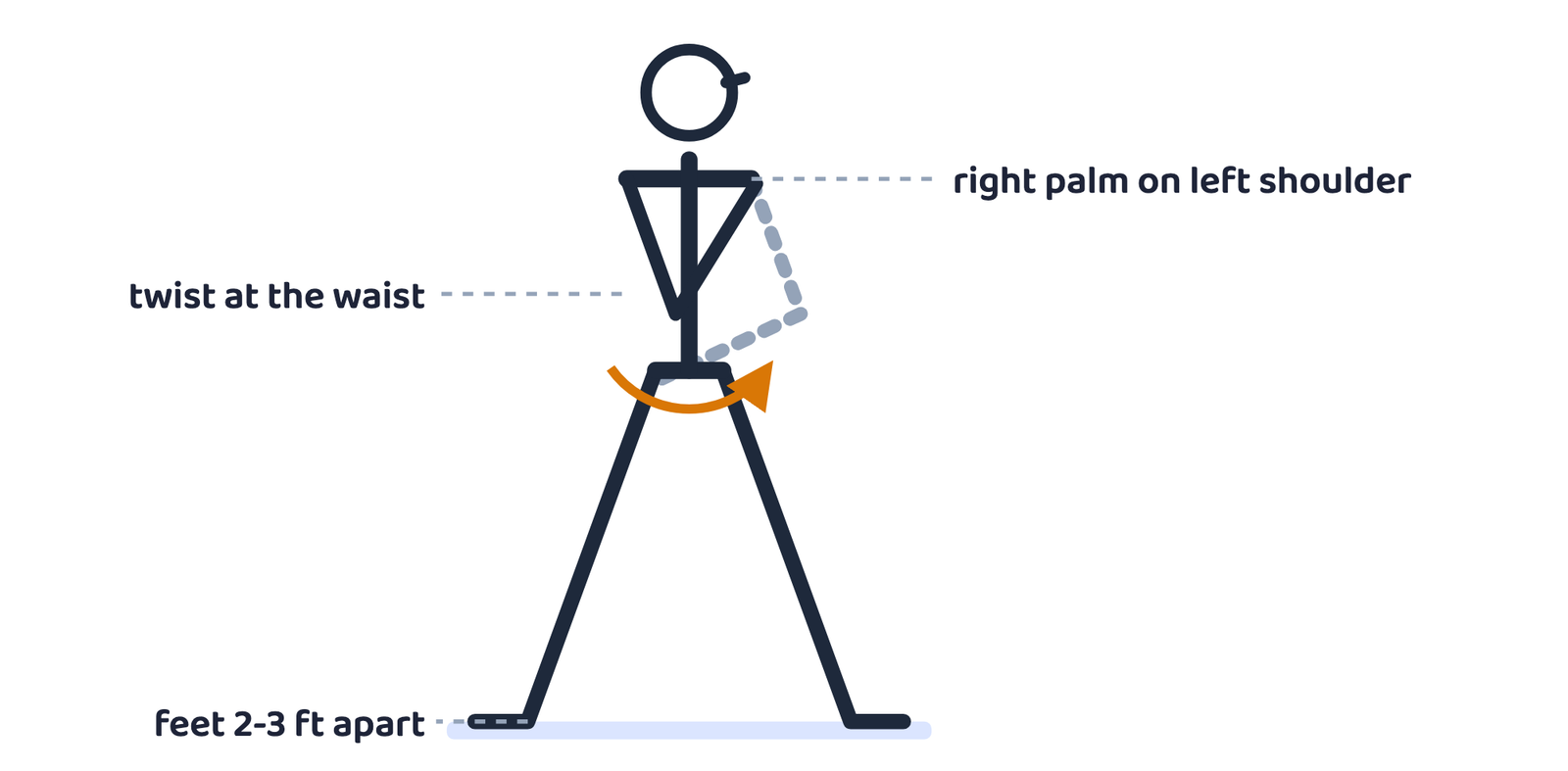
- Keep the legs 2-3 feet apart.
- Raise both arms to shoulder level, palms facing each other, arms parallel.
- Exhaling, twist the body to the left so that the right palm touches the left shoulder; come back with inhalation.
- Exhaling, twist to the right so that the left palm touches the right shoulder; come back with inhalation.
- This is one round; repeat it two more times. Relax in Samasthiti.
Breathing: Inhale while coming back to the centre; exhale while turning to the side. Do the same on either side.
Benefits
- Good for relieving constipation.
- Strengthens and improves the flexibility of the spine and waist.
- Good for arm and leg muscles.
- Opens up the neck and shoulders; strengthens the abdominal muscles and lower back.
- Beneficial for those with sedentary or desk-bound jobs.
Contraindications
- Avoid during pregnancy, or with hernia, slip disc or a recent abdominal surgery.
- Consult a doctor first if you have chronic spinal disorders.
2.3 Pavanmuktasana (Wind Removing Pose)
Book 3.1.3 Pawan = wind, mukta = free. So it is also called the wind removing asana.

- Lie on the back, legs stretched straight.
- Bend the right knee, hold it with both hands and press it towards the abdomen. Breathing out, lift the head and try to touch the knee with the chin.
- Breathe in and stretch the legs straight. Then press the abdomen with the left leg in the same way.
- Then press the abdomen with both legs, chin between the knees.
- From this position swing the body back and forth 5 to 10 times, then left to right 5 to 10 times.
Breathing: Breathe normally throughout; be aware of the coordination of the movement.
Benefits
- Stretches the neck and back.
- Abdominal muscles are stretched and internal organs compressed: better blood circulation, stimulated nerves, more efficient internal organs.
- Pressure on the abdomen releases trapped gases in the large intestine.
- Improves the digestive system and relieves constipation.
- Strengthens the lower back muscles and loosens the spinal vertebrae.
- Massages the pelvic muscles and reproductive organs; beneficial for menstrual disorders.
- Reduces fat in the abdominal area, thighs and buttocks.
Contraindications
- Recent abdominal surgery (there is a lot of pressure on the abdomen).
- Hernia or piles.
- Pregnancy.
2.4 Matsyasana (Fish Pose)
Book 3.1.4 Matsya = fish. According to ancient yogic texts it can restore spinal strength and overall body balance, leading to a better physical and emotional outlook.

- Lie in Savasana (corpse pose); stretch arms and legs, relax and take a few deep breaths.
- Place the palms under the hips, facing the ground; bring the elbows close to each other, near the waist.
- Cross the legs so that the feet cross at the middle, thighs and knees flat on the floor.
- Breathe in and lift the chest so that the head is also lifted and the crown touches the floor.
- Keep the body’s weight on the elbows, not on the head; lightly press the shoulder blades as the chest lifts.
- Hold only while comfortable, breathing normally.
- To release, raise the head, lower the chest and head to the floor and bring the hands back beside the body. Relax in Savasana.
- When ready, go into the asana again, hold it longer and go deeper with every exhalation.
Breathing: Slow inhalation and exhalation; as you exhale, throw the chest out and take the head deeper. Inhale and bring the head up to release. Exhale and relax the whole back down to the mat.
Benefits
- Opens and stretches the neck muscles and shoulders.
- Opens the chest and corrects round shoulders.
- Relief from respiratory disorders by encouraging deep breathing.
- Strengthens the back muscles through the arch.
- Helps tone the parathyroid, pituitary and pineal glands.
- Helps regulate emotions and stress.
Contraindications
- High or low blood pressure
- Neck injury, or injury to the lower or middle back
- Migraine
- Spondylitis
- Heart ailments
- Pregnancy
2.5 Halasana (Plough Pose)
Book 3.1.5 Hala = plough. In the final position the body looks like an Indian plough.
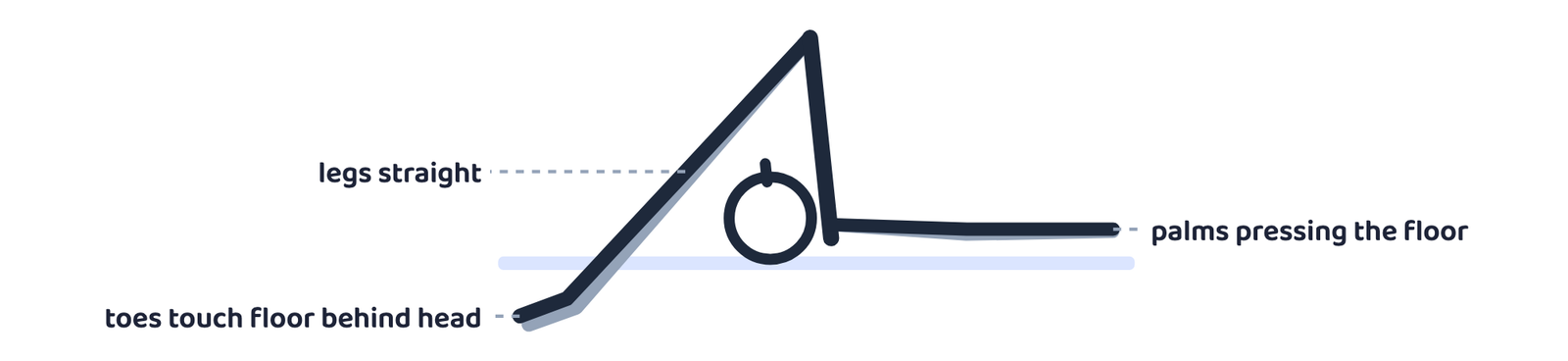
- Lie supine, hands straight by the side of the thighs, palms on the ground.
- Pressing the hands, slowly raise both legs together, knees straight, to 30°; after a few seconds to 60°; then to 90°.
- Pressing both hands, bring the legs slowly towards the head until the toes touch the ground; then stretch the legs backward as far as possible.
- Place both palms on the head with a finger lock and bring the elbows on the ground.
- To return: release the finger lock, place the hands by the side of the body, lower the waist slowly, stop the legs at 90°, then come back to the original position.
Breathing: Keep the breath controlled, not irregular. Inhale deeply while raising the legs to 90° and exhale completely; stay a few breaths and let the blood flow.
Benefits
- Corrects dyspepsia or constipation caused by disturbed abdominal muscles.
- Helpful in certain types of diabetes.
- Maximum benefit comes when Bhujangasana is practised immediately after Halasana.
Contraindications
- Cervical spondylitis or stiffness in the spine.
- Abdominal injuries or hernia.
2.6 Paschimottanasana (Seated Forward Bend)
Book 3.1.6 Paschima = west, the back of the body; uttana = intense stretch. One sits and intensely stretches the back forward.

- Sit with both legs stretched together in front, hands by the side, palms on the ground, fingers together pointing forward.
- Loosen the back muscles and bend forward as far as possible.
- Hold, loosen the hands and place them where comfortable, better on the thighs.
- Bend a little more each day. Finally hold the big toes with the forefingers and place the forehead on the knees.
- After a few seconds raise the head, release the toes and come back.
Breathing: Breathe slowly and deeply in the final position (or breathe out if holding briefly). Inhale while returning.
Benefits
- Stretches the back muscles from head to ankles; contracts the muscles of the front of the body.
- Improves respiration and the functions (especially secretions) of the intra-abdominal glands.
- Improves flexibility of the lumbar region, hips, back of the thighs and calves.
- Massages and tones the abdominal and pelvic organs: liver, pancreas, kidneys, adrenals, spleen, intestines.
- Improves blood circulation in the back and tones the spinal nerves.
- Improves alignment of the vertebral column.
Contraindications
- A painful and enlarged liver or spleen, herniated discs or acute appendicitis: do not do it until the symptoms are relieved.
2.7 Ardha Matsyendrasana (Half Spinal Twist Pose)
Book 3.1.7 Ardha = half, matsya = fish, eendra = king: the final position is like the Half Lord of the Fish. Also called the Half Spinal Twist Pose (a side-twist pose).
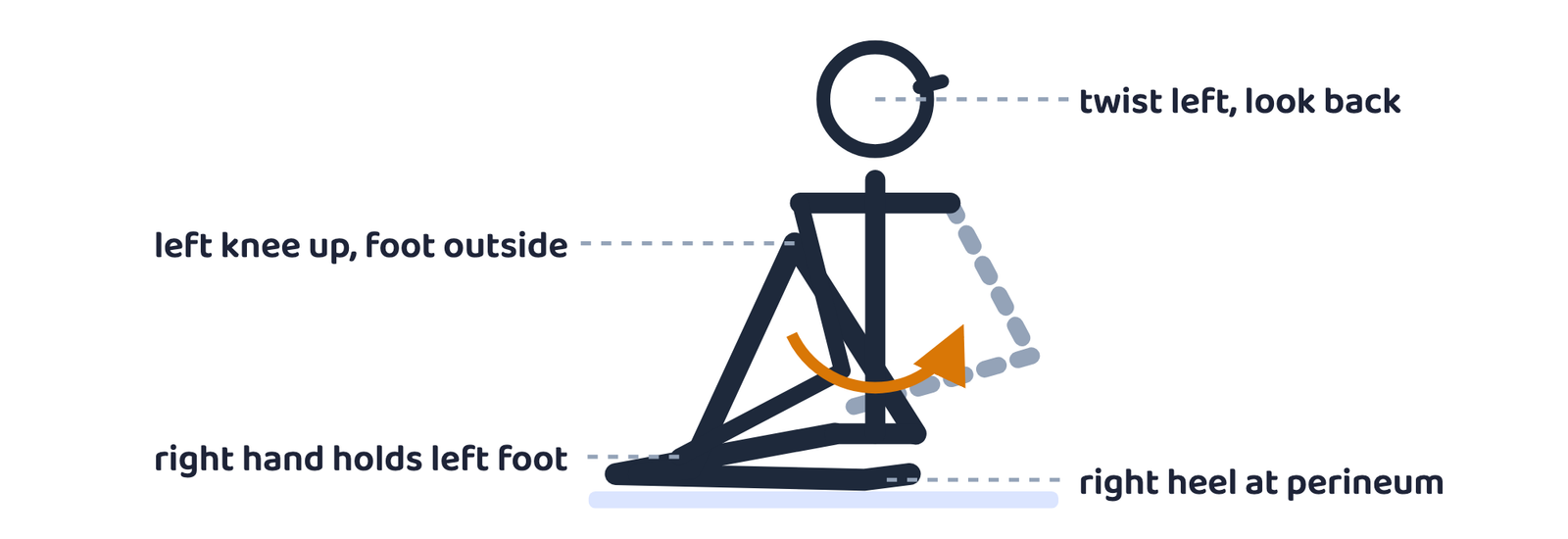
- Sit with both legs extended in front, hands by the side, palms on the ground.
- Fold the right leg and set the right heel at the perineum.
- Fold the left leg and, bringing it over the right knee, place the left foot on the ground beside it; the left knee points to the sky.
- Bring the right arm to the left side of the left knee (left knee near the right armpit); straighten it and hold the left toe or ankle.
- Twisting the body to the left, look backwards; bring the left hand from behind onto the right thigh. Gaze to the back.
- Return in reverse order: release the back hand and turn the head forward, loosen the right hand, straighten the back, then the left leg, then the right leg.
- Repeat from the other side, folding the left leg first.
Breathing: Inhale in the forward position; exhale while twisting the trunk; breathe deeply and slowly, without strain, in the final position; inhale while returning.
Benefits
- Very useful in constipation and dyspepsia.
- Improves liver efficiency and removes debility of the kidney.
- Very useful in diabetes.
- Very beneficial for the muscles of the shoulder and back.
Contraindications
- Pregnancy and menstruation (strong twist in the abdomen).
- Those who have had heart, abdominal or brain surgery.
- Care with peptic ulcer or hernia.
- Severe spinal problems (mild slipped disc may benefit; severe cases must avoid it).
2.8 Dhanurasana (Bow Pose)
Book 3.1.8 Dhanura = bow. The final position is like a bow.

- Lie prone, legs together, hands by the side of the thighs, chin on the ground.
- Fold the legs at the knees and bring them to the thighs; knees together.
- Take the hands back and hold the toes of the respective legs with the thumb and forefinger.
- Raise the legs a little and at the same time raise the head and chest.
- Holding the toes, pull the legs towards the ears, bringing the toes near the ears. Gaze in front.
- To return: loosen the hands, take the legs back, let the thighs touch the ground, leave the toes, and bring the legs and hands to the first position.
Breathing: Inhale deeply at the start; retain the breath while coming into the final position; breathe slowly and deeply there; exhale while returning.
Benefits
- Makes the spine and back muscles flexible; removes nervous weakness.
- Cures constipation and removes excess fat.
- Acts as a cure for dyspepsia, rheumatism and gastrointestinal disorders.
- Improves digestion and appetite.
Contraindications
- High blood pressure, back pain, hernia, headache, migraine or abdominal surgery.
- Women during pregnancy and periods.
2.9 Ushtrasana (Camel Pose)
Book 3.1.9 Ustra = camel. An intermediate-level back-bending posture said to open Anahata (heart chakra); adds flexibility and strength and helps digestion.

- Sit in Vajrasana; stand on the knees and raise the arms beside the body to shoulder level (knees and feet together, or apart if needed).
- Exhaling, twist to the right and place the right palm on the right heel; bending back a little more, place the left palm on the left heel.
- In the final position push the abdomen and hips forward, thighs vertical to the floor; bend the head and spine back as flexibility allows.
- Relax the body, especially the back; weight evenly on legs and arms, the arms anchoring the shoulders to keep the arch.
- Exhale and bring the abdomen and thighs back; inhaling, raise the left hand from the heel to shoulder level, then the right; exhale, lower the arms and return to Vajrasana.
Breathing: Slow inhalation and exhalation while taking the position; with every inhalation raise the chest, and relax with exhalation; inhale and release the neck first, then return and exhale completely.
Benefits
- Stretches the front (anterior) muscles and contracts the back (posterior) muscles.
- Favourable influence on the ovaries, thyroid and other endocrine glands.
- Develops strength and confidence.
- Beneficial for the digestive and reproductive organs.
- Loosens the vertebrae, stimulates the spinal nerves; relieves backache, rounded back and drooping shoulders.
- Helpful for asthmatic people.
Contraindications
- Hernia
- Abdominal injuries
- Back problems
- Severe arthritis
- Vertigo
- Pregnancy
2.10 Surya Bhedana Pranayama (Right Nostril Breathing)
Book 3.1.10 Surya = sun, bhedana = to get through. All inhalations through the right nostril, all exhalations through the left.
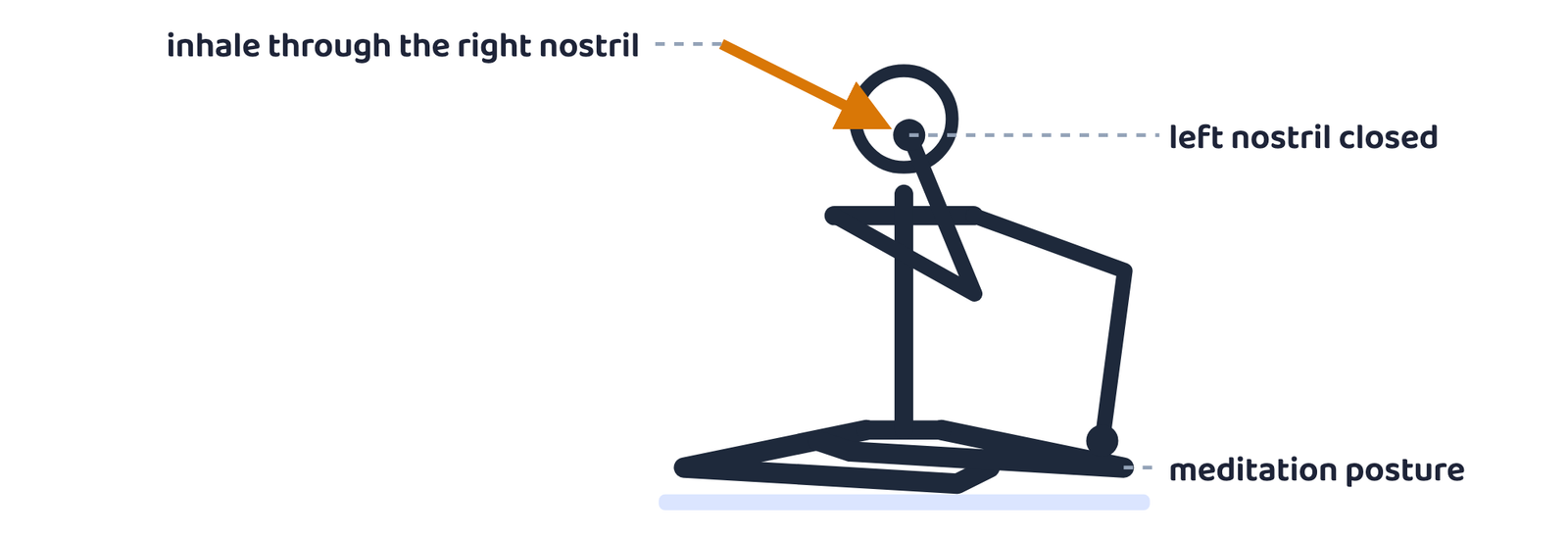
- Sit in a meditation posture (e.g. Padmasana, Sukhasana); close the eyes.
- Close the left nostril with the middle and ring fingers of the right hand.
- Inhale slowly, without sound, through the right nostril, as long as comfortable.
- Bring the hand down to the knee and retain the breath, pressing the chin firmly against the chest (chin lock) and contracting the rectum muscles (anal lock). Increase the retention period gradually.
- Exhale very slowly, without sound, through the left nostril (closing the right), then release the anal lock and the chin lock.
- Relax. Do this 3 to 5 times.
Breathing: Inhale through the right nostril; retain with chin lock and anal lock; exhale through the left nostril. Every breath is silent and slow.
Benefits
- Purifies the brain; destroys intestinal worms and diseases arising from excess of wind (vayu).
- Helps manage rhinitis and various sorts of neuralgia.
- Removes the worms found in the frontal sinuses.
- Good for persons with low blood pressure.
Contraindications
- Shoulder, wrist, finger or hand injury or surgery.
- Acidity, or stomach and mouth problems, because of the heat it creates.
3 Asanas to Prevent Diabetes
Diabetes mellitus is a chronic metabolic disorder in which the body cannot regulate its blood glucose (sugar), because of insufficient production of insulin or improper use of insulin by the body. Blood glucose becomes abnormally high (hyperglycaemia). Insulin is secreted by the pancreas.
Type 1 diabetes
- The pancreas makes little or no insulin
- Usually begins in childhood or youth
- Needs insulin from outside
Type 2 diabetes
- Insulin is made but the body does not use it properly
- The most common type; linked to obesity, inactivity and unhealthy diet
- Can often be prevented or controlled by activity, yoga and diet
Common symptoms (the book’s chart): always tired, frequent urination, sudden weight loss, wounds that do not heal, sexual problems, always hungry, blurry vision, numb or tingling hands or feet, always thirsty, vaginal infections. The asanas below massage and tone the abdominal organs, especially the pancreas, and improve digestion.
These practices were explained earlier. Write the same procedure, benefits and contraindications; the last column is the point to stress for this disease.
| Asana | See | Why it helps here |
|---|---|---|
| Katichakrasana | 2.2 | strengthens the abdominal muscles and lower back; relieves constipation |
| Pavanmuktasana | 2.3 | compresses the internal organs, improving their blood circulation and efficiency |
| Dhanurasana | 2.8 | improves digestion; acts on gastrointestinal disorders |
| Paschimottanasana | 2.6 | massages and tones the abdominal organs, including the pancreas |
| Ardha Matsyendrasana | 2.7 | the book calls it very useful in diabetes; improves liver efficiency |
| Ushtrasana | 2.9 | favourable influence on the endocrine glands |
3.1 Bhujangasana (Cobra Pose)
Book 3.2.3 Bhujanga = cobra. The final position resembles a hooded snake, so it is also called the cobra posture.

- Lie prone: legs and toes together, toes pointing outwards, hands beside the body, palms up, forehead on the ground.
- Fold the hands at the elbows and place the palms on the ground beside the shoulders, thumbs under the armpits.
- Bring the chin forward onto the ground; gaze in front.
- Raise the chin and turn the head back as much as possible; raise the thorax, bending the spine backwards up to the navel. Do not raise the navel.
- Hold for some time, then come down in order: upper part of the navel, thorax, shoulders, chin, and lastly the forehead.
- Relax the hands beside the thighs.
Breathing: Inhale while raising the torso, breathe normally in the final position, exhale while lowering; keep breath and movement synchronised and smooth.
Benefits
- Strengthens and increases the flexibility of the spine and vertebral column.
- Opens the chest, shoulders, heart and ribcage.
- Tones the whole spinal extensor group of back muscles.
- Stimulates the endocrine system and digestive organs.
- Good for kyphosis.
Contraindications
- Pregnancy
- Spondylitis
- Spinal injuries and/or weak back muscles
3.2 Shalabhasana (Locust Pose)
Book 3.2.4 Shalabh = grasshopper or locust.

- Lie prone: legs together, soles towards the sky, hands by the side, palms up, forehead on the ground.
- Fold both hands at the elbows and bring them under the shoulders, as in Bhujangasana, fingers pointing forward.
- Slowly raise both legs upward without bending the knees, and hold.
- Lower the legs slowly and bring the hands back.
Breathing: Inhale deeply at the start; retain the breath while raising both legs and holding; exhale while lowering.
Benefits
- Reduces abdominal fat and tones the abdomen.
- Strengthens the back and neck muscles.
- Helps repair and replenish the whole spinal cord.
- Helps rectify neck pain and repair defects in neck joints.
- Encourages digestion by stretching the intestines.
- Helps rectify urinary disorders.
- Strengthens the uterus and reproductive system; helps correct menstrual problems.
- Strengthens the hip bones and reduces excess thigh muscle.
- Helps decrease constipation.
Contraindications
- Acute back pain or slip disc.
- Severe sciatica (it tightens the whole body from hip to feet).
- Major menstrual problems or a prolapsed uterus.
- Pregnancy.
- Blood pressure problems (it may lead to suffocation).
3.3 Supta Vajrasana (Reclined Thunderbolt Pose)
Book 3.2.6 Supta = reclined, vajra = thunderbolt. Mainly useful for the digestive system and for stamina.

- Sit in Vajrasana.
- Slowly place the elbows on the ground near the hips.
- Straighten the hands and lie completely on the back; shoulders on the floor, knees together.
- With practice, make a scissor with both hands under the shoulders: right hand under the left shoulder, left hand under the right shoulder, head in the middle.
- To return, take out the hands and place them beside the body, then sit up with the help of the elbows.
Breathing: Breathe deeply and slowly in the final position; while returning, breathe in the reverse order.
Benefits
- Massages the abdominal organs, improving digestive ailments and constipation.
- Tones the spinal nerves, makes the back flexible and realigns rounded shoulders.
- Fills the lungs to maximum capacity, bringing in more oxygen.
- Beneficial in asthma, bronchitis and other lung ailments.
- Increases circulation in the brain.
- Regulates the adrenal glands; tones the pelvic muscles; helps disorders of male and female reproductive organs.
Contraindications
- Very high blood pressure or slipped disc.
- Vertigo.
- Pregnancy, irregular menstrual cycle, or knee injury or surgery.
3.4 Mandukasana (Frog Pose)
Book 3.2.9 Manduk = frog: the body looks like a frog. Fairly straightforward; can be practised by almost all age groups.
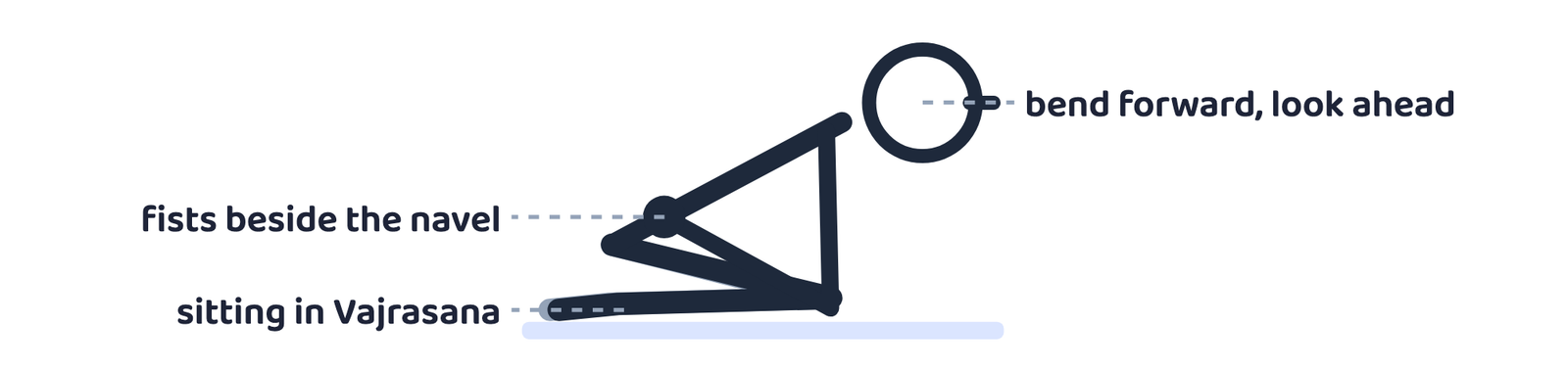
- Sit in Vajrasana and make fists with both hands, thumbs inside.
- Place the fists on the belly, next to the belly button.
- Bend forward with exhalation, keep looking straight.
- Hold the breath in the posture for a few seconds; come up with inhalation.
- Repeat 3-4 times.
Breathing: Inhale deeply; exhale slowly and completely as the forehead goes towards the floor; inhale to come up, and sit in Vajrasana again.
Benefits
- Beneficial to all organs of the body.
- Relief from diabetes, digestive disorders and constipation.
- Improves flexibility and mobility of the knee and ankle joints.
- Tones the shoulder and abdominal muscles.
- Increases lung capacity.
- Beneficial for problems of the pancreas and the heart.
- Helps reduce fat from thighs, belly and hips.
Contraindications
- Severe back pain.
- Recent abdominal surgery.
- Pregnancy.
- Ankle injury, high blood pressure, insomnia or migraine.
3.5 Gomukhasana (Cow Face Pose)
Book 3.2.10 Go = cow, mukha = face. The thighs and calves look like a cow’s face: wide at one end, tapering at the other.

- Sit with legs extended and spine straight.
- Bend the left leg and place the left foot below the right hip; sit on it.
- Bend the right leg and place the right thigh over the left thigh, right foot close to the left hip.
- Take the left arm up over the shoulder and bend it, placing the left palm on the back near the shoulder blade.
- Take the right arm from below, behind the back, and clasp the left palm; pull the palms closer, chest out, neck in line (not bent forward).
- Hold a few breaths, release, stretch the legs; then repeat on the other side (left thigh over the right, right arm from above).
Breathing: Inhale and cross the legs; exhale and expand the spine; inhale and take the arm behind; exhale and take the other arm from below to hold the palms. With every exhalation go deeper.
Benefits
- Stretch of the hamstrings gives flexibility.
- Greater flexibility of the hip joint.
- Stretches and tones the chest muscles.
- Increases blood supply to the legs and arms.
- Knee flexion can help some weakness of the knees (if there is no ligament tear).
- Improves the abdominal organs and digestion; burns tummy fat and tones the torso.
- Strengthens biceps and triceps; more flexible shoulders and upper arms.
Contraindications
- Shoulder pain, backache, hip or knee pain, or stiff shoulders.
- Pregnancy.
3.6 Yogamudra (Yoga Seal)
Book 3.2.11 Yogamudra is not an asana but a mudra; it can be performed as a remedy for diabetes.
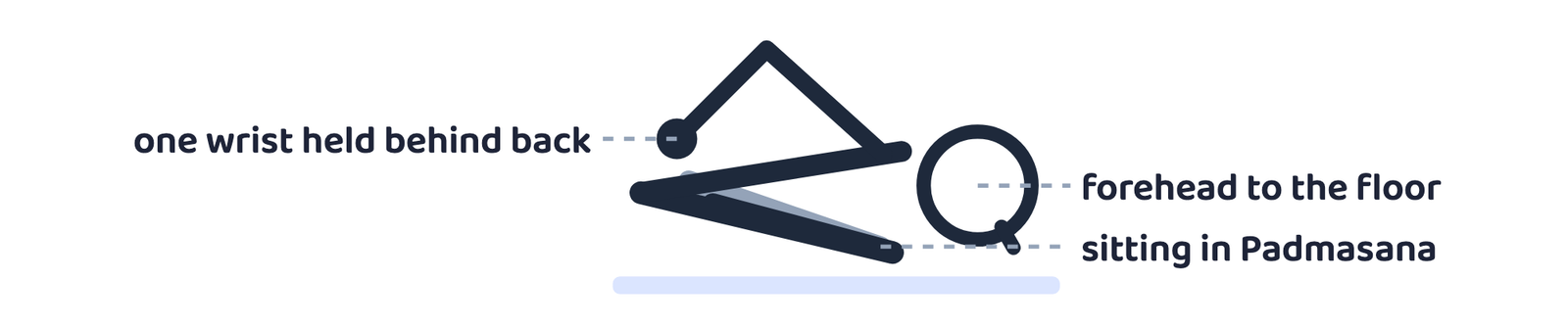
- Sit in Padmasana and close the eyes.
- Hold one wrist behind the back with the other hand.
- Inhale deeply. Exhaling, bend forward, keeping the spine straight; bring the forehead to the floor.
- Stay as long as comfortable; slowly return.
Breathing: Inhale slowly and deeply at the start; exhale while bending forward; breathe deeply and slowly in the final position; inhale while returning.
Benefits
- Stretches the posterior muscles of the trunk and neck.
- Improves muscle toning and venous circulation of the spinal column.
Contraindications
- Pregnancy.
- Heart, abdominal or brain surgery.
- Care with peptic ulcer or hernia.
- Severe spinal problems (mild slipped disc may benefit).
3.7 Kapalabhati (Skull-Shining Breath)
Book 3.2.13 Forceful and fast diaphragmatic breathing. In a comfortable sitting position one exhales forcefully by contracting the abdomen and then inhales, in quick succession, as many times as one’s capacity allows.
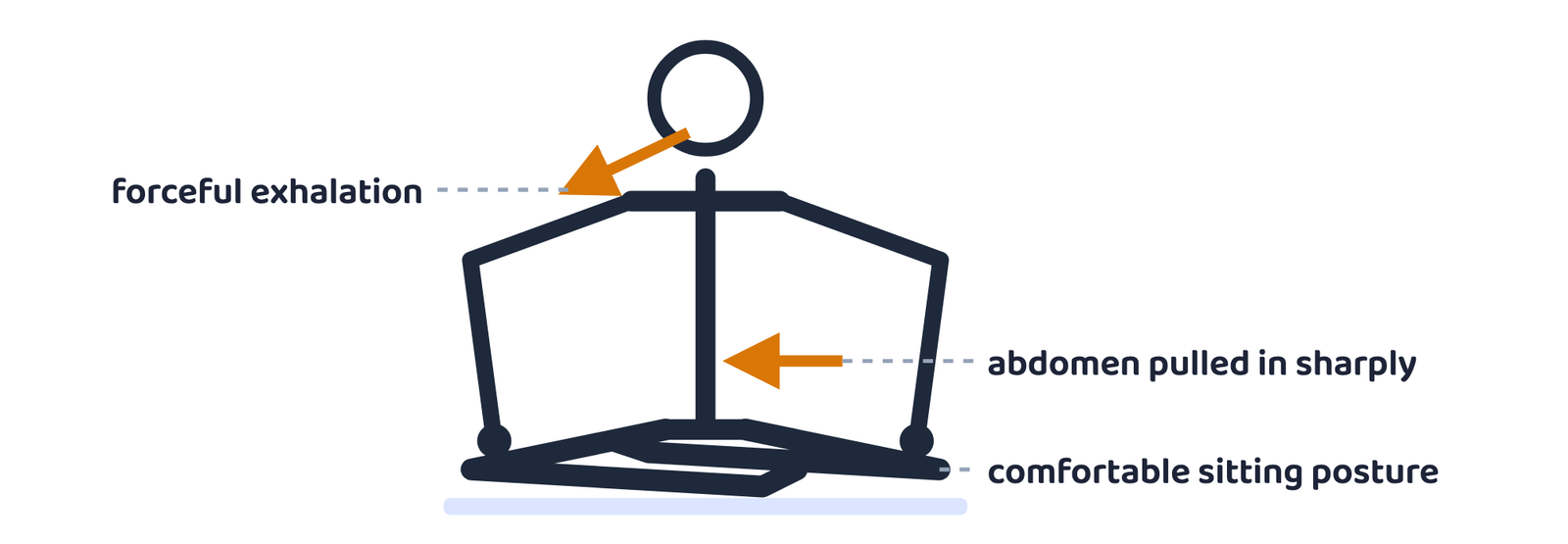
- Sit comfortably.
- Exhale forcefully by pulling the abdomen in; let the inhalation follow.
- Repeat the exhalation and inhalation, with the abdominal movement, in quick succession, as per capacity.
Breathing: Exhale forcefully by contracting the abdomen, then inhale; repeat in quick succession.
Benefits
- A great cleanser of the respiratory passages, including the sinuses.
- Improves respiratory function and promotes circulation.
- Improves balance.
- Removes acidity and gas-related problems.
- Cures sinusitis, asthma and hair loss.
Precautions
- Pregnant women, slipped disc patients and asthma patients should avoid it.
- It should not be performed during menstruation.
4 Asanas to Prevent Asthma
Bronchial asthma is a long-term disease of the airways: they swell, narrow and fill with mucus, so breathing becomes difficult. Signs are wheezing, breathlessness, coughing and a tight chest. An asthma attack can be set off by allergy (dust, pollen), smoke and pollution, exercise, cold air or an infection. The book’s questions name two kinds: allergy-induced and exercise-induced asthma. The asanas below open and stretch the chest, increase lung capacity and train deep, controlled breathing.
Kapalabhati is in the asthma list, but its own precautions name asthma patients among those who should avoid it. The lists are for prevention; a person who already has a condition practises only what its contraindications allow, under a yoga expert’s guidance.
These practices were explained earlier. Write the same procedure, benefits and contraindications; the last column is the point to stress for this disease.
| Asana | See | Why it helps here |
|---|---|---|
| Tadasana | 2.1 | stretches and opens the chest and shoulders |
| Bhujangasana | 3.1 | opens the chest, shoulders and ribcage |
| Dhanurasana | 2.8 | makes the spine and back muscles flexible |
| Ushtrasana | 2.9 | the book says it is helpful for asthmatic people |
| Kapalabhati | 3.7 | cleanses the respiratory passages; the book says it cures sinusitis and asthma |
| Gomukhasana | 3.5 | stretches and tones the chest muscles |
| Matsyasana | 2.4 | relief from respiratory disorders by encouraging deep breathing |
4.1 Urdhvahastottanasana (Upward Hands Stretch)
Book 3.3.2 Urdhva = upward, hasta = hands; in English the upward salute or upward hands pose.
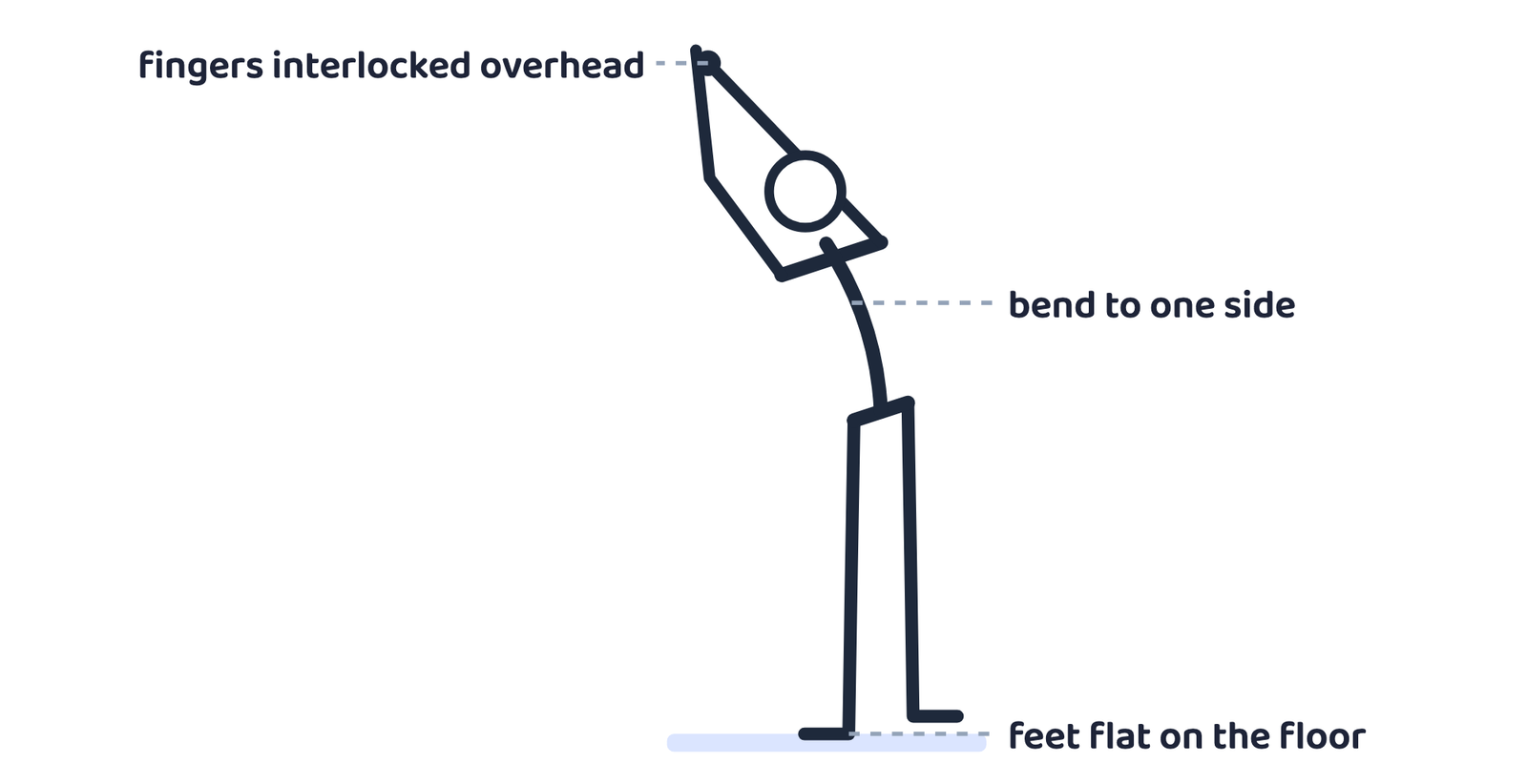
- Stand upright in the overhead-stretch pose with the fingers interlocked.
- Breathing in, stretch the hands high, keeping the feet flat on the floor.
- Breathing out, slowly bend to the left (or right); pause a few seconds at the limit of the bend.
- Straighten up slowly, breathing in.
- Bend to the opposite side breathing out, hold a few seconds, and straighten up inhaling.
Breathing: Inhale while stretching up; exhale during the side stretch and while returning.
Benefits
- Back pain: gives the right stretch to the muscles, especially the finer back muscles.
- Spinal health: after aligning the body and spine, it helps improve the curvature of the spine.
- Weight loss: known as yoga for a slim waist and to remove fat from the hips, because of the stretch there.
- Asthma control: stretches the chest and increases the lungs’ intake capacity.
- Constipation relief: gives proper movement to the stomach and intestines.
- Abdominal sides’ fat: one of the best poses to burn fat from the sides of the abdomen.
- Nerve health: stretching from toes to fingers, kept with the breathing, improves the efficiency of the nerves.
- Strengthening of legs: good for the toes, feet, ankles, knees and buttocks.
- Sciatica: pain can be reduced a lot if practised under a yoga expert’s supervision.
Contraindications
- Pregnancy.
- Varicose veins: practise with a yoga expert’s help.
- During a headache.
- Insomnia: consult a yoga therapist first.
4.2 Uttan Mandukasana (Upright Frog Pose)
Book 3.3.3 Done from the Mandukasana base with the head held in the elbows; it resembles an upright frog.

- Sit in Vajrasana.
- Spread the knees wide; the toes stay together.
- Fold the right hand back over the right shoulder and place the palm below the left shoulder.
- Fold the left hand the same way and place the palm on the right shoulder; one elbow rests on the other.
- To return, slowly remove the left hand, then the right, and bring the knees together.
Benefits
- Helps diaphragmatic movements.
- Improves posture.
- Removes back pain and pain in the lumbar region.
- Increases elasticity of the thigh joint and shoulder.
Contraindications
- Arthritis, hernia, chronic or severe back problems, elbow or shoulder pain, or spinal deformities.
4.3 Vakrasana (Twisted Pose)
Book 3.3.7 Vakra = twist: the spine is twisted. A seated asana that works the lower back, middle back, hips and neck.
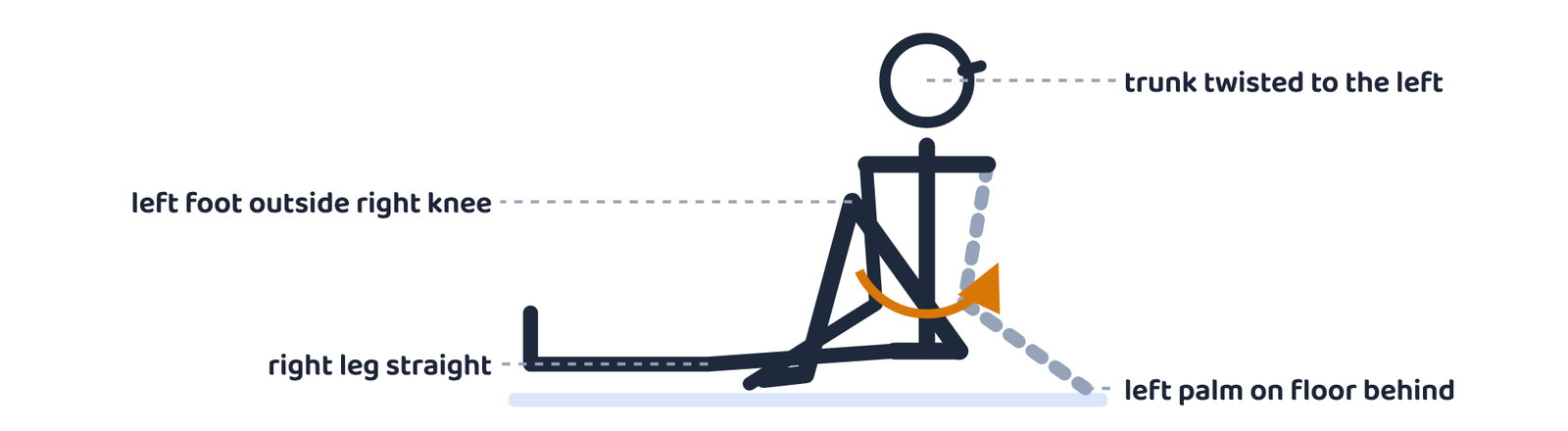
- Sit in Dandasana; take a few breaths and expand the spine upward.
- Bring the left knee close to the chest and place the left foot outside the right knee.
- Twist the upper body to the left; place the right elbow outside the left knee and the right hand on the floor near the right knee. (The body twists to the same side as the bent knee.)
- With a deep breath, twist as far as possible and face the wall behind; place the left hand on the floor behind, close to the lower back.
- With every exhalation raise the spine and twist more; release and relax in Dandasana.
- Keeping the left knee bent, twist now to the right, placing both palms on the floor on the right close to the lower back, and look behind.
- Repeat with the right knee bent: twist first to the right, then to the left.
Breathing: Inhale as you twist; exhale while coming back. Repeat on either side.
Benefits
- Helps straighten the upper back.
- Strengthens the neck muscles.
- Tones the internal organs: digestive system, intestines, uterus and kidneys.
- Works the neck muscles and so activates the thyroid gland, balancing hormone levels.
Contraindications
- Back injury.
- Pregnancy (discomfort to the uterus).
- Weak neck muscles or upper spine may get sore neck muscles.
4.4 Anulom-Vilom (Alternate Nostril Breathing)
Book 3.3.11 One of the fundamental pranayamas, also called Anuloma-Viloma: viloma means ‘produced in the reverse order’, because the nostril used for inhaling and exhaling is reversed every time.

- Sit in a comfortable meditation asana, head and spine straight, eyes closed.
- Right hand in jnana mudra position; close the right nostril with the right thumb and inhale through the left for 5 counts.
- Release the thumb and close the left nostril with the ring finger; exhale through the right for 10 counts, slow, deep and silent.
- Then inhale through the right nostril for 5 counts (and exhale through the left).
- Do 5 rounds, or 3 to 5 minutes, with no sound as the air passes.
Breathing: Inhale 5 counts, exhale 10 counts (exhalation twice as long), changing the nostril every time; slow, deep and silent.
- Calms and steadies the mind; improves focus and concentration; balances the left and right hemispheres.
- Strengthens the immune system.
- Manages hypertension.
- Provides sufficient oxygen for every cell.
- Removes carbon dioxide and other toxic gases so they do not remain in the blood.
5 Asanas to Prevent Hypertension
Hypertension (high blood pressure) is a condition in which the pressure of blood against the walls of the arteries stays higher than normal. Causes include stress, too much salt and fatty food, smoking, alcohol, obesity, inactivity and heredity. It is called the silent killer because it often shows no symptoms while it damages the heart, brain and kidneys. The practices below relax the body and mind (Shavasana, Makarasana), calm the breath (Nadi Shodhana) and cool the system (Sheetali).
Tadasana (low or high BP), Uttanpadasana (abnormal BP), Ardha Halasana (high BP) and Makarasana (high BP) list blood pressure among their contraindications. The list is for prevention: a person who already has high blood pressure does these only under a yoga expert’s guidance.
These practices were explained earlier. Write the same procedure, benefits and contraindications; the last column is the point to stress for this disease.
| Asana | See | Why it helps here |
|---|---|---|
| Tadasana | 2.1 | increases mental and physical equilibrium; reduces anxiety and stress |
| Katichakrasana | 2.2 | a gentle standing twist, good for desk-bound people |
| Gomukhasana | 3.5 | increases blood supply to the arms and legs |
| Uttan Mandukasana | 4.2 | improves posture and diaphragmatic movement |
| Vakrasana | 4.3 | activates the thyroid, balancing hormone levels |
| Bhujangasana | 3.1 | stimulates the endocrine system; opens the chest |
5.1 Uttanpadasana (Raised Leg Pose)
Book 3.4.3 Uttana = raise upward, pada = feet or legs: the legs are raised in the supine position, so it is also called the Raised Leg Pose.

- Lie supine, legs together, hands beside the body, palms on the ground.
- Raise both legs together slowly to 30°; after a few seconds to 45°; after a few seconds to 60°, and hold.
- While returning, stop at 45° or 30°.
- Finally bring both legs to the ground.
Benefits
- Very beneficial in diabetes, constipation, indigestion and nervous weakness.
- Balances the navel centre, Nabhimanipurachakra.
- Builds up the abdominal muscles.
- Helps improve breathing and lung capacity.
Contraindications
- Injury in the neck, back, pelvis or leg muscles.
- Pregnancy.
- Severe spondylitis, cardiac disease or abnormal blood pressure.
- After hernia-repair surgery, wait at least two weeks.
- Migraine.
5.2 Ardha Halasana (Half Plough Pose)
Book 3.4.4 Ardha = half, hala = plough: the final position looks like half an Indian plough. It is the preparatory asana for Halasana.
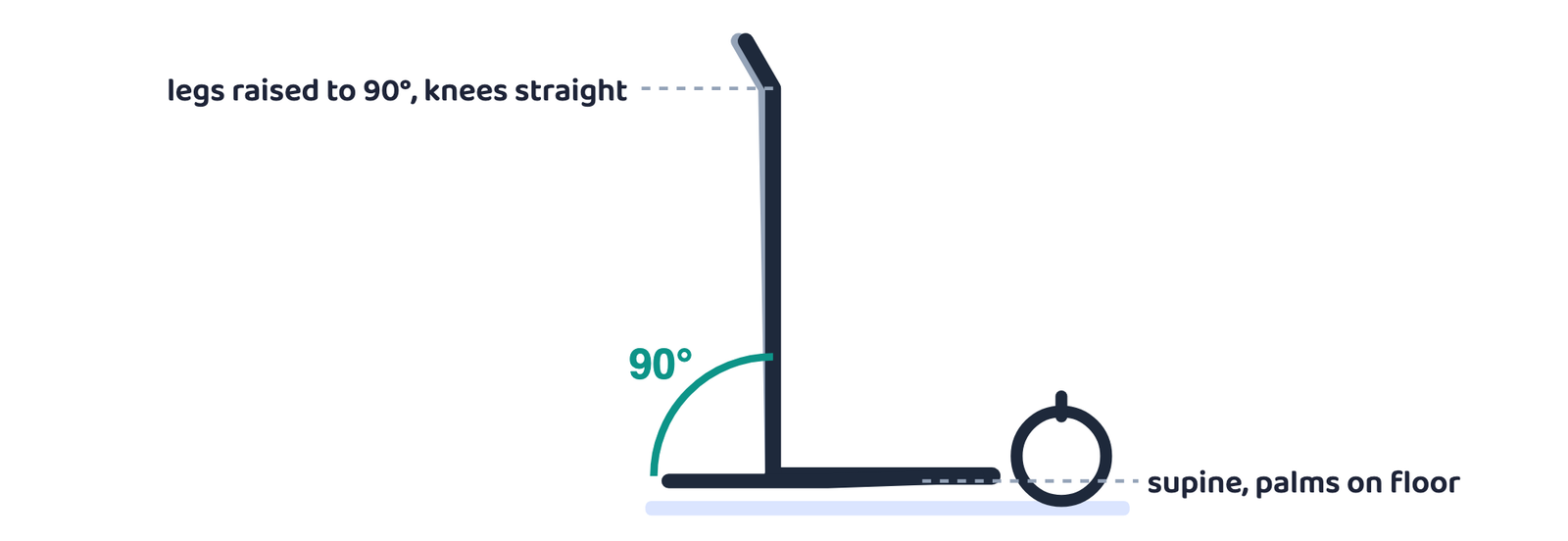
- Lie supine, hands straight by the side of the thighs, palms on the ground.
- Pressing the hands, raise both legs together, knees straight, and stop at 30°.
- After a few seconds raise them to 60° and hold.
- Then bring the legs to 90° and hold for 15-30 seconds.
Breathing: Inhale while lying; retain the breath while taking the final position; breathe slowly and deeply in it; retain the breath again while returning.
Benefits
- Improves digestion and appetite.
- Improves blood circulation.
- Strengthens the thigh and calf muscles.
- Helps reduce abdominal fat and lose weight.
- Stimulates the abdominal organs.
Contraindications
- Cardiac problems, back pain or high blood pressure.
- Pregnancy (immense pressure on the lower abdomen and pelvis).
- Acute lower back pain: take precaution.
- Recovering from a stomach infection or abdominal surgery: proper precautions and guidance.
5.3 Sarala Matsyasana (Easy Fish Pose)
Book 3.4.5 Saral = easy, matsya = fish: an easy version of the fish pose.

- Lie flat on the back.
- With the support of the hands, keep the top of the head on the mat.
- The neck, upper back and shoulders are lifted from the ground.
- Relax the hands at the sides; breathe normally; keep the toes stretched out.
- Hold for 30 seconds, then relax.
Breathing: Inhale as you lift the chest and tuck the head; exhale while relaxing back to the start; then breathe normally.
Benefits
- Improves the digestive system.
- Helps cure irritable bowel syndrome.
- Helps get rid of abdomen-related issues.
Contraindications
- Cervical spondylitis and frozen shoulder.
5.4 Makarasana (Crocodile Pose)
Book 3.4.10 Makar = crocodile: the body looks like a crocodile. Considered a relaxing asana like Shavasana.
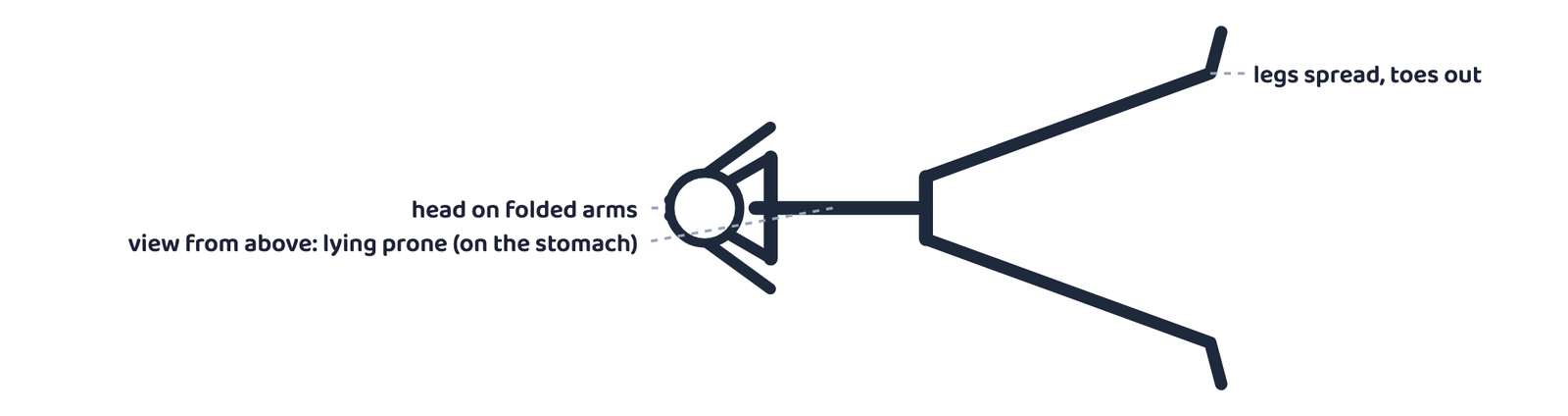
- Lie prone, hands by the side of the thighs.
- Slowly spread the legs: toes pointing out, heels inward.
- Fold the left hand at the elbow, bring it from below the armpit and place it on the right shoulder; fold the right hand and place it on the left shoulder.
- Place the head on the triangle made by both elbows.
Breathing: Inhale lifting the torso, exhale resting the elbows; inhale pushing the chest out, shoulders back; exhale, lift the chin and push the belly into the floor; continue breathing in the posture.
Benefits
- Beneficial in asthma.
- Useful for those who have acquired a wrong process of respiration.
- Abdominal muscles get an automatic massage.
Contraindications
- Heart problem
- Obesity
- Gas or high blood pressure
5.5 Shavasana (Corpse Pose)
Book 3.4.11 Lying supine on the ground like a corpse. A relaxing asana: wards off fatigue (also the fatigue of other asanas) and brings mental repose.

- Lie straight on the back with ease.
- Keep about one and a half feet between the legs.
- Place the hands on the ground about six inches from the body, palms up, fingers slightly curled, eyes closed.
- Hold for some time, then return to the first position.
Benefits
- Practised soon after other asanas, it removes fatigue.
- Very beneficial in high blood pressure and cardiac diseases.
- Beneficial for people with neurosis and fear complexes.
Contraindications
- Those whom doctors have forbidden the supine position.
5.6 Nadi Shodhana Pranayama (Channel Purification)
Book 3.4.12 Nadi = channel, shodhana = purification. The book says Nadi Shodhana is also known as Anulom Vilom or alternate nostril breathing, and gives it the same technique and benefits as 3.3.11.
Learn it once: the procedure, breathing (inhale 5 counts, exhale 10 counts, nostril changed every time) and benefits are exactly those of Anulom-Vilom in 4.4. In the hypertension list, its key benefit is that it manages hypertension and calms the mind; for back pain and arthritis the book lists it again under the same name.
5.7 Sheetali Pranayama (Cooling Breath)
Book 3.4.13 As the name shows, this pranayama cools the system and helps keep body temperature down.
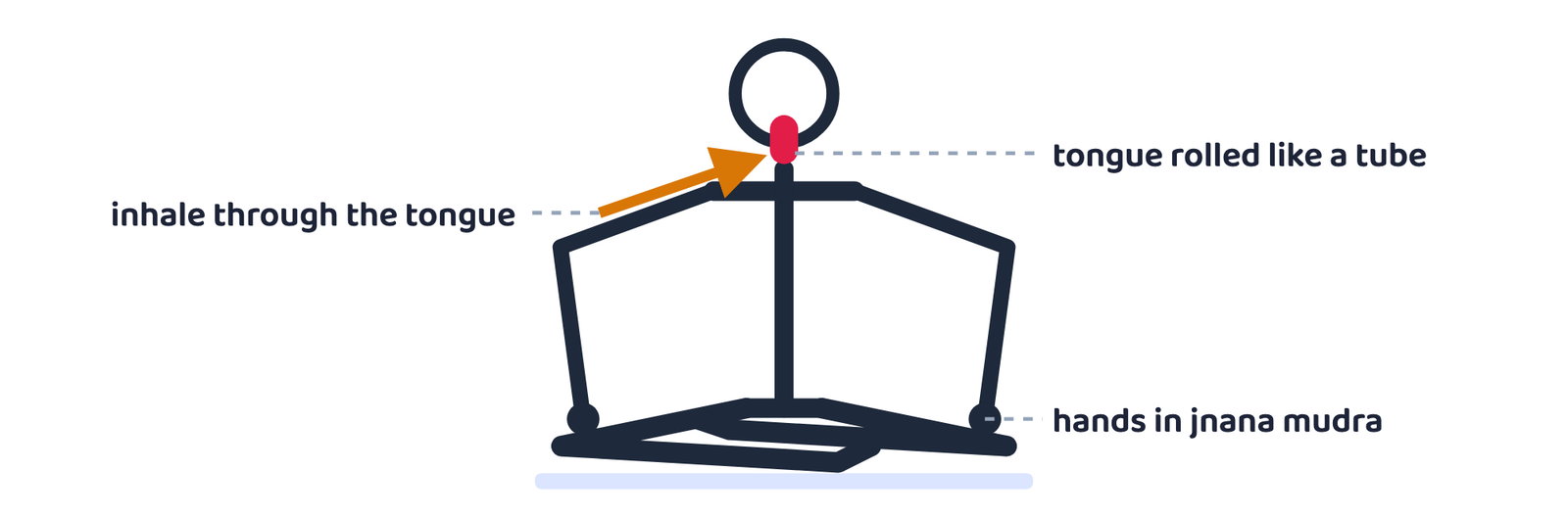
- Sit in Padmasana or any comfortable position, hands on the knees in jnana mudra, eyes gently closed.
- Open the mouth, bring the tongue out and fold its sides lengthwise into a tube; inhale through it.
- Close the mouth. Retain the breath as long as you can with the chin lock and the anal lock.
- Release both locks and exhale slowly through the nostrils.
Breathing: Inhale through the rolled tongue; retain with chin lock and anal lock; exhale through the nose.
- Beneficial in diseases of the throat, spleen etc.
- Cures indigestion.
- Helps control thirst and hunger; lowers blood pressure.
- Beneficial for diseases caused by imbalance of pitta dosha (heat).
- Purifies blood.
6 Asanas to Prevent Back Pain and Arthritis
Back pain, especially low back pain, comes from poor posture, long sitting, weak back and abdominal muscles, lifting weights wrongly, obesity or a slipped disc. Arthritis is inflammation of the joints, causing pain, swelling and stiffness; osteoarthritis and rheumatoid arthritis are its common forms. The asanas below strengthen and stretch the back, improve posture and keep the joints supple.
Ushtrasana lists back problems and severe arthritis, and Bhadrasana asks those with serious arthritis to consult a yoga expert. As with every list, a person who already has the condition follows each asana’s contraindications.
These practices were explained earlier. Write the same procedure, benefits and contraindications; the last column is the point to stress for this disease.
| Asana | See | Why it helps here |
|---|---|---|
| Tadasana | 2.1 | reduces back pain and sciatica; stretches the spine |
| Urdhvahastottanasana | 4.1 | stretches the finer muscles of the back; helps overcome back pain and sciatica |
| Ushtrasana | 2.9 | loosens the vertebrae; relieves backache, rounded back and drooping shoulders |
| Vakrasana | 4.3 | helps straighten the upper back |
| Sarala Matsyasana | 5.3 | the 3.5 list calls it Sarala Matsyendrasana and points to Sarala Matsyasana (3.4.5) |
| Bhujangasana | 3.1 | strengthens the spine and the spinal extensor muscles |
| Gomukhasana | 3.5 | greater flexibility of the hip joint; knee weakness (no ligament tear) |
| Nadi Shodhana Pranayama | 5.6 | the same breathing practice as in the hypertension list (Anulom-Vilom technique) |
6.1 Ardha Chakrasana (Half Wheel Pose)
Book 3.5.3 Ardha = half, chakra = wheel: the half-wheel posture, a simpler version of Chakrasana. A back bend in the standing position.

- Stand straight and bring the hands together in a clasped position.
- Raise the hands above the shoulders.
- Slowly bend the upper body backwards with the hands, as far as possible.
- Stay according to capacity; come back slowly to standing, hands at the sides.
- Variation: hands placed behind the hips, then bend back.
Benefits
- Strengthens the back and abdominal muscles.
- Tones the abdominal organs: digestive, excretory and reproductive.
- Relief from back problems and postural defects.
- Opens the chest; strengthens the arms and shoulders.
- Prepares beginners for the full wheel pose (Chakrasana).
Contraindications
- Neck, hip or spinal injury.
- High blood pressure.
- Pregnancy (any pose that strains the foetus).
6.2 Bhadrasana (Gracious Pose)
Book 3.5.9 Bhadra = auspicious or gracious. Bhadrasana means the gracious yoga pose.

- Sit with the legs fully stretched forward.
- Bring the feet, toes pointing outward, close to the body, heels touching the perineum.
- If needed, clasp the feet to bring the heels as close as possible.
- Place the hands on the knees, pressing them down.
- Neck straight, chest forward, stomach in normal contour, eyes fixed on one point ahead.
Benefits
- Loosens the joints: pelvis, knees and ankles become more supple.
- Relieves tension in the spine.
- Relief in sciatica, varicose veins and menstrual disorders.
- Prevents arthritis.
- Improves posture; promotes concentration.
- Good for those who find Padmasana or Vajrasana difficult.
Contraindications
- Serious arthritis: consult a yoga expert first.
6.3 Makarasana (as described in 3.5) (Crocodile Pose)
Book 3.5.10 Section 3.5 repeats Makarasana with a slightly different technique, and different benefits, for back pain and arthritis.
Figure: a prone resting pose like Figure 25, except that here the palms are stacked (right over left) under the head and the legs are stretched with the toes out.
- Lie on the stomach with the hands folded under the head.
- Place the right palm over the left palm on the ground and rest the head on the right palm; close the eyes.
- Stretch the legs as far as possible, toes pointing outwards.
- Relax the whole body; breathe normally and slowly; feel deep relaxation. Stay a few minutes.
- To return, bring the feet together, unfold the arms and come to the prone position.
Benefits
- Deep relaxation to the shoulders and spine.
- Reduces waist pain.
- Helps in slipped disc.
- Helps asthma and lung disorder patients.
- Relief for arthritis patients.
Contraindications
- Second or third trimester of pregnancy (prone posture).
7 Two Asanas Asked in the Book’s Exercises
The book’s asthma exercises ask about Parvatasana and Chakrasana, and Parvatasana appears in its case-study picture. Neither is in the curriculum’s lists or described in the unit, so only the identifying features are given here.

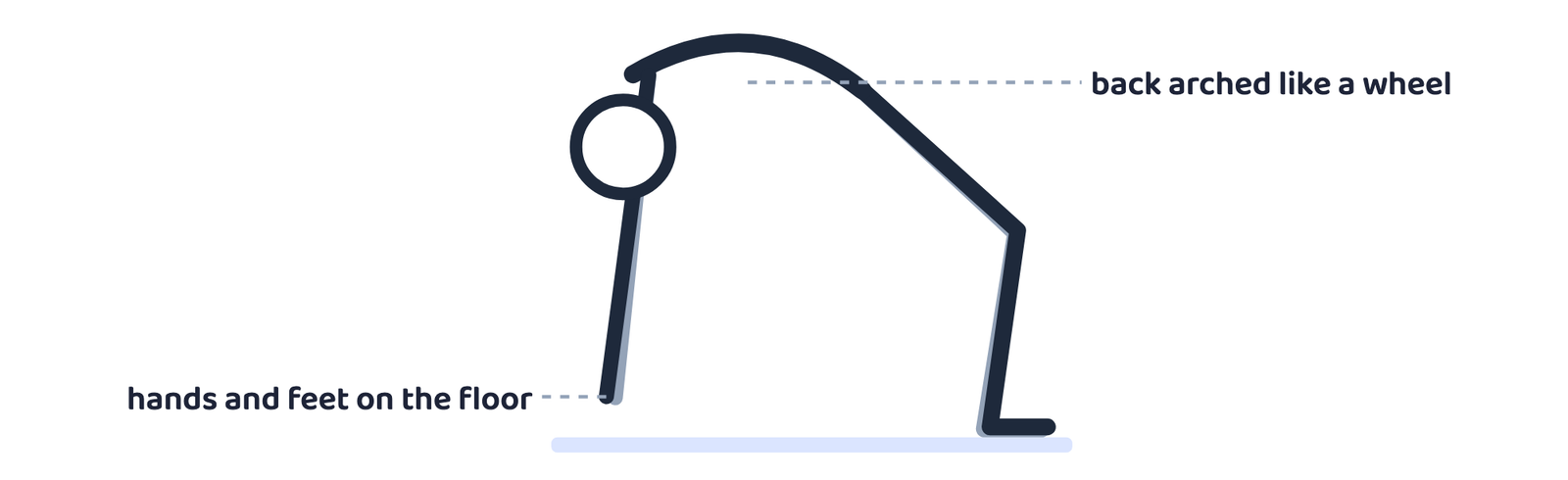
Parvatasana (Mountain Pose)
- Body forms an inverted V like a mountain
- Palms and feet on the floor, hips pushed up, head between the arms, heels pressed down
- Breathing (general practice; the book gives none): exhale while pushing the hips up, breathe normally while holding
Chakrasana (Wheel Pose)
- The full wheel; Ardha Chakrasana is its simpler version
- Lying on the back, palms beside the ears, feet near the hips, the body is lifted into an arch
- Breathing (general practice; the book gives none): inhale while lifting into the arch, breathe normally in it, exhale while coming down
8 Comparison Tables for Revision
8.1 Asanas by body position
| Position | Asanas in this unit |
|---|---|
| Standing | Tadasana, Katichakrasana, Urdhvahastottanasana, Ardha Chakrasana |
| Sitting | Paschimottanasana, Ardha Matsyendrasana, Vakrasana, Gomukhasana, Bhadrasana, Yogamudra (from Padmasana) |
| Kneeling / from Vajrasana | Ushtrasana, Supta Vajrasana, Mandukasana, Uttan Mandukasana |
| Lying on the back (supine) | Pavanmuktasana, Matsyasana, Halasana, Ardha Halasana, Uttanpadasana, Sarala Matsyasana, Shavasana |
| Lying on the stomach (prone) | Bhujangasana, Shalabhasana, Dhanurasana, Makarasana |
| Breathing practices | Surya Bhedana, Kapalabhati, Anulom-Vilom (Nadi Shodhana), Sheetali |
8.2 Look-alike pairs
| Pair | How to tell them apart |
|---|---|
| Matsyasana vs Sarala Matsyasana | Matsyasana: legs crossed, crown on the floor, weight on the elbows. Sarala (easy): legs straight, top of the head on the mat, hands relaxed at the sides. |
| Halasana vs Ardha Halasana | Halasana: legs go over the head till the toes touch the floor. Ardha Halasana: legs stop at 90°; it prepares for Halasana. |
| Ardha Halasana vs Uttanpadasana | Ardha Halasana goes 30° → 60° → 90°; Uttanpadasana goes 30° → 45° → 60° and holds at 60°. |
| Mandukasana vs Uttan Mandukasana | Mandukasana: fists at the navel, bend forward. Uttan (upright): knees spread, arms folded behind the head, trunk upright. |
| Ardha Matsyendrasana vs Vakrasana | Both are seated twists. Ardha Matsyendrasana: heel of the folded leg at the perineum, hand holds the foot. Vakrasana: from Dandasana, the other leg stays straight, hand on the floor. |
| Bhujangasana vs Shalabhasana | Both prone. Bhujangasana lifts the chest up to the navel; Shalabhasana lifts both straight legs. |
| Surya Bhedana vs Anulom-Vilom | Surya Bhedana: always in through the right, out through the left, with breath retention. Anulom-Vilom: the nostril changes every time. |
8.3 Who should avoid what (common contraindications)
| Condition | Main asanas to avoid (from the book’s contraindications) |
|---|---|
| Pregnancy | Katichakrasana, Pavanmuktasana, Matsyasana, Ardha Matsyendrasana, Dhanurasana, Ushtrasana, Bhujangasana, Shalabhasana, Supta Vajrasana, Mandukasana, Gomukhasana, Yogamudra, Kapalabhati, Urdhvahastottanasana, Vakrasana, Uttanpadasana, Ardha Halasana, Ardha Chakrasana; Makarasana in the 2nd or 3rd trimester |
| Hernia | Katichakrasana, Pavanmuktasana, Halasana, Dhanurasana, Ushtrasana, Uttan Mandukasana; care in Ardha Matsyendrasana and Yogamudra; Uttanpadasana: wait at least two weeks after hernia-repair surgery |
| High blood pressure | Matsyasana, Dhanurasana, Shalabhasana, Supta Vajrasana (very high BP), Mandukasana, Ardha Halasana, Makarasana, Ardha Chakrasana; Tadasana (low or high BP); Uttanpadasana (abnormal BP) |
| Slipped disc / severe back problems | Katichakrasana, Shalabhasana, Supta Vajrasana, Kapalabhati, Ushtrasana, Uttan Mandukasana, Mandukasana; Paschimottanasana (herniated disc); Ardha Matsyendrasana and Yogamudra (severe spinal problems); Dhanurasana and Ardha Halasana (back pain); Bhujangasana (spinal injury, weak back muscles); Vakrasana (back injury) |
| Spondylitis / neck problems | Matsyasana, Halasana (cervical), Bhujangasana, Uttanpadasana, Sarala Matsyasana (cervical), Tadasana (neck injury), Ardha Chakrasana (neck injury), Vakrasana (weak neck muscles) |
| Migraine | Tadasana, Matsyasana, Dhanurasana, Mandukasana, Uttanpadasana |
- Lifestyle diseases come from inactivity, poor diet, smoking and stress; yoga slows respiration and metabolism and arrests catabolism, unlike exercise.
- Obesity (10): Tadasana, Katichakrasana, Pavanmuktasana, Matsyasana, Halasana, Paschimottanasana, Ardha Matsyendrasana, Dhanurasana, Ushtrasana, Surya Bhedana.
- Diabetes (13): Katichakrasana, Pavanmuktasana, Bhujangasana, Shalabhasana, Dhanurasana, Supta Vajrasana, Paschimottanasana, Ardha Matsyendrasana, Mandukasana, Gomukhasana, Yogamudra, Ushtrasana, Kapalabhati.
- Asthma (11): Tadasana, Urdhvahastottanasana, Uttan Mandukasana, Bhujangasana, Dhanurasana, Ushtrasana, Vakrasana, Kapalabhati, Gomukhasana, Matsyasana, Anulom-Vilom.
- Hypertension (13): Tadasana, Katichakrasana, Uttanpadasana, Ardha Halasana, Sarala Matsyasana, Gomukhasana, Uttan Mandukasana, Vakrasana, Bhujangasana, Makarasana, Shavasana, Nadi Shodhana, Sheetali.
- Back pain and arthritis (11): Tadasana, Urdhvahastottanasana, Ardha Chakrasana, Ushtrasana, Vakrasana, Sarala Matsyasana, Bhujangasana, Gomukhasana, Bhadrasana, Makarasana, Nadi Shodhana.
- Names to remember: palm tree, wind removing, fish, plough, bow, camel, cobra, locust, frog, cow face, crocodile, corpse; Ardha Matsyendrasana = Half Spinal Twist; Uttanpadasana = Raised Leg Pose; Yogamudra is a mudra, not an asana.
- Breathing: Surya Bhedana in right, out left; Anulom-Vilom = Nadi Shodhana, 5 in, 10 out, nostril changes each time; Sheetali through a rolled tongue, cools and lowers BP; Kapalabhati forceful exhalation.
- Can I draw Gomukhasana, Dhanurasana, Ushtrasana, Bhujangasana and Supta Vajrasana as stick figures and label them?
- Can I give five asanas for any one disease, without mixing the lists?
- Can I write three contraindications each for Matsyasana, Pavanmuktasana and Makarasana?