
- Why the First World War, the Rowlatt Act and the Jallianwala Bagh massacre pushed ordinary Indians into the national movement
- How Gandhiji built the Non-Cooperation Movement, why he called it off, and how peasants, workers and tribals each gave it their own meaning
- The story of the Salt March and the Civil Disobedience Movement, step by step, from Sabarmati to Dandi and beyond
- Why some groups, especially dalits and many Muslims, stayed only partly inside the movement, and what that cost the freedom struggle
- How songs, paintings and symbols like Bharat Mata and the tricolour made “the nation” feel real to ordinary people
Modern nationalism grew in Europe alongside the rise of nation-states. In India, and in most other colonies, this same feeling of nationalism grew out of the struggle against colonial rule. People from very different backgrounds began to feel that they were being oppressed by the same foreign government, and that shared feeling tied them together. But every class and group experienced colonialism differently, so “freedom” did not mean the same thing to all of them. The Indian National Congress, led by Mahatma Gandhi, tried to bring these different groups into one movement, and this chapter follows that story from the 1920s: the Non-Cooperation Movement and the Civil Disobedience Movement, who joined them and why, and how nationalism came to live in songs, paintings and symbols as much as in politics.
1The First World War, Khilafat and Non-Cooperation
After 1919 the national movement spread to new areas and pulled in new social groups. The First World War is the reason why. It created a new economic and political crisis in India:
Heavier taxes
Defence spending shot up. The government paid for it with war loans, higher customs duties and a new income tax.
Prices doubled
Prices rose right through the war, doubling between 1913 and 1918, and ordinary people found life much harder.
Forced recruitment
Villages were made to supply soldiers for the war, often against their will, which caused deep anger in rural areas.
Famine and disease
Crops failed in 1918-19 and 1920-21, and an influenza epidemic followed. The 1921 census recorded 12 to 13 million deaths from the famines and the epidemic together.
Forced recruitment was the process by which the colonial state pressed people in rural India into joining the army, whether they wanted to or not.
People hoped their troubles would end once the war was over. That did not happen, and it was at this point that a new leader offered a new way to fight back.
1.1 The Idea of Satyagraha
Mahatma Gandhi returned to India from South Africa in January 1915. In South Africa he had led a mass movement against racist laws, using a method he called satyagraha. It did not rely on physical force at all.
Satyagraha means insisting on truth. If your cause is true and your struggle is against injustice, Gandhiji argued, you do not need physical force to fight the oppressor. A satyagrahi wins without violence and without seeking revenge, by appealing to the conscience of the opponent until they themselves see the truth.
“It is said of ‘passive resistance’ that it is the weapon of the weak, but the power which is the subject of this article can be used only by the strong. This power is not passive resistance; indeed it calls for intense activity. The movement in South Africa was not passive but active… Satyagraha is not physical force. A satyagrahi does not inflict pain on the adversary; he does not seek his destruction… Satyagraha is pure soul-force. Truth is the very substance of the soul… Non-violence is the supreme dharma.”
So satyagraha is active, not passive, resistance: it needs courage and intense action, but never physical force or ill-will. Gandhiji also argued that India could never match Britain in arms, so non-violence was the way all Indians could fight together.
After 1915 Gandhiji tested this method inside India itself, in three separate campaigns, before ever trying it on a national scale:
| Year | Place | Who he supported, and why |
|---|---|---|
| 1917 | Champaran, Bihar | Peasants struggling against an oppressive plantation (indigo) system |
| 1918 | Kheda district, Gujarat | Peasants hit by crop failure and a plague epidemic, unable to pay revenue, demanding relief |
| 1918 | Ahmedabad | Cotton mill workers, organising a satyagraha over their conditions |
1.2 The Rowlatt Act
Confident after these local successes, Gandhiji decided in 1919 to take satyagraha nationwide, against a new law called the Rowlatt Act.
The government pushed this law through the Imperial Legislative Council despite the united opposition of the Indian members. It let the government detain political prisoners without trial for two years. Gandhiji called for a nationwide hartal (strike) on 6 April against it.
A large crowd had gathered inside the enclosed ground of Jallianwala Bagh in Amritsar, some to protest the government’s repressive new measures, many others (villagers from outside the city, unaware that martial law had been declared) simply to attend the annual Baisakhi fair. General Dyer marched in, blocked every exit, and ordered his soldiers to fire directly into the crowd, killing hundreds. He later said his aim was “to produce a moral effect”: to fill satyagrahis with terror. Repression spread afterwards too: satyagrahis were forced to crawl on the streets and salute every Englishman, people were flogged, and villages around Gujranwala (Punjab, now in Pakistan) were bombed. Seeing the violence spreading, Gandhiji called off the movement.
The Rowlatt satyagraha had stayed mostly limited to cities and towns. Gandhiji now wanted a much bigger, broad-based movement, and he was certain it could not succeed unless Hindus and Muslims stood together in it. That is why he turned to the Khilafat issue.
The First World War ended with the defeat of Ottoman Turkey, and rumours spread that a harsh peace treaty would be forced on the Ottoman emperor, the Khalifa, the spiritual head of the Islamic world. To defend the Khalifa’s powers, a Khilafat Committee was formed in Bombay in March 1919. A young generation of Muslim leaders, like the brothers Muhammad Ali and Shaukat Ali, began discussing a united mass action on the issue with Gandhiji, who saw in it a chance to bring Muslims into a unified national movement. At the Calcutta session of the Congress in September 1920, Gandhiji convinced the party to launch a Non-Cooperation Movement in support of both Khilafat and swaraj (self-rule) together.
1.3 Why Non-Cooperation?
In his famous 1909 book Hind Swaraj, Gandhiji had argued that British rule survived in India only because Indians cooperated with it. Withdraw that cooperation, he said, and British rule would collapse within a year.
Boycott means refusing to deal with, associate with, or take part in something, usually as a form of protest, such as refusing to buy foreign goods.
Not everyone in the Congress agreed at first. Many members were reluctant to boycott the council elections due in November 1920, and feared that mass action would turn violent. After months of intense debate, a compromise was finally reached at the Congress session in Nagpur in December 1920, and the Non-Cooperation programme was formally adopted.
2Differing Strands within the Movement
The Non-Cooperation-Khilafat Movement began in January 1921. Very different social groups joined it, and every one of them understood the word “swaraj” in its own way.
2.1 The Movement in the Towns
The movement began with the urban middle class. Thousands of students left government schools and colleges, teachers and headmasters resigned, and lawyers gave up their legal practice. Council elections were boycotted in most provinces except Madras, where the Justice Party (the party of non-Brahmans) felt that entering the council was one way of gaining some power, something that usually only Brahmans had access to.
On the economic side, the effect was dramatic: foreign goods were boycotted, liquor shops picketed, and foreign cloth burnt in bonfires. As people switched to Indian cloth, Indian mills and handlooms produced more. But the movement in the cities slowed down after a while. Khadi cost more than mill-made cloth, so poor people could not keep boycotting cheap cloth for long, and the alternative Indian institutions (schools, courts) that were supposed to replace British ones were slow to appear. So students and lawyers gradually trickled back to government schools and courts.
2.2 Rebellion in the Countryside
Picket is a form of protest where people block the entrance to a shop, factory or office. Begar is labour that villagers were forced to give without any payment at all.
From the cities, Non-Cooperation spread into the countryside, drawing in struggles that peasants and tribals had already been fighting since the war.
In Awadh, peasants were led by Baba Ramchandra, a sanyasi who had earlier worked as an indentured labourer in Fiji. Their movement targeted talukdars and landlords who charged exorbitant rents, forced peasants into begar, and evicted tenants at will so no one could claim rights over the land. Their demands: lower revenue, end begar, and a social boycott of oppressive landlords. In many places panchayats organised nai-dhobi bandhs, denying landlords even the services of barbers and washermen. In June 1920 Jawaharlal Nehru began visiting Awadh’s villages, and by October the Oudh Kisan Sabha was formed under Nehru and Baba Ramchandra, growing to over 300 branches within a month. But as the movement spread through 1921, the houses of talukdars and merchants were attacked, bazaars were looted and grain hoards were taken over. In many places local leaders told peasants that Gandhiji had declared that no taxes were to be paid and land was to be redistributed among the poor. This went well beyond what the Congress leadership wanted or approved.
When the police in the United Provinces fired at peasants near Rae Bareli, Jawaharlal Nehru was stopped from going to the spot and addressed the angry peasants instead. He later wrote: “For a moment my blood was up, non-violence was almost forgotten, but for a moment only… I spoke to them in all humility on non-violence, I needed the lesson more than they, and they heeded me and peacefully dispersed.” The point: the peasants were calmer than their leader, and Gandhiji’s non-violence held even under police firing. (Quoted in Sarvapalli Gopal, Jawaharlal Nehru: A Biography, Vol. I.)
In 1928, Vallabhbhai Patel led a peasant movement in Bardoli, a taluka in Gujarat, against an increase in land revenue. Known as the Bardoli Satyagraha, it succeeded under his leadership and won sympathy across large parts of India.
Tribal peasants in the Gudem Hills of Andhra Pradesh read Gandhiji’s message of swaraj in yet another way. The colonial government had closed off large forest areas, stopping hill people from grazing cattle or collecting fuelwood and fruit there, and this hurt both their livelihoods and their sense of traditional rights. When the government also forced them into begar for road-building, they revolted, led by Alluri Sitaram Raju, who claimed special powers (correct astrological predictions, healing, even surviving bullets) and was seen by his followers as an incarnation of God. Raju praised Gandhiji and said he was inspired by Non-Cooperation, but he believed India could only be freed by force, not non-violence. His rebels attacked police stations and fought a guerrilla war; Raju was captured and executed in 1924, and became a folk hero afterwards.
2.3 Swaraj in the Plantations
For plantation workers in Assam, freedom meant something very specific: the right to leave the confined space of the tea garden and keep a connection with their home village. The Inland Emigration Act of 1859 did not let them leave the gardens without permission, which was rarely given. When they heard of Non-Cooperation, thousands of workers defied the authorities, left the plantations and set out for home, believing that “Gandhi Raj” was coming and everyone would get land. They never reached their villages: a railway and steamer strike left them stranded on the way, and the police caught and beat them badly.
At Chauri Chaura in Gorakhpur, a peaceful demonstration turned into a violent clash with the police. When Gandhiji heard of it, he called off the Non-Cooperation Movement altogether, feeling that it was turning violent in many places and that satyagrahis needed to be properly trained before they would be ready for mass struggles.
3Towards Civil Disobedience
After Non-Cooperation ended, the Congress was divided over what to do next. C.R. Das and Motilal Nehru formed the Swaraj Party within the Congress to argue for returning to council politics, while younger leaders like Jawaharlal Nehru and Subhas Chandra Bose pushed for more radical mass agitation. During a protest against the Simon Commission, British police assaulted Lala Lajpat Rai, and he later died of his injuries.
Two developments then reshaped Indian politics by the late 1920s: a worldwide economic depression, in which agricultural prices began to fall from 1926 and collapsed after 1930, and the arrival of the Simon Commission (under Sir John Simon) in 1928, a body set up to review India’s constitution that did not have a single Indian member. It was greeted with the slogan “Go back Simon”. Viceroy Lord Irwin offered only a vague promise of future “dominion status” in October 1929, which satisfied no one in the Congress.
“We believe that it is the inalienable right of the Indian people, as of any other people, to have freedom and to enjoy the fruits of their toil and have the necessities of life… if any government deprives a people of these rights and oppresses them, the people have a further right to alter it or to abolish it. The British Government in India has not only deprived the Indian people of their freedom but has based itself on the exploitation of the masses, and has ruined India economically, politically, culturally, and spiritually. We believe, therefore, that India must sever the British connection and attain Purna Swaraj or Complete Independence.”
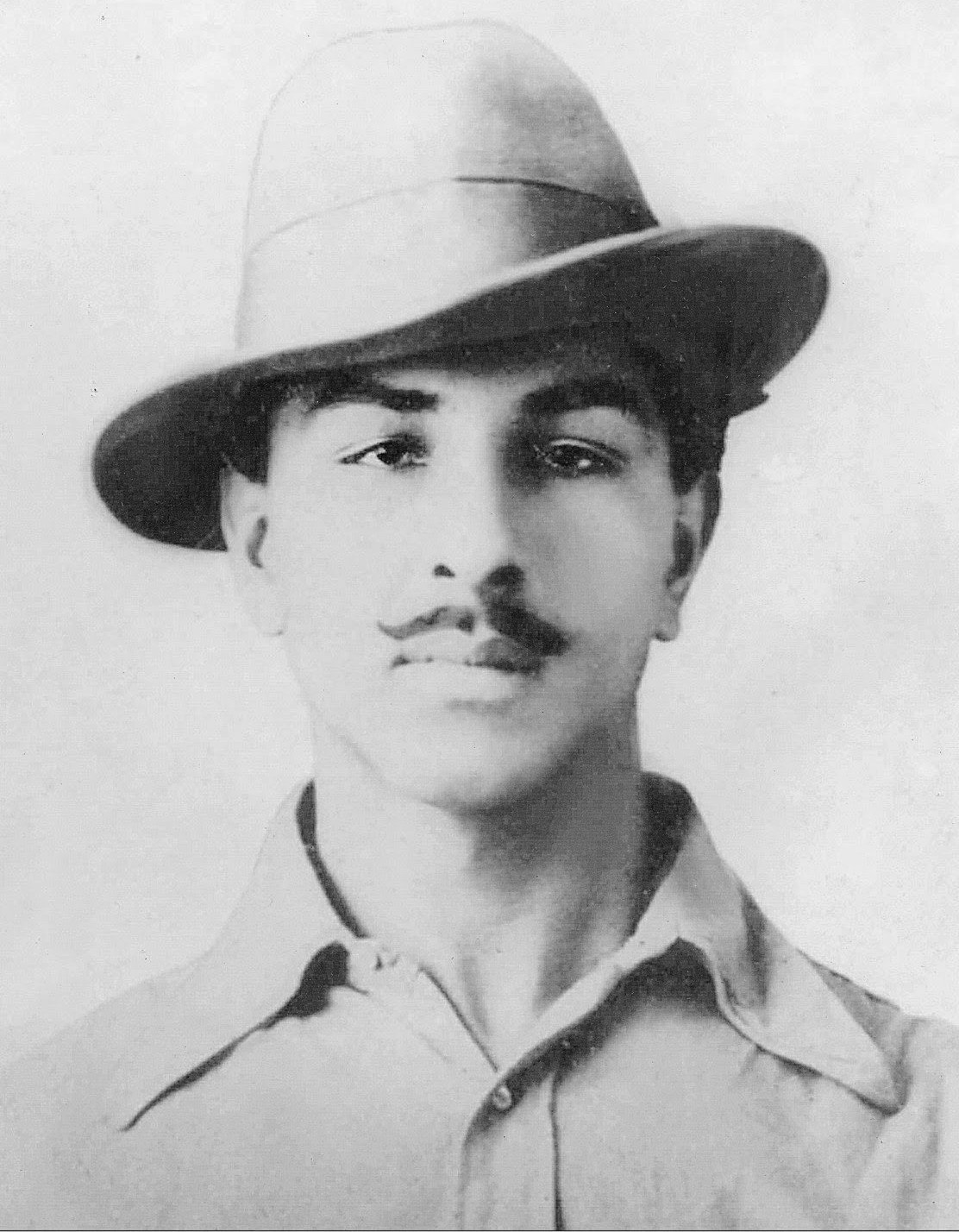
Not every nationalist believed non-violence could defeat the British. The HSRA was founded in 1928 at Ferozeshah Kotla ground in Delhi, with leaders including Bhagat Singh, Jatin Das and Ajoy Ghosh. In April 1929, Bhagat Singh and Batukeswar Dutt threw a bomb inside the Legislative Assembly, and the same year saw an attempt to blow up the train carrying Lord Irwin. Bhagat Singh was tried and executed at just 23. At his trial he said he did not want to glorify “the cult of the bomb and pistol” but wanted a revolution in society, in words the book quotes: “Revolution is the inalienable right of mankind. Freedom is the imprescriptible birthright of all. The labourer is the real sustainer of society… To the altar of this revolution we have brought our youth as incense, for no sacrifice is too great for so magnificent a cause… Inquilab Zindabad!” (Long live the revolution).
3.1 The Salt March and the Civil Disobedience Movement
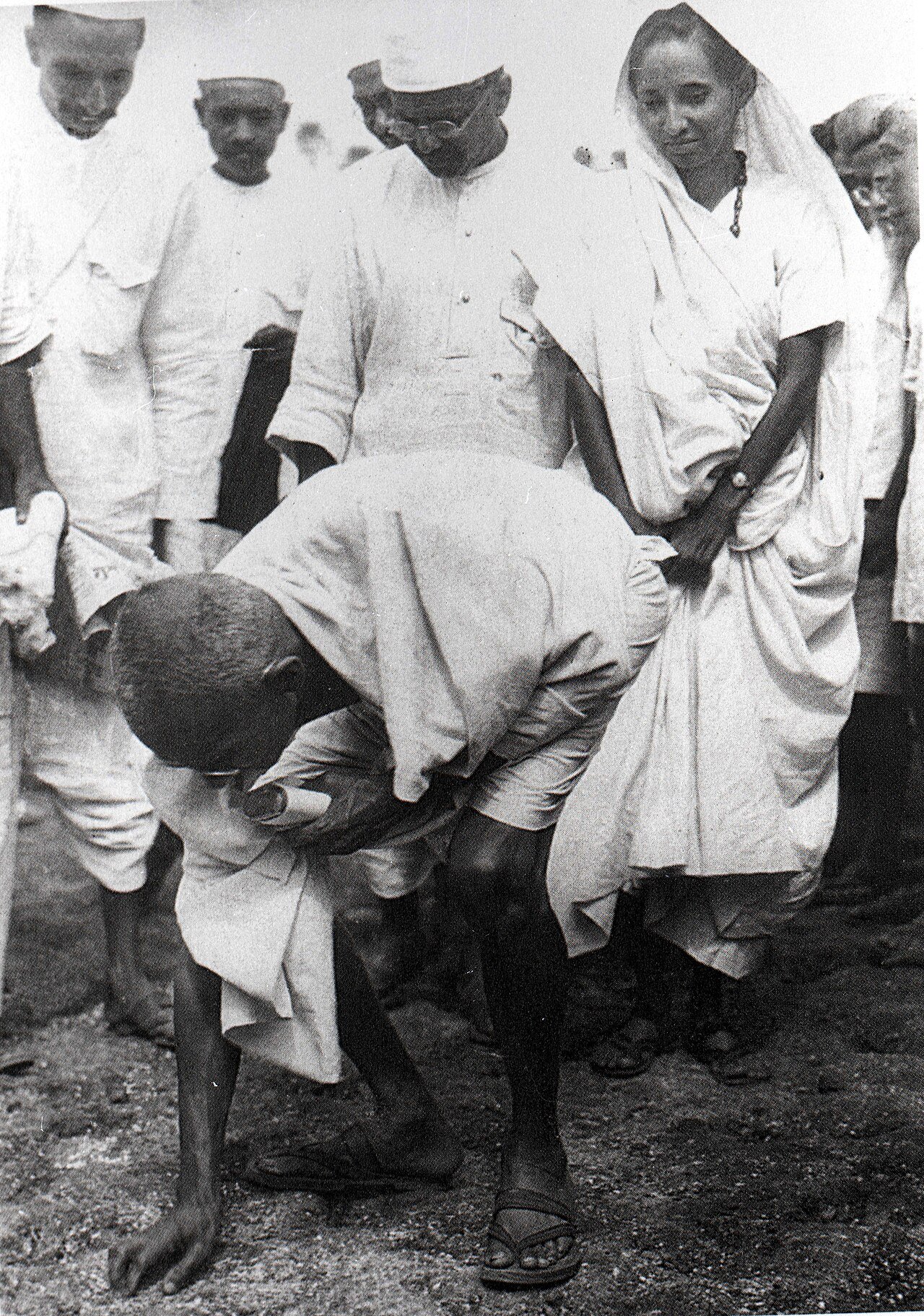
Gandhiji chose salt because everyone, rich and poor, used it, which made the government’s tax on it and its monopoly over salt production feel like the most oppressive face of British rule. Accompanied by 78 trusted volunteers, he walked over 240 miles from his ashram at Sabarmati to the coastal town of Dandi in Gujarat, covering about 10 miles a day for 24 days. Thousands joined him along the way. On reaching Dandi on 6 April 1930, he ceremonially broke the law by making salt from sea water.
Non-Cooperation Movement (1920-22)
- Refuse to cooperate with British institutions
- Surrender titles, boycott schools, courts, councils
- Asked people to refuse cooperation, not to break colonial laws
Civil Disobedience Movement (1930 onward)
- Actively break colonial laws, not just withdraw cooperation
- Break the salt law, refuse to pay revenue and taxes, violate forest laws
- Deliberately defies the law
The movement spread quickly: the salt law was broken across the country, foreign cloth was boycotted, liquor shops picketed, peasants refused to pay revenue and chaukidari taxes, village officials resigned, and forest people defied forest laws to collect wood and graze cattle. The government responded by arresting Congress leaders one by one, which triggered violent clashes: when Abdul Ghaffar Khan was arrested in April 1930, angry crowds in Peshawar faced armoured cars and police firing, and many were killed; and when Gandhiji himself was arrested a month later, industrial workers in Sholapur attacked police posts, municipal buildings, courts and railway stations. The government’s repression was brutal: satyagrahis were attacked, women and children beaten, and about 100,000 people arrested.
3.2 How Participants Saw the Movement
Different social groups joined Civil Disobedience for very different reasons, and swaraj meant something different to each of them.
| Group | Why they joined | What happened to their support |
|---|---|---|
| Rich peasants (Patidars of Gujarat, Jats of UP) | Hit hard by falling prices for their cash crops; wanted lower revenue | Enthusiastic at first, but disappointed when revenue was not cut in 1931; many refused to rejoin in 1932 |
| Poor and small tenant peasants | Wanted unpaid rent to landlords forgiven | Often joined radical Socialist- or Communist-led movements instead; Congress was unwilling to support “no rent” campaigns in most places, fearing it would upset rich peasants and landlords |
| Business classes (via the Indian Industrial and Commercial Congress, 1920, and FICCI, 1927, led by figures like Purshottamdas Thakurdas and G.D. Birla) | Wanted protection from foreign imports so their own businesses could grow | Supported Civil Disobedience at first with funds; grew less enthusiastic after the Round Table Conference failed, fearing prolonged unrest and rising socialism |
| Industrial working class | Some adopted Gandhian ideas like the foreign-goods boycott in their own fight against low wages and poor working conditions: railway workers struck in 1930, dockworkers in 1932, and in 1930 thousands of Chotanagpur tin-mine workers wore Gandhi caps at protest rallies | Stayed mostly aloof, except in the Nagpur region; Congress was reluctant to adopt workers’ demands, fearing it would alienate industrialists |
| Women | Answered Gandhiji’s call during the salt march and after: marches, salt-making, picketing | Large-scale participation (mostly high-caste in cities, rich-peasant families in villages); but this did not necessarily change how women’s position was seen: Gandhiji held that women’s duty was to look after home and hearth, and for a long time the Congress was reluctant to give them any position of authority, keen only on their symbolic presence |
3.3 The Limits of Civil Disobedience
Not every group felt the same pull towards the abstract idea of swaraj.
From around the 1930s the “untouchables” had begun to call themselves dalit (oppressed). The Congress had long ignored them, for fear of offending the sanatanis (conservative high-caste Hindus). But Gandhiji declared that swaraj would not come for a hundred years if untouchability was not eliminated. He called untouchables “harijan” (children of God), led satyagraha to open temples and wells to them, and cleaned toilets himself to dignify that work. But many dalit leaders wanted a political solution instead: reserved seats in educational institutions and a separate electorate. Dalit participation in the Civil Disobedience Movement was therefore limited, particularly in the Maharashtra and Nagpur region, where their organisation was quite strong. Dr B.R. Ambedkar organised the Depressed Classes Association in 1930 and clashed with Gandhiji at the Second Round Table Conference over separate electorates. When the British government agreed to Ambedkar’s demand, Gandhiji began a fast unto death against it, believing separate electorates would slow down dalits’ integration into wider society. Ambedkar eventually accepted Gandhiji’s position, and the Poona Pact of September 1932 gave the Depressed Classes (later called Scheduled Castes) reserved seats in provincial and central legislatures, but voted for by the general electorate, not a separate one.
After the Non-Cooperation-Khilafat Movement declined, many Muslims felt the Congress was drifting closer to Hindu organisations like the Hindu Mahasabha, and communal riots deepened the distance between communities. In 1927 the Congress and Muslim League tried again to build an alliance; Muhammad Ali Jinnah was willing to drop the demand for separate electorates if Muslims got reserved seats in the Central Assembly and population-proportional representation in Bengal and Punjab. But the 1928 All Parties Conference collapsed when M.R. Jayakar of the Hindu Mahasabha opposed the compromise. In 1930, Sir Muhammad Iqbal, president of the Muslim League, restated the need for separate electorates to protect Muslims as a minority (many Muslim leaders feared that the culture and identity of minorities “would be submerged under the domination of a Hindu majority”), a statement later seen as the intellectual root of the demand for Pakistan.
4The Sense of Collective Belonging
Nationalism spreads when people start to feel they belong to the same nation. This came partly from fighting shared struggles together, but also from culture: history, folklore, songs, prints and symbols all helped make the idea of “the nation” feel real.
Bankim Chandra Chattopadhyay created the idea of Bharat Mata (Mother India) when he wrote the hymn “Vande Mataram” in the 1870s, later included in his novel Anandamath and sung widely during the Swadeshi movement in Bengal. Abanindranath Tagore then painted his own famous image of Bharat Mata, showing her as a calm, composed ascetic figure. A later image shows an entirely different Bharat Mata: standing beside a lion and an elephant and carrying a trishul, symbols of power and authority rather than peace.

Nationalists also worked to revive Indian folklore, believing it preserved a true picture of traditional culture. Rabindranath Tagore collected ballads, nursery rhymes and myths in Bengal, and Natesa Sastri published a four-volume collection of Tamil folk tales in Madras, The Folklore of Southern India, calling folklore “the most trustworthy manifestation of people’s real thoughts and characteristics”.
Swadeshi Flag (Bengal)
- Tricolour: red, green, yellow
- Eight lotuses, for eight provinces of British India
- A crescent moon, for Hindus and Muslims together
Gandhiji’s Swaraj Flag (1921)
- Tricolour: red, green, white
- A spinning wheel at the centre
- Represented the Gandhian ideal of self-help
Popular prints spread the same feeling. A print of Bal Gangadhar Tilak (Fig. 11) frames him with the sacred places of different faiths (temple, church, masjid) as symbols of unity, and a print of Jawaharlal Nehru (Fig. 13) shows him holding the image of Bharat Mata and the map of India close to his heart. In many prints, leaders were shown offering their heads to Bharat Mata: the idea of sacrifice for the mother was powerful in popular imagination.
A third strategy was to reinterpret Indian history itself. Since the British portrayed Indians as backward and unfit to govern themselves, Indian writers looked to the past and wrote proudly of a golden ancient age of art, science, religion, law and trade, followed by a long decline under colonial rule. These histories urged readers to take pride in the past and struggle to change the miserable conditions of life under British rule.
“In earlier times, foreign travellers in India marvelled at the courage, truthfulness and modesty of the people of the Arya vamsa; now they remark mainly on the absence of those qualities. In those days Hindus would set out on conquest and hoist their flags in Tartar, China and other countries; now a few soldiers from a tiny island far away are lording it over the land of India.” (Tarinicharan Chattopadhyay, Bharatbarsher Itihas, vol. 1, 1858.) Notice that the glorious past here is a Hindu one, which is exactly the problem described next.
This unifying project had its own limits. When the past being glorified was Hindu, and the images celebrated were drawn from Hindu iconography, people of other communities felt left out of this “shared” past, even as the same movement was trying to bring Hindus and Muslims together over Khilafat, and Congress and dalits together over untouchability.
The failure of the Cripps Mission and the hardships of the Second World War brought widespread discontent. On 14 July 1942 the Congress Working Committee, meeting at Wardha, passed the historic “Quit India” resolution, demanding an immediate transfer of power. The All India Congress Committee endorsed it in Bombay on 8 August 1942, and it was here that Gandhiji gave his famous “Do or Die” speech. It became a true mass movement of students, workers and peasants, led in different places by figures such as Jayprakash Narayan, Aruna Asaf Ali and Ram Manohar Lohia, and women including Matangini Hazra (Bengal), Kanaklata Barua (Assam) and Rama Devi (Odisha). It took the British more than a year to suppress it.
5Conclusion
A growing anger against colonial rule kept pulling different Indian groups and classes into one shared struggle for freedom. The Congress, under Mahatma Gandhi, tried again and again to channel these very different grievances into organised movements for independence. But because freedom meant different things to different people, this unity kept breaking down and having to be rebuilt, so the high points of nationalist unity were followed by phases of disunity and inner conflict.
The Congress under Mahatma Gandhi kept trying to weave many different grievances into one movement for independence, but because freedom meant different things to different groups, that unity kept breaking apart and being rebuilt.
what emerged was a nation with many voices
- The First World War made life harder for ordinary Indians and created the conditions for mass protest
- The Rowlatt Act and the Jallianwala Bagh massacre (13 April 1919) turned anger into a nationwide movement
- Non-Cooperation (1921-22) linked Khilafat and swaraj, but Gandhiji withdrew it after Chauri Chaura
- Peasants, tribals and plantation workers all gave “swaraj” their own local meaning, often beyond what Congress wanted
- The Salt March (1930) turned an everyday item, salt, into a powerful symbol that could unite the nation
- Civil Disobedience broke colonial laws directly; it was called off after the Gandhi-Irwin Pact (March 1931) and relaunched in 1932 after the failed Second Round Table Conference
- Rich peasants, poor peasants, business, workers and women each experienced Civil Disobedience differently
- Dalits (Ambedkar, Poona Pact 1932) and many Muslims (Jinnah, Iqbal) stayed only partly inside the movement
- Bharat Mata, folklore, flags and a reinterpreted history built a shared national feeling, but where its past and images were Hindu, other communities felt left out
- The chapter closes with Quit India (1942) and the idea of “a nation with many voices”
- Can I explain why the growth of nationalism in a colony is linked to the anti-colonial movement?
- Can I list the stages Gandhiji proposed for Non-Cooperation, in order?
- Can I name at least three different social groups and explain what “swaraj” meant to each of them?
- Can I trace the Salt March on a timeline, with its dates and distance, without looking?
- Can I explain why the Poona Pact was a compromise, and what each side gave up?