
- How trade, migration and disease connected the world long before “globalisation” became a word: the Silk Routes, new-world foods, and the conquest of the Americas
- How the three flows of trade, labour and capital built a single world economy in the nineteenth century, and what the Corn Laws, indentured labour and colonial rinderpest cost ordinary people
- Why the two World Wars and the Great Depression broke the world economy apart, and how Henry Ford’s assembly line changed the way things were made
- How the Bretton Woods Conference rebuilt the world economy after 1945, and why the newly independent countries of the G-77 demanded a fairer deal
- How the end of fixed exchange rates and the rise of China’s low-wage manufacturing led into today’s globalisation
When people talk about “globalisation” today, they usually mean an economic system that has grown over the last fifty years or so. But the making of a global world is a much longer story: of trade, of migration, of people moving in search of work, and of capital moving across borders. This chapter traces that story through four stages: the pre-modern world, the nineteenth century, the years between the two World Wars, and the rebuilding of the world economy after 1945.
1The Pre-modern World
Human societies have always been linked by travellers, traders, priests and pilgrims who carried goods, money, values, skills, ideas and even diseases across great distances. As early as 3000 BCE, coastal trade connected the Indus valley civilisation with West Asia. For over a thousand years, cowrie shells from the Maldives travelled as currency all the way to China and East Africa.
1.1 Silk Routes Link the World
The Silk Routes are the clearest example of pre-modern trade and cultural exchange. Historians have traced many such routes, over land and by sea, that existed from before the Christian Era until almost the fifteenth century, linking Asia with Europe and northern Africa.
What travelled west
West-bound Chinese silk (which gave the routes their name). Chinese pottery, and textiles and spices from India and Southeast Asia, also travelled the same routes.
What travelled east
In return, precious metals, gold and silver, flowed from Europe to Asia.
What travelled alongside
Faith and ideas. Early Christian missionaries almost certainly travelled these routes to Asia, as did early Muslim preachers a few centuries later. Buddhism itself spread out of eastern India along the Silk Routes.
1.2 Food Travels: Spaghetti and Potato
Food shows how far cultural exchange reached even before modern times. One theory holds that noodles travelled from China and became spaghetti in Italy, perhaps carried by Arab traders to fifth-century Sicily, though similar foods were also known in India and Japan, so the truth about their origins may never be known.
Far more certain is the effect of foods that reached Europe and Asia only after Christopher Columbus’s accidental “discovery” of the Americas about five hundred years ago: potatoes, soya, groundnuts, maize, tomatoes, chillies and sweet potatoes were unknown before this. Many of these foods came originally from the American Indians, America’s original inhabitants.
New crops could mean the difference between life and death. Europe’s poor ate better and lived longer once the humble potato spread. But Ireland’s poorest peasants became so dependent on the potato that when disease destroyed the crop in the mid-1840s, hundreds of thousands died of starvation. The book’s caption to its picture of the famine adds that during the Great Irish Potato Famine (1845 to 1849) around 1,000,000 people died of starvation in Ireland, and double the number emigrated in search of work.

1.3 Conquest, Disease and Trade
The pre-modern world shrank dramatically in the sixteenth century, once European sailors found a sea route to Asia and crossed the Atlantic to America. The Indian Ocean had already known centuries of bustling trade, and the Indian subcontinent was central to this network, but the arrival of Europeans redirected many of these flows towards Europe. Precious metals, especially silver from mines in present-day Peru and Mexico, financed Europe’s trade with Asia and fed legends of El Dorado, the fabled city of gold.
John Winthorp, the first governor of the Massachusetts Bay colony in New England, wrote in May 1634 that a smallpox epidemic among the natives was God’s blessing, clearing the colonists’ claim to the land they wanted (Alfred Crosby, Ecological Imperialism). It captures a real historical fact: Portuguese and Spanish conquerors did not defeat America’s original inhabitants through firepower alone. Their most powerful weapon was the germs, especially smallpox, that they carried on their bodies. Because of their long isolation (America had been cut off from regular contact with the rest of the world for millions of years), America’s original inhabitants had no immunity to these diseases, and smallpox spread ahead of the Europeans themselves, killing entire communities and clearing the way for conquest. Guns could be captured and turned against the invaders; disease could not.
Dissenter is one who refuses to accept established beliefs and practices.
Until the nineteenth century, poverty, hunger, overcrowded cities and religious persecution of dissenters were common in Europe, driving thousands to flee to America. By the eighteenth century, plantations worked by slaves captured in Africa were growing cotton and sugar for European markets. China and India remained among the world’s richest countries and were pre-eminent in Asian trade well into the eighteenth century. But from the fifteenth century, China is said to have restricted overseas contacts and retreated into isolation, and as its role shrank and the Americas grew more important, the centre of world trade shifted west, until Europe itself became the centre of world trade.
2The Nineteenth Century (1815-1914)
The world changed profoundly in the nineteenth century, as economic, political, social, cultural and technological factors reshaped societies and the relations between them. Economists describe this change through three types of movement, or “flows,” within the international economy.
All three flows were closely interwoven, though labour migration was usually more restricted than the movement of goods or capital.
2.1 A World Economy Takes Shape
Britain’s population grew fast from the late eighteenth century, pushing up the demand, and the prices, of food grain. Under pressure from landowners, the government restricted the import of corn through laws known as the Corn Laws. High food prices then angered industrialists and urban dwellers, who forced the government to abolish the Corn Laws.
By 1890 a global agricultural economy had taken shape. Food no longer came from a nearby village; it was grown by hired agricultural workers on distant farms, carried by railway and by ship, and about 60% of all this trade was in “primary products”: agricultural goods like wheat and cotton, and minerals like coal. A smaller, similar story unfolded closer home: the British Indian government built the Canal Colonies in west Punjab, irrigating semi-desert land to grow wheat and cotton for export, and settling it with peasants from elsewhere in Punjab.
2.2 Role of Technology
Railways, steamships and the telegraph made the transformed nineteenth-century world possible, but technological advances were often the result of larger social, political and economic factors. The trade in meat is a good example.
Before refrigerated ships
- Live animals shipped from America to Europe, then slaughtered on arrival
- Many died, fell ill or lost weight on the voyage
- Meat was an expensive luxury, out of reach for Europe’s poor
After refrigerated ships
- Animals slaughtered at the starting point, transported as frozen meat
- Shipping costs fell, and so did meat prices in Europe
- Many of the poor, though not all, could now add meat (and butter and eggs) to a diet of bread and potatoes
Better living conditions from cheaper food helped keep social peace at home, and built support for imperialism abroad.
2.3 Late Nineteenth-century Colonialism
Trade and markets expanded rapidly in the late nineteenth century, but this had a darker side: for many colonised societies, it meant a loss of freedom and livelihood. In 1885, the major European powers met at the Berlin Conference to complete the carving up of Africa between themselves, drawing some borders so straight that they look as if they were drawn with a ruler. Britain and France made vast new colonial gains; Belgium and Germany became new colonial powers; and by the late 1890s the US had also become one, taking over colonies earlier held by Spain.
Stanley was a journalist and explorer sent by the New York Herald to find Livingston, a missionary who had spent years in Africa. Like other European and American explorers of his time, Stanley travelled armed, mobilised local hunters and warriors, fought local tribes, and mapped African terrain: all of which helped pave the way for conquest. Geographical exploration in this era was rarely innocent scientific curiosity; it was directly linked to imperial ambition.
2.4 Rinderpest, or the Cattle Plague
For centuries, land and livestock, both abundant, sustained African livelihoods, so Africans had little reason to work for wages. But late-nineteenth-century Europeans wanted African land, minerals and labour for their plantations and mines. To force people into wage labour, colonisers imposed heavy taxes, changed inheritance laws so only one family member could inherit land, and confined mineworkers to compounds.
Then came Rinderpest, a devastating cattle disease carried into East Africa in the late 1880s by cattle imported from British Asia to feed Italian soldiers invading Eritrea. It spread west “like forest fire,” reaching Africa’s Atlantic coast in 1892 and the Cape five years later, killing 90 per cent of the cattle along the way.
The loss of cattle destroyed African livelihoods built on land and livestock. Planters, mine owners and colonial governments seized control of what few cattle remained, using this scarce resource to force Africans into the very labour market Europeans had struggled to create. By the 1890s, South Africa alone produced over 20 per cent of the world’s gold.
2.5 Indentured Labour Migration from India
The story of indentured labour shows the nineteenth-century world’s two faces at once: faster growth alongside great misery, higher incomes for some and poverty for others. In the nineteenth century, hundreds of thousands of Indian and Chinese labourers went to work on plantations, in mines, and in road and railway construction projects around the world; this section follows the Indian case. In India, indentured labourers were hired under contracts which promised return travel to India after they had worked five years on their employer’s plantation.
Indentured labour is a bonded labourer under contract to work for an employer for a specific amount of time, to pay off the passage to a new country or home.
Most Indian indentured workers came from eastern Uttar Pradesh, Bihar, central India and the dry districts of Tamil Nadu: regions where cottage industries were declining, land rents were rising, and the poor were falling into debt. Agents recruited migrants with false promises about work and living conditions, and sometimes by force.
| Main destinations | Details |
|---|---|
| Caribbean islands | Mainly Trinidad, Guyana and Surinam |
| Mauritius and Fiji | Island destinations named alongside the Caribbean |
| Ceylon and Malaya | Tamil migrants went here (“closer home”) |
| Assam | Tea plantations |

Nineteenth-century indenture has been called a “new system of slavery”: conditions on plantations were harsh, and legal rights were few. Yet workers built their own forms of survival and expression: in Trinidad, the Muharram procession was transformed into the carnival called “Hosay”; Rastafarianism (made famous by Bob Marley) is also said to reflect cultural links with Indian migrants; and “Chutney music” in Trinidad and Guyana grew out of the post-indenture experience. Most workers stayed on after their contracts ended, which is why large communities of Indian descent exist in these countries today. The Nobel Prize-winning writer V.S. Naipaul and West Indies cricketers Shivnarine Chanderpaul and Ramnaresh Sarwan all descend from indentured migrants. From the 1900s India’s nationalist leaders began opposing the system as abusive and cruel, and it was abolished in 1921, though descendants remained an uneasy minority, often called “coolies,” for decades afterwards. The book’s caption to a photograph of indentured labourers photographed for identification notes: “For the employers, the numbers and not the names mattered.”
Ram Narain Tewary, who spent ten years as an indentured labourer on Demerara in the early twentieth century, recorded: “…in spite of my best efforts, I could not properly do the works that were allotted to me … In a few days I got my hands bruised all over and I could not go to work for a week for which I was prosecuted and sent to jail for 14 days. … Deductions are also made from wages if the work is considered to have been done unsatisfactorily. … In fact, the labourers have to spend their period of indenture in great trouble.” (Department of Commerce and Industry, Emigration Branch, 1916)
2.6 Indian Entrepreneurs Abroad
Growing crops for the world market needed capital that ordinary peasants could not easily borrow. Indian bankers such as the Shikaripuri Shroffs and Nattukottai Chettiars financed export agriculture across Central and Southeast Asia, using their own funds or loans from European banks, and developed sophisticated systems to move money across long distances. Indian traders also followed European colonisers into Africa; Hyderabadi Sindhi traders went further still, establishing emporia at ports worldwide from the 1860s, selling curios to a growing number of tourists.
2.7 Indian Trade, Colonialism and the Global System
Fine Indian cotton had long been exported to Europe. But as British cotton manufacturing industrialised, tariffs were imposed on cloth imports into Britain, and the share of cotton textiles in India’s exports fell steadily.
While exports of manufactures declined rapidly, export of raw materials increased equally fast: the share of raw cotton in India’s exports rose from 5 per cent (1812) to 35 per cent (1871). Indigo (for dye) remained an important export for decades, and from the 1820s opium shipments to China grew so fast that opium became, for a while, India’s single largest export: Britain grew opium in India, sold it to China, and used the proceeds to buy tea and other Chinese goods. (Earlier, all through the seventeenth and early eighteenth centuries, Surat had remained the main centre of overseas trade in the western Indian Ocean.)
Over the nineteenth century, the value of Britain’s exports to India was much higher than the value of its imports from India: Britain had a “trade surplus” with India. Britain used this surplus to settle its own trade deficits with other countries, a multilateral settlement system in which one country’s deficit with a second is paid off by its surplus with a third. This surplus also financed Britain’s “home charges”: private remittances home by British officials and traders, interest on India’s external debt, and pensions of British officials in India.
3The Inter-war Economy
3.1 Wartime Transformations
The First World War (1914-18) was fought mainly in Europe, between the Allies (Britain, France and Russia, later joined by the US) and the Central Powers (Germany, Austria-Hungary and Ottoman Turkey). When it began in August 1914, many governments thought it would be over by Christmas; it lasted more than four years and became the first modern industrial war, using machine guns, tanks, aircraft and chemical weapons on a massive scale.
Most of the dead and injured were men of working age, which shrank Europe’s able-bodied workforce and cut household incomes. Industries were restructured for war production, and as men went to the battlefront, women stepped into jobs earlier reserved for men. The war also snapped economic links between the major powers: Britain borrowed heavily from US banks and the American public, which turned the US from an international debtor into an international creditor: the US and its citizens now owned more overseas assets than foreign governments and citizens owned within the US.
3.2 Post-war Recovery
Britain, the world’s leading pre-war economy, faced a long crisis. While Britain was preoccupied with war, industries had developed in India and Japan, and Britain struggled afterwards to recapture its old dominance in the Indian market or compete with Japan, all while carrying huge debts to the US. As the wartime economic boom ended, production fell and unemployment rose sharply: by 1921, one in every five British workers was out of work. Wheat-growing economies suffered too: wartime disruption to Eastern European wheat had pushed up production in Canada, America and Australia, but once Eastern Europe recovered after the war, the resulting glut crashed grain prices and pushed many farmers deeper into debt.
3.3 Rise of Mass Production and Consumption
In the US, recovery was quicker. One important feature of the US economy of the 1920s was mass production: the move towards it had begun in the late nineteenth century, but in the 1920s it became a characteristic feature of industrial production in the US. Car manufacturer Henry Ford adapted the assembly-line method of a Chicago slaughterhouse to his car plant in Detroit, forcing workers to repeat a single mechanical task at a pace set by the conveyor belt.

Ford’s cars came off the line every three minutes, far faster than any earlier method, and the T-Model Ford became the world’s first mass-produced car. But workers found the relentless pace unbearable and quit in large numbers, so in January 1914 Ford doubled the daily wage to $5 and banned trade unions from his plants. He later called this his “best cost-cutting decision”: he simply sped up the line again afterwards to recover the cost.
Fordist methods spread through the US and, in the 1920s, through Europe too. Lower costs and higher wages let more workers buy durable goods: car production rose from 2 million (1919) to over 5 million (1929), alongside a boom in refrigerators, washing machines and radios bought on credit (“hire purchase”). Rising investment in housing and consumer goods created a self-feeding cycle of employment, income and demand. In 1923, the US resumed exporting capital to the rest of the world and became the largest overseas lender; US imports and capital exports also boosted European recovery and world trade and income growth over the next six years. By 1929, it all collapsed.
3.4 The Great Depression
The Great Depression (1929 to the mid-1930s) brought catastrophic falls in production, employment, income and trade across most of the world, hitting agricultural regions hardest because farm prices fell further and longer than industrial prices.
Agricultural overproduction
As prices fell, farmers tried to produce even more to protect their income, worsening the glut and pushing prices down further. Produce rotted for lack of buyers.
Collapse of US lending
Many countries had financed investment with easy US loans in the mid-1920s. US overseas loans fell from over $1 billion (early 1928) to a quarter of that within a year, as American lenders panicked at the first sign of trouble.
The withdrawal of US loans triggered bank failures and currency collapses in Europe (including the British pound), and deepened the slump in Latin American commodity prices; the US then made things worse for world trade by doubling its own import duties. The US was also the industrial country most severely affected by the depression: banks slashed domestic lending and called back loans, farms could not sell their harvests, households were ruined, and businesses collapsed. Many households could not repay what they had borrowed and were forced to give up their homes, cars and other consumer durables. When an unemployment census showed 10 million people out of work, the local government in many US states began making small allowances to the unemployed.
3.5 India and the Great Depression
India’s exports and imports nearly halved between 1928 and 1934, and wheat prices in India fell by 50 per cent in the same period, showing how tightly India was now bound into the world economy. Peasants suffered most, since the colonial government refused to lower revenue demands even as agricultural prices crashed. Bengal’s jute growers, for instance, saw the price of raw jute crash by more than 60 per cent as gunny exports collapsed, driving them deep into debt, a hardship captured in a contemporary jute growers’ lament about traders who “will pay only Rs 5 a maund.” Across India, peasants sold jewellery and precious metals to survive, and India became a notable exporter of gold in these years. Economist John Maynard Keynes thought that Indian gold exports promoted global economic recovery. They certainly helped speed up Britain’s recovery, but did little for the Indian peasant. It was amid this rural unrest that Mahatma Gandhi launched the Civil Disobedience Movement in 1931. Urban India suffered less: falling prices actually helped those on fixed incomes, such as landowners and salaried employees, and nationalist pressure won tariff protection that encouraged industrial investment.
4Rebuilding a World Economy: The Post-war Era
The Second World War broke out just two decades after the First ended, fought between the Axis powers (mainly Nazi Germany, Japan and Italy) and the Allies (Britain, France, the Soviet Union and the US). Unlike earlier wars, most of its victims were civilians rather than soldiers.
Two powers shaped the post-war world: the US, now the dominant economic, political and military power in the West, and the Soviet Union, which had made huge sacrifices to defeat Nazi Germany and had transformed itself from a backward agricultural country into a world power during the very years the capitalist world was mired in Depression.
4.1 Post-war Settlement and the Bretton Woods Institutions
Economists and politicians drew two lessons from the inter-war years: first, that mass production needs mass consumption, which needs stable full employment, which only government intervention can guarantee; second, that full employment requires governments to be able to control flows of goods, capital and labour across borders.
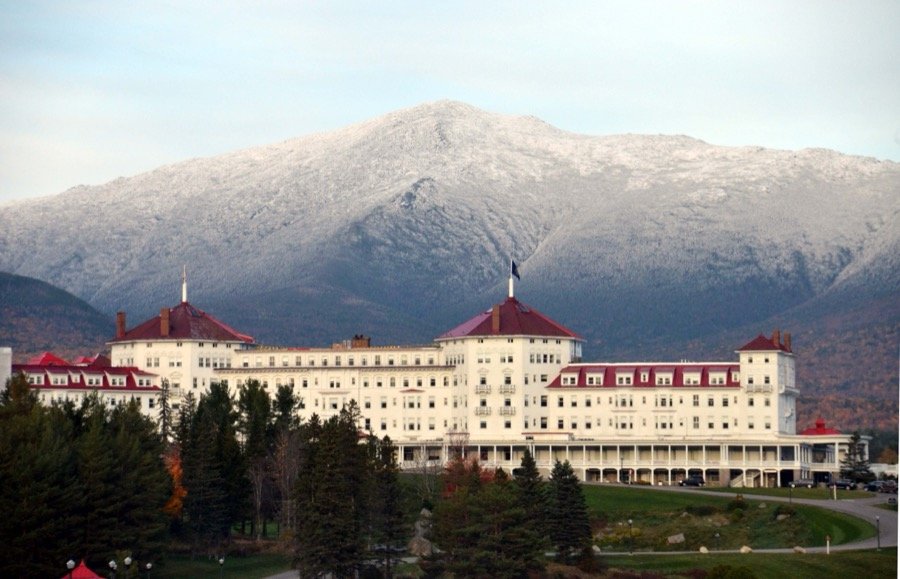
This framework was agreed at the United Nations Monetary and Financial Conference, held in July 1944 at Bretton Woods, New Hampshire.
International Monetary Fund (IMF)
- Set up to deal with external surpluses and deficits of member nations
World Bank
- Formally the International Bank for Reconstruction and Development
- Set up to finance post-war reconstruction
The IMF and the World Bank are together called the Bretton Woods institutions or the Bretton Woods twins. They began financial operations in 1947. Decision-making in both is controlled by the Western industrial powers, and the US holds an effective right of veto over key decisions.
The Bretton Woods system rested on fixed exchange rates: national currencies (including the Indian rupee) were pegged to the US dollar, and the dollar itself was anchored to gold at a fixed price of $35 per ounce.
Exchange rate: the system linking national currencies for international trade.
Fixed exchange rate: where governments intervene to prevent movements in the rate.
Flexible (floating) exchange rate: where rates move with the demand and supply of currencies, in principle without government interference.
4.2 The Early Post-war Years
The Bretton Woods system brought an era of remarkable, stable growth for the Western industrial nations and Japan: world trade grew at over 8 per cent a year between 1950 and 1970, incomes at nearly 5 per cent, and for much of this period unemployment in most industrial countries averaged less than 5 per cent. Developing countries, eager to catch up, invested heavily in imported industrial plant and technology during these decades, which also saw the worldwide spread of multinational corporations.
Multinational corporations (MNCs) are large companies operating in several countries at once. The first MNCs date to the 1920s, but many more appeared in the 1950s and 1960s as US businesses expanded worldwide and Western Europe and Japan recovered into powerful industrial economies. High import tariffs in many countries pushed MNCs to set up local manufacturing and become “domestic producers” in as many places as possible.
4.3 Decolonisation and Independence
Over the two decades after the Second World War, most Asian and African colonies won independence, but poverty and a lack of resources, the legacy of long colonial rule, left them badly handicapped. The IMF and World Bank had been designed to serve industrial countries, not to fight poverty in the newly independent world, so as Europe and Japan rebuilt and needed them less, the Bretton Woods institutions gradually shifted their attention towards developing countries from the late 1950s. Yet former colonial powers, and corporations from powerful countries like the US, often still controlled vital resources, minerals and land, in these newly independent nations, very cheaply.
Because most developing countries did not share in the fast growth the West enjoyed in the 1950s and 1960s, they organised themselves as the Group of 77 (G-77) to demand a New International Economic Order (NIEO): real control over their own natural resources, more development assistance, fairer prices for raw materials, and better access to developed-country markets for their manufactured goods.
4.4 End of Bretton Woods and the Beginning of “Globalisation”
From the 1960s, the rising cost of US overseas commitments weakened its finances, and the dollar could no longer hold its value against gold. This led to the collapse of fixed exchange rates and the introduction of floating exchange rates in their place. From the mid-1970s, developing countries could no longer rely on international institutions for loans and had to borrow instead from Western commercial banks and private lenders, leading to repeated debt crises, falling incomes and rising poverty, especially in Africa and Latin America. Industrial-world unemployment also rose from the mid-1970s and stayed high until the early 1990s. From the late 1970s MNCs also began to shift production operations to low-wage Asian countries.
China, cut off from the world economy since its 1949 revolution, rejoined it through new economic policies, just as the collapse of the Soviet Union and Soviet-style communism in Eastern Europe brought many more countries back into the world economy. Low wages made China an attractive destination for foreign MNC investment, which is why so many everyday goods are made there today. This relocation of industry to low-wage countries drove a new surge in world trade and capital flows, and over the last two decades the world’s economic geography has been transformed by the rapid growth of countries such as India, China and Brazil.
- The pre-modern world was already connected by the Silk Routes, food exchange, and, after Columbus, the conquest and diseases of the Americas.
- Three flows built the 19th-century world economy: trade, labour, and capital. After the Corn Laws were abolished, British farming could not compete with cheap imports; thousands thrown out of work flocked to the cities or migrated overseas, while lands abroad were cleared to meet British food demand.
- Rinderpest destroyed African cattle-based livelihoods and forced Africans into colonial wage labour.
- Indentured labour took Indian workers to the Caribbean, Mauritius, Fiji, Ceylon and Malaya (and to the tea plantations of Assam); agents often gave false information about destinations and work, and conditions were harsh; abolished in 1921.
- Britain had a trade surplus with India, using it to settle its deficits with other countries and pay its “home charges.”
- The First World War (9 million dead, 20 million injured) wrecked the old economic order; Henry Ford’s assembly line built a new one on mass production.
- The Great Depression (1929 to the mid-1930s) was caused by a combination of several factors, including agricultural overproduction and the collapse of US lending; it nearly halved India’s trade (1928-34), and rural India was seething with unrest when Gandhi launched the Civil Disobedience Movement in 1931.
- The Bretton Woods Conference (July 1944) created the IMF and World Bank on a system of fixed exchange rates: national currencies were pegged to the US dollar, and the dollar to gold at $35 per ounce.
- Decolonised nations, still dependent on their former rulers, organised as the G-77 to demand a New International Economic Order.
- Fixed exchange rates collapsed as the dollar lost its value against gold, and floating rates replaced them; China’s re-entry and low-wage manufacturing reshaped the world economy that followed.
- Can I name the three flows of the 19th-century world economy, with one Indian example of each?
- Can I explain why the Corn Laws’ abolition led to migration to America and Australia?
- Can I explain how Rinderpest helped colonisers force Africans into wage labour?
- Can I list the main destinations of Indian indentured labour, and describe conditions there?
- Can I explain what a “trade surplus” and a “multilateral settlement system” meant for British India?
- Can I give two causes of the Great Depression, and explain its impact on India?
- Can I name the two Bretton Woods institutions and explain what “fixed exchange rate” means?
- Can I explain what the G-77 and the NIEO demanded, and why?