
- Why industrialisation did not begin with factories at all, and what “proto-industrialisation” means
- Why British factories grew slowly, and why hand labour survived alongside steam power for decades
- How the East India Company took control of India’s weavers, and why Indian textile exports declined so sharply
- Where India’s own factories, capital and workers came from, and what made Indian industrial growth different from Britain’s
- How advertisements, labels and calendars built new markets, and later carried the swadeshi message
This chapter opens with two old pictures: a goddess of progress flying past railways and factories, and two magicians, one from “the East” with a magic lamp, one a modern mechanic with modern tools. Both pictures tell the same story: the modern world equals machines, factories and rapid progress. This chapter asks whether that story is actually true, by looking closely at how industrialisation really happened, first in Britain and then in colonial India.
1Before the Industrial Revolution
We usually think of industrialisation as the growth of factories, and of industrial workers as factory workers. But large-scale industrial production for an international market existed in Europe long before factories did.
Proto-industrialisation is the name historians give to this early phase of large-scale industrial production for an international market, carried out before factories existed and without factories.
In the 17th and 18th centuries, merchants from European towns moved into the countryside, gave money to peasants and artisans, and got them to produce goods for an international market. Why the countryside and not the town? Because in towns, powerful urban crafts and trade guilds stood in the way.
A guild was an association of producers that trained craftspeople, controlled production, fixed prices, and restricted the entry of new people into a trade. Rulers gave different guilds a monopoly to produce and trade specific goods, so it was difficult for a new merchant to set up business in a town.
In the countryside, poor peasants and artisans agreed eagerly. Open fields were disappearing and common lands were being enclosed, so cottagers who once gathered firewood, berries and fodder from the commons needed a new source of income. Their own tiny plots could not provide work for all members of the household, so when merchants offered an advance to produce goods, whole families took it. The income from this proto-industrial work supplemented their shrinking income from farming, and let them use every member’s labour, not just the plot of land.
A close relationship grew between town and countryside. Merchants stayed in towns but the actual work moved through several hands in the villages before it reached the market.
The English merchant clothier bought wool from a stapler and carried it through this whole chain. The final finishing was done in London before the export merchant sold the cloth abroad, so London itself came to be known as a “finishing centre”. This proto-industrial system was really a network run by merchants: at each stage, every merchant employed 20 to 25 workers, which meant a single clothier could be controlling hundreds of workers scattered across many households, none of them in a factory.
1.1 The Coming Up of the Factory
England’s earliest factories appeared by the 1730s, but their numbers multiplied only in the late 18th century. Cotton was the first symbol of this new era, and its production boomed fast.
Raw cotton imported into Britain: nearly a nine-fold jump in 27 years.
A series of 18th-century inventions sped up every step of cotton production, and then Richard Arkwright created the cotton mill. Until then, cloth production was spread across the countryside, done inside village homes. Now, the costly new machines could be bought, installed and run under one roof, under one management.
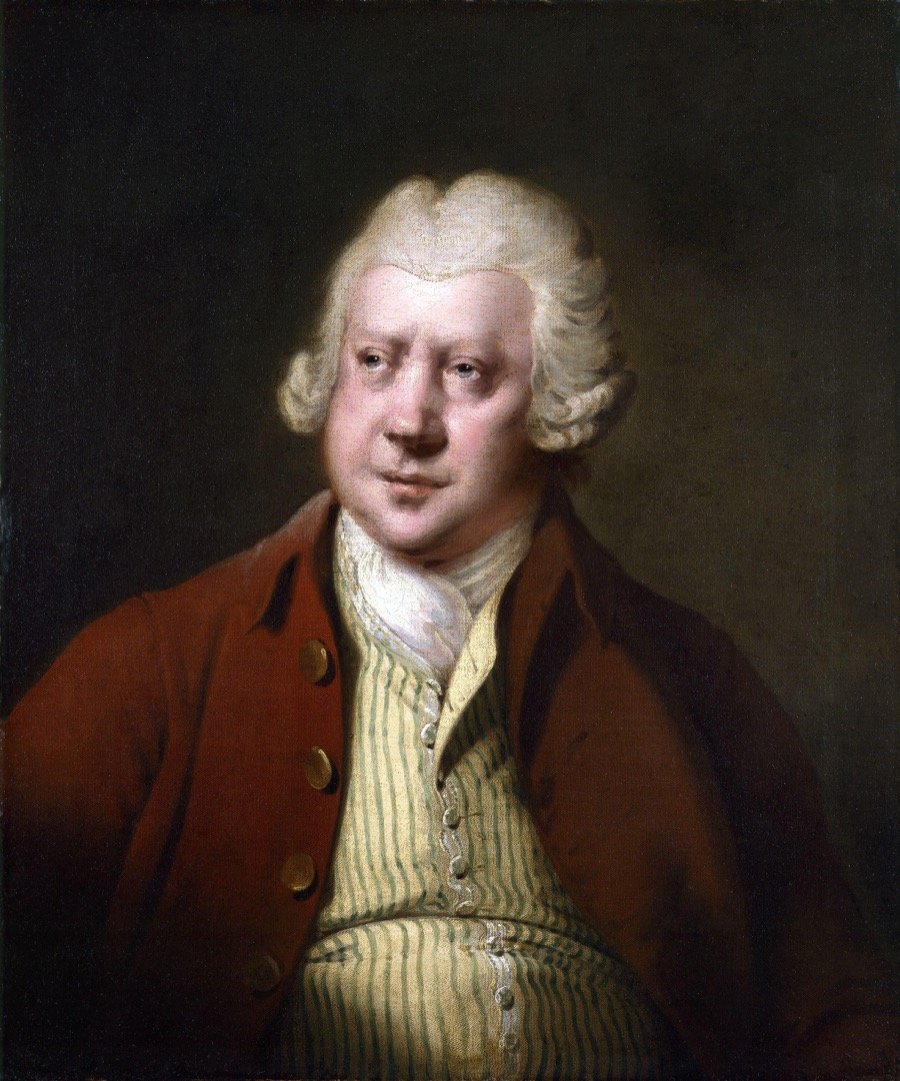
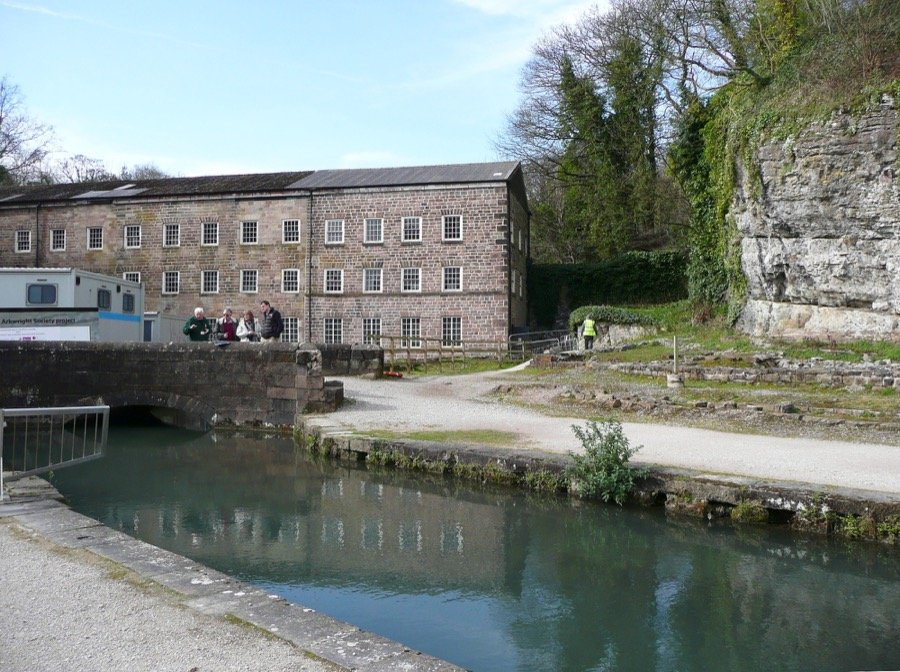
Gathering every process into one mill allowed for careful supervision, a watch over quality, and control over labour, none of which was possible when work was spread across the countryside. By the early 19th century, factories had become such a visible part of the English landscape, and new technology seemed so magical, that contemporaries were dazzled by the mills and almost forgot that production was still going on in bylanes and small workshops too.
1.2 The Pace of Industrial Change
The book itself makes this point in four steps, because the pace of change was far slower and patchier than the “Dawn of the Century” pictures suggest.
Cotton, then iron and steel
Cotton was Britain’s leading sector up to the 1840s. After that, railway expansion (in England from the 1840s, in the colonies from the 1860s) pushed iron and steel ahead. By 1873 Britain’s iron and steel exports were worth about £77 million, double the value of its cotton exports.
Old industries did not vanish
Even at the end of the 19th century, less than 20% of Britain’s total workforce worked in technologically advanced industries. Textiles stayed dynamic, but a large portion of textile output still came from outside factories, in domestic units.
“Traditional” industries kept improving
Food processing, building, pottery, glass work, tanning, furniture making and tool production were not run by steam power, but they were not stagnant either: small, ordinary innovations were the basis of growth in many of them.
New technology spread slowly
It was expensive, it broke down often, and repairs cost a lot, so merchants and industrialists adopted it cautiously rather than eagerly.
James Watt improved the steam engine originally built by Newcomen, and patented his new engine in 1781. His industrialist friend Mathew Boulton manufactured it, but found no buyers for years. At the start of the 19th century, there were no more than 321 steam engines in the whole of England.
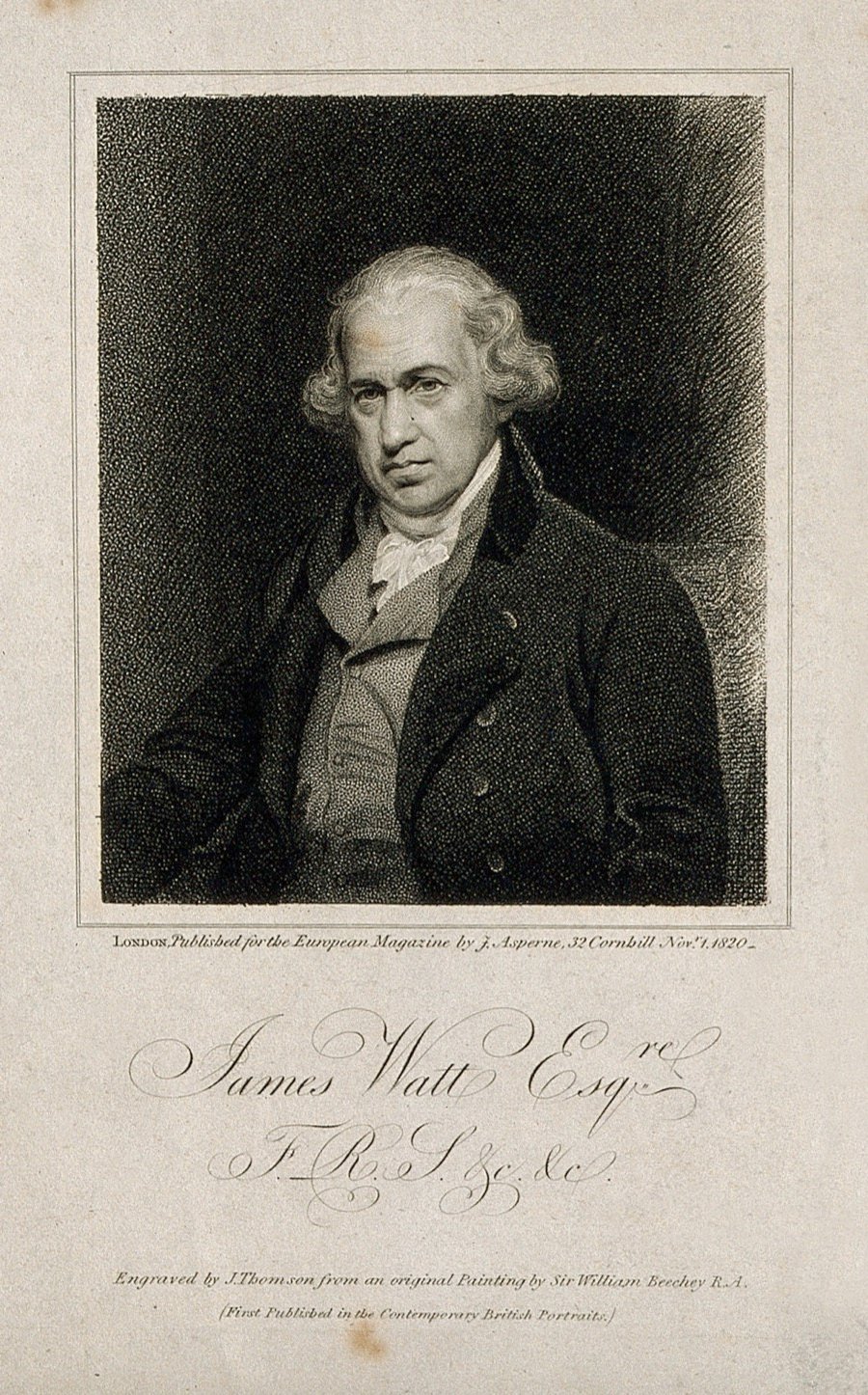
Use this steam-engine fact to challenge the “rapid mechanisation” image directly: even the most powerful new technology, one that enhanced the productivity of labour manifold, was slow to be accepted by industrialists in England, so industrialisation clearly did not spread through instant, dramatic mechanisation.
Historians now recognise that the typical mid-19th-century British worker was not a machine operator but the traditional craftsperson and labourer.
the chapter’s central correction to the “machines everywhere” myth
2Hand Labour and Steam Power
Victorian Britain had no shortage of human labour. Poor peasants and vagrants kept moving to the cities looking for work, and when labour is plentiful, wages stay low. So industrialists felt no pressure to buy expensive, labour-replacing machines.
| Industry | When demand peaked | Why hand labour suited it |
|---|---|---|
| Gas works and breweries | Cold months | Needed extra hands only for a season |
| Bookbinders and printers | Before Christmas | Demand spiked once a year |
| Ship repair at the waterfront | Winter | Ships were repaired and spruced up |
Wherever production fluctuated like this with the season, industrialists preferred to hire and release hand labour rather than invest in machines that ran all year round. Machines were also oriented to producing uniform, standardised goods for a mass market. But much of the market wanted goods with intricate designs and unusual shapes. In mid-19th-century Britain, 500 varieties of hammers and 45 kinds of axes were still made by hand, because they required human skill, not mechanical technology.
Handmade goods
- Preferred by the upper classes: aristocrats and the bourgeoisie
- Symbol of refinement, individually finished
- Better finished and carefully designed
Machine-made goods
- Uniform, mass-produced
- Cheaper to make in bulk
- Sent mostly for export to the colonies
Countries that actually had a labour shortage, like 19th-century America, were the ones keen on using machines to save on workers. Britain, with plenty of hands, felt no such need.
2.1 Life of the Workers
An abundance of labour was good for factory owners but hard on workers. Getting a job at all depended heavily on friendship and family networks: a relative or friend already inside a factory made it far more likely you would be hired quickly. Without such connections, many job-seekers had to wait weeks, sleeping under bridges or in night shelters.
Night Refuges
- Set up by private individuals
- Somewhere to spend the night
Casual Wards
- Maintained by the Poor Law authorities
- The book’s Fig. 10 caption adds that in the Poor Law workhouses everyone had a medical examination and had to do hard labour
Seasonal work meant long stretches with no work at all; some workers went home to the villages after winter, most simply hunted for odd jobs in the city. Wages did rise somewhat in the early 19th century, but average figures hide real hardship. During the long Napoleonic War, prices rose so fast that the real value of wages fell sharply, and income depended not just on the wage rate but on how many days a worker actually found employment.
This constant fear of unemployment made workers hostile to new technology.
The Spinning Jenny, invented by James Hargreaves in 1764, let one worker turn a single wheel and spin several threads on many spindles at once. It sped up spinning enormously, and sharply reduced the demand for spinners’ labour.

When the Spinning Jenny was introduced into the woollen industry, women who lived on hand-spinning began attacking the new machines, because the machines had taken away their work. This conflict over the Jenny ran on for a long time.
| Source in the book | Who | What it shows |
|---|---|---|
| Source A | Will Thorne, who went in search of seasonal work | How job-seekers walked to London in search of work: he set out in November 1881 with two friends, “Some days we walked as much as twenty miles”, and their money was gone by the end of the third day |
| Source B | A magistrate’s report, 1790 | Colliers’ wives, who “had lost their work to spinning engines”, came to cut to pieces a machine they feared would “lessen the demand for manual labour”; “The women became clamorous”, while the men were “induced to desist from their purpose and return peaceably home” |
After the 1840s, building activity intensified in the cities (wider roads, new railway stations and lines, tunnels, drainage and river embankments), opening up greater opportunities of employment. The transport industry’s workforce doubled in the 1840s, and doubled again over the next 30 years.
3Industrialisation in the Colonies
3.1 The Age of Indian Textiles
Before machine industries existed anywhere, Indian silk and cotton goods dominated the world’s textile trade. Coarser cotton was made in many countries, but the finest varieties usually came from India, and they travelled both by land and by sea.
| Route | Carried by | Connected India to |
|---|---|---|
| Overland: Punjab to Afghanistan, eastern Persia, Central Asia (by camel, through mountain passes and deserts) | Armenian and Persian merchants | Central and West Asia |
| Sea: via Surat, on the Gujarat coast | Indian merchants and bankers | The Gulf and the Red Sea ports |
| Sea: via Masulipatam (Coromandel coast) and Hoogly (Bengal) | Indian merchants and bankers | Southeast Asian ports |
Indian merchants and bankers ran the whole network: financing production, carrying goods and supplying the big export houses. Supply merchants gave weavers advances, collected the finished cloth, and carried it to the ports, where brokers for the big shippers negotiated the price.
By the 1750s, this Indian-controlled network was already breaking down. European companies first won concessions from local courts, then monopoly rights to trade, and this crushed the old ports.
As Surat and Hoogly decayed, Bombay and Calcutta grew in their place, now firmly under European control and carried in European ships. Many old Indian trading houses collapsed; those that survived had to work inside a network the European companies now controlled.
3.2 What Happened to Weavers?
Strangely, the East India Company’s growing political power after the 1760s did NOT immediately hurt textile exports. British cotton industries had not yet expanded, and Europe still wanted fine Indian textiles badly. Before the Company won political control of Bengal and Carnatic (1760s-70s), French, Dutch, Portuguese and local traders all competed for cloth, so weavers and merchants could bargain and sell to the highest bidder. In their letters back to London, Company officials continuously complained of difficulties of supply and the high prices.
Everything changed once the Company held political power and could enforce a monopoly.
A gomastha was a paid Company servant sent to supervise weavers directly, collect the cloth they produced, and examine its quality, replacing the earlier supply merchants who had lived within the weaving villages.
Weavers eagerly took the early advances hoping to earn more, and many had to lease out their small plots of land to weave full time, with the whole family, including children, put to work. But the new gomasthas were outsiders with no old ties to the village. They behaved arrogantly, arrived with sepoys and peons, and punished weavers for delays in supply, often by beating and flogging them.
The British called an Indian soldier in their service a sepoy, their pronunciation of the word sipahi.
Weavers fought back in the ways available to them:
Migration
Many weavers in Carnatic and Bengal deserted their villages and set up looms elsewhere, wherever they had family.
Revolt
In some places, weavers joined village traders in open revolt against the Company and its officials.
Refusal
Over time, many weavers simply refused new loans, shut down their workshops, and took up farm labour instead.
3.3 Manchester Comes to India
In 1772 a Company official, Henry Patullo, confidently said the demand for Indian textiles could never fall, since no other nation made goods of the same quality. He was wrong.
Why? As England’s own cotton industry grew, its industrialists pressured the government to tax imported cotton textiles, protecting Manchester at home, while also persuading the East India Company to sell British manufactures in Indian markets as well.
Indian cotton weavers were squeezed from both sides together: their export market abroad collapsed, AND their local market at home shrank, glutted with cheap Manchester machine-made cloth. By the 1850s most weaving regions reported decline and desolation.
Then, in the 1860s, a fresh problem hit: when the American Civil War cut off US cotton supplies, Britain turned to India for raw cotton instead. As India’s raw cotton exports rose, its price shot up at home, and Indian weavers were left starved of good-quality raw material, forced to buy at exorbitant prices, and weaving simply stopped paying. By the century’s end, Indian factories themselves had begun flooding the market with machine-made goods, adding a third blow.
| Source in the book | Who | What it shows |
|---|---|---|
| Source C | The Commissioner of Patna | Twenty years earlier “a brisk trade was carried on in the manufacture of cloth at Jahanabad, and Behar”; it had “entirely ceased” in Jahanabad and was “very limited” in Behar, “in consequence of the cheap and durable goods from Manchester with which the Native manufactures are unable to compete” |
| Source D | Census Report of Central Provinces, 1872, on the Koshtis, a community of weavers | The Koshtis “have fallen upon evil times. They are unable to compete with the showy goods which Manchester sends in such profusion”, and many had emigrated, “chiefly to Berar”, to work as day labourers |
4Factories Come Up
4.1 The Early Entrepreneurs
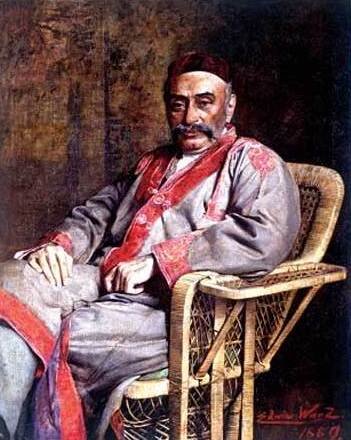
Many of India’s earliest industrial fortunes began in the China trade: exporting opium to China and bringing tea back to England, from the late 18th century. Indians who financed, supplied and shipped this trade later turned their profits into industry.
Dwarkanath Tagore
Made his fortune in the China trade, then set up six joint-stock companies in the 1830s-40s. His enterprises sank in the wider business crisis of the 1840s.
Dinshaw Petit and Jamsetjee Nusserwanjee Tata
Bombay Parsis who built huge industrial empires, with early wealth from both China exports and raw cotton shipments to England.
Seth Hukumchand and G.D. Birla’s family
Hukumchand, a Marwari businessman, set up India’s first Indian-owned jute mill in Calcutta in 1917, after trading with China. G.D. Birla’s father and grandfather also traded with China.

But colonial rule also squeezed Indian merchants hard: they were barred from trading manufactured goods with Europe, pushed into exporting mostly raw materials and food grains such as raw cotton, opium, wheat and indigo, and gradually edged out of the shipping business too.
“Who controlled Indian industry before the First World War?” The answer is European Managing Agencies: they mobilised capital, set up joint-stock companies and made all investment and business decisions, although in most instances Indian financiers provided the capital.
| Managing Agency | What it actually did |
|---|---|
| Bird Heiglers & Co., Andrew Yule, Jardine Skinner & Co. (the three biggest) | Mobilised capital and ran joint-stock companies. In most instances Indian financiers provided the capital, while the European Agencies made all investment and business decisions, and ran their own chambers of commerce that Indians could not join. |
4.2 Where Did the Workers Come From?
Most workers in an industrial region came from the surrounding districts. In 1911, over half the workers in Bombay’s cotton mills came from the single neighbouring district of Ratnagiri, while Kanpur’s mills drew most of their hands from villages inside Kanpur district itself. Millworkers routinely moved between village and city, going home for harvests and festivals. Later, as news of jobs travelled further, workers came from as far as the United Provinces to work in Bombay’s textile mills and Calcutta’s jute mills.
Getting a job was never easy, since job-seekers always outnumbered jobs, and entry into the mills was tightly controlled.
A jobber was an old, trusted worker whom an industrialist employed to recruit new hands, usually from his own village. He helped new workers settle in the city and lent them money in a crisis, but this power soon let him demand money and gifts, and control workers’ lives.
| Source in the book | Who | What it shows |
|---|---|---|
| Source E | Vasant Parkar, once a millworker in Bombay | “The workers would pay the jobbers money to get their sons work in the mill”; the millworker “was closely associated with his village, physically and emotionally”, going home for the harvest and for sowing, with leave granted by the mills |
| Source F | Bhai Bhosle, a trade unionist of Bombay, recalling the 1930s and 1940s | “the shift was 10 hours – from 5 pm to 3 am – terrible working hours”; his father worked for 35 years, fell ill with an asthma-like disease and went back to the village |
5The Peculiarities of Industrial Growth
European Managing Agencies invested mainly in tea and coffee plantations, mining, indigo and jute, using cheap land from the colonial government. Most of these were products required primarily for export trade and not for sale in India.
When Indian businessmen entered industry in the late 19th century, they deliberately avoided competing head-on with Manchester in the Indian market. Since yarn was not an important part of British imports into India (the little yarn imported was only of the superior variety), the earliest Indian cotton mills made coarse cotton yarn rather than cloth, sold to Indian handloom weavers, or exported to China.
The early 20th century brought sharp change. The Swadeshi movement mobilised people to boycott foreign cloth, and industrial groups organised for tariff protection. From 1906, Chinese and Japanese mills flooded China’s own market, so Indian yarn exports there declined, and Indian industrialists shifted from yarn to cloth production instead. Cotton piece-goods output in India doubled between 1900 and 1912.
Industrial growth was still slow before the First World War. The war changed everything: British mills turned to war production, Manchester’s imports into India fell away, and Indian mills suddenly had a vast home market of their own.
Jute bags
For war needs
Cloth, tents, boots
Army uniforms, tents and leather boots
Saddles and more
Horse and mule saddles, and many other items
New factories opened, old ones ran multiple shifts, more workers were hired, and everyone worked longer hours as industrial production boomed through the war years. After the war, Manchester never recovered its old place in India. Britain’s economy crumbled after the war, unable to modernise and compete with the US, Germany and Japan, so its cotton exports collapsed while local Indian industrialists consolidated their hold on the home market.
5.1 Small-scale Industries Predominate
Even as factory industry grew steadily after the war, large-scale industry stayed a small part of the whole economy.
About 67% of India’s large industries in 1911 were concentrated in just two regions, Bengal and Bombay. Everywhere else, small workshops and household units, often invisible in ordinary alleys and bylanes, did most of the work.
| Region (1931) |
|---|
| Punjab |
| United Provinces |
| Bihar |
| Central Provinces |
| Bengal |
| Bombay |
| Madras |
The book shows these as the regions holding India’s large-scale industries in 1931 (its Fig. 24), carried here as a list rather than as a map. In the book’s figure, the circles indicate the size of industries in the different regions.
Handicrafts production actually grew in the 20th century in some cases. Cheap machine-made thread had wiped out the spinning industry in the 19th century, but weavers survived, and handloom cloth production almost trebled between 1900 and 1940. Why? Partly because of technological changes: weavers adopted new technology where it improved production without excessively pushing up costs.
The fly shuttle is a mechanical device, moved by ropes and pulleys, that places the horizontal weft threads into the vertical warp threads. It let a weaver operate a much larger loom and weave wider pieces of cloth, with less labour.
Coarse cloth weavers
- Cloth bought mainly by the poor
- Demand swung wildly with harvests and famines
- Hit hard whenever the rural poor had no cash
Fine cloth weavers
- Cloth bought by the well-to-do
- Demand stayed stable even in famine years
- Banarasi and Baluchari saris kept selling; mills could not imitate specialised weaves, so woven-border saris and Madras lungis could not be easily displaced
Weavers and craftspeople who expanded production this way did not necessarily prosper. They lived hard lives, working long hours with the whole household, including children, at work. But as the chapter itself insists, they were not simply leftovers from an older time: their life and labour was an integral part of the process of industrialisation itself.
6Market for Goods
When a new product appears, people first have to be persuaded that they need it, and the chapter traces this back to the very start of the industrial age through advertisements.
Manchester industrialists put labels on their cloth bundles to show the place of manufacture and act as a mark of quality. Buyers who saw “MADE IN MANCHESTER” printed boldly were meant to feel confident buying it. These labels also carried images, very often Indian gods and goddesses like Krishna, Lakshmi, Saraswati and Kartika, which lent the imported cloth a feeling of divine approval and made it look familiar to Indian buyers. Historic and royal figures, such as Maharaja Ranjit Singh, appeared on labels too, to earn respect for the product.
From the late 19th century, manufacturers began printing calendars, which reached even people who could not read newspapers or magazines. Hung in tea shops, offices and homes rich and poor alike, a calendar put its advertisement in front of the same household every single day, all year. The Gripe Water calendar of 1928 used an image of baby Krishna, and the Sunlight Soap calendar of 1934 showed the god Vishnu bringing sunlight from the sky.
When Indian manufacturers began advertising, their message turned explicitly nationalist: buy what Indians make, because you care about the nation. This is the direct link between advertising and the swadeshi movement.
7Conclusion
The age of industry did bring real technological change, the rise of factories, and a whole new industrial labour force. But as this chapter has shown again and again, hand technology and small-scale production never disappeared. They stayed a genuinely important part of the industrial landscape throughout, in both Britain and India. Look back at the two opening pictures now: the goddess of progress and the two magicians told only half the story.
- Proto-industrialisation came before factories: merchants funded rural producers because urban guilds blocked them in towns
- England’s earliest factories came up by the 1730s and multiplied in the late 18th century; Richard Arkwright’s cotton mill brought all production processes under one roof and one management
- Industrial change was slow and patchy: less than 20% of Britain’s workforce was in advanced industry even by 1900, and only 321 steam engines existed in England in the early 1800s
- Britain had abundant, cheap labour, so hand production of intricate goods (like 500 kinds of hammers) survived alongside factories
- The East India Company controlled Indian weavers through the gomastha and the system of advances, tying them down with loans and low prices
- Manchester’s rise flipped India’s trade: piece-goods fell from 33% of exports (1811-12) to 3% (1850-51), while cotton piece-goods rose past 50% of India’s imports by the 1870s
- India’s factories (Bombay 1854, Bengal jute 1855, Madras 1874) grew partly from capital raised in the China trade and other trade networks, but European Managing Agencies controlled a large sector of Indian industry until the First World War
- The First World War brought an industrial boom, as Indian factories supplied war needs while Manchester’s imports into India declined
- Handloom cloth production almost trebled between 1900 and 1940, partly through innovations like the fly shuttle; demand for fine cloth, unlike coarse cloth, held up in famines
- Advertisements, Manchester’s labels and Indian calendars all shaped what people bought, and later carried the swadeshi message
- Can I explain proto-industrialisation and name the five roles in the wool production chain, in order?
- Can I state all four points the book makes about the slow pace of industrial change?
- Can I describe how the East India Company controlled weavers, step by step, using the word gomastha correctly?
- Can I quote the export and import percentage figures that show Manchester’s rise and India’s decline?
- Can I explain why large-scale industry stayed a small part of India’s economy even in 1931?