
- What yoga means, its classical definitions, and why it matters for body, mind and spirit
- The eight limbs of Ashtanga Yoga, with the five yamas and five niyamas
- The six yogic kriyas (Shat Karma), with the procedure, benefits and precautions of Kapalabhati, Trataka, Jal Neti and Vamana Dhauti
- Pranayama: its three phases, the essentials before practice, and six pranayamas step by step, each drawn as a stick figure
- How yoga manages stress: the five approaches, the general guidelines, the 30-minute stress protocol and Yoga Nidra
In the CBSE Physical Education (048) curriculum this is Unit 3: Yoga, worth 6 marks + 1 “b” mark in Class XI (the “b” mark is a concept question, such as a tactile diagram or case study, for visually impaired candidates). The prescribed book is CBSE’s own Physical Education Class XI. The curriculum lists five topics, and this page follows them in order: meaning and importance of yoga, introduction to Ashtanga Yoga, yogic kriyas (Shat Karma), pranayama and its types, and active lifestyle and stress management through yoga.
1 Meaning, Definition and Importance of Yoga
1.1 Meaning of yoga
The word yoga comes from the Sanskrit word “yuj”, which means union. Yoga is the union of the spirit with the soul.
The book explains this union in several pairs. Learn the pairs; a 2-mark “meaning of yoga” answer can quote any two.
| Yoga is the union of | with |
|---|---|
| the spirit | the soul |
| the Ida nerve | the Pingla nerve |
| the sun nerve | the moon nerve |
| negative | positive |
| Shiva (spirit) | Shakti (mother nature) |
| Mooladhar Chakra (coccyx plexus) | Sahasrar Chakra (thousand lotus petal plexus) |
| Prana Vayu (life current) | Apan Vayu (excretion current) |
According to Hindu scriptures this union is a long process that may even take several births. The book calls yoga a science of experiencing that lifts humanity “from animal-hood to God-hood”, brings happiness, and removes doubt, confusion and intellectual dissatisfaction. Yoga is not merely a means to treat diseases: it brings health and happiness on the causal, astral and physical planes. The union can be reached in many ways, but yoga as given by Maharishi Patanjali is described as the fastest and most effective way.
1.2 Definitions of yoga
| Source | Definition |
|---|---|
| Maharishi Patanjali | Yoga Chitta Vritti nirodha: stillness in the whirlpools (modifications) of the mind |
| Lord Krishna, Bhagavad Gita | Yogah karmasu kaushalam: skill in action |
| Yoga Vasistha | A skilful and subtle process to calm the mind |
| Maitri Upanishad | The oneness of breath, mind and senses, and the abandonment of all states of existence |
| Yoga Bija | The unification of the web of dualities (Dvandva Jaala) |
| Brahmaanda Purana | “Yoga is said to be in control.” |
“Skill in action” is the Bhagavad Gita (Lord Krishna), not Patanjali. Patanjali’s definition is about the mind: Chitta Vritti nirodha.
In the modern era, Swami Vivekananda introduced the importance of yoga to the Western world when he addressed the World Parliament of Religions at Chicago in 1893. He is credited as the greatest proponent of yoga in the West.
1.3 International Day of Yoga
Why 21 June? It is the longest day of the year in the Northern Hemisphere, and the date is important in many parts of the world.
1.4 Importance of yoga
Yoga is not a religion; it is a way of living that ensures “a healthy mind in a healthy body”. A human being is a physical, mental and spiritual being, and yoga promotes a balanced development of all three. Other forms of exercise, such as aerobics, assure only physical well-being and have little to do with the spiritual or astral body.
The book says yogic exercise “recharges with cosmic energy”. This helps in eight ways:
Equilibrium
Attainment of perfect equilibrium and harmony
Self-healing
Promotes self-healing
Cleansing
Removes negative blocks from the mind and toxins from the body
Personal power
Enhances personal power
Self-awareness
Increases self-awareness
Concentration
Helps attention, focus and concentration, especially for children
Less stress
Reduces stress and tension by activating the parasympathetic nervous system
Control
Gives the power to control the body and mind
2 Introduction to Ashtanga Yoga
Ashtanga Yoga is Patanjali’s path of yoga in eight limbs (stages): Yama, Niyama, Asana, Pranayama, Pratyahara, Dharana, Dhyana and Samadhi.
Yoga is more than a physical discipline; it is a way of life and a philosophical path. The yamas (social restraints) and niyamas (self-discipline) together are ten common-sense guidelines for a healthier, happier life. They are to be thought over with a rational mind: yoga is not about mindlessly accepting rules imposed from outside, it is about finding the truth for oneself and “connecting” with it.
“Yes, New Asanas Prepare People’s Deep Daily Samadhi”
Y-N-A-P-P-D-D-S: Yama, Niyama, Asana, Pranayama, Pratyahara, Dharana, Dhyana, Samadhi. The first is Yama, the last is Samadhi, and the last three (Dharana, Dhyana, Samadhi) are the stages of meditation.
2.1 Yama (first limb)
Yamas are the five codes of conduct, or moral disciplines, towards the outside world. They ask us to avoid violence, lying, stealing, wasting energy and possessiveness.
| Yama | Meaning | What it asks of us |
|---|---|---|
| Ahimsa | Non-harming (non-violence) | Kindness to others, to animals and to ourselves in every thought and action. It is the most important principle: if the truth would cause harm, choose the option that causes no harm. |
| Satya | Refraining from dishonesty | Living with integrity; no dishonesty or betrayal in thought, word or deed |
| Asteya | Non-stealing | Everything we need is already within us; gratitude, taking only what is freely given, no envy |
| Brahmacharya | Wise use of vitality (energy) | Using and preserving vitality responsibly, respecting others and yourself. The book says it does not mean celibacy. |
| Aparigraha | Non-possessiveness | The ability to let go: non-grasping, non-clinging, no attachment to possessions or even thoughts |
The book calls these yoga’s “golden rules”; they should be followed without the desire for an end goal.
2.2 Niyama (second limb)
Niyamas deal with the way we interact with ourselves and our internal world. They help a person regulate behaviour and keep a positive environment in which to grow.
Energy built up by practising the yamas is harnessed through the niyamas. Sage Yajnavalkya lists ten niyamas and the Bhagavad Gita lists 11, but Patanjali names five:
| Niyama | Meaning | Key point in the book |
|---|---|---|
| Saucha | Purity | External and internal purity. According to Manu, water purifies the body, truthfulness the mind, true knowledge the intellect, and knowledge and austerity the soul. Purity of intellect, speech and body. |
| Santosha | Contentment | Not desiring more than what one has earned by honest labour; equanimity whatever life brings; gratitude, joy, calm |
| Tapa | Austerity | The power to bear thirst and hunger, cold and heat, discomfort of place and posture, silent meditation and fasts; the perfect man practises both mental and physical austerity |
| Swadhyaya | Self-education | According to the commentator Vyas: study of the Vedas and Upanishads with recitation of the Gayatri Mantra and the Om Mantra |
| Ishwar Pranidhan | Meditation on the Divine | Dedicating all actions (of intellect, speech or body) to the Divine, whose decision governs their results |
Maharishi Patanjali is believed to have lived some time during the 2nd century BCE. His treatise on yoga is the “Patanjali Yoga Sutra”. According to Hindu mythology, Shiva is considered the Supreme Lord of Yoga.
2.3 Benefits of practising yamas and niyamas
- They help manage our energy in an integrated way, matching our outer life to our inner development.
- They help us see ourselves with compassion and awareness.
- They help us respect the values of life and balance inner growth with outer restraint.
- They are not about right and wrong but about being honest with oneself; living by them means living better and moving towards the Divine.
2.4 Asana (third limb)
Asana is a posture in harmony with one’s inner consciousness. It aims at a sustained and comfortable sitting posture to make meditation possible.
Asanas also balance and harmonise the basic structure of the body, which is why they have a range of therapeutic uses.
2.5 Pranayama (fourth limb)
Pranayama (Prana + Yama) means maintaining prana (the life force) in a healthy manner throughout life. It is more than a breath-control exercise: it is the art of the life force.
Ancient yogis studied prana and devised practices to master it. Breath is basic to life, so pranayama harnesses the prana in and around us and, by deepening and extending it, leads to inner peace. According to Hatha Yoga, pranayamas are classified into eight:
The pranayamas and how to do them are in Section 4.
2.6 Pratyahara (fifth limb)
Pratyahara is the withdrawal of the senses from external objects. It is the fifth of the eight stages of Patanjali’s Ashtanga Yoga.
It is also the first stage of the six-branch yoga of the Buddhist Kalachakra tantra, where the five senses are withdrawn from external objects.
2.7 Dharana, Dhyana and Samadhi (the last three limbs)
The last three limbs are the three essential stages of meditation.

Dhyana
- The state of meditation: the mind stays concentrated without distraction
- Unlike the other six limbs, not a technique but a state of mind; the quiet mind produces few or no thoughts
- The seventh limb; comes before Samadhi
Samadhi
- Total absorption: becoming one with the true self and merging into the object of concentration; perceiver and perceived unite
- The acme of all yogic endeavours, the connection between the individual and the universal soul
- The eighth and final limb
3 Yogic Kriyas (Shat Karma)
3.1 Why kriyas: the tridosha theory
According to the tridosha theory, a basic theory of Indian medicine, the body is made of three constituents. If they go out of balance, disease follows. Yoga recommends six purification processes to bring and keep these doshas in balance.
Vata
The mechanical functional constituent of the body
Pitta
The chemical functional constituent of the body
Kapha
The material functional constituent of the body
Yogic kriyas (Shat kriyas or Shat Karma) are the six purification (cleansing) processes of yoga that keep the three doshas, Vata, Pitta and Kapha, in balance and purify the whole body.
The book calls Nauli and Dhauti higher practices. It gives the method of Kapalabhati, Trataka, Neti (Jal Neti) and Dhauti (Vamana Dhauti), below.
3.2 Kapalabhati
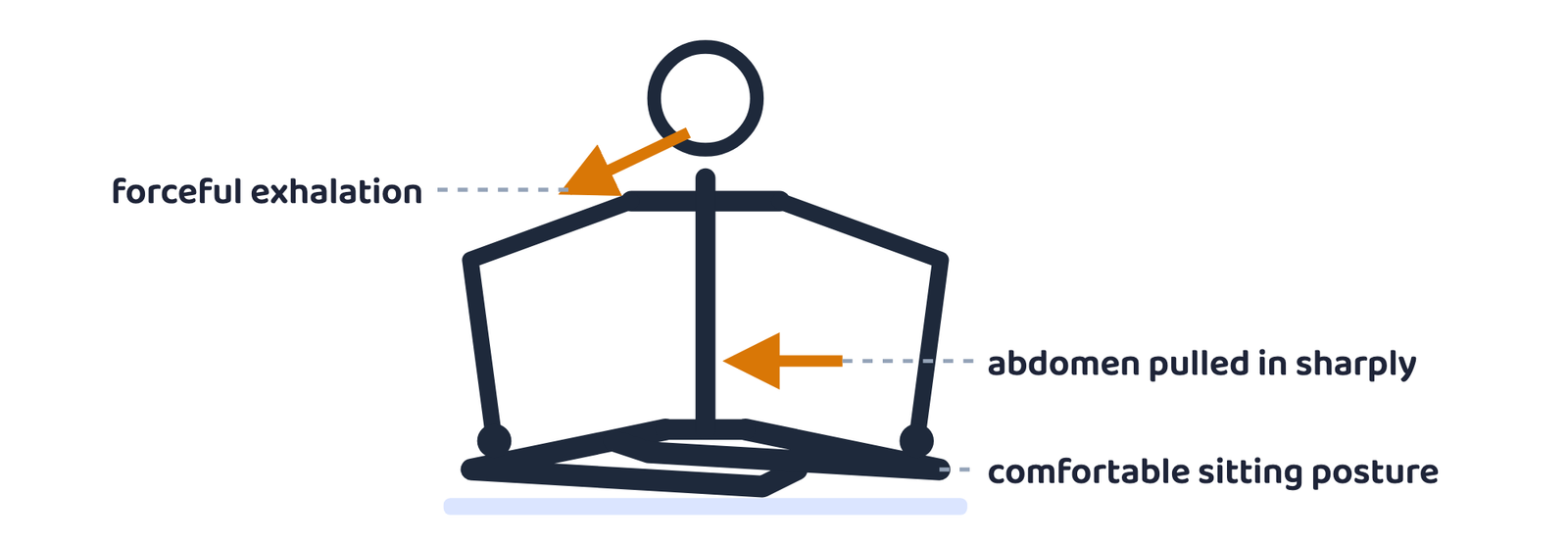
- Sit in a comfortable sitting position.
- Exhale forcefully by contracting the abdomen, then inhale.
- The exhalations and inhalations go with abdominal movements, in quick succession, as many times as one’s capacity allows.
It is forceful and fast diaphragmatic breathing.
Benefits
- A great cleanser of the respiratory passages, including the sinuses
- Improves respiratory function and promotes circulation
- Improves balance
- Removes acidity and gas-related problems
- The book says it cures sinus, asthma and hair loss
Precautions
- Pregnant women, patients with a slipped disc and asthma patients should avoid it
- Should not be performed during menstruation
3.3 Trataka

- Choose a point to gaze at: a black dot on paper, an unwavering flame, or any other object of choice.
- Gaze at it steadily, without blinking (still-gazing).
- Continue until tears roll down.
Benefits
- Improves eyesight and tones up the visual mechanism
- Helps concentration
- Calms the mind and removes distractions
Precautions
- People with epilepsy should not practise Trataka on a candle
- Kids should avoid it
3.4 Neti: Jal Neti
Neti is the yogic cleansing technique meant mainly to clean the air passages in the head. In Jal Neti (jal = water) yogis cleanse the nose with water, to stay away from disease and to use the breath well, without blockages.
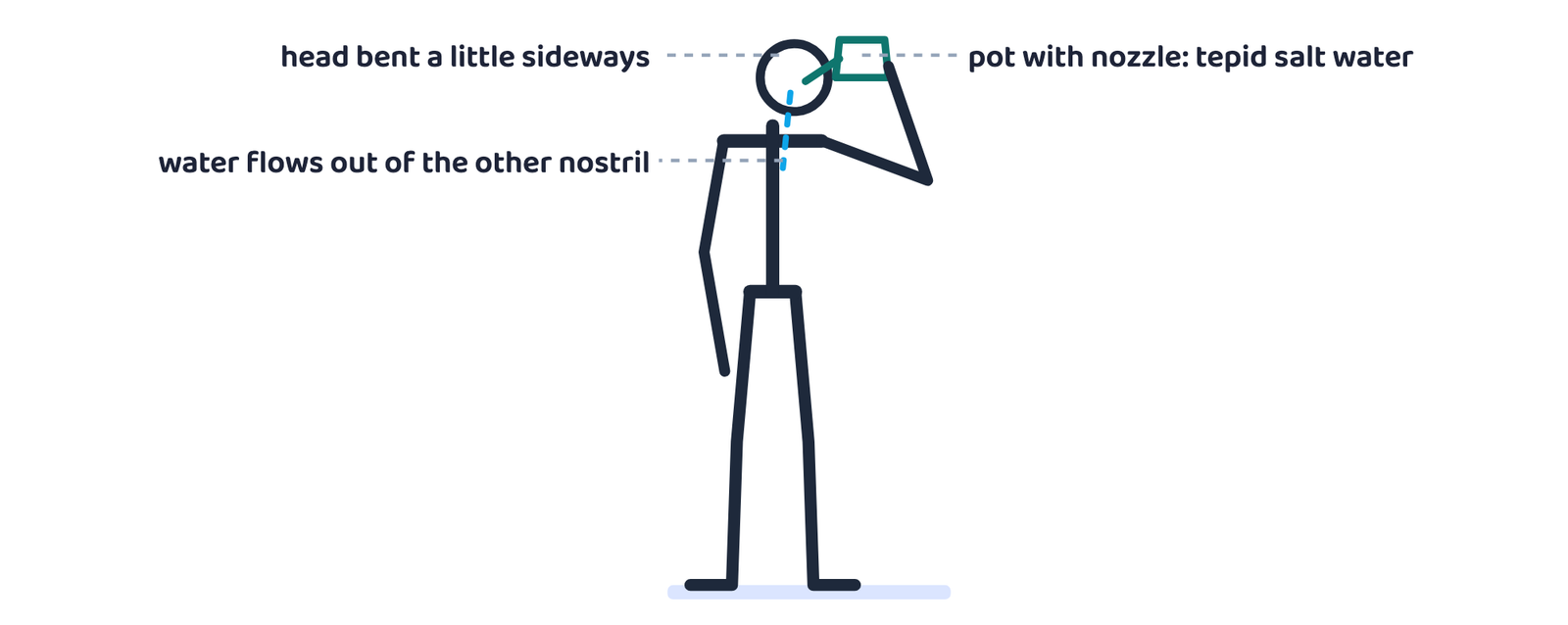
- Take tepid water with a little salt in a feeding cup or small pot with a nozzle.
- Insert the nozzle in one nostril.
- Bend the head a little sideways and pour the water slowly into the nostril.
- Repeat with the other nostril. The nasal cavity is cleansed with water.
- Removes excess mucus and impurities in the nose
- Reduces inflammatory conditions and builds up resistance
- Helps prevent cold and cough
- Practised daily, it can cure headache and migraine
3.5 Dhauti: Vamana Dhauti
Dhauti means washing, so every kriya that involves washing is a dhauti kriya. Vamana Dhauti is known in yogic literature as Kunjala, the gesture of the elephant. It is one of the six purification methods (shat karma) of Hatha Yoga.
- Removes all stomach contents, including excess secretions and undigested food
- Removes gas, acidity and indigestion
- Helps cure cough and sore throat
| Kriya | Cleans | Key action | Avoid / precaution |
|---|---|---|---|
| Kapalabhati | Respiratory passages, sinuses | Forceful exhalation, quick succession | Pregnancy, slipped disc, asthma patients, menstruation |
| Trataka | Eyes and mind | Blinkless gazing until tears flow | Epilepsy (candle), kids |
| Jal Neti | Nasal passages | Tepid salt water into each nostril in turn | None given in the book |
| Vamana Dhauti (Kunjala) | Stomach | Drink tepid water, vomit it out | None given in the book |
Tao Porchon-Lynch (born 13 August 1918) is described in the book as an American yoga master who discovered yoga in India at the age of eight and, at 100, teaches six to eight classes a week. V. Nanammal of Coimbatore, Tamil Nadu, at 99 India’s oldest yoga teacher, received the Nari Shakti Puraskar (2016) and the Padma Shri (2018).
4 Pranayama and its Types
Pranayama is a science that regularises vital energies by regulating the breath. Its main purpose is to gain control over the Autonomous Nervous System and mental functions. These breathing practices regulate the flow of prana (vital energy) to all vital parts of the body. Regular practice can modulate the sensitivity of the chemo-receptors and makes the mind calm and quiet.
4.1 The three phases of a breath
P-K-R: Pour in, Keep, Release
Puraka = pour the air in, Kumbhaka = keep it, Rechaka = release it.
The pranayamas named in the Hatha Yoga texts in this section are: Anulom-Vilom, Suryabhedana, Ujjayi, Bhramari, Sheetkari and Sheetali. Nadi Shodhana (Anulom-Vilom), Suryabhedana, Ujjayi, Sheetali and Bhramari are the important ones to practise.
4.2 Essentials before practising pranayama
Place
Well ventilated, free from noise, insects and flies
Season to begin
Spring (March-April) or autumn (Sept-Oct); one already practising should continue
Time
Morning is best suited
Seat
Soft, thick and comfortable
Posture
Padmasana, Siddhasana, Vajrasana, Sukhasana
4.3 Anulom-Vilom (Nadi Shodhana) Pranayama
One of the fundamental pranayamas. Viloma means “produced in the reverse order”: the order of the nostrils used for inhaling and exhaling is reversed from time to time.
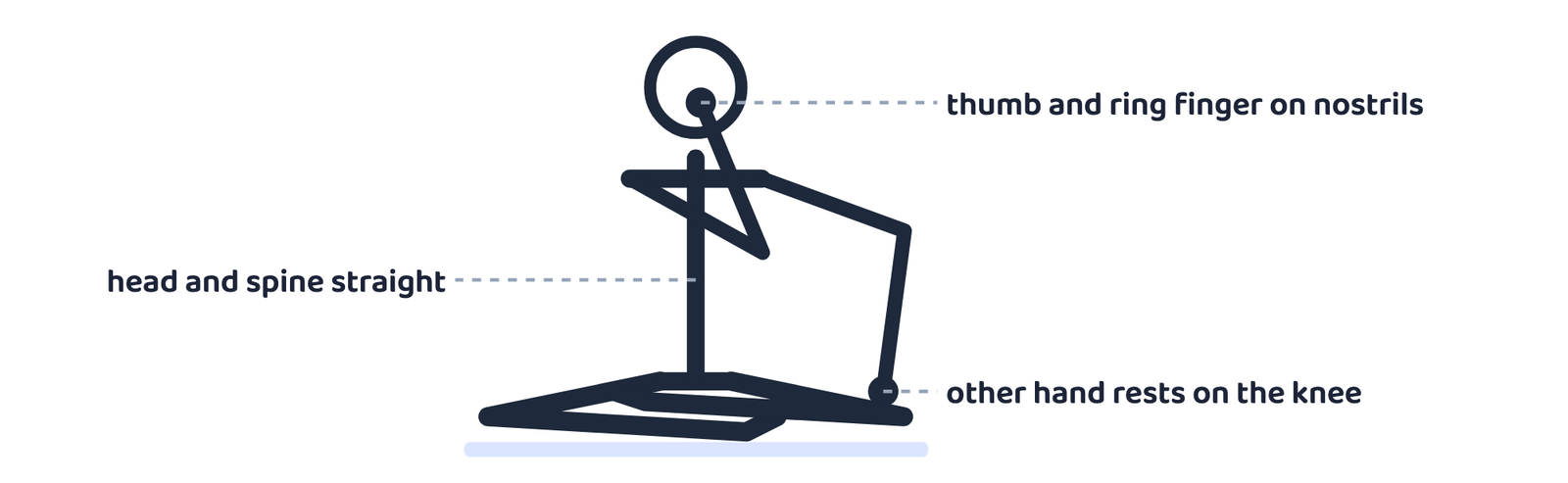
- Sit in any comfortable asana, head and spine straight, eyes closed.
- Place the right hand in jnana mudra. Close the right nostril with the right thumb and inhale through the left nostril for 5 counts.
- Release the thumb from the right nostril and close the left nostril with the ring finger.
- Exhale through the right nostril for 10 counts, slow, deep and silent. Then inhale through the right nostril for 5 counts.
- Practise 5 rounds, or for 3 to 5 minutes, with no sound as the air passes through the nostrils.
- Calms and steadies the mind, improves focus and concentration; balances the left and right hemispheres
- Strengthens the immune system
- Manages hypertension
- Provides sufficient oxygen for every cell of the body
- Removes waste products such as carbon dioxide and other toxic gases from the blood
4.4 Surya Bhedana Pranayama
Surya is the sun and bhedhana means to get through. All inhalations are through the right nostril and all exhalations through the left.

- Sit in a meditative asana (Padmasana, Sukhasana) and close the eyes.
- Close the left nostril with the middle and ring fingers of the right hand.
- Inhale slowly and silently through the right nostril, as long as is comfortable.
- Bring the hand down to the knee and retain the breath, pressing the chin firmly against the chest (chin lock) and contracting the rectum muscles (anal lock). Increase the retention gradually.
- Close the right nostril and exhale very slowly and silently through the left nostril, then release the anal lock and the chin lock.
- Relax and return. Do it 3 to 5 times.
- Purifies the brain; destroys intestinal worms and diseases from excess wind (vayu)
- Helps manage rhinitis and neuralgia
- Removes worms found in the frontal sinuses
- Good for people with low blood pressure
4.5 Ujjayi Pranayama
Both nostrils are used for inhaling and the left one for exhaling. A sound is produced by a partial closure of the glottis (the book links it to the letters “Aum”); this sound is the peculiarity of Ujjayi.

- Sit in a meditative asana with the mouth closed.
- Inhale slowly through both nostrils, smoothly and uniformly, expanding the chest.
- A peculiar hissing sound comes during inhalation because the glottis is partly closed; keep it mild and of uniform pitch.
- Retain the breath as long as is comfortable.
- Close the right nostril with the right thumb and exhale slowly through the left nostril.
- Removes heat from the head
- Makes the voice clear and melodious
- Removes phlegm in the throat; pulmonary diseases are managed
- Good for asthmatic patients and those with respiratory disorders
4.6 Bhramari Pranayama
Bhramari means a black bee: the sound made while exhaling is like a black bee buzzing. It calms the mind instantly and frees it from agitation, frustration, anxiety and anger.

- Sit in Padmasana or any comfortable sitting position.
- Close the eyes, lips and ears (close both ears with the thumbs).
- Inhale deeply, then exhale making a sound like a black bee.
Benefits
- Delights the mind
- Beneficial for pregnant women, as preparation for labour
- Improves blood circulation in the brain; clears the ears, eyes, nose and throat
Precaution
- Should not be practised on an empty stomach
4.7 Sheetkari Pranayama
Sheet = coolness, kari = which arises. Sheetkari literally means “hissing breath”: the breath is drawn in through the mouth with a hissing sound like a snake. It keeps the mind and body calm.

- Sit in Padmasana or any comfortable asana, hands on the knees in jnana mudra, eyes closed.
- Touch the palate with the tongue.
- Press the teeth tightly together, keeping the lips open.
- Draw in air through the mouth with the hissing sound “Siii”. Retain the breath as long as you can with the chin lock and the anal lock.
- Release both locks and exhale slowly through both nostrils.
Benefits
- Quenches thirst, appeases hunger, cools the body
- Destroys gulma (chronic dyspepsia), pleeha, inflammation, fever, indigestion, bilious disorders and phlegm
- Where no water is available, it relieves thirst at once
Precaution
- Not for those suffering from cold, cough or tonsillitis
4.8 Sheetali Pranayama
As the name says, Sheetali cools the system and keeps body temperature down.
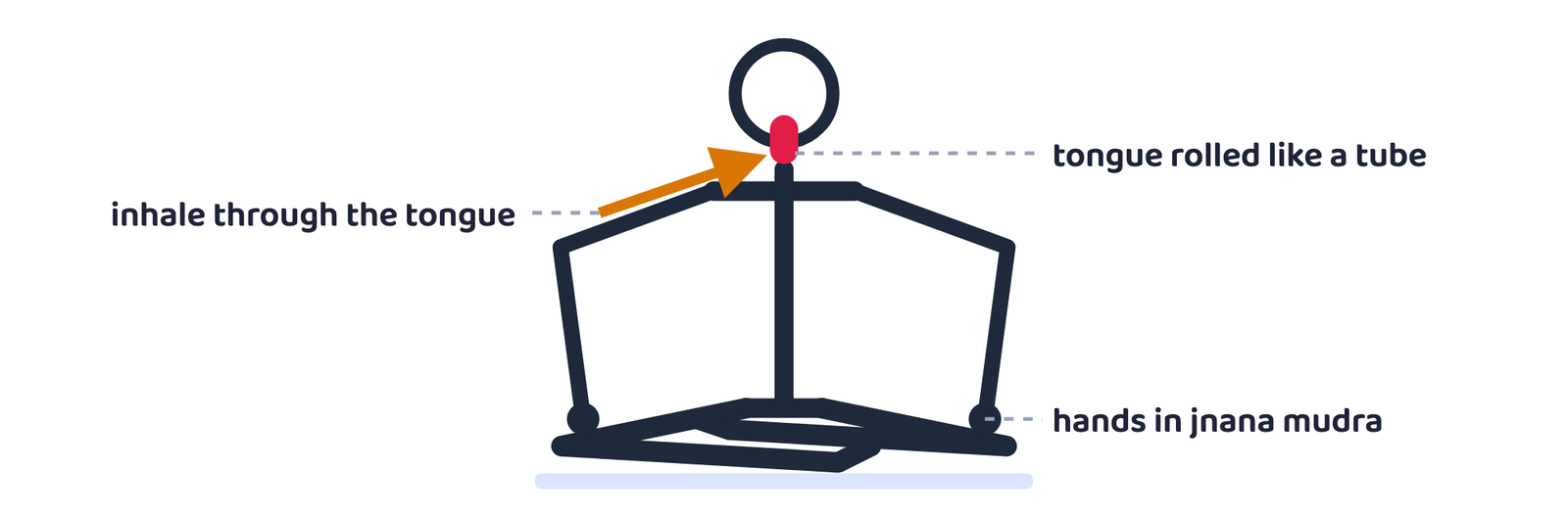
- Sit in Padmasana or any comfortable position, hands on the knees in gyan mudra, eyes gently closed.
- Open the mouth, bring the tongue out and fold both its sides lengthwise into a tube (cylinder).
- Inhale so that the air passes through the tongue; then close the mouth.
- Retain the breath as long as you can with the chin lock and the anal lock.
- Release both locks and exhale slowly through the nostrils.
- Beneficial in diseases of the throat and spleen
- Cures indigestion
- Helps control thirst and hunger; lowers blood pressure
- Beneficial for diseases caused by an imbalance of pitta dosha (heat)
- Purifies the blood
4.9 All six pranayamas at a glance
| Pranayama | Breathe in through | Breathe out through | Special feature | Key benefit / caution |
|---|---|---|---|---|
| Anulom-Vilom | One nostril (alternates) | The other nostril | Thumb + ring finger; 5 counts in, 10 out | Calm mind; manages hypertension |
| Surya Bhedana | Right nostril | Left nostril | Chin and anal lock | Low blood pressure; sinus worms |
| Ujjayi | Both nostrils | Left nostril | Partly closed glottis: sound | Clear voice; asthma |
| Bhramari | Deep breath | With bee-like hum | Thumbs close the ears | Calms the mind; not on empty stomach |
| Sheetkari | Mouth, teeth pressed (“Siii”) | Both nostrils | Hissing breath | Cools; avoid with cold, cough |
| Sheetali | Rolled tongue | Nostrils | Tongue as a tube | Cools; lowers BP; pitta |
Kapalabhati is a kriya (one of the Shat Karma), not one of these pranayamas. And the two cooling pranayamas differ in one detail: Sheetkari breathes in through the teeth, Sheetali through the rolled tongue.
5 Active Lifestyle and Stress Management through Yoga
5.1 What is stress?
Medical science defines stress as a specific response of the body to all the non-specific demands. A person feels stressed when the problems of everyday life exceed his or her resources for coping with them.
Stress is a demand on our adaptability. It does not come only from outside: it can be generated from within, from our fears, hopes, expectations and beliefs. When our resources are overworked, the exhausted body stops working smoothly, and physical signs appear: high blood pressure, high blood sugar, digestive disorders, back pain and many others.
5.2 How yoga manages stress
Yoga aligns the body, mind and intellect through proper knowledge of structure and function and through self-realisation of inner awareness.
Asanas
Stretch and tone every muscle and joint, the spine, organs and nerves; releasing physical and mental tension frees a vast amount of energy
Pranayamas
Revitalise the body and help control the mind, leaving a person calm and refreshed
Relaxation
Helps control anxiety, hypertension and other discomforts of mind and body
5.3 The five approaches to a healthy lifestyle
Yoga sees health as a whole and the person as a whole. The five approaches to manage a healthy lifestyle are ahara, vihara, achara, vichara and vyavahara.
| Approach | Means | What it covers |
|---|---|---|
| Ahara | Food and wellness | What, when, how, how much to eat, and what not to eat. Emphasis on mitahara: the stomach ½ filled with food, ¼ with water and ¼ with air; quality of food and a state of mind that adds vitality and long life. |
| Vihara | Recreation and wellness | Three components: relaxation, recreation and relationships; expressing emotion in a healthy or creative way; sound sleep |
| Achara | Right conduct | Setting and following routines; right habits, attitude and behaviour; Yama and Niyama play an important role |
| Vichara | Right thinking | A conducive frame of mind; controlling the vrittis (thoughts) of the mind and turning negative thoughts positive |
| Vyavahara | Right behaviour | The Bhagavad Gita: actions performed with detachment and duty; right behaviour towards self and others, with the principles of maitri, mudita and upeksha |
“A-V-A-V-V”: Ahara, Vihara, Achara, Vichara, Vyavahara
Food, fun, conduct, thinking, behaving. The “quality of food” approach is Ahara.
5.4 General guidelines for yoga practice
✓ Before the practice
- Saucha (cleanliness) of surroundings, body and mind
- A calm, quiet place; relaxed body and mind
- Empty or light stomach; a little honey in lukewarm water if you feel weak
- Bladder and bowels empty
- Use a mattress, yoga mat, durrie or folded blanket
- Light, comfortable cotton clothes
- Chronic disease, pain or heart problems: consult a physician or yoga therapist first
- Pregnancy and menstruation: consult a yoga expert first
✗ Do not practise
- When exhausted or ill
- In a hurry
- In acute stress conditions
5.5 Yoga protocol for stress management (30 minutes)
| S.No. | Practice | Rounds | Duration |
|---|---|---|---|
| 1 | Prayer | 1 minute | |
| 2 | Yogic Sukshma Vyayama (micro-circulation practices): neck movements (forward and backward bending, right and left bending, right and left twisting, neck rotation clockwise and anticlockwise); shoulder movements (shoulder stretch, shoulder rotation forward and backward); trunk twisting (Katishaktivikasaka); knee movement; ankle stretch and ankle rotation | Neck, shoulder, trunk: 3 rounds each · knee, ankle: 5 rounds each | 5 minutes |
| 3 | Yoga Sthula Vyayama (macro-circulation practice): Sarvangapusti | 3 rounds | |
| 4 | Yogasanas: standing (Tadasana, Urdhva Hastottanasana); sitting (Ushtrasana, Sasankasana, Uttana Mandukasana, Vakrasana); prone (Bhujangasana); supine (Pawanmuktasana, Setubandhasana) | 12 minutes | |
| 5 | Pranayama: Nadi Shodhana or Anuloma Viloma (alternate nostril breathing); Bhramari | 2 rounds; 5 rounds | 6 minutes |
| 6 | Dhyana | 5 minutes | |
| 7 | Santi Patha | 1 minute | |
| Total | 30 minutes |
5.6 The protocol asanas as stick figures
The book names these asanas with their English names but does not give their techniques. Learn the name, English name, group and final position of each, so that you can identify it from a picture and draw its stick diagram.


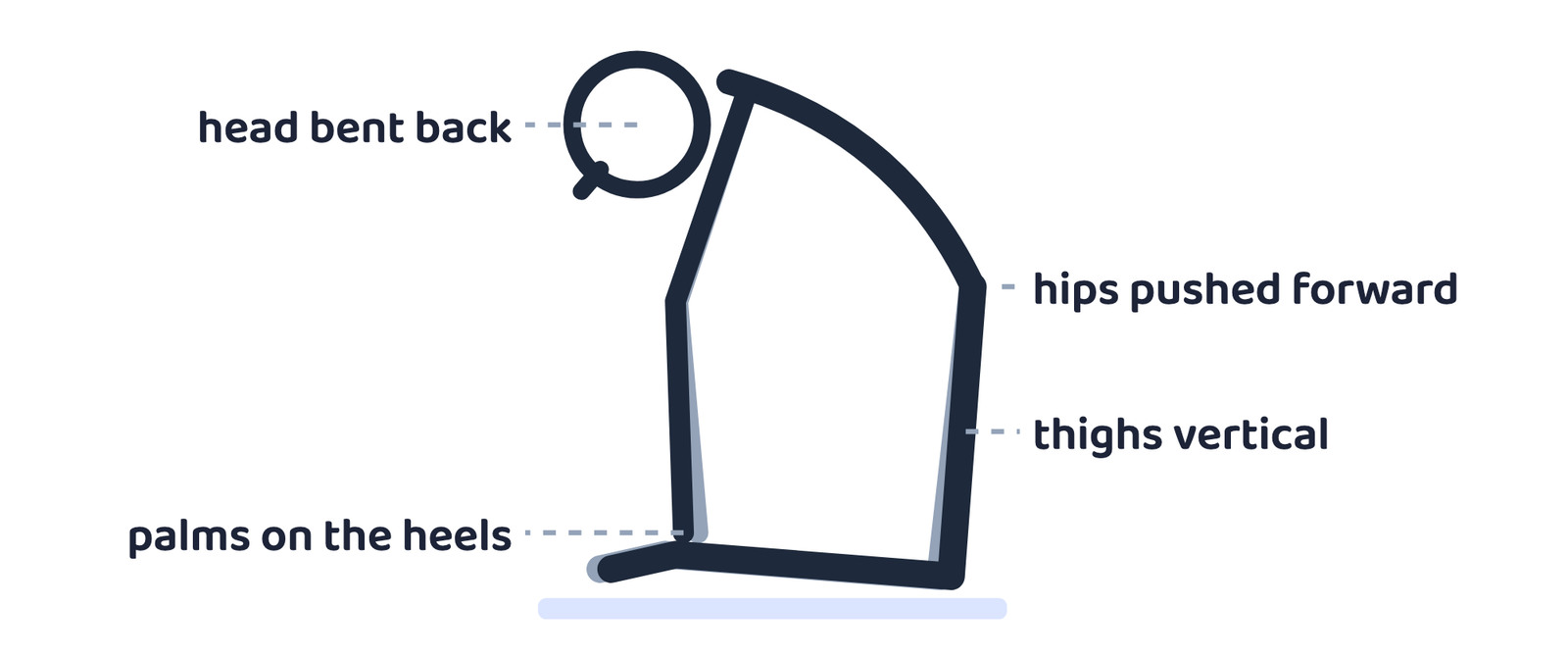


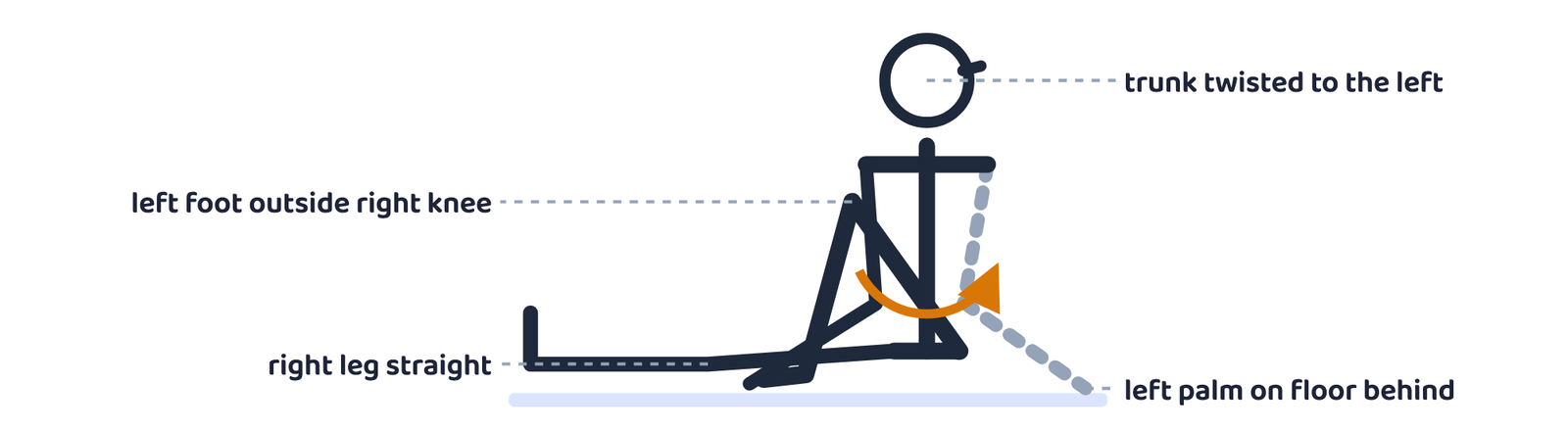

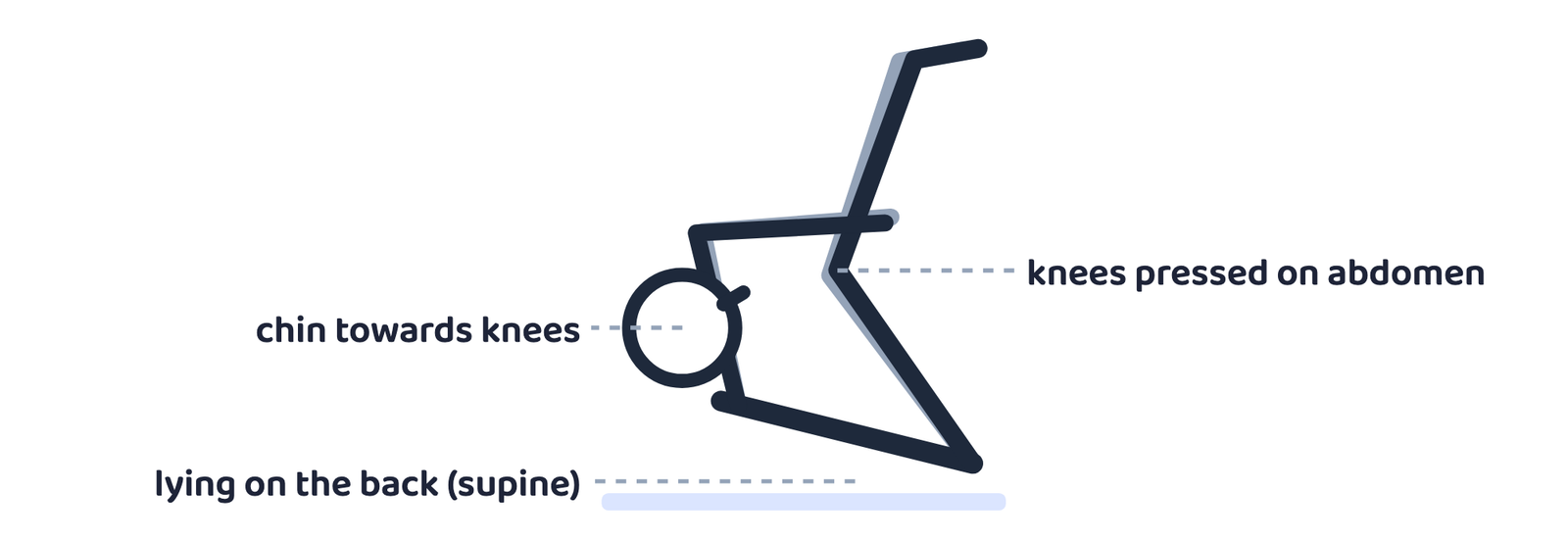

| Group | Asana | English name |
|---|---|---|
| Standing | Tadasana · Urdhva Hastottanasana | Palm Tree Pose · Raised Arm Pose |
| Sitting | Ushtrasana · Sasankasana · Uttana Mandukasana · Vakrasana | Camel Pose · Hare Pose · Stretched-up Frog Pose · Spinal Twisting Pose |
| Prone (on the stomach) | Bhujangasana | Cobra Pose |
| Supine (on the back) | Pawanmuktasana · Setubandhasana | Wind Releasing Pose · Bridge Pose |
5.7 Relaxation technique: Yoga Nidra
Yoga Nidra (yoga = union or perfect awareness, nidra = sleep) is a state in which the body appears to be asleep but the consciousness works at a deeper level of awareness. It is an effective technique for relaxation, stress management and wellness.

Things to remember
- Best done on an empty stomach
- Practise in a comfortable, clutter-free space
- Keep a blanket handy; some people feel a little cold afterwards
Contraindications
- Use your discretion with severe clinical depression or other challenging mental health conditions (it may help mild conditions)
- Never while driving or operating machinery: you may fall asleep
Relaxation
Produces deep relaxation
Mood
Reduces stress, anxiety and depression
Pain and habits
Reduces pain and dependency on drugs; reduces addictions
Sleep
Relief from insomnia; better quality of sleep
Mind
Clearer thought and memory; better learning and new skills
For a 5-mark “role of yoga in stress management” answer, write in this order: definition of stress → how asanas, pranayamas and relaxation help → the five approaches (one line each) → the protocol in brief → Yoga Nidra as the relaxation technique.
- Yoga from yuj = union. Patanjali: Chitta Vritti nirodha; Gita: Yogah karmasu kaushalam (skill in action).
- IDY: 21 June since 2015; proposed at UNGA 27 Sept 2014; declared 11 Dec 2014. Vivekananda, Chicago, 1893.
- Yoga reduces stress by activating the parasympathetic nervous system.
- Eight limbs: Yama, Niyama, Asana, Pranayama, Pratyahara (5th), Dharana, Dhyana, Samadhi (last).
- Yamas: Ahimsa, Satya, Asteya, Brahmacharya, Aparigraha. Niyamas: Saucha, Santosha, Tapa, Swadhyaya, Ishwar Pranidhan. Yajnavalkya 10, Gita 11, Patanjali 5.
- Tridosha: Vata mechanical, Pitta chemical, Kapha material. Six kriyas: Kapalabhati, Trataka, Neti, Dhauti, Nauli, Basti (colon).
- Vamana Dhauti = Kunjala. Neti is for nasal allergy; Trataka until tears roll down.
- Pranayama phases: Puraka, Kumbhaka, Rechaka. Begin in spring or autumn; morning.
- Anulom-Vilom 5 in : 10 out; Surya Bhedana right in, left out (low BP); Ujjayi both in, left out (glottis); Bhramari bee, not on empty stomach; Sheetkari teeth (avoid in cold, cough); Sheetali tongue (lowers BP, pitta).
- Five approaches: Ahara (mitahara ½ : ¼ : ¼), Vihara, Achara, Vichara, Vyavahara.
- Stress protocol 30 min: prayer 1, sukshma 5, asanas 12, pranayama 6, dhyana 5, santi patha 1.
- Yoga Nidra in Shavasana; turn to the right side at the end.
- Can I write three definitions of yoga with their sources?
- Can I list the eight limbs in order and say which are the stages of meditation?
- Can I name the five yamas and five niyamas with their meanings?
- Can I write the procedure, benefits and precautions of Kapalabhati and Trataka?
- Can I draw Anulom-Vilom, Bhramari and Sheetali as stick figures?
- Can I write the 30-minute stress protocol and the steps of Yoga Nidra?