
- Define balanced diet and nutrition, and sort foods into the energy-giving, body-building and protective groups
- Name every macro and micro nutrient with its functions and food sources, including the vitamin and mineral tables
- Tell nutritive components from non-nutritive ones, and name the anti-nutritional and beneficial factors
- Calculate BMI, judge a healthy weight, and plan eating for weight control without falling into the pitfalls of dieting
- Explain food intolerance and bust five common food myths
- Plan what a sportsperson should eat and drink before, during and after a competition
In the CBSE Physical Education (048) curriculum, this is Unit 5: Sports & Nutrition, worth 7 marks. The curriculum lists five topics: balanced diet and nutrition; macro and micro nutrients (food sources and functions); nutritive and non-nutritive components of diet; eating for weight control (healthy weight, pitfalls of dieting, food intolerance, food myths); and diet in sports before, during and after competition. The prescribed book is CBSE’s own Physical Education Class XII textbook; there is no NCERT book for this subject.
1 Balanced Diet and the Food Groups
No single food has every nutrient. So foods are put into food groups, depending on which nutrients they carry, and a good diet picks from all of them.
1.1 Eleven food groups by nutrients
| Food group | Examples | Main nutrients it gives |
|---|---|---|
| 1. Cereals and millets | Wheat, rice, jowar, bajra, ragi | Mainly carbohydrates; also protein (better when eaten with pulses), B-vitamins, iron (bajra), calcium (ragi) |
| 2. Pulses | Red gram (lobia), Bengal gram (chana), lentils, green gram (moong); whole and washed dhals | Protein (better when eaten with cereals); fair source of carbohydrates and B-vitamins, especially thiamine and niacin; whole pulses give iron and fibre; sprouts give vitamin C |
| 3. Milk and milk products | Milk, curd, cheese, paneer, khoa | Good quality protein; also carbohydrates, fat (whole milk), calcium, riboflavin. Gives all nutrients except iron and vitamin C |
| 4. Meat and meat products | Meat, fish, chicken, egg | Major source of good quality protein; B-vitamins, retinol (liver), calcium (fish). Eggs give most nutrients |
| 5. Nuts and oil seeds | Groundnuts, almonds, cashew nuts, til seeds, pistachio | Good source of fat; also protein, B-vitamins, calcium and other minerals |
| 6. Green leafy vegetables (GLVs) | Mustard (sarson), bathua, fenugreek leaves (methi), spinach (palak) | Carotene (vitamin A), B-vitamins (especially riboflavin and folic acid), iron (especially sarson and bathua), fibre; fresh GLVs give vitamin C. They contain calcium, but oxalates in GLVs bind most of it, so little is absorbed |
| 7. Root vegetables | Potato, colocasia, sweet potato, yam | Mainly carbohydrate; carotene only from yellow yam |
| 8. Other vegetables | Brinjal, ladyfinger (okra), beans, cauliflower | Fibre, vitamins, some minerals |
| 9. Fruits | Mango, apricot, orange, papaya; citrus fruits, amla, guava; dates, raisins | Carotene (mango, apricot, orange, papaya); vitamin C (citrus fruits, amla, guava); iron (dried fruits like dates and raisins); fibre from most fruits. Eat a combination of fruits |
| 10. Sugar and jaggery | Sugar, jaggery | Simply carbohydrates; jaggery also has iron |
| 11. Fats and oils | Ghee, oil, butter | Rich source of fat; vitamin D from butter and fortified oils |
1.2 Three food groups by function
The same foods can also be grouped by the job they do in the body. This is the grouping used to plan a meal.

Inside Group 3 the book lists the kinds separately: fruits (yellow and orange such as mango and papaya; citrus such as lemon, orange, mausambi; others such as apple and banana) and vegetables (green leafy such as spinach, mustard, fenugreek; yellow and orange such as carrot and pumpkin; others such as beans, okra, cauliflower; root vegetables such as potatoes and yam (arvi), which are rich in carbohydrates).
1.3 What is a balanced diet?
To get every nutrient in the right amount and right proportion, each meal should include foods from the energy-giving, body-building and protective groups.
One energy-giving food: bread (2 slices) with jam. One body-building food: egg (non-vegetarians) or paneer or sprouts (vegetarians), along with milk. One or two protective foods: fruit or fruit juice. Lunch and dinner can mix the groups in other combinations in the same way.
A balanced diet is one which contains different types of foods in such quantities and proportions that the need for calories, minerals, vitamins and other nutrients is adequately met, and a small provision is made for extra nutrients to withstand the period of leanness, that is, when adequate food or a particular nutrient is not consumed.
Nutrients act on each other
A balanced diet also thinks about how nutrients help or block each other:
✓ Helps absorption
- Taking a vitamin C source with meals increases the absorption of iron
✗ Blocks absorption
- Drinking tea with meals hampers the absorption of iron
- Excess phosphorus stops the body using calcium properly and affects bone and teeth formation, so calcium and phosphorus must be supplied in correct proportions and adequate amounts
For “importance of a balanced diet”, write separate points: it supplies all nutrients in right amounts and proportions; gives energy (energy-giving group), builds and repairs the body (body-building group) and protects and regulates body functions (protective group); keeps a reserve for the period of leanness; and takes care of how nutrients act on each other (vitamin C helps iron absorption, tea blocks it).
2 Nutrition and Nutrients
Food is any substance that nourishes our body: anything that we can digest, absorb and utilize for the physiological functions of the body, including growth and development.
Nutrition is the science of food and a study of the process that includes everything that happens to food from the time it is eaten until it is used for various functions in the body. It is the scientific study of foods and the nutrients in them; their action, interaction and balance, in health and disease. It is the study of ingestion, digestion, absorption, utilization and assimilation of nutrients present in food.
We see chapatti, rice, dhal or apple. Once food enters the mouth it starts breaking down, and the body sees it only as the chemicals inside it. These chemicals are the nutrients.
Nutrients are those chemical substances in foods that are required by the body for energy, growth and maintenance.
3 Macronutrients: Carbohydrates, Proteins, Fats and Water
Nutrients are grouped by how much of them the body needs every day.
Macronutrients are nutrients required by the body in relatively large amounts: carbohydrates, proteins and fats, along with water. Carbohydrates, proteins and fats are also called ‘proximate principles’ because they form the main bulk of the diet.
Micronutrients are nutrients like vitamins and minerals that are required in small amounts. Although required in smaller amounts, they are all equally essential for our health.
In Indian meals, the three energy-giving macronutrients share the total energy intake like this:
Water gives no energy, but it is needed in large quantity for metabolic processes and regulatory functions, so it is also counted as a macronutrient.
3.1 Carbohydrates
- Organic compounds made of carbon, hydrogen and oxygen; a major source of energy, 4 kcal per gram; found in abundance in plant foods.
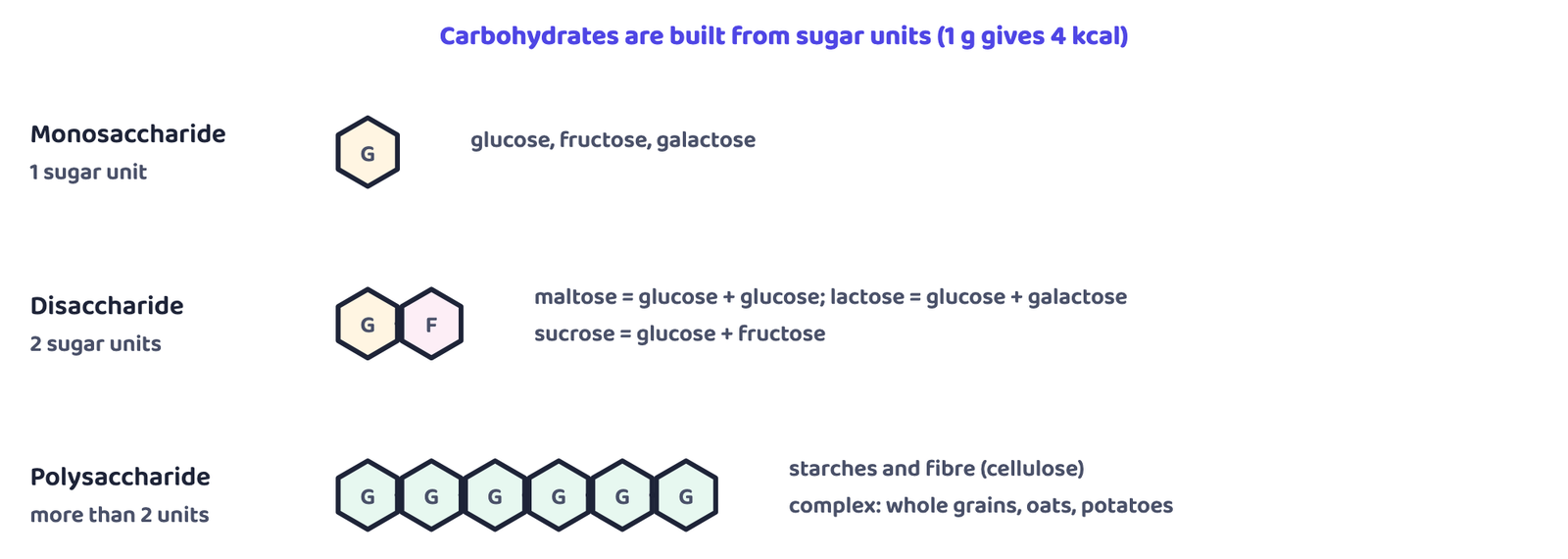
- Monosaccharides: simple single sugar units: glucose, fructose, galactose.
- Disaccharides: two monosaccharides joined: maltose (glucose + glucose), lactose (glucose + galactose), sucrose (glucose + fructose). Simple sugars (mono and disaccharides) are found in fruits (sucrose, glucose, fructose), milk (lactose) and commercial sweets.
- Polysaccharides: more than two monosaccharide units joined: starches and fibre (cellulose). Also called complex sugars; found in whole grain cereals, rice, oats, potatoes, bread, legumes, corn and flour.
Available carbohydrates
- Sugars and starches
- Broken down to glucose, absorbed and used for body functions
Non-available carbohydrates (fibre)
- Cellulose and other large carbohydrate molecules
- Cannot be digested in the human digestive tract
Diets rich in complex carbohydrates are healthier than low-fibre diets based on refined and processed food. Sources: rice, cereal grains, breads, pasta, milk, fruit, root vegetables, sugar, jams, jellies, honey, jaggery. Fibre: whole grain cereals (whole wheat atta), whole pulses, GLVs, peas, carrot, beans, fruits like guava, apple, orange, pineapple.
Weight-loss diets often say “avoid carbohydrates”. But at least 50-100 g of carbohydrate a day is needed for complete oxidation of fat. According to ICMR (2020), the RDA (minimum requirement) of carbohydrate is 130 g/day for adults and children, based on the glucose used by the brain and red blood cells (erythrocytes). Too little carbohydrate makes the body break down fat for energy; this produces ketone bodies. In excess they collect in the blood and cause ketosis (disturbance of the normal acid-base balance), generally seen in diabetics and life-threatening.
3.2 Macronutrients and roughage: functions and sources
| Nutrient | Functions | Sources |
|---|---|---|
| Carbohydrates | Provide energy (1 g = 4 kcal); main source of energy for the nervous system, brain and red blood cells; spare proteins for their own work (without enough carbohydrate, protein is burnt for energy); help proper use of fat by providing substrates for fat metabolism | Fruits, cereal grains, milk, sugar, rice, root vegetables, pasta, breads |
| Roughage (dietary fibre) | Gives a feeling of fullness; adds bulk and helps smooth elimination of stool; helps prevent cancer, diabetes and heart disease and lowers cholesterol; negligible energy, so useful for weight control | Whole grain cereals (whole wheat flour, dalia, oats), whole pulses, GLVs, peas, beans, other vegetables, fruits like guava, orange, pineapple |
| Proteins | Build and repair body cells; form part of enzymes, hormones and antibodies; also give energy (4 kcal/g) | Milk and milk products, fish, eggs, poultry, meat, legumes, grains |
| Fats | Give energy (9 kcal/g); help transport fat-soluble vitamins; part of cell membranes, membranes around nerves, hormones and bile (for fat digestion) | Visible: vegetable oils, desi ghee, vanaspati ghee, butter, margarine. Invisible: cheese, meat, poultry, fish, milk and milk products, nuts and seeds |
3.3 Proteins
Proteins are organic compounds containing nitrogen, besides carbon, oxygen and hydrogen. They are made of nitrogen-containing amino acids linked in chains. From hair and nails to muscles, skin, organs, blood, hormones and enzymes, protein is a major structural and functional part of the body. About 20 amino acids join in different sequences to form different proteins.
Essential amino acids (EAA) are the nine amino acids which cannot be synthesized by the body and have to be supplied in the diet. The others are non-essential amino acids, as the body can synthesize them.
| Essential (9) | Non-essential (11) |
|---|---|
| Histidine, Isoleucine, Leucine, Lysine, Methionine, Phenylalanine, Threonine, Tryptophan, Valine | Alanine, Arginine, Asparagine, Aspartate, Cysteine, Glutamate, Glutamine, Glycine, Proline, Serine, Tyrosine |
“His Leu-Iso Lys Met; Phe Thr Try Val”
Read it as: Histidine, Leucine, Isoleucine, Lysine, Methionine, Phenylalanine, Threonine, Tryptophan, Valine.
Protein quality: three kinds of protein foods
Complete protein foods
Contain all essential amino acids in adequate amounts: eggs, milk and milk products, meat and meat products, and one plant source, soybean.
Partially complete protein foods
Lack any one essential amino acid: cereals lack lysine, pulses lack methionine. Eat cereals and pulses together, or with complete protein foods.
Incomplete protein foods
Lack more than one essential amino acid, for example maize protein.

Protein quality depends on having complete protein foods in the diet; it improves the absorption and use of protein.
Too little or too much protein has health effects, so protein should be eaten as required and recommended.
3.4 Fats (lipids)
Lipids (dietary fats) is the broad term for both oils (liquid at room temperature) and fats (solid at room temperature). Which one a lipid is depends on its fatty acids, the building blocks of fats and oils.

| Type | Double bonds | Health effect | Sources |
|---|---|---|---|
| Saturated fatty acids (SFA), also called animal fats | None | Raise total and LDL (“bad”) cholesterol, so increase the risk of heart disease; keep below 7% of total calories | Desi ghee, butter, cheese, cream, red meats, baked products, full-fat dairy; coconut and palm oils |
| Monounsaturated (MUFA) | One | When they replace saturated fats, they lower blood cholesterol and the risk of heart disease | Canola, olive, peanut, palmolein, rice bran and til (sesame) oils; nuts like walnuts |
| Polyunsaturated (PUFA) | More than one | Same benefit as MUFA | Vegetable oils: mustard, soybean, corn, safflower, sunflower; flaxseed |
More saturated fatty acids make a fat solid; more unsaturated fatty acids (MUFA or PUFA) make it liquid, and it is called an oil.
Visible fat
- Ghee, butter, cooking oil
- Restrict to 20-30 g per day, depending on physical activity
Invisible fat
- Hidden inside nuts, cereals, pulses, milk, eggs, meat
- Adds a lot to total fat and essential fatty acids
Recommended: total fat 20-30% of calories for adults; saturated fat below 7% of calories; cholesterol below 300 mg/day; trans fatty acids as low as possible. MUFA and PUFA (vegetable oils, nuts, rice bran, fish) are encouraged. An ideal fat keeps a balance between SFA, MUFA and PUFA, which is done by combining oils, for example mustard oil with sunflower oil, or safflower oil with palm oil.
Cholesterol is a fat-like substance made in the body. It is part of cell membranes and is needed to make bile acids (for digestion) and sex hormones. Excess blood cholesterol can deposit in blood-vessel walls, reduce blood flow in major arteries and lead to a heart attack. Dietary cholesterol is found only in animal foods (egg yolks, butter, organ meats, beef, chicken); vegetable oils are cholesterol-free.
Trans-fatty acids are produced mainly by hydrogenation: adding hydrogen to unsaturated fatty acids (as in vegetable oil) to make them saturated or solid. They occur naturally in beef, lamb and dairy, but the main sources are cookies, biscuits, mixtures, namkeens, pastries and fried foods. Like saturated fat and cholesterol, they raise LDL (“bad”) cholesterol, and may also lower HDL (good) cholesterol.
3.5 Water
Body’s main component
An inorganic compound of hydrogen and oxygen; makes up to 60% of body weight; the medium of all body fluids: blood, saliva, digestive juices, urine, faeces, sweat.
Regulates temperature
Plays an important role in regulating body temperature.
Universal solvent and lubricant
Bathes body cells and keeps them moist; an important lubricant for the joints.
Sources
Water and drinks (tea, coffee, juices, aerated drinks); hidden in vegetables, fruits, milk, cereals, pulses. Drink clean, safe water to avoid diarrhoea, dysentery and cholera.
4 Micronutrients: Vitamins
Vitamins are chemicals the body needs in small amounts to function properly. They mostly act as ‘helpers’; for example, many B-vitamins help the body use protein, fats and carbohydrates.
Water-soluble vitamins
- All the B vitamins and vitamin C
- Unused amounts leave through the kidneys in urine (or stool)
- Needed in frequent, small doses
- Unlikely to reach toxic levels
Fat-soluble vitamins
- Vitamins A, D, E and K
- Stored in body cells; not passed out easily
- More likely to reach toxic levels if taken in too much
- A balanced diet usually gives enough
“ADEK” in fat, “B and C” in water
Fat-soluble vitamins spell ADEK. Everything else (the B group and C) dissolves in water.
4.1 Water-soluble vitamins (Table 2.i)
| Vitamin | Important functions | Sources |
|---|---|---|
| Thiamine (B1) | Coenzyme thiamine pyrophosphate (TPP) for energy metabolism; nerve function; DNA and RNA synthesis | Whole-grain cereals, pulses, peanuts and seeds, mushrooms, green peas, beans, egg yolk, meat |
| Riboflavin (B2) | Two coenzymes, FMN and FAD, for energy metabolism; normal vision and skin health | Milk and milk products; eggs, liver, kidney; GLVs such as broccoli; whole-grain cereals; legumes |
| Niacin (B3) | Part of coenzymes NAD and NADP for energy metabolism; nervous system, digestive system and skin | Whole-grain cereals, pulses, meat, poultry, fish, mushrooms. Eggs and milk lack niacin but are rich in the EAA tryptophan, which the body converts to niacin: 60 mg tryptophan gives 1 mg niacin |
| Vitamin B6 (pyridoxal, pyridoxine, pyridoxamine) | Coenzyme pyridoxal phosphate for protein and amino acid metabolism; enzymes for carbohydrate, fat and protein metabolism; helps make white blood cells and the heme in haemoglobin | Meat, poultry, fish, nuts, sunflower seeds, pulses, whole grains, spinach, bananas, potatoes |
| Biotin | Coenzyme in metabolic reactions | Liver, kidney, egg yolk, almonds, peanuts, walnuts, soybeans and other legumes, whole grains, bananas, cauliflower, mushrooms; also made by bacteria in the intestine |
| Pantothenic acid | Part of co-enzyme A (CoA) for energy metabolism | Widespread: milk, meat, peanuts, eggs |
| Folic acid / Folate | Part of an enzyme for making DNA and new cells, especially red blood cells; formation of neurotransmitters; normal blood pressure; reduces cancer risk | GLVs (especially spinach), pulses, oranges and orange juice, liver; cabbage, cauliflower, broccoli |
| Cobalamin (B12) | Part of coenzymes methyl cobalamin and 5-deoxy adenosyl cobalamin, for making new cells; nerve function | Meat, poultry, fish, seafood, eggs, milk and milk products; not found in plant foods |
| Ascorbic acid (C) | Antioxidant; collagen formation, so wound healing; enzyme for protein metabolism; immune system; helps iron absorption | Fruits and vegetables, especially citrus fruits, cabbage-family vegetables, sprouts, amla, guava |
4.2 Fat-soluble vitamins (Table 2.ii)
| Vitamin | Important functions | Sources |
|---|---|---|
| Vitamin A (retinol and its precursor, beta-carotene) | Vision in dim light; healthy skin and mucous membranes; growth of skeletal and soft tissues; immune system health | Animal (retinol): milk, cheese, cream, butter, egg yolk, liver. Plant (beta-carotene): dark GLVs; red and yellow fruits and vegetables (carrots, pumpkin, mangoes, papaya) |
| Vitamin D | Proper absorption of calcium and phosphorus; deposition of calcium and phosphorus in bones | Egg yolks, liver, fatty fish, fortified foods; the skin makes vitamin D in sunlight |
| Vitamin E | Antioxidant; protects cell walls | Polyunsaturated plant oils (soybean, corn, cottonseed, safflower); GLVs; wheat germ; whole grains; liver; egg yolks; nuts and seeds |
| Vitamin K | Proper blood clotting | GLVs and cabbage; milk; also made by bacteria in the intestine |
A precursor is a substance the body converts into the vitamin (beta-carotene is converted to vitamin A).
5 Micronutrients: Minerals
Minerals are inorganic elements the body needs for various physiological functions. Those needed in larger amounts are macro-minerals; those needed in smaller amounts are micro-minerals (trace minerals). Iron is a trace mineral, though it is needed in somewhat larger amounts than the other trace minerals.
5.1 Macro-minerals (Table 3.i)
| Mineral | Important functions | Sources |
|---|---|---|
| Sodium | Fluid balance; regulating alkalinity and acidity of body fluids; nerve transmission; muscle contraction | Table salt, soy sauce; large amounts in processed foods; small amounts in milk, breads, GLVs, unprocessed meats |
| Chloride | Fluid balance; stomach acid | Table salt, soya sauce; processed foods; small amounts in milk, meats, breads, vegetables |
| Potassium | Fluid balance; nerve transmission; muscle contraction | Meats, milk, fresh fruits and vegetables, whole grains, pulses |
| Calcium | Healthy bones and teeth; helps muscles relax and contract; nerve functioning, blood clotting, blood pressure regulation, immune system health | Milk and milk products; fish with bones (sardines); fortified soya milk; greens (broccoli, mustard leaves); pulses |
| Phosphorus | Healthy bones and teeth; found in every cell; part of the system that keeps acid-base balance | Meat, fish, poultry, eggs, milk, processed foods |
| Magnesium | Found in bones; making protein, muscle contraction, nerve transmission, immune system health | Nuts and seeds; pulses; leafy green vegetables; seafood; chocolate |
| Sulphur | Found in protein molecules | As part of protein in meats, poultry, fish, eggs, milk, pulses, nuts |
5.2 Trace minerals (Table 3.ii)
| Mineral | Important functions | Sources |
|---|---|---|
| Iron | Found in every cell; part of haemoglobin in red blood cells, which carries oxygen to every cell; part of myoglobin for muscle contraction; energy metabolism, so crucial for physical work | Organ meats, red meats, fish, poultry, egg yolks; whole pulses and whole grain cereals; dried fruits; dark GLVs (mustard greens, bathua); iron-enriched and fortified breads and cereals |
| Zinc | Part of enzymes for making protein and genetic material; taste perception, wound healing, normal foetal development, sperm production, normal growth and sexual maturation; immune system | Meats, fish, poultry, whole grains, vegetables |
| Iodine | Found in thyroid hormone, which regulates growth, development and metabolism | Seafood, foods grown in iodine-rich soil, iodized salt, bread, dairy products |
| Selenium | Antioxidant | Meats, seafood, grains |
| Copper | Part of many enzymes; iron metabolism | Pulses, nuts and seeds, whole grains, organ meats, drinking water |
| Manganese | Part of many enzymes | Widespread, especially plant foods |
| Fluoride | Formation of bones and teeth; helps prevent tooth decay | Drinking water (fluoridated or naturally containing fluoride), fish, most teas |
| Chromium | Works with insulin to regulate blood sugar (glucose) | Organ meats (especially liver), whole grains, nuts, cheese |
| Molybdenum | Part of some enzymes | Pulses, breads and grains, GLVs, milk, liver |
Other trace nutrients known to be essential in tiny amounts: nickel, silicon, vanadium and cobalt.
Each red blood cell contains haemoglobin, the iron-containing protein that carries oxygen from the lungs to the body. Each subunit of haemoglobin has a heme group, and each heme group has one iron atom that can bind an oxygen molecule.
A safe set: Calcium (milk, curd, ragi), Potassium (fresh fruits, vegetables, pulses), Sodium (table salt) as macro; Iron (GLVs like bathua, dates, whole pulses), Iodine (iodized salt, seafood), Zinc (meat, fish, whole grains) as micro. Write each mineral with two sources.
6 Nutritive and Non-Nutritive Components of Diet
Food gives energy for workouts and helps growth and development. Nutritive components are those with nutritional value, such as carbohydrates, fats and proteins (and the other nutrients above). Some other components of diet have no nutritive value.
Non-nutritive components of food are chemical compounds in foods with no specific nutritional function. Some act as anti-nutritional factors (like phytate), some have various benefits (like phytochemicals), and some are added to food and drinks to make them smell better, taste better, last longer or look better.
6.1 Non-nutritive factors that interfere with nutrient absorption
Anti-Nutritional Factors (ANFs) are biological compounds present in human or animal foods that reduce nutrient utilization or food intake, thereby contributing to impaired gastrointestinal and metabolic performance.
| Anti-nutritional factor | Found in | What it does |
|---|---|---|
| 1. Phytates | Unrefined cereals and millets | Bind iron, zinc, calcium and magnesium, making them unavailable. Germination reduces phytate |
| 2. Tannins | Legumes, millets like bajra and ragi, spices, tamarind, tea, turmeric, some vegetables and fruits | Interfere with absorption of iron and protein |
| 3. Trypsin inhibitors | Soya bean, white of duck egg | Block the enzyme trypsin in the gut, so proteins are digested and used less. Heat treatment inactivates them |
| 4. Oxalates | Green leafy vegetables, some legumes | Interfere with calcium absorption |
| 5. Goitrogens (anti-thyroid substances) | Cabbage, cauliflower, turnips, soybean, bajra, peanuts, lentils | Interfere with iodine uptake by the thyroid gland; may lead to iodine deficiency disorders when iodine intake is marginal |
“PTTOG”: Phytates, Tannins, Trypsin inhibitors, Oxalates, Goitrogens
6.2 Beneficial non-nutritive factors of foods
Phytochemicals are chemical compounds produced by plants, generally to help them thrive or thwart competitors, predators or pathogens. The name comes from the Greek phyton, meaning ‘plant’.
Phytochemicals
In fruits, vegetables, grains, beans. Some act as antioxidants and protect cells from damage that could lead to cancer. Eating more colourful plant foods reduces cancer risk. Examples: beta carotene and other carotenoids (yellow, red, green vegetables and fruits), flavonoids (green tea), isothiocyanates (cruciferous vegetables: cabbage, broccoli, kale, mustard greens, turnip greens, cauliflower).
Anthocyanins
Give grapes, blueberries, cranberries and raspberries their dark colour. Shown in the laboratory to have anti-inflammatory and anti-tumour properties. (The book’s picture also shows red cabbage, eggplant, cherries, purple broccoli and cauliflower, red lentils and beans, red onion, berries and grapes.)
Flavonoids or isoflavones
In vegetables, fruits and grains like soybeans and chickpeas. May act a little like oestrogen, so they are called phytoestrogens. Help lower the risk of osteoporosis, heart disease, breast cancer and symptoms of menopause.
Artificial sweeteners
Synthetic compounds that copy the taste of sugar with less energy; added to diet foods and drinks to keep the taste but cut calories. Being additives, they are regulated, so their identity and concentration must be determined.
Preservatives
Compounds that inhibit microbial growth; added to prolong shelf life. Being additives, they are regulated, so their identity and concentration must be determined.
Spices
A dried seed, fruit, root, bark or vegetable substance used mainly for flavouring, colouring or preserving food (herbs are leafy green parts). Other uses: medicinal, religious, cosmetics, perfume; turmeric roots eaten as a vegetable, garlic as an antibiotic.
Coffee
A brewed drink made from roasted seeds of Coffea; the two common sources are Coffea arabica and Coffea canephora. Its caffeine can have a stimulating effect.
7 Healthy Weight and BMI
A healthy body weight lowers the chance of heart disease, stroke and obesity-related cancers, and raises the chance of a long, healthy life. For obese or overweight people, health benefits can come from losing just the first 5-10% of weight; losing even 10% makes type 2 diabetes less likely.
Body Mass Index (BMI), also called Quetelet’s Index, is a key index relating weight to height. It is a person’s weight in kilograms divided by the square of the height in metres. It is used to classify a person as underweight, normal weight, overweight or obese.

| BMI | Classification |
|---|---|
| Below 18.5 | Underweight |
| 18.5-24.9 | Normal weight |
| 25.0-29.9 | Overweight |
| 30.0-34.9 | Grade I obesity |
| 35.0-39.9 | Grade II obesity |
| 40.0 and above | Grade III obesity |
Q. A student weighs 70 kg and is 1.70 m tall. Find the BMI and classify it.
Step 1: Height² = 1.70 × 1.70 = 2.89 m²
Step 2: BMI = 70 ÷ 2.89 = 24.2
Answer: BMI = 24.2 kg/m², normal weight (18.5-24.9).
Q. An athlete weighs 90 kg and is 1.60 m tall. Classify the BMI.
Height² = 1.60 × 1.60 = 2.56 m²; BMI = 90 ÷ 2.56 = 35.2: Grade II obesity (35.0-39.9).
BMI does not measure how much of the weight is fat and how much is muscle. A very muscular person can get a high BMI without health risk. So BMI is less accurate for body builders and pregnant women.
BMI broadly places a person in a category based on tissue mass (muscle, fat and bone) and height. Healthy weight can be assessed by weight-for-height charts, BMI or body fat percentage; nowadays BMI is used rather than the traditional height/weight charts.
Overweight or obesity can lead to type 2 diabetes, high blood pressure and cardiovascular problems. A weight that is too low raises the risk of malnutrition, osteoporosis and anaemia.
7.1 Reading a BMI chart (data interpretation)

From such a chart: the largest slice (71%) is the normal category (BMI 18.5-24.9); the overweight slice is BMI 25.0-29.9 (18%); obese is 30.0 and above (2%).
7.2 Central obesity, waist-hip ratio and body fat
Fat inside the abdomen (intra-abdominal or visceral fat) is strongly linked with cardiovascular disease. Women with abdominal obesity have a cardiovascular risk similar to men.
| Measure | Men | Women |
|---|---|---|
| Waist circumference defining central obesity | More than 102 cm (40 inches) | More than 88 cm (35 inches) |
| Waist-hip ratio (waist ÷ hip) defining central obesity | More than 1.0 | More than 0.85 |
| Body fat % used as cut-point for obesity | More than 25% | More than 32% |
In people with a BMI under 35, intra-abdominal fat is linked to poor health independent of total body fat. There is no generally accepted definition of obesity based on total body fat.
Waist-to-Hip Ratio (WHR)
Ratio of waist circumference to hip circumference; indicates the risk of obesity. A larger trunk means higher risk of hypertension and type 2 diabetes.
Girth circumferences
Circumferences of body segments; document body size and estimate body fat percentage.
Skinfolds
Determine body fat quite accurately; done only by a trained technician with skinfold callipers.
Bioelectrical Impedance Analysis
A weak electric current is passed through the body and the voltage measured to calculate impedance (resistance); estimates body fat and muscle mass. Portable, easy, reliable.
Hydrostatic (underwater) weighing
The gold standard method to measure mass per unit volume of a living person’s body.
DEXA
Dual X-ray absorptiometry, one of the methods (with skinfolds and bioelectrical impedance) to assess body fat percentage; needs special equipment and expertise.
Body fat percentage is total body fat expressed as a percentage of total body weight.
8 Eating for Weight Control
Maintaining weight is a balancing act: the energy we eat should equal the energy we use.
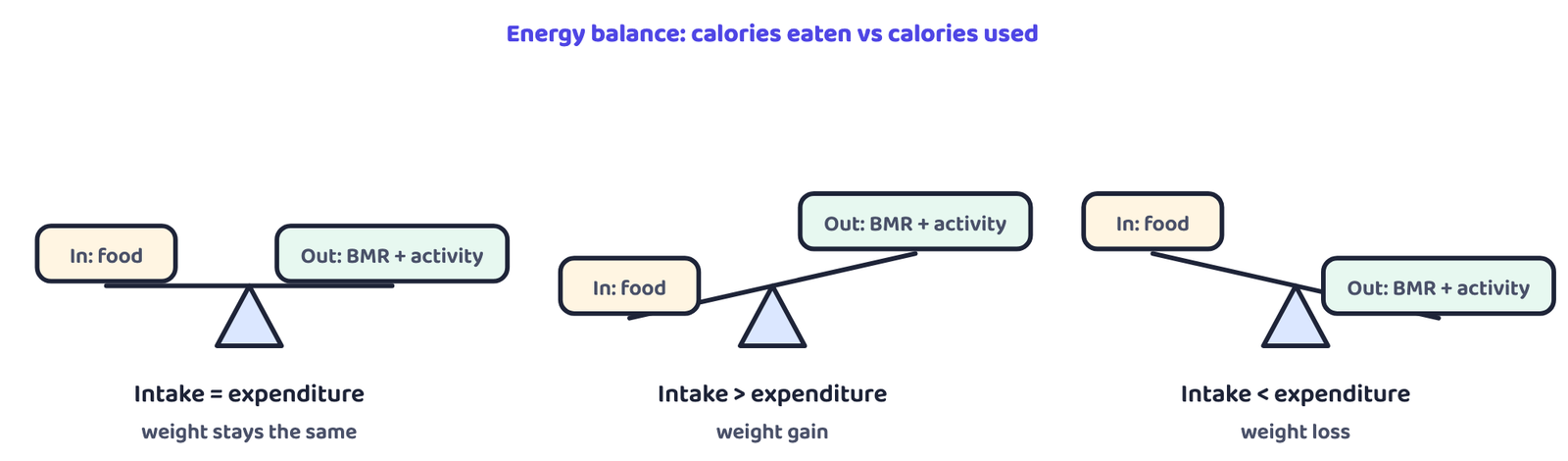
- The best ways to reduce weight: choose foods lower in fat and calories and increase physical activity. Slow and steady wins the race; losing too fast makes one feel sluggish, drained and sick.
- Caloric restriction is essential, but diet change must go with moderate exercise. Aerobic exercise increases daily energy use and helps long-term weight maintenance.
- Exercise preserves lean body mass and partly prevents the fall in basal metabolic rate that comes with eating less. It also improves body composition, fitness and metabolic health, and lowers the risk of heart disease and diabetes. Less stress means less stress-eating.
- Eating fewer calories does not mean eating less food: choose foods wisely and you can still fill up.
8.1 Modifications in the diet for weight control
Reducing portion sizes, changing ways of cooking and right food selection go a long way in weight management.
CBSE Physical Education Class XII, 5.4.1
9 The Pitfalls of Dieting
A calorie deficit always causes weight loss. Without exercise, it has to come only from eating less, and that is where dieting fails.
Hard to sustain
A very low-calorie intake for a long time needs too much sacrifice. Most people break down, go back to old habits, and the lost weight returns quickly.
Starvation mode
After a sudden, drastic cut in calories, the body slows its metabolism to protect itself. It drastically cuts its energy needs and the person stops losing weight.
Fad diets fail
Fad diets and “quick-fix” pills and plans often fail, because diets that cut out whole food groups (carbohydrates or fat) are impractical and unhealthy. The key is moderation.
No maintenance plan
Severe calorie cuts, restricted foods or ready-made meals may work short term but have no plan to keep weight off, so it comes back.
Nutrient deficiency
A severely restricted diet leads to deficiency of various nutrients. Once normal eating resumes, weight is regained until metabolism bounces back.
Costly and impractical
Special shakes, meals and programmes are expensive and not practical for long-term weight loss. Regular exercise and good eating habits are the real answer.
Anorexia nervosa is an eating disorder characterized by an abnormally low body weight, an intense fear of gaining weight and a distorted perception of weight.
People with anorexia severely restrict food; they may vomit after eating, misuse laxatives, diet aids, diuretics or enemas, or exercise excessively. However much weight is lost, the fear of gaining weight continues.
10 Food Intolerance
Food intolerance is the non-IgE mediated food hypersensitivity or non-allergic food hypersensitivity, characterized by difficulty in digesting certain foods.
Food intolerance
- Does not trigger the immune system
- Symptoms take longer to appear
- Digestive problems after certain foods
Food allergy
- Triggers the immune system
- Symptoms appear sooner
- Signs often overlap with intolerance, so they are hard to tell apart
Foods most commonly associated with food intolerance: dairy products, grains that contain gluten (gluten in wheat is one of the most common causes), and foods that cause intestinal gas, such as beans and cabbage. Symptoms: stomach-ache, bloating, nausea, irritable bowel, hives, migraine, mild fever, cough. Some people are intolerant to several groups of foods, which makes it harder to tell a chronic illness from food intolerance; identifying the foods responsible can take a long time.
10.1 Types of food intolerance
| Type | Cause | Example / effect |
|---|---|---|
| Absence of an enzyme | An enzyme needed to digest a food is missing or too little | Lactose intolerance: too little lactase, the enzyme that breaks milk sugar (lactose) into smaller molecules; milk and milk products cause stomach-ache, spasms, bloating, gas and diarrhoea |
| Chemical causes | Chemicals in foods and drinks | Amines in some cheeses; caffeine in coffee, tea and chocolates |
| Toxins due to food poisoning | Naturally occurring toxic chemicals | Aflatoxins in peanuts or undercooked beans cause diarrhoea, nausea, vomiting |
| Salicylates | Derivatives of salicylic acid, made by plants as a defence | Most fruits and vegetables, spices, herbs, tea, flavour additives; high in mint flavouring, tomato sauce, berries, citrus fruits and processed foods with flavour additives. Sensitive people react to normal amounts |
| Gluten intolerance | Gluten, a protein in wheat, barley and rye | Gas, abdominal pain, diarrhoea; sometimes confused with celiac disease or an allergy. See a doctor before giving up gluten, as cereals give many nutrients |
| Food additives | Additives for flavour, look and shelf life | Nitrates (processed meats): itching, skin rashes; MSG (monosodium glutamate): headaches; colourings carmine (red) and annatto (yellow) |
10.2 Diagnosis and treatment
11 Food Myths
| Myth | Fact |
|---|---|
| 1. The fewer the carbohydrates, the healthier you are | Choose the healthiest carbohydrates, especially whole grains; avoid refined ones. Whole grains lower the risk of chronic diseases and early death |
| 2. Oils/margarine have fewer calories than ghee/butter | They have about the same calories. Some margarines are even unhealthier because they contain trans fats, which harm cholesterol and heart health more |
| 3. Apples and brinjals are rich in iron because they turn brown when cut | They are an excellent source of fibre, not iron. Browning is an enzymatic reaction, not iron |
| 4. Milk should be avoided after eating fish | Milk after fish does not cause leukoderma (white patches on the skin). This belief is not true |
| 5. Drinking water in between meals affects digestion | Water simply fills the stomach, so one eats less: useful for someone trying to lose weight |
For any food belief, learn the science behind it to find the fact.
12 Importance of Diet in Sports
Nutrition is an important part of training and performance. The basic rules of a balanced diet apply to sport too, but a sportsperson raises or lowers energy intake and the share of macro and micro nutrients depending on the nature of the sport. An athlete’s diet aims to keep the body weight and body composition the sport needs, keep a good pool of nutrients, and follow healthy eating in training, in competition and in the off-season. Both deficiency and excess can hurt performance.
Repair and recovery
Sportspersons put greater demands on the body; without proper diet, results suffer and post-training recovery is affected.
Body composition
Different games need different body composition; diet (with training) can shape it to a certain extent.
Performance and fatigue
Right pre-, during- and post-competition meals improve performance, delay fatigue and speed up recovery.
Weight goals
Makes fitness, weight loss and weight gain programmes work; helps athletes in weight categories; off-season diet prevents excess weight gain.
Ergogenic aids
Certain nutrients are taken as ergogenic aids; their psychological and physiological effects can help performance.
Hydration
Dehydration impairs performance; enough fluids and electrolytes keep the body hydrated before, during and after exercise.
Training adaptations
Adequate diet enhances physiological adaptations during training.
13 Nutrients for the Sportsperson
13.1 Carbohydrates in sports and exercise
- The type and time of carbohydrate intake matter as much as the amount.
- Before: take complex carbohydrates. Avoid simple sugars within 1 hour before exercise: they raise insulin, which speeds carbohydrate use and drops blood glucose during exercise (hypoglycaemia), causing early fatigue and light-headedness. Too much concentrated sugar (candy, soft drinks) in a short time can cause cramps and bloating.
- After: simple carbohydrates are the best for energy replacement after strenuous exercise.
- Carbohydrates take about 4 hours to be digested and begin to be stored as muscle and liver glycogen, so the pre-exercise meal is taken about 4 to 6 hours before exercise.
- A light carbohydrate and protein snack 30 to 60 min before (for example 50 g carbohydrate and 5 to 10 g protein) increases carbohydrate available near the end of intense exercise, increases amino acids and reduces exercise-induced protein breakdown.
“Sweets just before the match give instant energy.” The book says the opposite: simple sugars less than an hour before exercise can cause low blood sugar, early fatigue and light-headedness. Simple sugars belong after strenuous exercise; complex carbohydrates belong before.
13.2 Proteins for exercise and training
- Training increases muscle bulk and also breaks down muscle tissue; in prolonged exercise protein is oxidised for energy. So sportspersons need more protein.
- ICMR (1985): protein 12-14% of total calories; range 1 g/kg to 2 g/kg body weight: the lower limit for endurance sports and light weight categories, the upper limit for strength sports.
- Enough calories from a balanced diet usually give enough protein; include good-quality protein. Low-fat protein sources (skim milk, egg white, fish, chicken) help performance and long-term health. A cereal-pulse combination or complete-protein supplements improve protein quality.
- Protein supplements are not necessary as long as athletes keep energy balance and take 15% of their calories as protein.
- Increases the risk of renal (kidney) degeneration and bone porosity
- More urea is made, more water is drawn into urine to remove it, putting the athlete into dehydration
- Causes urinary calcium loss, which in the long term harms calcium status, particularly of women athletes
13.3 Fat intake in sports and training
Fat adds energy density and has protective roles, but too much causes health problems. Athletes, like others, should keep fat to 25-30% of total calories. Within this, a diet with PUFA (vegetable oils, nuts and oil seeds) and MUFA (groundnut oil, fish oil) is better than one rich in SFA (animal fat, desi ghee, butter) for total cholesterol, LDL, HDL and triglycerides. Choose invisible fat sources wisely: egg whites, fish and skimmed milk in place of high-fat animal foods.
13.4 Vitamins and minerals
- Athletes have high energy needs and produce more free radicals, so they need more B-vitamins and antioxidant vitamins.
- The amount needed comes from a variety of foods, especially fruits and vegetables.
- Taking more vitamins and minerals than required does not improve performance if there is no deficiency. Supplements are not replacements for food.
14 Pre, During and Post Competition Requirements

14.1 Pre-exercise or pre-event meal
Goals: fill up glycogen stores for energy and ensure proper hydration. This controls hunger, fatigue, weakness and light-headedness, and keeps the stomach comfortable. Overnight, blood glucose and glycogen go down; carbohydrate foods before exercise refill liver glycogen and can top up muscle glycogen.
✓ Do this
- Eat a high-carbohydrate, moderate-protein, low-fibre, low-fat meal of 500-1000 kcal: banana milk shake, pasta and fruits with curd, or potato sandwich with fruit juice
- On regular training days, take small meals or a snack every 2-3 hours instead of large meals
- Take meals about 2-4 hours before exercise; within two hours, eat less and take semi-solid or liquid meals
- Eat a dinner the previous night that ensures proper sleep and adequate fuelling up
- Eat familiar, easily digestible foods
- Take sufficient liquids or a small snack an hour (or less) before exercise
✗ Avoid
- High-sugar foods: the insulin rush causes early fatigue, cramping, dehydration, nausea and diarrhoea
- Any new food, foods with known allergies, or foods known to upset the stomach
- Heavy foods (fried or high-fibre) on the day before competition
- Too much protein: it increases water excretion, leading to dehydration, and is digested slowly
Hydration
- Good hydration plus full muscle glycogen delays fatigue and lets athletes exercise longer.
- High-intensity games cause heavy sweating, so fluid and electrolyte (sodium, potassium, chloride) imbalance; drink at regular intervals. The best fluid is always water.
- 150-250 ml of water every 15 minutes, depending on exercise intensity and weather, prevents dehydration. Sports drinks with sugar up to 2% can be taken.
- Signs of dehydration: dark urine, less urine, less frequent urination, rapid heart rate, headache, irritability, confusion.
- In weight-category sports, athletes sometimes dehydrate themselves to get into a lower category. This can hurt performance and should be discouraged.
Even slight dehydration brings mental and physical fatigue and weakens performance.
14.2 During exercise
Aims: keep water balance, control body temperature, keep blood sugar normal, and delay fatigue. Water lost in sweat must be replaced.
| Situation | What to take |
|---|---|
| Small breaks in an event (tennis, boxing) | Carbohydrate-rich foods like banana, juices, carbohydrate drinks (less than 2% concentration) or simply water |
| Exercising for more than 60 minutes | Carbohydrate-electrolyte drinks such as diluted fruit juices with 5-8% carbohydrates |
| Endurance events longer than two hours | Carbohydrate-rich solids or liquid meals (muscle glycogen keeps falling) |
| Not recommended | Carbonated beverages, fizzy drinks and drinks containing caffeine |
14.3 Post-training or post-competition
Recovery to the best body state is needed to train or play at full potential the next day and to reduce the chance of injury. The three aims:
- Fluids first. Re-hydration starts during exercise and continues after. Drink more fluid than is lost, because some leaves as urine. Keep drinking until the body is back to its pre-exercise weight or the urine is clear or pale. Re-hydrate before the next session.
- Carbohydrate immediately. The body replaces muscle glycogen within the first few hours. Right after the event take carbohydrates such as juice, fruit, sweet curd or cereal.
- A balanced meal with carbohydrates and good-quality protein within two hours after the event.
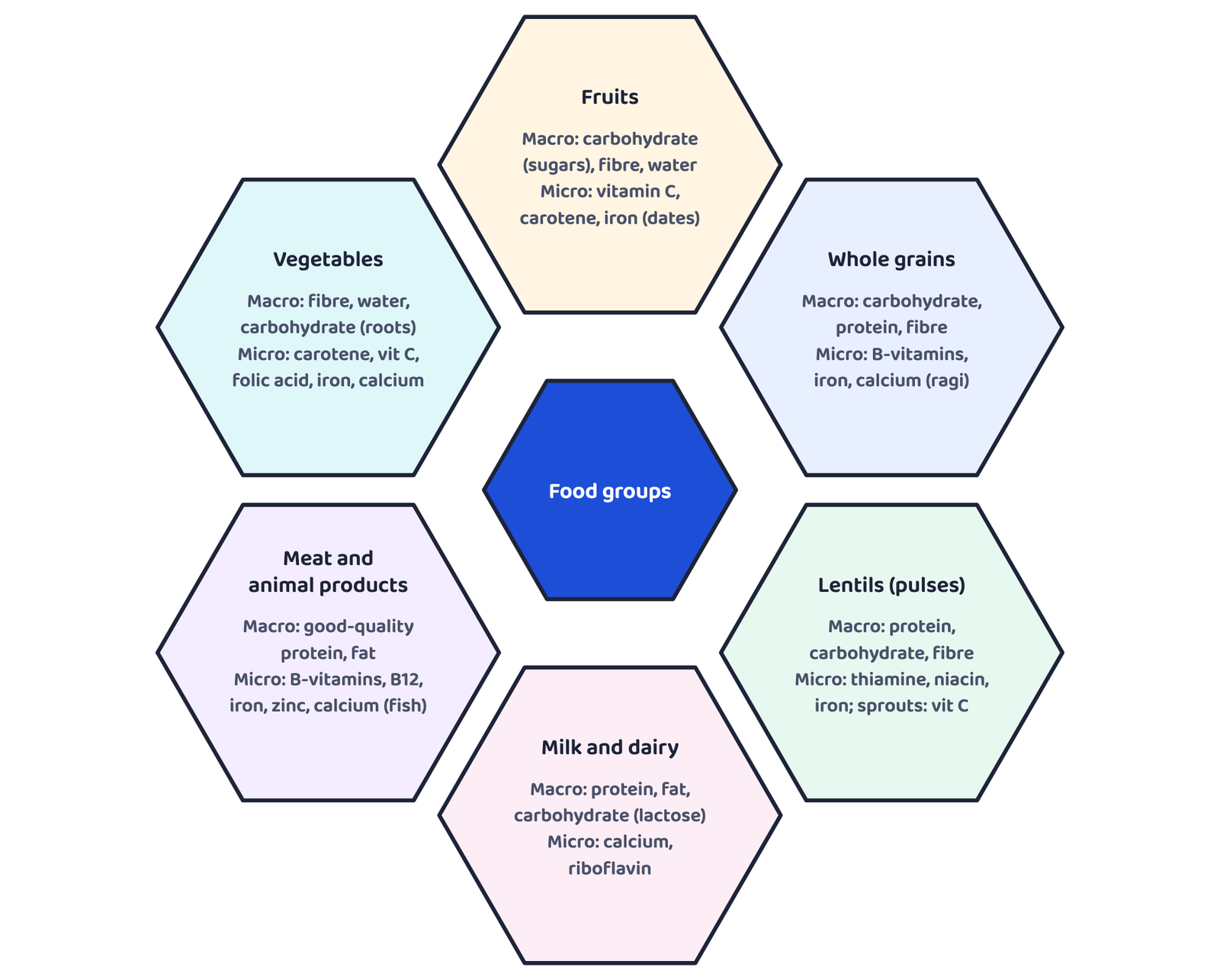
15 The Food-Group Graphic Organiser
The book asks students to fill in the macro and micro nutrients of six food groups. Here it is completed, using only what the book says about each group.
- Balanced diet: all nutrients in right amounts and proportions, plus a provision for the period of leanness; every meal = energy giving + body building + protective
- Nutrition = science of food: ingestion, digestion, absorption, utilization, assimilation; 7 nutrients: carbohydrates, proteins, fats, vitamins, minerals, water, fibre
- Macro (proximate principles + water) vs micro (vitamins, minerals); Indian meal energy: carbohydrates 55-60%, protein 10-15%, fats 20-30%
- Carbohydrate and protein 4 kcal/g, fat 9 kcal/g; RDA carbohydrate 130 g/day; protein 0.83 g/kg (about 46 g for a 55 kg woman), 10-15% of energy, max 35%
- 9 EAA; complete (egg, milk, meat, soybean), partially complete (cereals lack lysine, pulses lack methionine), incomplete (maize)
- SFA 0, MUFA 1, PUFA 2+ double bonds; SFA below 7%; cholesterol below 300 mg/day; trans fats from hydrogenation raise LDL, may lower HDL
- Water-soluble: B group + C; fat-soluble: A, D, E, K. Macro-minerals: Na, Cl, K, Ca, P, Mg, S; trace: Fe, Zn, I, Se, Cu, Mn, F, Cr, Mo
- ANFs: phytates, tannins, trypsin inhibitors, oxalates, goitrogens; beneficial: phytochemicals, anthocyanins, flavonoids, sweeteners, preservatives, spices, coffee
- BMI = kg ÷ m² (Quetelet’s Index): below 18.5, 18.5-24.9, 25-29.9, 30+ obese; central obesity waist 102/88 cm, WHR 1.0/0.85; hydrostatic weighing = gold standard
- Weight control: negative energy balance of 500-1000 kcal for 500 g-1 kg a week; diet + exercise; 15 diet changes; dieting alone fails (starvation mode, fad diets, deficiency)
- Food intolerance: non-IgE, not the immune system; lactose, chemical, toxins, salicylates, gluten, additives; exclusion diet 2 weeks-2 months
- Sports: carbohydrates 55% strength, 60-70% endurance; protein 1-2 g/kg; fat 25-30%; pre-meal 500-1000 kcal 2-4 h before; water 150-250 ml/15 min; 5-8% drinks after 60 min; post: fluids, glycogen, electrolytes, meal within 2 h
- Can I write the book’s definition of a balanced diet and name the three functional food groups with examples?
- Can I fill a table of functions and sources for carbohydrates, proteins, fats and roughage?
- Can I list the nine essential amino acids and explain complete, partially complete and incomplete proteins?
- Can I name the water-soluble and fat-soluble vitamins with one function and two sources each?
- Can I name three macro and three trace minerals with their sources?
- Can I explain the five anti-nutritional factors and the seven beneficial non-nutritive factors?
- Can I calculate a BMI and classify it, and give its limitation?
- Can I write any ten diet changes for weight control and any five pitfalls of dieting?
- Can I define food intolerance, give its types and five food myths with facts?
- Can I plan a sportsperson’s diet before, during and after competition with the numbers?