
These notes follow the NCERT text. The CBSE 2026-27 curriculum gives this
chapter its own marks; for any other board, check your board’s current syllabus
and paper pattern.
| Board | This chapter | Paper shape |
|---|---|---|
| CBSE (2026-27 curriculum) | 10 marks | 80 theory + 20 project |
The CBSE 2026-27 sample paper has 35 questions: 16 MCQs of
1 mark, 9 questions of 2 marks, 7 of 4 marks and 3 of 6 marks. It does not
say which chapter each question comes from.
- What makes an inequality “social” rather than just personal, and the three forms of capital that decide who has more and who has less
- The difference between prejudice, stereotype and discrimination, and why discrimination is hard to prove
- How the caste system works as a discriminatory system, what untouchability actually means, and the laws and reservations built to fight it
- Who the Other Backward Classes are, and the story of the Kalelkar and Mandal Commissions
- Why Adivasis have lost forests and land since colonial times, and how their struggles won Jharkhand and Chhattisgarh statehood
- The women’s movement in India from the anti-sati campaign to the declining sex ratio today
- Why disability is a social problem and not only a physical one
1What Is Social About Social Inequality and Exclusion?
Beggars on the street, children working as domestic helpers instead of going to
school, caste discrimination in classrooms, violence against women, prejudice
against minorities and the differently abled: all of this is so common in India
that it can start to feel normal, even natural. It is tempting to think the poor
and the excluded are simply where they are because they did not try hard enough.
“If hard labour were really such a good thing, the rich would keep it all for
themselves!”
a South American proverb, quoted in the chapter
All over the world, the hardest physical work (stone breaking, digging, pulling
rickshaws) is done by the poorest people, and yet they rarely rise out of poverty.
If personal effort and talent decided everything, hard-working poor people would
regularly become rich. They do not, because all other things are not equal.
Something beyond the individual, a group-level difference, is holding people back.
That “something” is what this chapter studies.
About groups, not individuals
Social inequality is not about one unlucky person; it is a pattern that
repeats across an entire caste, gender or community.
Not purely economic
Money is usually linked to it, but exclusion can also happen on grounds of
gender, religion, ethnicity, language, caste or disability, not only through
economic resources.
Systematic and structured
It follows a definite pattern; it is built into how society works, not a
random accident that could happen to anyone equally.
Social inequality is the pattern of unequal access that different
groups have to valued social resources such as money, property, education,
health and power.
1.2 The three forms of capital (Bourdieu, 1986)
Sociologist Pierre Bourdieu showed that “having more” is not just about money.
He split social resources into three kinds of capital, and showed that they
convert into each other.
| Form of capital | What it means | Example |
|---|---|---|
| Economic capital | Material assets and income | A well-off family’s wealth |
| Cultural capital | Educational qualifications and status | A degree from expensive higher education |
| Social capital | Networks of contacts and social associations | Influential relatives who help you get a job |
A child from a well-off family (economic capital) can afford an expensive
college, gaining a degree (cultural capital). Someone with influential
relatives (social capital) may get a well-paid job through good advice,
recommendations or information.
1.3 Social stratification
Social stratification is a system by which categories of people in a
society are ranked in a hierarchy, which then shapes their identity, their
relations with others, and their access to resources and opportunities.
1.4 Prejudice, stereotype and discrimination
These three words are often used loosely as synonyms. In this chapter each has
a precise, examinable meaning.
Prejudice means pre-conceived opinions or attitudes held by members of
one group towards another, literally a “pre-judgement” formed before looking at
any evidence. It is usually negative, but it can also be positive, as when a
person favours their own caste or group without evidence. Prejudice resists
change even when new information contradicts it.
Stereotypes are fixed, inflexible characterisations applied to an
entire group, treating it as though it were one person with one trait.
Prejudices are often grounded in stereotypes. Stereotypes are often applied to
ethnic and racial groups and to women, and in India many of them are partly
colonial creations: some communities were labelled “martial races”, others
“effeminate” or “cowardly”, yet others “untrustworthy”. English and Indian
fiction also often classifies a whole group as “lazy” or “cunning”. Real individuals may sometimes be lazy or brave, but a stereotype
refuses to see the variation that exists across people, contexts and time.
Discrimination is actual behaviour, not just an attitude, that
shuts members of one group out of opportunities open to others, such as
refusing someone a job because of their gender or religion. It can be hard
to prove because it may not be open or explicitly stated. It may be presented
as motivated by other, more justifiable reasons: a person refused a job
because of caste may be told he or she was “less qualified than others” and
that the selection was “done purely on merit”.
Prejudice
- An attitude or opinion
- Formed before evidence
- Can be positive or negative
Discrimination
- An actual action
- Denies real opportunities
- Hard to prove; often disguised
Social exclusion is the way individuals are cut off from full
involvement in the wider society, losing access not just to food, clothing and
shelter but to education, health, transport, insurance, banking and even the
police or judiciary. It is systematic, not accidental: it comes from the
very structure of society, not from bad luck.
To distinguish prejudice from discrimination, write one line on each:
prejudice describes attitudes and opinions; discrimination is actual
behaviour towards another group or individual, and it can be hard to prove.
India, like most societies, has a long history of discrimination and exclusion,
and protest movements against caste, gender and religious discrimination have
appeared throughout its history. Yet prejudices remain and often new ones emerge,
so legislation alone is unable to transform society or produce lasting social
change; a constant social campaign to change awareness and sensitivity is required. Colonial rule itself brought
home the meaning of discrimination and exclusion even to privileged Indians,
which is one reason so many social reform movements grew alongside the freedom
struggle.
1.5 Four groups this chapter studies
Box 5.1a of the chapter adds two further groups facing exclusion.
Transgender persons: medical advances now mean a person’s body can be
surgically changed from one sex to another, so gender identity does not have
to stay fixed at birth; it can be chosen. Third gender
persons: a social category of people who are neither male nor female,
identified both by self-understanding and by how family and society see them.
Third-gender persons now have legal recognition in India and can nominate
themselves to contest elections to Parliament, a state Assembly or local
government.
2Caste and Tribe: Systems Justifying and Perpetuating Inequality
2.1 The caste system as a discriminatory system
The caste system is a distinct Indian social institution that
legitimises and enforces discrimination against people born into particular
castes. Historically, every caste was tied to a fixed occupation: a person born
into a caste was also “born into” its occupation, with no choice, and each
caste held a specific rank in the social hierarchy.
What scripture said
- Social status and economic status were meant to be separate
- Brahmins, ritually highest, were not supposed to amass wealth
- Kings (Kshatriyas) held secular power but were ritually below Brahmins
What actually happened
- Social (caste) status and economic status tended to coincide
- “High” castes were almost invariably of high economic status too
- Compared to a hundred or fifty years ago the link is weaker (rich and poor people are found in every caste), but the caste-class correlation is still remarkably stable at the macro level
South Africa’s system of apartheid stratified society by race the way
caste stratifies Indian society. Though only about 1 in 7 South Africans were
of European descent, the White minority held the dominant share of power and
wealth. Apartheid became law in 1948: it denied the Black majority
citizenship and land ownership, banned mixed marriages, and forced millions of
Blacks into poor “homelands” that made up only 14% of the land for nearly 80%
of the population. Blacks earned on average only a quarter of White incomes.
Led by the African National Congress and Nelson Mandela, the
Black majority struggled for decades against jailing, torture and killing, and
finally formed the government in 1994. In 1964, on trial for his
anti-apartheid activities (known as the Rivonia Trial), Mandela said: “I
have fought against White domination and I have fought
against Black domination. I have cherished the ideal of a democratic and free
society in which all persons live together in harmony and with equal
opportunities… it is an ideal for which I am prepared to die.”
Poverty and affluence by caste and community
The book gives its own two tables of official data. Learn the pattern, not
just the numbers: Scheduled Tribes and Scheduled Castes are always worse off
than the national average, on both measures.
| Group | Rural, below poverty line (%) | Urban, below poverty line (%) |
|---|---|---|
| Scheduled Tribes | 45.3 | 24.1 |
| Scheduled Castes | 31.5 | 21.7 |
| OBCs | 22.7 | 15.4 |
| Forward Castes (FC) | 15.5 | 8.1 |
| Muslims | 26.9 | 22.7 |
| Hindus | 25.6 | 12.1 |
| Christians | 22.2 | 5.5 |
| Sikhs | 6.2 | 5.0 |
| All groups | 25.4 | 13.7 |
Table 1: percentage of population below the poverty line, 2011-12
(rural line: ₹816 or less per person per month; urban line: ₹1000 or less).
The book’s note: UC = ‘Upper Castes’, i.e., not SC/ST/OBC.
Source: NITI Aayog (the Indian government’s policy think tank), 2014; Panagariya and More, 2013.
| Group | Rural, affluent (%) | Urban, affluent (%) |
|---|---|---|
| Scheduled Tribes | 1.4 | 1.8 |
| Scheduled Castes | 1.7 | 0.8 |
| OBCs | 3.3 | 2.0 |
| Muslims | 2.0 | 1.6 |
| Hindus | 8.6 | 8.2 |
| Christians | 18.9 | 17.0 |
| Sikhs | 31.7 | 15.1 |
| Others | 17.9 | 14.4 |
| All groups | 4.3 | 4.5 |
Table 2: percentage of population that is affluent, 1999-2000
(rural: ₹1000 or more per person per month; urban: ₹2000 or more).
Do not quote a “current” poverty percentage from the news for this chapter.
These are the book’s own figures, from 2011-12 and 1999-2000. Use the book’s
numbers with the book’s years, not an updated statistic.
2.2 Untouchability
Untouchability is an extreme, particularly vicious form of the caste
system that places stringent social sanctions on castes at the very bottom of
the purity-pollution scale, considered so “impure” that their touch, or even
their shadow in some regions (“distance pollution”), is thought to pollute
others.
Exclusion
Being barred from sharing drinking water sources, or from joining
collective worship, ceremonies and festivals.
Humiliation-subordination
Treated as inferior in everyday social life, not just occasionally.
Exploitation
Almost always tied to forced, unpaid or under-paid labour, or the
confiscation of property.
All three dimensions matter equally in defining untouchability. Other,
“touchable” low castes also face subordination and exploitation to some degree, but they are
not shut out in the extreme way that “untouchables” are. Untouchability is
found all over India, though its exact form and intensity vary by region.
The term “Dalit” was not coined by Dr. Ambedkar, and he did not use it
often, even though it resonates strongly with his philosophy and the movement
he led. Do not attribute the coinage of the word itself to him.
2.3 State and non-state action against caste and tribe discrimination
India’s special programmes for Scheduled Castes and Tribes go back to before
Independence.
| Year | Law / step | What it did |
|---|---|---|
| 1850 | Caste Disabilities Removal Act | Disallowed cutting a citizen’s rights due solely to a change of religion or caste; used to allow Dalits entry to government schools |
| 1935 | The “Schedules” | British Indian government lists the castes and tribes deserving special treatment |
| 1950 | The Constitution of India | Article 17 abolishes untouchability and introduces reservation |
| 1989 | SC/ST (Prevention of Atrocities) Act | Strengthens legal punishment for violence or humiliation against Dalits and adivasis |
| 2005 / 2006 | Constitution (93rd Amendment) Act | Became law on 23 January 2006; brings OBC reservation into higher education |
Coincidentally, both the earliest law here (1850) and the most recent one
(2006) relate to education. The book says the fact that legislation was
passed repeatedly on this subject is proof that the law alone cannot end a
social practice.
No social group is only a victim: Dalits have organised on political,
agitational and cultural fronts throughout modern history.
Box 5.2 of the chapter carries a short poem, “The City”, by the well-known
Marathi Dalit poet Daya Pawar. It imagines someone digging up a
twentieth-century city and finding a water tap inscribed “This water tap is
open to all castes and religions”, and asks why they called it the “machine
age” when it seems like the “Stone Age” in the twentieth century.
2.4 The Other Backward Classes (OBCs)
The Other Backward Classes (OBCs) are the constitutional category of
“socially and educationally backward classes” recognised by the Constitution
of India as suffering social disadvantage, distinct from Scheduled Castes and
Scheduled Tribes. Like “tribe”, the category is defined negatively: OBCs are
neither “forward” castes nor Dalits. Because caste exists in religions other
than Hinduism too, OBCs also include backward-caste members of other
religions, making OBCs a much more diverse group than Dalits or adivasis.
Upper OBCs
- Largely landed castes
- Dominant in rural society in many regions of India
Lower OBCs
- Very poor and disadvantaged
- Often not very different from Dalits socio-economically
- Urban OBCs closer to SC/ST status than to upper castes
OBCs are severely under-represented in all spheres except
landholding and political representation (they have a large number of MLAs
and MPs). Remember both exceptions together.
2.5 Adivasi struggles
Scheduled Tribes, like Scheduled Castes, are recognised by the Constitution.
The “jana” or tribes were long seen as “people of the forest”, but their
isolation was never total: close, long contact with Hindu society has made the
line between “tribe” and “caste” quite porous. Except in the North-Eastern
states, no part of India today is inhabited exclusively by tribal people;
there are only areas of tribal concentration. Since the middle of the
nineteenth century, non-tribals have moved into the tribal districts of central
India, while tribal people from those districts have migrated to plantations,
mines, factories and other places of employment. In areas of tribal
concentration, the economic and social conditions of tribal people are usually
much worse than those of non-tribals.
| Dam project | River | Region |
|---|---|---|
| Sardar Sarovar Dam | Narmada | Western India |
| Polavaram Dam | Godavari | Andhra Pradesh |
Both projects displaced hundreds of thousands of adivasis from
their original habitats. (No map is given here: use this table to remember the
project, river and region together.)
The word “Adivasi” itself means “original inhabitants”. Like “Dalit”, it
connotes political awareness and the assertion of rights; it was coined in the
1930s as part of the struggle against the intrusion by the colonial
government and outside settlers and moneylenders. Tribal groups call these
outsiders “dikus”; both words are worth reproducing exactly in an answer.
In post-Independence India, the most significant achievements of Adivasi
movements include the creation of two separate states: Jharkhand (carved out of Bihar) and
Chhattisgarh (carved out of Madhya Pradesh). Unlike Dalits, who are
spread across the whole country, adivasis were concentrated in contiguous
areas and could demand states of their own.
3Struggle for Women’s Equality and Rights
Because men and women are biologically different, gender inequality can look
“natural”. But there is no biological reason why so few women hold public power,
or why women get a smaller share of family property in most societies. Scholars have shown these inequalities are social rather
than natural, and the strongest argument comes from societies that broke the
usual pattern. A
matrilineal society is one where family lines and property pass down
through the mother’s side rather than the father’s: the Nairs of Kerala
used to be a matrilineal society, and the Khasis of Meghalaya still
are, with women as heads of families and inheritors of property. Gender
inequality, like caste, is therefore social, not natural.
3.1 The nineteenth-century reform movements
The women’s question entered modern India through nineteenth-century
middle-class social reform movements, usually led by reformers from the newly
educated Indian middle class who drew on both Western democratic ideals and
their own traditions.
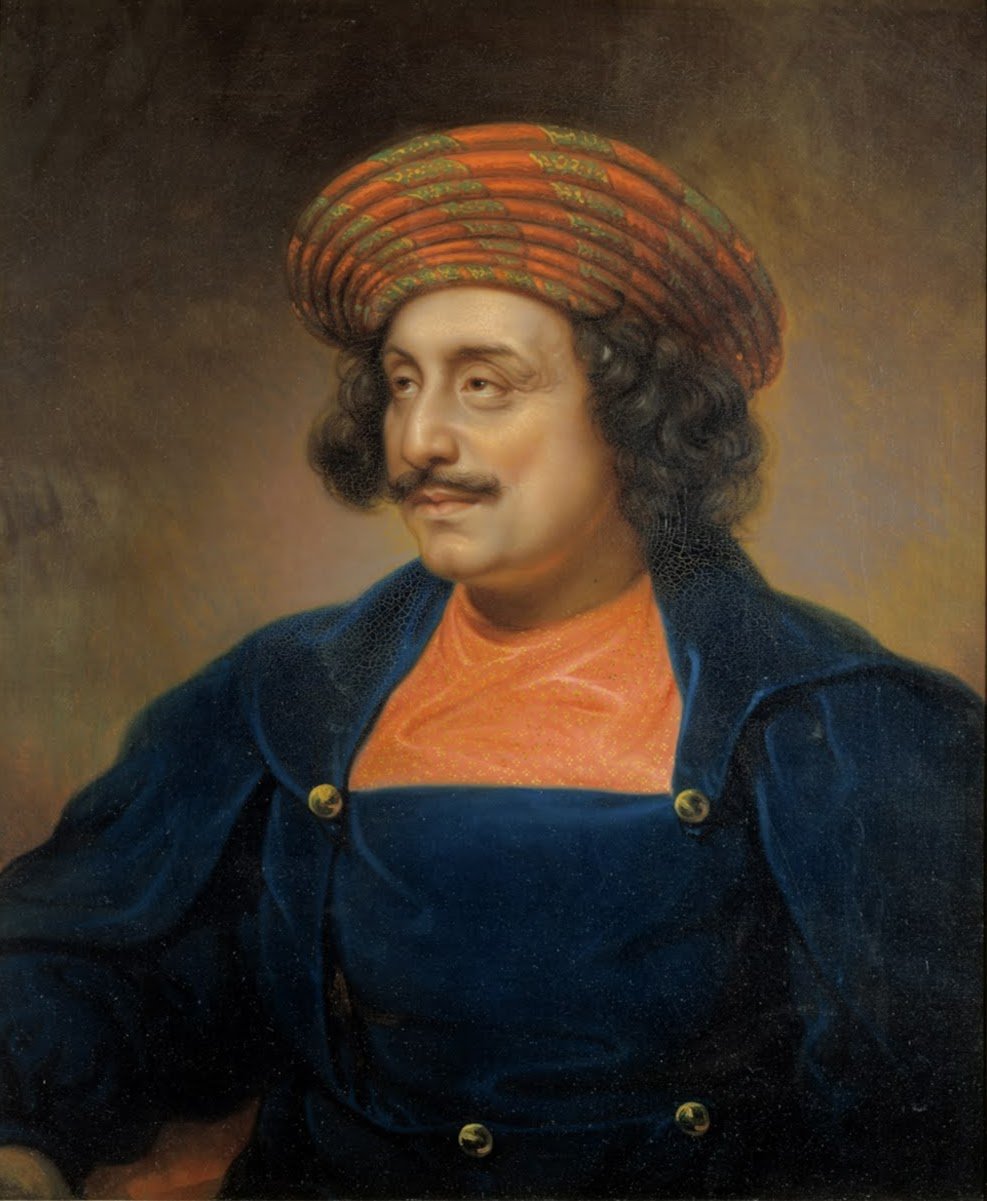
To argue his case for widow remarriage, Ranade drew on the writings of an
English clergyman, Bishop Joseph Butler, whose books were part of the moral
philosophy syllabus at Bombay University in the 1860s, alongside his own
book giving the scriptural case for remarriage.
Do not write that social reform for women’s rights “was entirely fought
for by male reformers” or that ideas of women’s equality are “alien
imports”. The book shows how wrong both assumptions are through two books
written by women.
Stree Purush Tulana (1882)
Written by Maharashtrian housewife Tarabai Shinde, protesting the
double standard by which a young Brahmin widow was sentenced to death for
killing her illegitimate baby while the child’s father faced no punishment
at all.
Sultana’s Dream (1905)
Written in English by Begum Rokeya Sakhawat Hossain, from a
well-to-do Bengali Muslim family; probably the earliest example of science
fiction writing in India, and among the first by a woman author anywhere in
the world. It imagines “Ladyland”, where gender roles are reversed:
men stay indoors observing purdah (the custom of screening women from
men, here reversed onto men instead) while women are scientists who
invent flying “air-cars”.
3.2 From the freedom movement to the twenty-first century
Apart from the early feminist visions, a large number of women’s
organisations arose at both the all-India and local levels in the early
twentieth century, and then women began to take part in the national movement
itself. Women’s rights were part and parcel of the nationalist vision, as the
1931 Karachi declaration shows.
2. No disability by reason of religion, caste, creed or sex in public employment, office of power or honour, or in any trade or calling
3. Franchise on the basis of universal adult suffrage
4. Women’s right to vote, to represent, and to hold public office
4The Struggles of the Disabled
The differently abled are not “disabled” only because of a physical or mental
impairment; they are also disabled because society itself is built in a way that
does not accommodate them. Compared to Dalit, adivasi or women’s struggles, the
rights of the disabled have been recognised only very recently, even though
disabled people have existed in every society and every period of history.
“I am invisible, understand, simply because people refuse to see me…
Indeed everything and anything except me.”
Ralph Ellison, Invisible Man (1952). Disability scholar Anita Ghai argues that the invisibility of disabled people can be compared to this novel’s Invisible Man
4.1 How disability is publicly perceived, and why it is wrong
A biological given
Disability is understood as a biological given.
The impairment is blamed for everything
Any problem the person faces is assumed to come from the impairment
itself.
The disabled person is a “victim”
Labels like bechara (poor thing) fix this victim status in place.
Tied to self-perception
Disability is assumed to be how the individual sees themselves, not how
society treats them.
Needing help
The very idea of disability suggests that disabled people are in need of
help.
In India, “disability”, “handicap”, “crippled”, “blind” and “deaf” are often
used as insults. The common perception views disability as retribution for
past karma from which there can be no reprieve, so the dominant
cultural view treats it as essentially a characteristic of the individual. The very term “disabled”
challenges these assumptions: terms such as “mentally challenged”, “visually
impaired” and “physically impaired” came to replace the more trite negative
terms such as “retarded”, “crippled” or “lame”.
“We are disabled by buildings that are not designed to admit us, and this
in turn leads to a range of further disablements regarding our education, our
chances of gaining employment, our social lives and so on. The disablement
lies in the construction of society, not in the physical condition of the
individual.” (Brisenden, 1986) The disabled are
rendered disabled not because they are biologically disabled, but because
society renders them so.
4.2 Disability and poverty
4.3 What the evidence shows
Census 2011 collected disability data through the Household Schedule,
covering all household types, after field trials and consultation with civil
society. It attempted to record eight types of disability, up from only
five in Census 2001, added a filter question on disability status, and
moved the disability question forward in the form. The questions were framed
to cover all types of disabilities listed in the Persons with Disabilities Act,
1995 and the National Trust Act, 1999.
A senior jurist criticised the higher judiciary’s practice of not
considering handicapped persons for judge posts, pointing out that High Court
buildings had no ramps and only staircases before the entrance, and that the
City Civil Court, where injured people come to depose in accident cases, was
even worse.
In a country where half the children aged 5 to 14 are out of school, there
is little room to think about educating children with disabilities. Anita Ghai
points out that rural parents may not see education as a route to autonomy for their
disabled child and would perhaps prefer a better way of fetching water and
improved agricultural facilities, while urban slum parents expect education to
be related to a world of work that improves their child’s quality of life.
Recognition of disability is still absent from mainstream educational
discourse: schools have historically kept two separate streams, one for
disabled students and one for everyone else, which itself marginalises the
issue rather than solving it. The film Iqbal, about a boy who cannot hear
or speak but becomes a cricket bowler, is a good illustration of just how many
things “differently abled” can mean in practice.
The social sciences understood inequality first through class, then
race, and more recently gender; caste and tribe are only now
getting the attention they deserve in the Indian context. The book flags that
categories combining religion with caste, gender or region still need more
attention, citing the Sachar Committee Report (a government-appointed
study of the social and economic condition of Muslims in India) as an
example of this emerging area.
- Social inequality and exclusion are about groups, not just individuals, and follow a structured pattern
- Bourdieu’s three capitals (economic, cultural, social) convert into each other
- Prejudice is an attitude, discrimination is the act that follows from it, and social exclusion is systematic, not accidental
- Untouchability has three equally important dimensions: exclusion, humiliation-subordination, exploitation
- The 1850 Act and the 2006 amendment both relate to education; repeated legislation on this subject is proof that the law alone cannot end a social practice
- OBCs are constitutionally “socially and educationally backward classes”, defined negatively, made major national politics by the Mandal Commission (implemented 1990)
- Adivasi land and forest rights were cut by colonial policy and continued after 1947; statehood for Jharkhand and Chhattisgarh is among the movement’s most significant achievements
- Scholars show gender inequality is social, not natural; matrilineal societies like the Khasis of Meghalaya are the strongest argument for this
- The women’s movement moved from 19th-century issues (sati, widow remarriage) to 1970s media representation, 1980s law reform, and today’s declining sex ratio
- Disability is a social barrier as much as a physical one: society disables people through buildings, attitudes and labels, not just through impairment
- Can I name Bourdieu’s three forms of capital and give an example of each?
- Can I state all three key principles of social stratification?
- Can I explain the difference between prejudice and discrimination in one line each?
- Can I name the three dimensions of untouchability, and one law with its year?
- Can I explain why OBCs are called a “diverse” category?
- Can I name both dam projects that displaced adivasis, with their rivers?
- Can I name two women writers from the nineteenth or early twentieth century and what they wrote?
- Can I explain, using Brisenden, why disability is as much social as physical?