
1 Why Do We Need a Parliament?
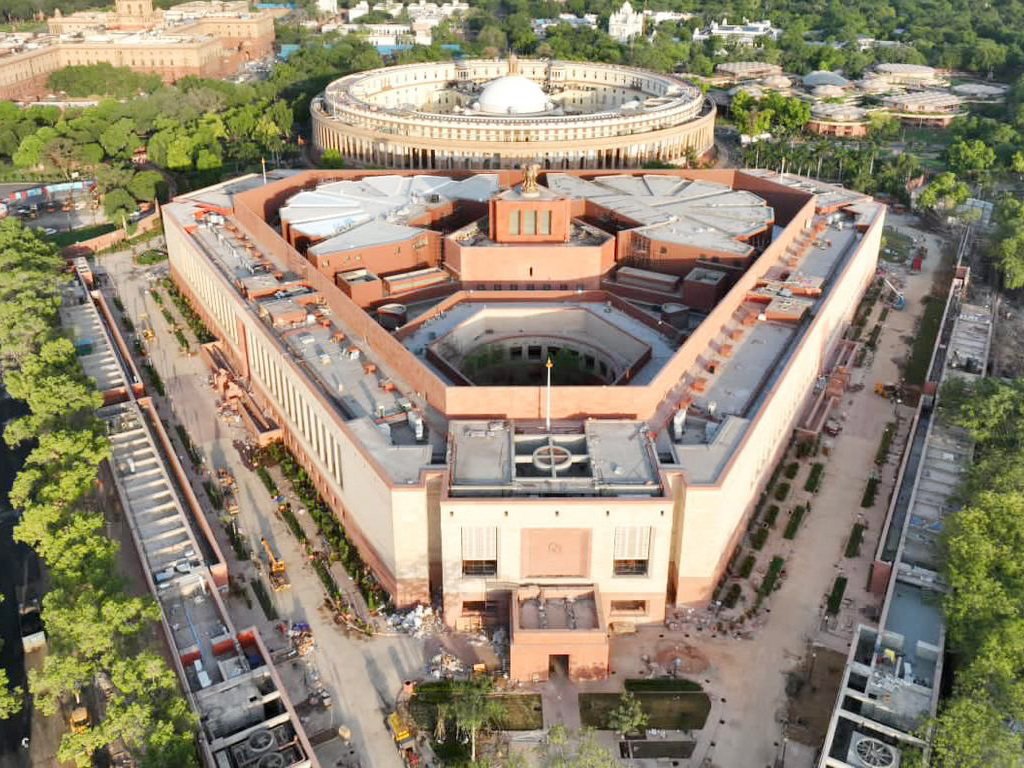
If ministers alone run the government, why bother electing 543 Members of Parliament at all? That is the question this chapter opens with, and the answer runs through the whole chapter.
Legislature is the organ of government made up of the people’s elected representatives, which makes laws and holds the executive accountable to the people.
- The legislature is not merely a law-making body, law-making is only one of its many functions
- It is the centre of all democratic political process
- The House is packed with debate, walkouts, protests, demonstrations, unanimity, concern and co-operation, all the time
- All this activity is not wasted, it serves very vital purposes
- A genuine democracy is inconceivable without a representative, efficient and effective legislature
- The legislature gives people the means to hold their representatives accountable, this is the very basis of representative democracy
1.1 But there is a complaint too: “the Parliament has declined”
- In most democracies, legislatures are losing central place to the executive
- In India too, the Cabinet initiates policies, sets the agenda for governance and carries them through
- This has led some critics to remark that the Parliament has declined
Even very strong cabinets must retain a majority in the legislature. A strong leader has to face the Parliament and answer to its satisfaction.
Herein lies the democratic potential of the Parliament
- Parliament is recognised as one of the most democratic and open forums of debate
- On account of its composition, it is the most representative of all organs of government
- Above all, it is vested with the power to choose and dismiss the government
A 4- or 6-mark question on “the decline of Parliament” comes up again and again. Write both sides: first the reasons the executive has gained ground, then the three things that still make Parliament powerful (retaining a majority, being the forum of debate, the power to dismiss the government).
1.2 Two real events showing that Parliament works
In each case the government had a majority, and yet it had to give way. This is Parliament’s control over the executive in action.
2 Why Do We Need Two Houses of Parliament?
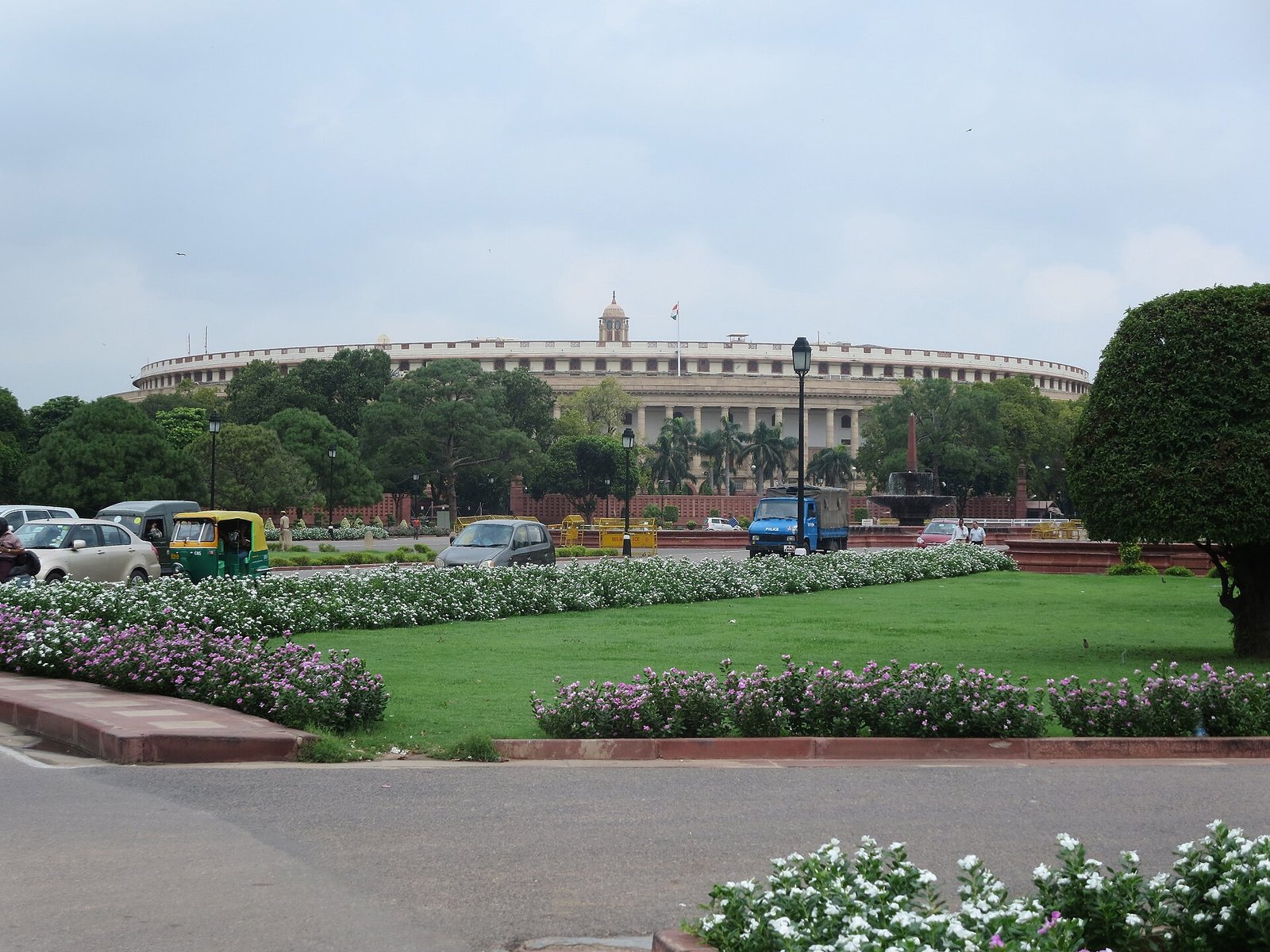
- The national-level legislature is called the Parliament, the State-level legislature is called the State legislature
- India’s Parliament has two Houses: the Rajya Sabha (Council of States) and the Lok Sabha (House of the People)
A bicameral legislature is a legislature that has two Houses. A legislature with only one House is called a unicameral legislature.
- The Constitution gives States the option of a unicameral or bicameral legislature
- At present only six States have a bicameral legislature
In a State, the second House is called the Legislative Council and the first House is called the Legislative Assembly.
2.1 Two reasons for having two Houses
Every part gets a place
Countries with large size and much diversity usually prefer two houses of the national legislature, to give representation to all sections in the society and to all geographical regions of the country.
Every decision gets reconsidered
Every decision taken by one House goes to the other House for its decision, so every bill and policy is discussed twice. This ensures a double check: even if one House takes a decision in haste, the other House can reconsider it.
“…an Upper House could perform the…useful function of being a revising body, and…its views may count but not its votes…”
Purnima Banerji, CAD, Vol. IX, p. 33, 30 July 1949
Germany’s two Houses are the Bundestag (Federal Assembly) and the Bundesrat (Federal Council). The Bundestag is elected for four years by a system combining direct and proportional representation. The Bundesrat’s 69 seats are divided among Germany’s 16 federal states on the basis of population. Its members are not elected, they are appointed by the state governments, and under German law all members from one state must vote as a bloc as per the state government’s instructions. Sometimes, due to coalition government at the state level, they fail to reach an agreement and abstain. The Bundesrat does not vote on every legislative initiative, but all policy areas where the federal states have concurrent powers must be passed by it, and it can veto such legislation.
3 Rajya Sabha
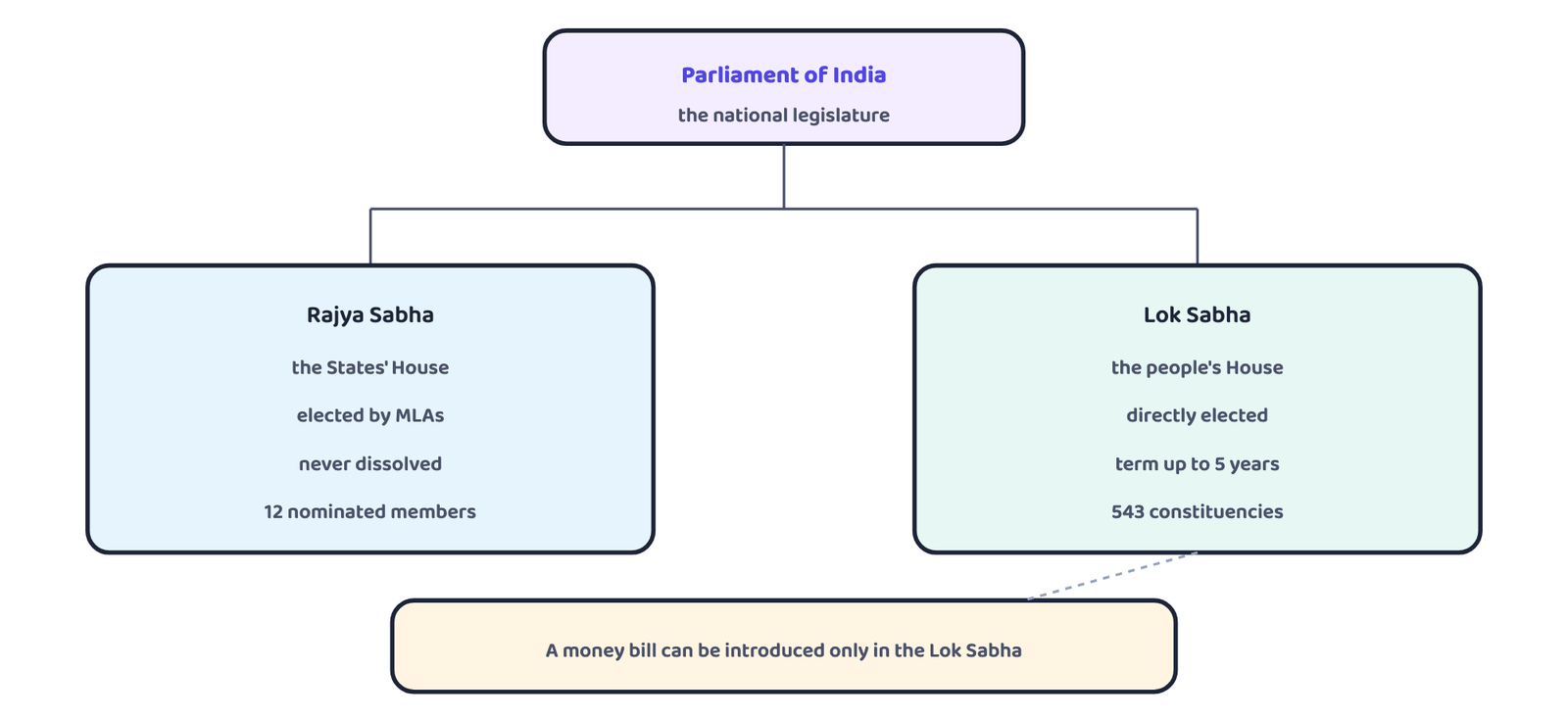
- The Rajya Sabha represents the States of India
- It is an indirectly elected body, the people do not elect it directly
3.1 How seats are divided: why India did not follow the American system
There are two possible principles of representation in a second chamber.
Symmetrical representation (USA)
- Every part of the country gets equal representation, regardless of size or population
- In the USA, every state has equal representation in the Senate
- Advantage: ensures equality of all the states
- Drawback: a small state gets the same representation as a much larger state
Representation by population (India)
- A region with a larger population gets more representatives
- The number of members from each State is fixed by the Constitution’s Fourth Schedule
- Uttar Pradesh has 31 seats, Sikkim has 1 seat
- This is exactly the discrepancy the framers of the Constitution wanted to prevent
The book itself raises the question: if India had followed the American system of equal representation, Uttar Pradesh (population 1998.12 lakhs) would have got the same number of seats as Sikkim (population only 6.10 lakhs).
3.2 Term and the permanent House
- Members of the Rajya Sabha are elected for a term of 6 years
- They can get re-elected
- All members do not complete their term at the same time
- Every two years, one-third of the members retire and elections are held for those one-third seats only
- This is why the Rajya Sabha is never fully dissolved, it is called the permanent House
A permanent House is a House that is never fully dissolved because all its members do not retire at the same time. In India, the Rajya Sabha is the permanent House.
Always write the advantage of a permanent House, this is where the real marks are: even when the Lok Sabha is dissolved and fresh elections have not yet been held, the Rajya Sabha can still be called to meet and conduct urgent business.
3.3 Nominated members
- Besides its elected members, the Rajya Sabha also has 12 nominated members
- They are nominated by the President, meaning appointed without an election
- They are chosen from among people who have made their mark in literature, science, art and social service
Students often write that nominated members also sit in the Lok Sabha. They do not. This is only about the Rajya Sabha’s 12 nominated members, and they come from exactly those four fields. “Sport” is not on this list, sportspersons have historically been nominated under social service or art.
4 Lok Sabha
- The Lok Sabha and the State Legislative Assemblies are directly elected by the people
- The entire country (or State, for a Legislative Assembly) is divided into territorial constituencies of roughly equal population
- One representative is elected from each constituency
- Elections use universal adult suffrage: every adult citizen has the right to vote and every vote is of equal value
- At present there are 543 constituencies
- This number has not changed since the 1971 census
A constituency is a territorial part of the country (or State) with roughly equal population, from which one representative is elected.
4.1 Term
- The Lok Sabha is elected for a period of 5 years, this is the maximum
- It can be dissolved before five years are complete, in two situations:
- No party or coalition can form the government
- The Prime Minister advises the President to dissolve the Lok Sabha and hold fresh elections
“Difference between Lok Sabha and Rajya Sabha” is the most common 4-mark question. The table below is the complete answer, learn it point by point.
| Basis | Lok Sabha | Rajya Sabha |
|---|---|---|
| Other name | House of the People | Council of States |
| Represents | the people of the whole country | the States of India |
| Election | direct, by the people | indirect, by MLAs |
| Term | 5 years, can dissolve earlier | members serve 6 years, House never dissolved |
| Nominated members | none | 12, by the President |
| Money bill | can be introduced only here | can neither introduce nor reject |
| Council of Ministers responsible to | the Lok Sabha | not responsible to it |
5 What Does the Parliament Do?
Law-making is Parliament’s most famous job, but not its only one. The book lists eight functions of the Parliament.
5.1 All eight functions, a little more fully
- Legislative function: Parliament enacts legislation for the country. But despite being the chief law-making body, it often merely approves legislation. The actual task of drafting the bill is performed by the bureaucracy under the supervision of the minister concerned. The substance and even the timing of the bill are decided by the Cabinet. No major bill is introduced without Cabinet approval. Members other than ministers can also introduce bills, but these have little chance of passing without government support.
- Control of Executive: perhaps the most vital function, ensuring the executive does not overstep its authority and remains responsible to the people. A full section follows on this below.
- Financial function: government spends a lot of money, and it comes from taxation. In a democracy, the legislature controls taxation and how money is used. A new tax needs the Lok Sabha’s approval. Government must account to the legislature for the money it has spent and wishes to raise, through the budget and annual financial statements.
- Representation: Parliament represents the divergent views of members from different regional, social, economic and religious groups of different parts of the country.
- Debating function: Parliament is the highest forum of debate in the country. There is no limitation on its power of discussion, members are free to speak on any matter without fear. These discussions constitute the heart of democratic decision making.
- Constituent function: Parliament has the power of discussing and enacting changes to the Constitution. The constituent powers of both Houses are similar, and every constitutional amendment must be approved by a special majority of both Houses.
- Electoral function: Parliament elects the President and Vice President of India.
- Judicial function: considering proposals for the removal of the President, Vice-President and Judges of the High Courts and Supreme Court.
A special majority needs two conditions together: a majority of the total membership of the House, and support of at least two-thirds of the members present and voting. An ordinary majority needs only more than half of the members present and voting.
The judicial function does not mean Parliament sits as a criminal court or hands down a sentence. Parliament considers a proposal for removal and itself votes on the removal, by the special procedure; no court decides it.
6 Powers of the Two Houses
In a bicameral system, the two Houses are not equal. The book lists their powers separately.
6.1 The book’s own two lists
Powers of the Lok Sabha
- Makes laws on subjects in the Union List and Concurrent List; introduces and enacts both money and non-money bills
- Approves proposals for taxation, budgets and annual financial statements
- Controls the executive through questions, supplementary questions, resolutions, motions and the no-confidence motion
- Amends the Constitution
- Approves the Proclamation of Emergency
- Elects the President and Vice President, and removes Judges of the Supreme Court and High Court
- Establishes committees and commissions and considers their reports
Powers of the Rajya Sabha
- Considers and approves non-money bills and suggests amendments to money bills
- Approves constitutional amendments
- Exercises control over the executive by asking questions, introducing motions and resolutions
- Participates in the election and removal of the President, Vice President, and Judges of the Supreme Court and High Court; it alone can initiate the procedure for removing the Vice President
- Can give the Union Parliament power to make laws on matters in the State List
The Constitution divides subjects into three lists. Only Parliament makes laws on Union List subjects, only a State legislature on State List subjects, and both can make laws on Concurrent List subjects.
6.2 Special powers of the Rajya Sabha
- The Rajya Sabha exists to give representation to the States, so its purpose is to protect the States’ powers
- Any matter that affects the States must be referred to it for consent and approval
- If the Union Parliament wishes to move a State List subject to the Union List or Concurrent List in the national interest, the Rajya Sabha’s approval is necessary
- This provision adds to the Rajya Sabha’s strength
Experience shows that the members of the Rajya Sabha represent their parties more than they represent their States. On paper the Rajya Sabha is the States’ House, in practice it too runs on party politics. Always add this line in a 4- or 6-mark answer.
6.3 Powers exercised only by the Lok Sabha
- The Rajya Sabha cannot initiate, reject or amend a money bill, it can only approve or suggest changes
- The Council of Ministers is responsible only to the Lok Sabha, not the Rajya Sabha
- So the Rajya Sabha can criticise the government but cannot remove it
The Rajya Sabha is elected by MLAs, not directly by the people. In the democratic form our Constitution adopted, the people are the final authority. By this logic, the representatives directly elected by the people should hold the crucial powers of removing a government and controlling its finances. That is why the Constitution stopped short of giving these two powers to the Rajya Sabha.
In all other spheres, including passing non-money bills, constitutional amendments, impeaching the President and removing the Vice President, the powers of the Lok Sabha and Rajya Sabha are co-equal.
Impeachment is the constitutional procedure by which Parliament can remove the President from office, before the completion of the term, on a charge of violating the Constitution.
7 How Does the Parliament Make Laws?
A bill is a draft of a proposed law, a draft that is not yet law. It becomes law only after being passed by both Houses of Parliament and receiving the President’s assent.
7.1 Types of bills
| Type | How it is identified | Special feature |
|---|---|---|
| Government Bill | introduced by a minister | good chance of passing, has government support |
| Private Member’s Bill | introduced by a non-minister | almost impossible to pass without government support |
| Money Bill | concerns tax, government spending or borrowing | can be introduced only in the Lok Sabha |
| Non-Money Bill (ordinary bill) | every other subject | can be introduced in either House |
| Ordinary Bill | to make an ordinary law | passed by an ordinary majority |
| Constitution Amendment Bill | to change the Constitution | needs a special majority in both Houses |
7.2 The politics before a bill arrives
Politics on a bill begins long before it reaches Parliament.
- A political party may pressurise the government to fulfil an election promise or improve its chances at the next election
- Interest groups, media and citizens’ forums may also persuade the government for a particular legislation
- Preparing a bill weighs many things: the resources needed to implement it, the support or opposition it is likely to produce, and its impact on the ruling party’s electoral prospects
- In coalition politics, a bill must be acceptable to all the coalition partners
Law making is thus not merely a legal procedure but also a political course of action.
The whole of this point in one line
- Once the Cabinet approves the policy behind the legislation, the task of drafting begins
- The draft is prepared by the concerned ministry, for example a bill raising the marriageable age of girls from 18 to 21 would be prepared by the law ministry, with the ministry of women and child welfare also involved
7.3 A bill’s journey: three stages
The 14-day rule on money bills is asked almost every year. The Rajya Sabha can either approve a money bill or suggest changes, it cannot reject it. If it takes no action within 14 days, the bill is deemed to have been passed. Whether the Lok Sabha accepts the Rajya Sabha’s suggested amendments is entirely up to the Lok Sabha.
Special procedure for Money Bills: “A Money Bill shall not be introduced in the Council of States.”
8 How Does the Parliament Control the Executive?
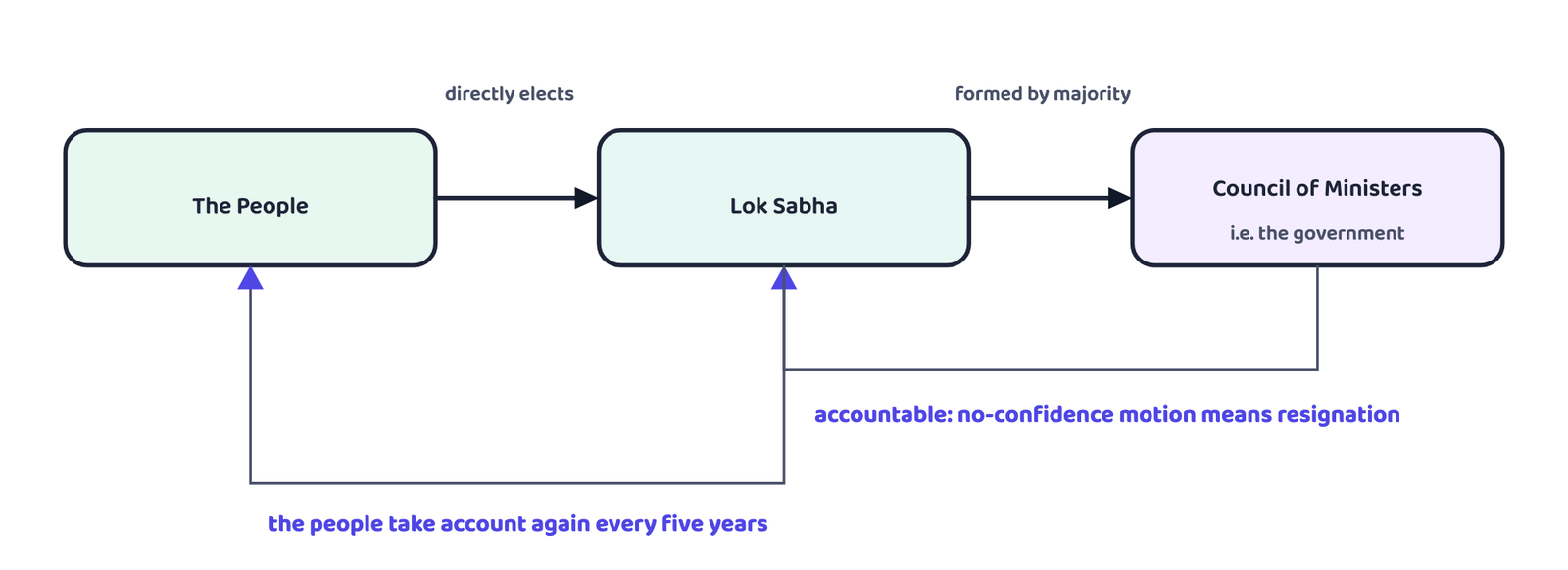
- In a parliamentary democracy, the executive is drawn from the party or coalition that has a majority in the Lok Sabha
- So it is not difficult for the executive to exercise unlimited and arbitrary power with the support of the majority
- In such a situation, parliamentary democracy may slip into Cabinet dictatorship, where the Cabinet leads and the House merely follows
- Only an active and vigilant Parliament can keep a regular, effective check on the executive
8.1 Parliamentary privilege
Parliamentary privilege is the protection that means no legal action can be taken against a member for anything they said in the legislature. The presiding officer of the House has the final say in matters of breach of privilege.
The purpose of this privilege is clear: MPs and MLAs can represent people properly and exercise effective control over the executive only when they can speak without fear.
8.2 Four instruments of control
Deliberation and discussion
During law-making, and in the House’s general discussions, members can question the executive’s policy direction and how it implements policy.
Approval or refusal of laws
No bill can become law without Parliament’s approval, so this approval is itself a form of control.
Financial control
The government gets money only when Parliament approves the budget, keeping both spending and policy under watch.
No-confidence motion
The most powerful weapon: if it passes, the entire government has to resign.
8.3 Tools inside the debate: Question Hour and Zero Hour
| Basis | Question Hour | Zero Hour |
|---|---|---|
| When | every day during sessions | right after Question Hour |
| What happens | members ask searching questions, ministers must respond | members can raise any matter they think is important |
| Minister’s reply | compulsory | not binding |
| Importance | most effective method of vigil over the executive and administration | brings up issues not on the fixed agenda |
- Question Hour records the maximum attendance of members
- Most questions target issues of public interest: price rise, food-grain availability, atrocities on weaker sections, riots, black-marketing
- This gives members a chance to criticise the government and raise their constituencies’ problems
- Besides these, the half-an-hour discussion and the adjournment motion are also instruments of control
Question Hour discussions get so heated that members raise their voice, walk to the well of the House, or walk out in protest. This causes considerable loss of legislative time. But remember, many of these actions are also political techniques to gain concessions from government, and that very pressure is what forces executive accountability.
8.4 Approval of laws: never automatic
- A government with a disciplined majority does not usually struggle to get the legislature’s approval
- But such approvals cannot be taken for granted, they are the product of intense bargaining and negotiation
- If the government has a majority in the Lok Sabha but not the Rajya Sabha, it must make substantial concessions to get both Houses’ approval
8.5 Financial control
- Money for government programmes is granted through the budget
- Preparing and presenting the budget for the legislature’s approval is the government’s constitutional obligation
- The legislature may refuse to grant resources, though this seldom happens as the government ordinarily has a majority
- Before granting money, the Lok Sabha can discuss why the government needs it
- It can also enquire into cases of misuse of funds on the basis of reports from the Comptroller and Auditor General (CAG) and the Public Accounts Committee
- This control is not only about financial propriety, government policy is reflected in the budget, so financial control is also policy control
The Comptroller and Auditor General (CAG) is the constitutional officer who examines all government expenditure and reports to Parliament, so Parliament can see whether money was spent on what it was actually sanctioned for.
8.6 No-confidence motion
A no-confidence motion is a motion moved in the Lok Sabha stating that the House no longer has confidence in the Council of Ministers. If it passes, the entire Council of Ministers must resign.
- This is the most powerful weapon by which Parliament ensures executive accountability
- As long as the government has the support of a majority party or coalition, this power of the House is fictional rather than real
- After 1989, several governments were forced to resign for lack of the House’s confidence
- Each of these governments lost confidence because they failed to retain the support of their coalition partners
8.7 When control actually works, and where it has declined
✓ Control is effective when
- the House has adequate time
- members genuinely take interest and participate
- both government and opposition are willing to compromise
✗ But over the last two decades
- Lok Sabha and State Assembly sessions have declined
- time spent on debate has fallen
- the House has been plagued by absence of quorum, the minimum members needed to be present
- opposition boycotts sessions, which strips the House of its own power to control the executive through discussion
9 What Do Parliamentary Committees Do?
- Parliament sits only during sessions, so it has very limited time
- Law-making needs in-depth study, which demands attention and time
- There is more besides: studying demands for grants, meaning how much money each ministry needs; examining departmental expenditure; and investigating cases of corruption
- Parliamentary committees perform exactly these functions
| Standing Committees | Joint Parliamentary Committees (JPC) | |
|---|---|---|
| Since | the system developed since 1983 | set up whenever needed |
| How many | departmentally related, over twenty of them | no fixed number |
| Members | members of Parliament | members from both Houses |
| Work | oversee a department’s work, budget, expenditure and related bills | joint discussion on one bill, or investigating financial irregularities |
9.1 The effect of committees
- This system has considerably reduced Parliament’s burden
- Many important bills have been referred to committees, and Parliament has approved their work with only occasional alterations
- Legally speaking, no bill can become law and no budget is sanctioned without Parliament’s own approval
- But it is equally true that Parliament rarely rejects the suggestions made by its committees
“How has the parliamentary committee system affected the overseeing and appraisal of legislation” is question 10 of the book’s own exercises, so it is very likely to be asked. Write both sides: the burden was reduced and scrutiny went deeper, but with real decisions moving into committees, Parliament’s own role has shrunk closer to rubber-stamping.
10 How Does the Parliament Regulate Itself?
- Parliament is a debating forum, and it is through debate that it performs all its vital functions
- So discussion must be meaningful and orderly, to keep proceedings smooth and the House’s dignity intact
- The Constitution has made certain provisions for this
- The presiding officer of the House is the final authority in regulating its business
10.1 The anti-defection law
The presiding officer has one more way to regulate members’ behaviour: the anti-defection law.
- Most members of a legislature are elected on some political party’s ticket
- The question was: what happens if a member leaves the party after being elected?
- This issue stayed unresolved for many years after independence
- Eventually the parties agreed that a legislator elected on one party’s ticket must be restricted from “defecting” to another party
- An amendment to the Constitution, the 52nd Amendment Act, was made in 1985, this is the anti-defection amendment
- It was later modified by the 91st Amendment
Defection is deemed to have occurred when a member does any one of these: remains absent from the House when the party asks them to be present, votes against the party’s instructions, or voluntarily leaves the membership of the party.
The experience of the past twenty years shows this law has not succeeded in curbing defections. Instead, it has given additional power to party leadership and the presiding officers of legislatures over their members. The result cuts both ways, and a 4-mark answer needs both halves.
“The nature of the legislature is such that there are restrictions only so far as procedure is concerned. But in substance there is no restriction, no limitation on the sovereignty of the legislature or Parliament…”
N.V. Gadgil, CAD, Vol. XI, p. 659, 18 November 1949
11 Conclusion
- Watch a live telecast of Parliament and you find a rainbow of colourful dresses symbolising different regions of the country
- Members speak different languages and come from various castes, religions and sects
- They often fight bitterly, and it can seem the nation’s time and money are being wasted
- But this chapter has shown that these same parliamentarians can effectively control the executive
- They express the interests of various sections of society
- On account of its composition, Legislature is the most representative of all organs of government
- The presence of members from diverse social backgrounds makes the legislature more responsive to people’s expectations
- In a parliamentary democracy, the legislature occupies a high position of power and responsibility, here lies the democratic potential of the Parliament
- The legislature makes laws and holds the executive accountable, its most vital function
- Parliament is bicameral, but only 6 States currently have two Houses
- Rajya Sabha: States’ House, indirectly elected, permanent, 6-year terms, 12 nominated members
- Lok Sabha: directly elected, 543 seats, maximum 5-year term
- Eight functions: legislative, control, financial, representation, debating, constituent, electoral, judicial
- Only the Lok Sabha holds the money-bill power and can remove the government, elsewhere the Houses are equal
- Moving a State List subject to the Union List needs Rajya Sabha’s approval, its special power
- A bill passes three stages, a deadlock goes to a Joint Session, then the President’s assent
- Four instruments of control: debate, approval of laws, financial control, no-confidence motion
- Over twenty standing committees since 1983 do the real scrutiny, hence “miniature legislatures”
- The 52nd Amendment of 1985 did not stop defections, but it raised party leaders’ power
- Can I list six differences between the Lok Sabha and the Rajya Sabha without looking?
- Can I name all eight functions of Parliament?
- Can I write the full journey of a bill becoming law, in order, including the Joint Session and the 14-day rule?
- Can I explain the difference between Question Hour and Zero Hour in one sentence?
- Do I remember the Rajya Sabha’s special power that the Lok Sabha does not have?
- Can I write the three conditions of defection and this law’s double-edged result?